
Cutting the cord can affect sound quality, especially if you choose wireless speakers, which may face interference, latency, or weaker signals in crowded areas. Wired speakers usually deliver more reliable, stable audio with no lag or dropouts, making them ideal for critical listening. However, advancements in wireless tech are tightening the gap. To understand how your setup may be impacted and explore the differences, keep exploring the key factors influencing sound quality.
Key Takeaways
- Wired speakers generally offer more stable, high-fidelity sound with minimal latency and fewer dropouts.
- Wireless speakers can match wired sound quality with advanced Bluetooth technology, though interference may cause occasional issues.
- Cutting the cord doesn’t automatically reduce sound quality; performance depends on the quality of wireless tech and environmental factors.
- Wired options eliminate interference and power concerns, providing consistent audio performance ideal for critical listening.
- Wireless sound quality is improving, making it comparable to wired options for everyday use and casual listening.

When choosing between wireless and wired speakers, you need to contemplate how each option fits your lifestyle and audio needs. Wireless speakers offer convenience and flexibility, but they also introduce some considerations you should be aware of, especially regarding Bluetooth interference and power consumption. Bluetooth interference can be a real issue if you live in a densely populated area or have many devices competing for the same frequency. When multiple Bluetooth devices operate nearby, your speaker might experience dropouts or reduced audio quality, which can be frustrating if you’re trying to enjoy uninterrupted music. To minimize this, you’ll want to ensure your wireless speaker uses advanced Bluetooth technology, such as Bluetooth 5.0 or higher, which offers better stability and less susceptibility to interference.
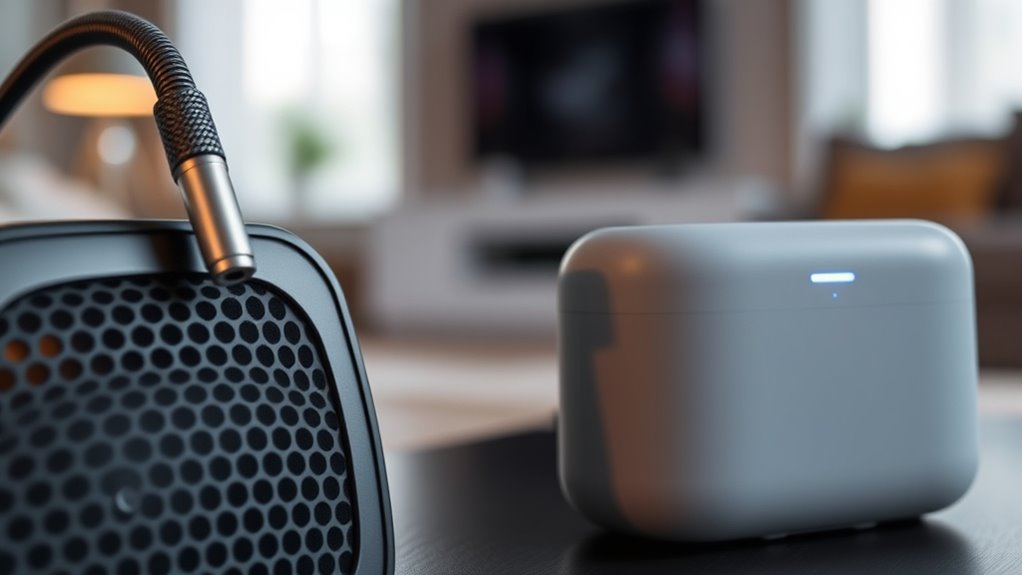
Wireless speakers can face Bluetooth interference in crowded areas, affecting sound quality and reliability.
Power consumption is another factor that differentiates wireless speakers from their wired counterparts. Wireless speakers rely on batteries, meaning you’ll need to recharge them regularly, especially if you use them frequently or for long periods. This adds a layer of maintenance that wired speakers don’t require, as the latter draw power directly from the connected device or power outlet. If you’re often on the go or prefer a clutter-free setup without cords, the trade-off might be worth it. However, if you want a more reliable and consistent power source, wired speakers tend to be more dependable, as they don’t depend on battery life. You also won’t have to worry about your audio cutting out due to low power, which can sometimes happen with wireless models if the battery runs low unexpectedly.
Wireless speakers also have the advantage of eliminating cables, making setup easier and cleaner in your living space. Still, the wireless connection introduces some latency, which can affect sync with video or gaming, though this is improving with newer technology. Wired speakers, on the other hand, typically offer more stable audio transmission, with no lag or dropouts, providing a consistent listening experience. If your priority is sound quality and reliability, wired options might be better, especially for critical listening or professional use. Additionally, advancements in audio technology continue to improve the performance of wireless options, narrowing the gap with wired speakers.
Ultimately, the decision hinges on how you value convenience versus stability. Wireless speakers excel in portability and ease of use, but you must accept potential issues like Bluetooth interference and higher power consumption. Wired speakers offer a straightforward, dependable experience without these concerns, but with less flexibility. Knowing your environment, usage habits, and preferences will help you choose the right type to best suit your audio lifestyle.
Frequently Asked Questions
Can Wireless Speakers Cause More Audio Lag Than Wired Ones?
Yes, wireless speakers can cause more audio lag than wired ones due to Bluetooth latency. This delay can affect audio synchronization, especially during gaming or watching videos, where precise timing matters. While newer Bluetooth versions reduce latency, some lag still exists. Wired speakers typically offer better audio synchronization because they transmit sound directly without the delay introduced by wireless signals.
Do Wired Speakers Have Better Durability Than Wireless Options?
Wired speakers generally have better durability compared to wireless options because of their material quality and construction. You’ll find that wired speakers are less prone to damage from water or drops since they often have sturdier materials. Plus, without batteries or wireless components, they tend to last longer and require less maintenance. If durability is your priority, wired speakers offer a more reliable choice for long-term use.
How Does Interference Affect Wireless Speaker Sound Quality?
Imagine trying to have a conversation in a noisy room—that’s what Bluetooth interference and Wi-Fi congestion do to your wireless speaker’s sound quality. These interferences cause signal disruptions, leading to crackles, dropouts, or reduced volume. When multiple devices compete for the same frequency, your speaker struggles to deliver clear audio. To avoid this, keep your device away from other electronics that may cause Bluetooth interference or Wi-Fi congestion.
Are Wired Speakers More Energy-Efficient Than Wireless Alternatives?
Wired speakers are generally more energy-efficient than wireless options because they have lower power consumption. You’ll save energy by avoiding the need for Wi-Fi or Bluetooth transmission, which consumes additional power. If you want to maximize energy savings, sticking with wired speakers can be a smart choice, especially for long-term use. Plus, they typically require less maintenance and have fewer components that drain power, making them more efficient overall.
Can Wireless Speakers Be Hacked or Compromised More Easily?
Sure, wireless speakers can be hacked more easily, turning your cozy playlist into a potential security vulnerability. You might worry about privacy concerns, as hackers could intercept your audio streams or control your device remotely. While convenient, these security vulnerabilities highlight that your wireless speaker’s freedom isn’t without risks. So, if you value your privacy, you might prefer wired options—less hacking, more peace of mind.
Conclusion
Ultimately, whether you choose wireless or wired speakers depends on your lifestyle and preferences. Wireless options offer convenience and modern flair, perfect for the on-the-go audiophile. Wired speakers, reminiscent of a time when audio quality was paramount, often deliver superior sound fidelity. Don’t forget, even in this digital age, a well-made speaker can be as timeless as a gramophone—proving that sometimes, the best choice is the one that resonates most with your personal harmony.