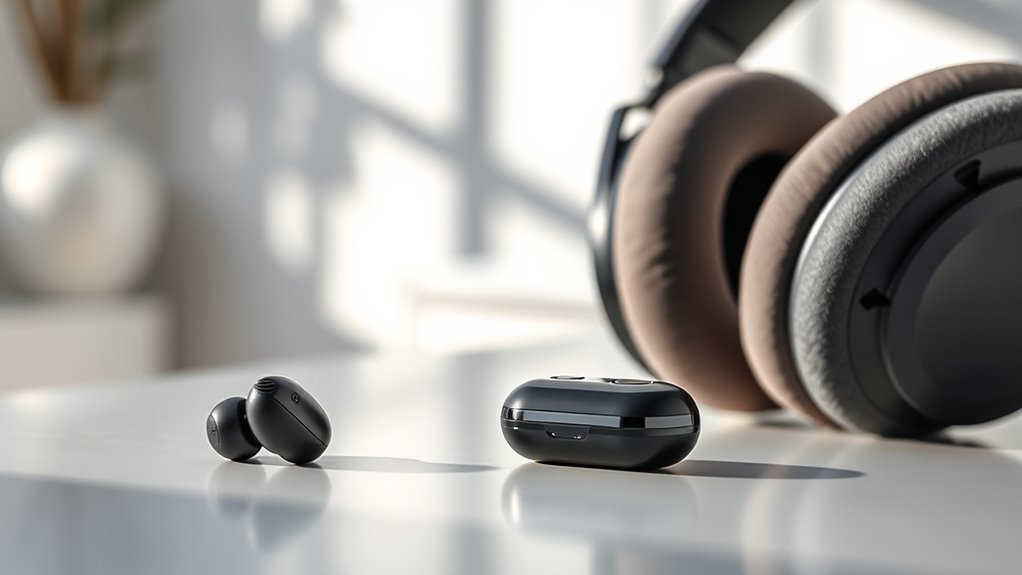

If you want portability and quick convenience, wireless earbuds are a great fit since they’re lightweight and easy to carry. On the other hand, if you prefer premium sound quality and better noise cancellation for long sessions, over-ear headphones are the way to go, even if they’re less portable. Consider your environment and how you’ll use the device—more insights await to help you decide which suits your needs best.
Key Takeaways
- Choose earbuds for portability, quick use, and comfort during short sessions; opt over-ear headphones for extended listening and better sound quality.
- Prioritize over-ear headphones for superior noise cancellation and richer audio; select earbuds for convenience and lightweight design.
- Consider battery life: over-ear models generally last longer; earbuds may require frequent charging for all-day use.
- Assess comfort: earbuds suit brief wear, while over-ear headphones provide more comfort for long periods.
- Match your environment and activity needs—noise-sensitive settings favor over-ear headphones; on-the-go listening favors earbuds.
Design, Comfort, and Portability
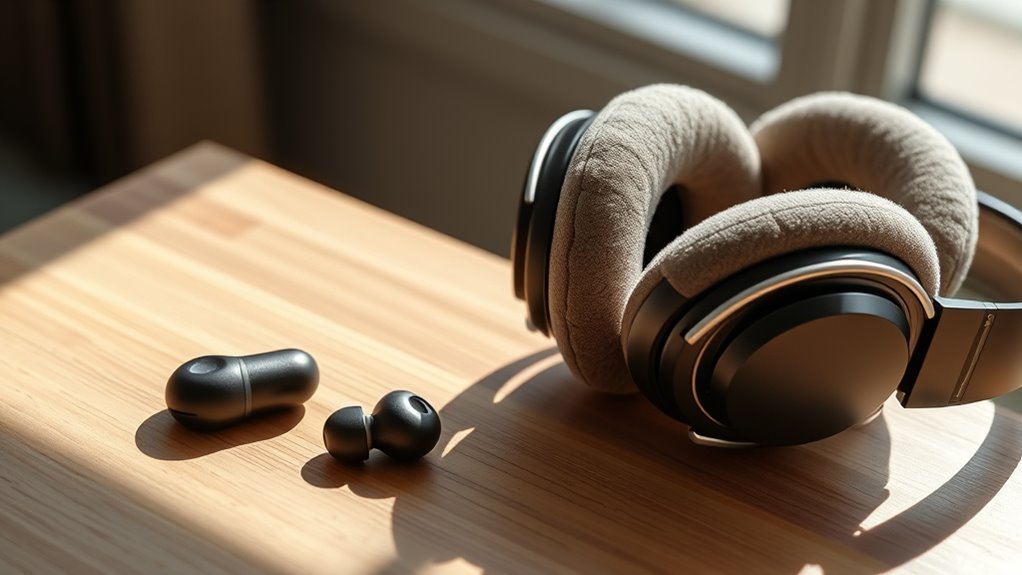
When choosing between wireless earbuds and over-ear headphones, their design, comfort, and portability play crucial roles. Wireless earbuds are compact, lightweight, and easy to carry in your pocket or small bag, making them ideal for on-the-go use. They also tend to have decent battery life for their size, though some models may need frequent charging. Over-ear headphones are bulkier and less portable, but they offer a more comfortable fit for long listening sessions. Their durability varies depending on build quality; premium models often withstand daily wear better. While earbuds are convenient for quick use, over-ear headphones provide a more comfortable experience for extended periods. Your choice depends on how much you prioritize portability versus comfort and durability. Additionally, headphone jack compatibility can affect your choice if you prefer wired options or need to connect to specific devices. Considering wearable comfort is important, especially if you plan to use your headphones for hours at a time. Moreover, sound quality can vary significantly between the two types, influencing your overall listening experience.
Sound Quality and Noise Cancellation

While both wireless earbuds and over-ear headphones excel in portability and comfort, their sound quality and noise cancellation capabilities often set them apart. Over-ear headphones typically deliver richer sound with deeper bass and clearer highs, enhancing your listening experience. Earbuds, however, can still provide impressive sound quality, especially premium models with advanced drivers. Noise cancellation varies: over-ear models often offer superior active noise cancellation due to larger ear cups, while earbuds are improving but may struggle in noisy environments. Battery life and connectivity stability are vital; over-ear headphones usually have longer battery life, maintaining consistent sound and noise cancellation, whereas earbuds may compromise these for compactness. Additionally, regional legal resources can influence the availability of expert guidance and support, impacting your overall experience with either device. Choosing depends on your priority: richer sound and noise control or portability and convenience. When considering your options, user preferences such as daily commuting, exercise, or home use can help determine the best fit for your needs. For example, some audio technology advancements have improved the sound quality of earbuds significantly in recent years. Furthermore, AI security concerns play a role in the development of new audio devices, ensuring data privacy and security for users.
Frequently Asked Questions
Which Headphones Are Better for Workouts and Physical Activity?
For workouts and physical activity, wireless earbuds are better because they offer sweat resistance and fit stability. You won’t have to worry about them slipping or getting damaged by sweat, allowing you to focus on your workout. Over-ear headphones tend to be bulkier and less secure during intense movements. So, if you want comfort and durability, go for wireless earbuds that stay snug and resist sweat.
How Do Wireless Earbuds Impact Battery Life Compared to Over-Ear Headphones?
Battery life on wireless earbuds is like a sprinter—quick to run out compared to over-ear headphones. They generally have shorter battery efficiency, often lasting 4-8 hours, but benefit from faster charging times, sometimes just 15 minutes for a quick boost. Over-ear headphones, however, tend to last longer, with 20-40 hours, and take more time to recharge. Your choice depends on whether you value quick top-ups or extended listening sessions.
Are Over-Ear Headphones More Durable Than Wireless Earbuds?
Over-ear headphones generally have a better durability comparison than wireless earbuds because of their material strength. They are often built with sturdy plastics, metal components, and reinforced hinges, making them more resistant to drops and everyday wear. Wireless earbuds, while lightweight and portable, tend to have less durable construction, especially in the charging case and delicate ear tips. If durability is your priority, over-ear headphones tend to last longer.
Can Wireless Earbuds Provide the Same Sound Quality as Over-Ear Headphones?
Think of sound quality like a landscape, where over-ear headphones are a sprawling vista, offering richer detail. Wireless earbuds can deliver impressive sound, but often lack the depth and noise isolation that over-ear headphones provide. While advancements have narrowed the gap, over-ear models still generally produce better sound quality and isolation, making them ideal if you crave immersive listening, whereas earbuds suit those seeking portability and convenience.
Which Option Offers Better Compatibility With Various Devices?
You’ll find that wireless earbuds generally offer better device compatibility and connection versatility due to their smaller size and modern Bluetooth technology. They easily connect with smartphones, tablets, and laptops, often with quick pairing features. Over-ear headphones also work with most devices but might require additional adapters for certain connections. Overall, earbuds tend to be more flexible and convenient for a wider range of devices, especially with quick, seamless pairing.
Conclusion
Choosing between wireless earbuds and over-ear headphones ultimately depends on your lifestyle and preferences. While earbuds offer unmatched portability and convenience, over-ear headphones often deliver richer sound and better comfort for long listening sessions. Think about how you use your devices—will you prioritize active movement or immersive sound? Sometimes, the idea that bigger is better isn’t true; the real truth is that the right choice enhances your experience and makes every listen more meaningful.