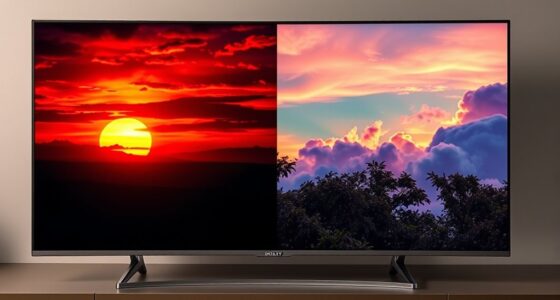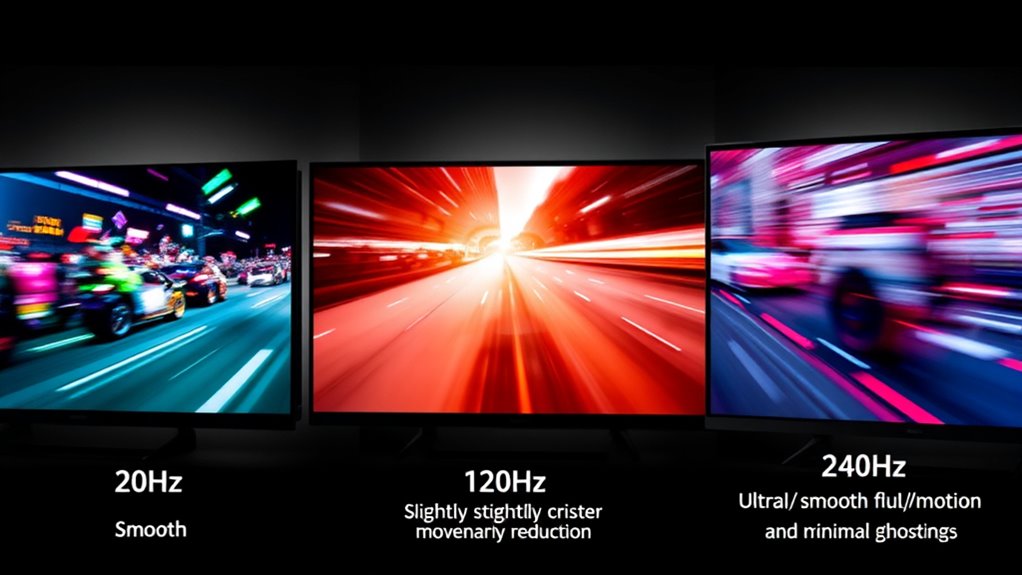

Choosing between 60Hz, 120Hz, and 240Hz refresh rates depends on how you watch and play. A 60Hz TV works well for casual viewing but might struggle with fast action, while 120Hz offers smoother motion and better gaming response. If you’re into fast-paced scenes or competitive gaming, 240Hz can provide even clearer motion, but it’s often more expensive. To find out which option fits your needs perfectly, keep exploring the details below.
Key Takeaways
- Higher refresh rates like 120Hz and 240Hz reduce motion blur and improve clarity during fast-moving scenes.
- 60Hz is sufficient for casual viewing, while 120Hz and 240Hz are ideal for gaming and sports.
- 240Hz offers the best motion smoothness but is more expensive and may have diminishing returns for some content.
- Advanced processing technologies can enhance motion clarity regardless of the refresh rate.
- The choice depends on content type, gaming needs, and budget for optimal viewing experience.
Understanding Refresh Rates and How They Affect Viewing

Understanding refresh rates is key to knowing how your TV displays motion. Higher refresh rates, like 120Hz or 240Hz, make fast-moving scenes smoother by updating images more frequently. This reduces motion blur and enhances clarity during action scenes or sports. Motion interpolation is a feature often linked to higher refresh rates; it adds extra frames to create seamless motion, making movements look more natural. Additionally, a higher refresh rate helps with flicker reduction, minimizing eye strain and distracting flickering effects that can occur at lower rates. When your TV refreshes more often, your viewing experience feels more fluid and comfortable. Recognizing how these factors work together helps you understand why a higher refresh rate can considerably improve your watching experience, especially during quick-paced content. Moreover, high refresh rates are particularly beneficial for gamers, providing smoother gameplay and more accurate motion rendering. An understanding of refresh rate technology can help consumers make more informed choices when selecting a new display, especially considering factors like TV tuning and how it can optimize viewing performance.
Comparing 60Hz, 120Hz, and 240Hz: Benefits and Limitations

When choosing a TV, it’s important to compare the benefits and limitations of different refresh rates like 60Hz, 120Hz, and 240Hz. A higher refresh rate can improve motion smoothing, making fast-moving scenes look smoother and clearer. For gaming responsiveness, 120Hz and 240Hz TVs often deliver quicker response times, reducing input lag and providing a more responsive experience. However, 60Hz TVs may struggle with fast action scenes and fast-paced games, resulting in choppier motion. While 240Hz offers the best motion clarity, it can be more expensive and sometimes unnecessary for casual viewers. Keep in mind that not all content benefits equally from higher refresh rates, so consider your primary use when evaluating these options.
Choosing the Right Refresh Rate for Your Entertainment Needs
Selecting the right refresh rate depends on how you primarily enjoy your TV. If you love fast-paced sports or gaming, higher refresh rates like 120Hz or 240Hz can improve gaming responsiveness and reduce motion blur. For movies and casual viewing, 60Hz often suffices, but enabling motion smoothing can create a smoother picture, though it may sometimes introduce a soap-opera effect. Consider these factors:
Choose a refresh rate that matches your viewing habits—higher for gaming and sports, 60Hz for casual watching.
- Gaming responsiveness benefits from higher rates, especially for competitive play
- Motion smoothing can enhance fast-action scenes but might feel unnatural
- Sports viewing benefits from higher refresh rates for fluid motion
- Casual TV watching typically works well with 60Hz, unless you prefer a super-smooth experience
- Ensuring good display quality can significantly impact how the refresh rate influences your viewing experience. Additionally, some modern TVs incorporate advanced processing technologies that can optimize motion clarity regardless of the refresh rate. The overall craftsmanship and engineering of the display also play a crucial role in delivering smooth motion. Furthermore, the prevalence of different refresh rates in consumer TVs influences the options available for various entertainment preferences. Being aware of industry standards helps in understanding the capabilities of different models and their suitability for your entertainment style.
Frequently Asked Questions
Do Higher Refresh Rates Improve Gaming Performance Significantly?
Higher refresh rates can markedly improve your gaming experience by reducing motion blur, making fast movements appear clearer. They also lower input lag, so your responses feel more immediate and accurate. If you’re into fast-paced games, a higher refresh rate TV helps you see movements better and react quicker. Keep in mind, though, your console or PC needs to support these higher rates for you to benefit fully.
Can a Higher Refresh Rate Reduce Eye Strain During Prolonged Viewing?
Sure, a higher refresh rate might seem like the magic fix for eye comfort and visual fatigue, but it’s not a guarantee. While it can make motion smoother and reduce flicker, other factors like lighting, screen brightness, and viewing habits matter more. So, don’t rely solely on a higher refresh rate to ease eye strain—practice good habits, take breaks, and adjust your environment for real relief.
Are There Any Downsides to Using a 240HZ TV?
Using a 240Hz TV can reduce motion blur and make fast scenes smoother, but there are downsides. It generally consumes more energy, which might increase your electricity bill. Additionally, some viewers notice artifacts or unnatural motion effects, especially with certain content. If your primary use is casual viewing, the benefits may not outweigh these downsides. Consider your viewing habits and energy concerns before opting for a higher refresh rate TV.
How Do Refresh Rates Impact Streaming Video Quality?
Higher refresh rates can improve streaming video quality by reducing motion smoothing artifacts, making fast-moving scenes look smoother. However, they may also increase input lag, which can affect gaming or interactive content. If you’re watching movies or shows, a higher refresh rate generally enhances clarity during action scenes, but be aware that some streaming platforms might not fully utilize these higher rates, so the impact varies depending on your setup.
Is a Higher Refresh Rate Noticeable on Non-Action Content?
A higher refresh rate is like a smooth dance partner, even for non-action content. You might not notice it directly, but it enhances motion smoothing, making scenes appear more fluid. With increased refresh rate perception, subtle movements—like gentle panning or flowing hair—look more natural. So, while the difference isn’t as dramatic as in action scenes, a higher refresh rate still offers a subtle, smoother viewing experience overall.
Conclusion
Choosing the right refresh rate depends on your viewing habits. If you love fast-paced gaming or sports, a 120Hz or 240Hz TV can give you smoother motion. For casual TV watching, 60Hz works fine. Imagine you’re watching a soccer game—higher refresh rates make the action look crisper and more realistic. So, pick what matches your entertainment style, and enjoy clearer, more fluid visuals every time.