
To choose the perfect TV size for your room, measure your space and determine your ideal viewing distance. Smaller rooms work well with 32-43 inches, while larger spaces benefit from 55-75 inches for immersive experiences. Consider your furniture layout, wall space, and existing decor to find a balanced look. Keep resolution and picture quality in mind to enhance your viewing. Continue exploring for expert tips to optimize your setup.
Key Takeaways
- Measure your room’s available space and viewing distance to select a size that offers comfort and clarity.
- Consider the room’s layout and furniture placement to ensure the TV fits well and provides optimal viewing angles.
- Match the TV size with your room type—smaller for bedrooms, larger for spacious living rooms or media areas.
- Account for wall space, mounting options, and aesthetic harmony with decor when choosing the TV size.
- Ensure electrical outlets and wiring support your chosen TV size for safe, convenient installation and operation.
Understanding the Ideal Viewing Distance
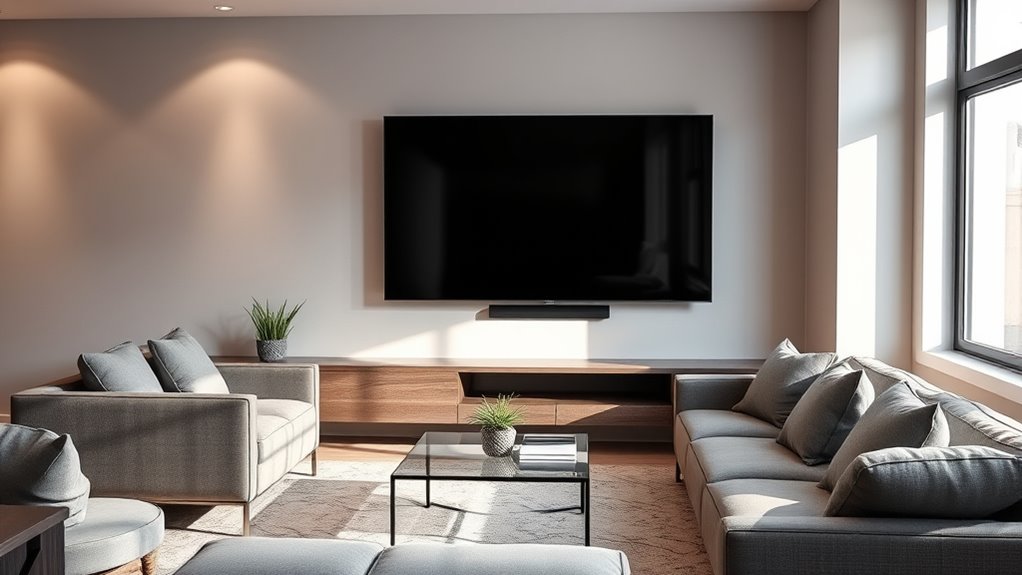
To find the perfect TV size for your room, understanding the ideal viewing distance is essential. Your viewing distance influences how well you can appreciate the screen resolution and whether you experience a comfortable viewing angle. Generally, sitting too close can make the image appear pixelated, while sitting too far might reduce immersion. For high-resolution TVs like 4K, you can sit closer without noticing pixelation, so a shorter distance enhances detail. Conversely, for lower resolutions, a greater distance helps maintain a clear picture. Consider your room’s size and seating arrangement to find a balance where you enjoy a broad viewing angle without straining your eyes or losing picture clarity. Additionally, understanding how screen size affects immersion can help you choose a TV that feels just right in your space. Proper calibration and contrast ratio considerations are also vital for achieving an optimal viewing experience. Optimizing your viewing experience by selecting the appropriate size ensures comfort and enjoyment during extended viewing sessions. Exploring industry standards can further assist in making an informed decision tailored to your specific room setup. Moreover, being aware of viewing angles can help prevent image distortion and glare issues, ensuring a better overall experience.
Measuring Your Space for a TV Setup
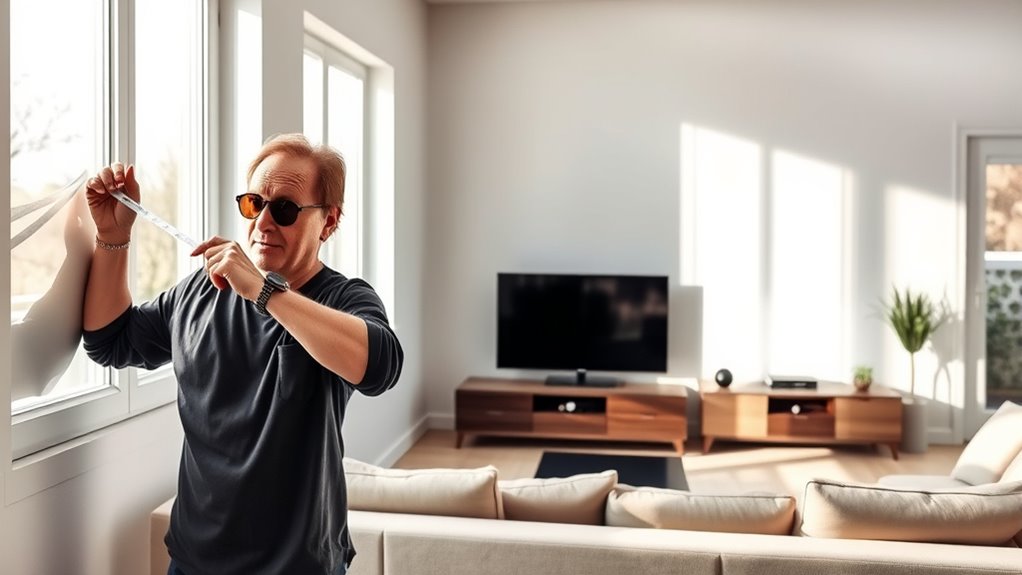
Before choosing the right TV size, you need to measure your space accurately. Start by determining the wall where you plan to wall mount your TV. Measure the width and height of the area to guarantee the TV fits comfortably without overcrowding the room. Consider the distance from your seating area to the wall, so you select a size that offers ideal viewing without straining your eyes. If you’re installing a sound system, account for space around the TV for speakers or soundbars, especially if wall mounting. Also, check the clearance for ventilation and accessibility. Precise measurements prevent selecting a TV that’s too big or small, helping you create a sleek setup that complements your room’s layout and enhances your viewing experience.
Common TV Sizes and Their Suitable Room Types
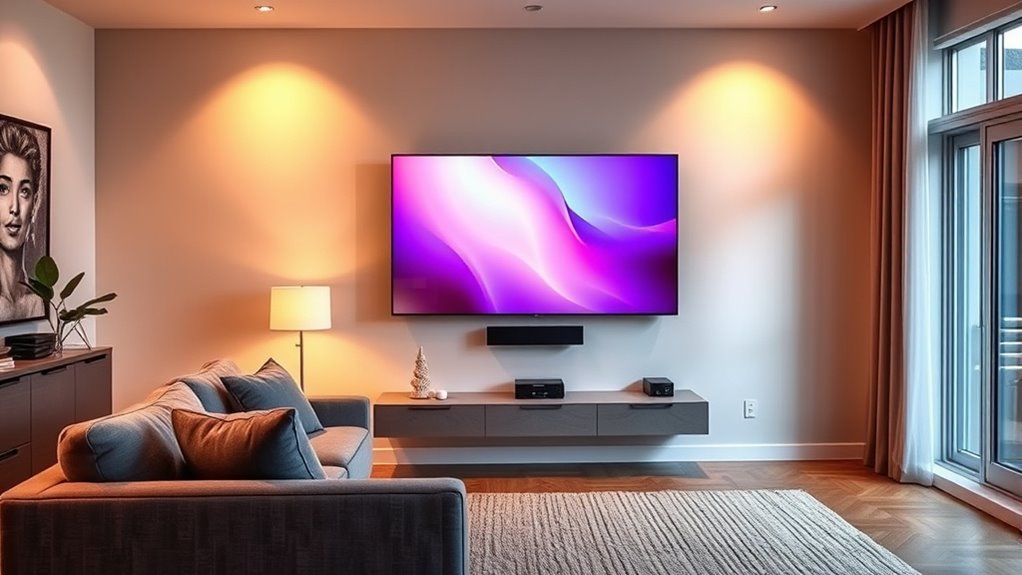
Choosing the right TV size depends largely on the room’s dimensions and your viewing preferences. Smaller rooms suit compact models, while larger spaces benefit from bigger screens. For wall mounting, consider how the TV fits comfortably without overwhelming the wall. Think about your sound system—larger TVs often pair better with surround sound or soundbars for immersive audio. Visualize these sizes in your space: 1. 32-43 inches – Ideal for bedrooms or small living rooms, fits comfortably on a wall. 2. 50-55 inches – Perfect for medium-sized rooms, balances size and space. 3. 65 inches – Great for larger living rooms, creates a cinematic experience. 4. 75 inches or more – Suitable for spacious rooms with dedicated media areas, maximizes immersion. Additionally, consider the room’s layout to ensure optimal placement and viewing comfort, especially if you plan to incorporate farmhouse-style decor elements around your entertainment area. Matching size with room type ensures suitable wall mounting and sound system setup, and selecting the appropriate TV size can significantly enhance your overall viewing experience. Incorporating personal preferences into your decision will help create a comfortable and enjoyable viewing environment.
Calculating the Optimal Screen Size for Your Room

Determining the ideal TV size for your room involves measuring both the space available and considering your viewing distance. If you plan to wall mount your TV, verify the wall can support the weight and size you choose. Measure the distance from where you’ll sit to the wall, as this impacts the optimal screen size—generally, a larger screen works better if you’re farther away. Keep in mind that a bigger TV may require a more powerful sound system to match the immersive experience, especially if you’re mounting high on the wall. Use these measurements to select a screen size that fits comfortably within your space while allowing for clear viewing angles and good sound integration. Additionally, understanding your room’s layout and potential audio-visual setup can enhance your overall viewing experience. Considering GMC tuning techniques for your vehicle could also inspire a tailored approach to your viewing environment, such as optimizing seating arrangements or sound placement. For optimal results, researching TV calibration methods can help fine-tune your display settings for the best picture quality, ensuring an enjoyable viewing experience tailored to your room’s layout. Furthermore, selecting a smart TV with the latest connectivity features can future-proof your entertainment setup and provide access to streaming services directly. Moreover, being aware of market trends can help you choose a TV model that remains relevant and offers the latest features for years to come.
Factors That Influence Your TV Size Choice
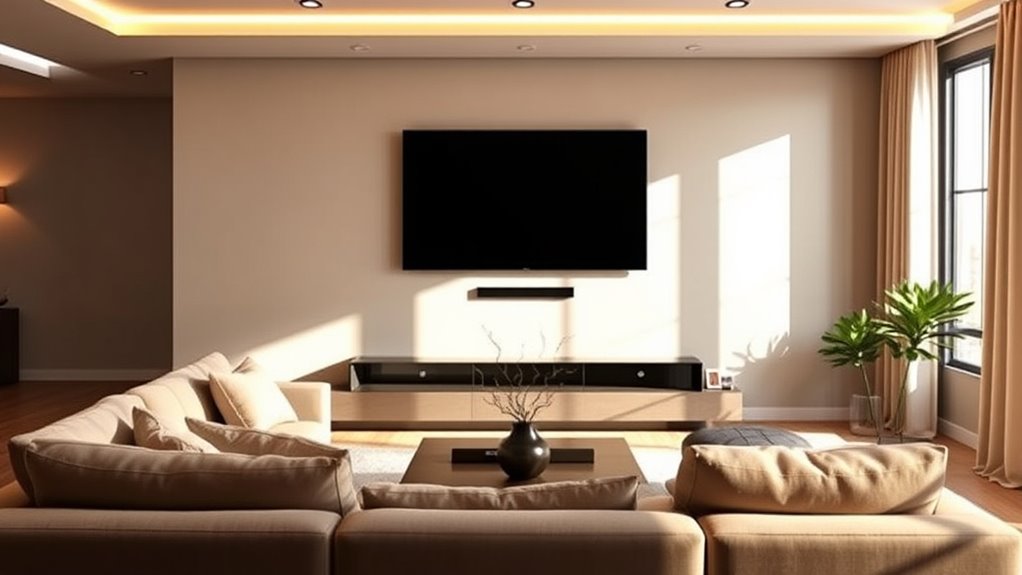
Several factors directly influence your TV size choice, and understanding them helps guarantee you select a screen that fits both your space and viewing preferences. First, consider your room size—larger rooms often need bigger screens for immersive viewing. Second, think about wall mounting; a TV that’s too large may overwhelm your wall, while a smaller one might look out of place. Third, your sound system plays a role—larger screens often pair with premium audio, but smaller TVs can work with compact soundbars. Fourth, viewing distance matters—sit too close to a giant screen and you might strain your eyes, while sitting too far makes details hard to see. Balancing these factors ensures your TV complements your room and enhances your viewing experience. Additionally, understanding room dimensions can help you choose a TV that matches your lifestyle and entertainment needs in your new environment. Moreover, considering the types of planters suitable for your space can also inspire a better overall interior setup. Finally, incorporating smart technology like voice control and streaming apps can further optimize your entertainment area and streamline device management.
Tips for Balancing Screen Size and Room Aesthetics

Finding the right balance between screen size and room aesthetics is key to creating a harmonious living space. Consider your wall color, as bold or dark hues can make a large TV feel overwhelming, while lighter shades help it blend seamlessly. Your furniture style also matters; sleek, modern pieces pair well with slim, minimalistic screens, while more traditional furniture can complement larger, classic designs. Keep proportions in mind—avoid oversized TVs that dominate the room or tiny screens that look out of place. Position your TV at eye level for comfortable viewing, and ensure it doesn’t clash with your decor. By thoughtfully coordinating wall color and furniture style, you’ll achieve a balanced look that enhances your room’s overall aesthetic.
Considering Resolution and Picture Quality

Since resolution and picture quality considerably impact your viewing experience, it’s essential to choose a TV that offers sharp, clear images. Higher screen resolution means more detail and better picture clarity, especially on larger screens. To visualize this, imagine:
- Crisp text and vibrant colors on a 4K TV that bring movies to life.
- The difference between blurry and sharp images during fast-paced sports.
- Rich, lifelike hues that make gaming immersive.
- Fine details in shadows and highlights, enhancing your overall picture quality.
- Understanding AI processing power in modern TVs helps explain how image enhancements are achieved.
Prioritizing high screen resolution guarantees you enjoy vivid, detailed images no matter the content. It helps you avoid pixelation and dull visuals, making your viewing experience more engaging and satisfying.
Final Steps to Select the Perfect TV Size
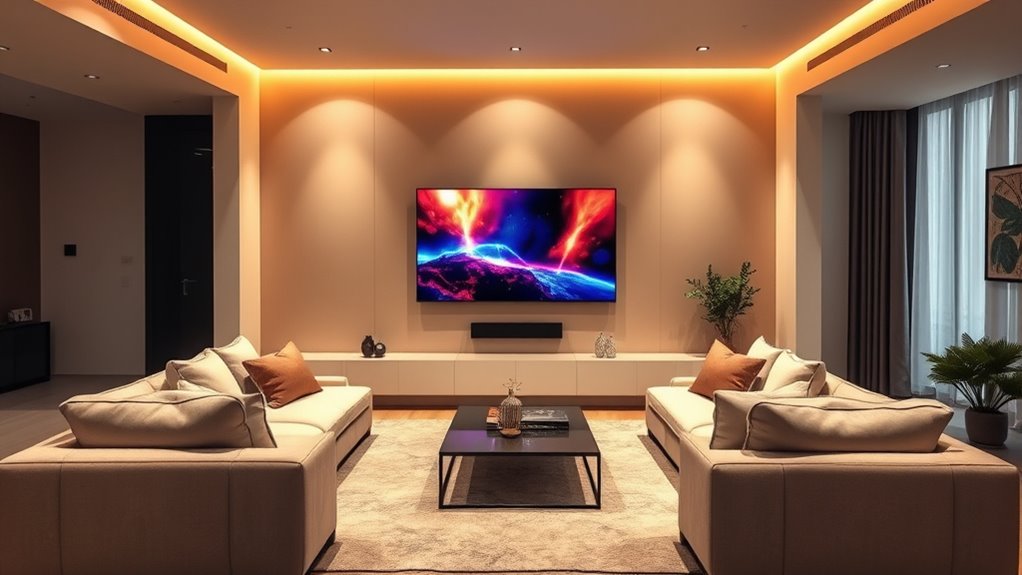
Now that you’ve considered resolution and picture quality, it’s time to take your measurements. Measure the distance from your seating area to where the TV will sit to guarantee the size feels comfortable. Properly assessing your room’s electrical setup can help prevent future installation issues and ensure your TV functions optimally. Additionally, consider your power outlet placement to ensure safe and reliable power supply for your new TV. Planning for electrical safety can help you avoid potential hazards and make sure your home’s wiring supports your entertainment needs. Also, evaluating your room’s lighting conditions can help you choose a screen size that minimizes glare and enhances viewing enjoyment.
Measure Viewing Distance
To determine the ideal TV size for your room, start by measuring the distance between your seating area and where the TV will be placed. This helps guarantee your viewing experience is comfortable and immersive. Consider these key points:
- Measure the distance in inches or feet for accuracy.
- Think about mounting options—wall mounting saves space and may influence size choices.
- Check wall space considerations to ensure the TV fits without crowding.
- Keep in mind that larger screens require more room for proper viewing angles and to avoid strain.
Match Room Layout
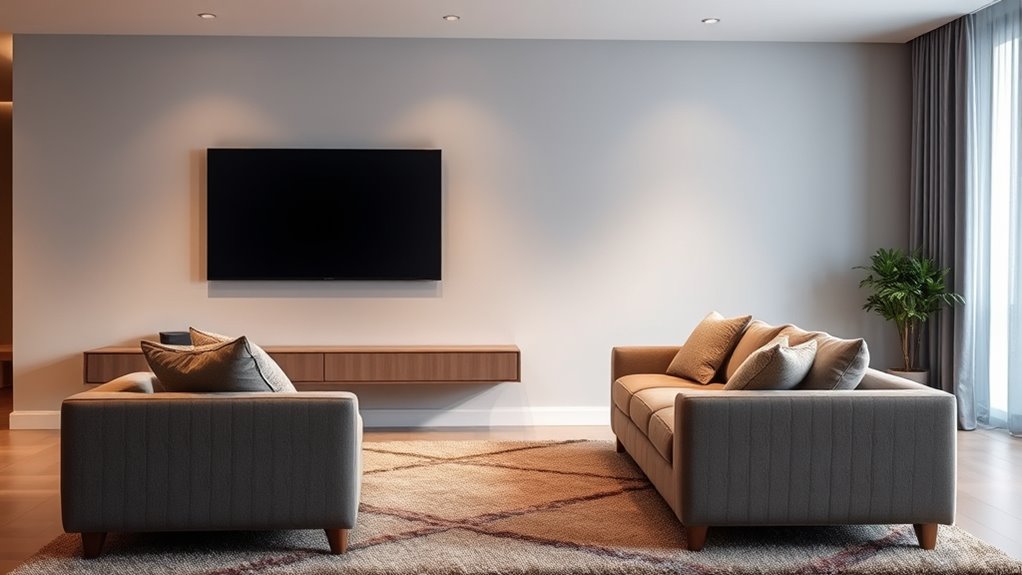
After measuring your viewing distance, the next step is to contemplate how your room’s layout influences your TV choice. Your wall color can affect how the screen appears, so consider opting for a TV size that complements or contrasts well with your walls. If your walls are dark, a larger screen can enhance the viewing experience, while lighter walls may require a slightly smaller size to avoid overwhelming the space. Furniture placement also matters—ensure your TV fits comfortably on or above your existing furniture without obstructing pathways or dominating the room. Think about sightlines and how your furniture is arranged; a TV that’s too big might clash with your layout, while a well-matched size enhances both aesthetics and comfort.
Frequently Asked Questions
How Does Room Lighting Affect TV Size Choice?
Room lighting greatly influences your TV size choice. In a room with high ambient light, a larger screen helps combat glare and enhances picture clarity. If you notice screen reflection, opt for a TV with anti-reflective coating or a smaller size to minimize glare. Bright rooms benefit from bigger screens, but make sure the viewing distance matches to avoid strain. Adjusting your TV size based on ambient light provides a better viewing experience.
Is a Larger TV Always Better for Small Rooms?
While a larger TV might seem tempting, it’s not always better for small rooms. You want a size that fits comfortably, avoiding overwhelming your space. Wall mounting helps save room, but be sure the TV’s size doesn’t compromise sound quality or viewing comfort. Remember, a perfectly proportioned TV enhances your experience, making every moment more enjoyable without crowding your cozy space. Bigger isn’t always better; it’s about balance!
What Are the Best TV Sizes for Gaming Setups?
For gaming setups, opt for a TV between 55 to 65 inches with high screen resolution like 4K for sharp visuals. A size in this range enhances immersion without overwhelming your space. Prioritize models with good sound quality, so you don’t depend solely on external speakers. This combo ensures an engaging gaming experience, whether you’re into competitive play or immersive storytelling.
How Do Viewing Angles Impact TV Size Selection?
Think of viewing angles like a lighthouse guiding ships—they show you where to see best. When selecting your TV size, consider your room layout because wider viewing angles guarantee everyone gets a clear picture without distortion. If your room has seating spread out, opt for a larger screen or an OLED to maintain picture quality from different angles. This ensures an immersive experience, no matter where you sit.
Should I Prioritize TV Size or Picture Quality?
You should prioritize picture quality over TV size, especially if resolution considerations matter to you. A larger screen with low resolution can be disappointing, so invest in a TV that offers sharp clarity even if it’s smaller. Keep your budget constraints in mind, but don’t compromise on resolution. Ultimately, a smaller, high-quality TV provides a better viewing experience than a larger, blurry one.
Conclusion
Choosing the right TV size is like planting a tree that fits perfectly in your garden—you want it to grow tall and strong without overwhelming the space. Measure, consider your viewing habits, and balance aesthetics with quality. When you find that sweet spot, your TV becomes more than a screen; it transforms your room into a cozy, immersive sanctuary. Trust your instincts, and you’ll create a perfect harmony of size and style.