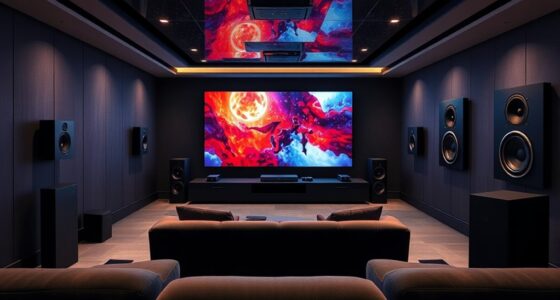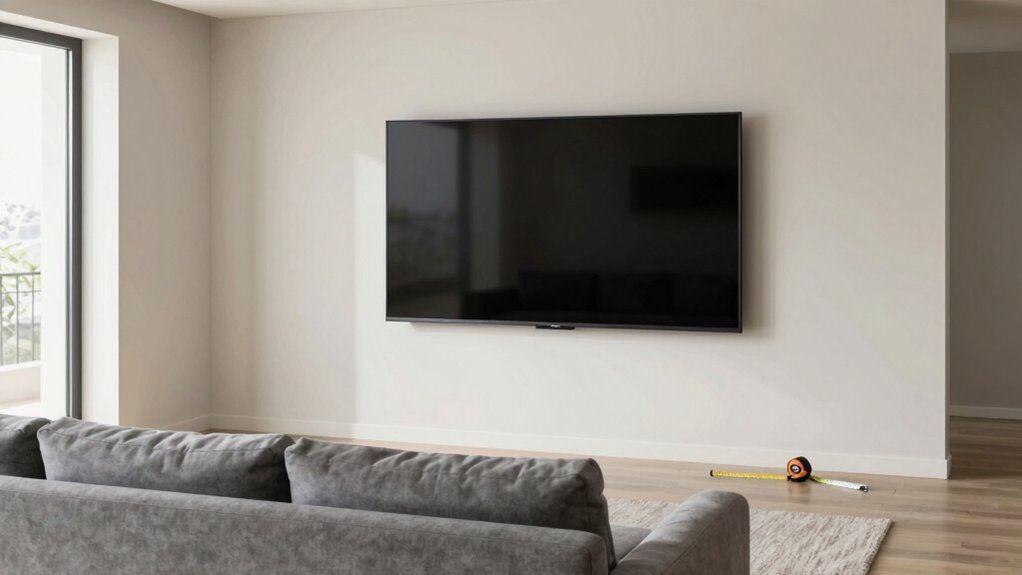

To choose the right TV size without guessing, start by measuring your room’s space and considering your seating distance, ideally 1.5 to 2.5 times the screen diagonal. Make certain the TV fits comfortably without overwhelming the room or sacrificing picture quality. Keep in mind resolution, room lighting, and viewing angles for a balanced experience. Want to make a smart decision? Keep exploring for more tips to find your perfect fit.
Key Takeaways
- Measure your available space to ensure the TV fits comfortably without overcrowding or blocking pathways.
- Calculate ideal viewing distance as 1.5 to 2.5 times the TV’s diagonal size for optimal comfort.
- Match TV size with room size, avoiding screens that are too large or small for the space.
- Consider viewing angles and display technology to maintain image quality from multiple seating positions.
- Balance resolution and size to prevent pixelation and ensure immersive viewing without overwhelming the room.
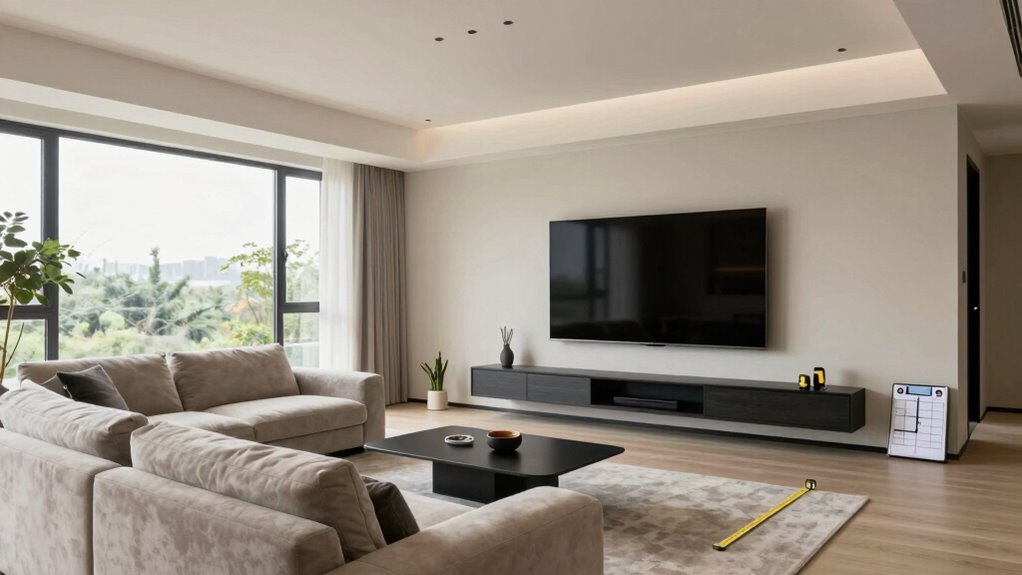
Choosing the right TV size is essential to creating an immersive viewing experience without overwhelming your space. To do that effectively, you need to take into account factors like screen resolution and viewing angle. Your screen resolution determines how clear and detailed the picture appears, especially on larger screens. Higher resolutions, such as 4K or 8K, let you enjoy crisp images even on bigger TVs, so you won’t have to worry about pixelation or loss of detail. When selecting a size, think about how close you’ll be sitting to the screen. If you’re sitting a bit farther away, a larger TV with high resolution will give you a sharper, more engaging picture without making individual pixels noticeable.
Choosing the right TV size balances screen resolution, viewing distance, and room space for an immersive experience.
Your viewing angle is equally important. It refers to the angle at which you can comfortably see the screen without experiencing distortion or color shifting. Most modern TVs have wide viewing angles, but some models still perform better than others, especially LCD panels. If your seating arrangement involves multiple viewers or you often watch TV from different spots in the room, you want a TV with a broad viewing angle to ensure everyone gets a good picture. Otherwise, you might find yourself turning your head or adjusting your position to see the display clearly, which can ruin the experience. Additionally, understanding the screen resolution of your TV can help you choose a size that maintains picture quality from various distances. Considering contrast ratio can also enhance your viewing experience, especially in darker rooms, by providing deeper blacks and more vibrant images. Being aware of room lighting conditions can further help you select a TV that performs well in your specific environment. Moreover, knowing the type of display technology can influence your choice, as different panel types offer varying levels of color accuracy and motion handling. A good understanding of glassware & storage options can also contribute to creating an aesthetically pleasing entertainment space that complements your new TV.
When choosing the size, measure your space carefully, but don’t forget to factor in the viewing distance. A good rule of thumb is that your sitting distance should be about 1.5 to 2.5 times the diagonal size of your TV. For example, if you’re sitting about 8 feet (96 inches) away, a TV around 55 to 65 inches will provide an ideal viewing experience. Larger screens can be engaging, but if you place them too close, the picture quality might suffer, especially if the resolution isn’t high enough. Conversely, a smaller TV might not fill your field of view, making the experience less immersive.
Finally, keep in mind that a bigger TV isn’t always better if your room isn’t spacious enough. You want a size that balances screen immersion with comfort and practicality. By considering your resolution, viewing angle, and seating distance, you’ll confidently select a TV that enhances your entertainment without feeling out of place or causing discomfort. Remember, the goal is to find that perfect size that makes your viewing enjoyable and effortless, without any guesswork involved.

INSIGNIA 55-inch Class F50 Series LED 4K UHD Smart Fire TV with Alexa Voice Remote (NS-55F501NA26)
4k Ultra HD (2160p resolution): Enjoy breathtaking HDR10 4K movies and TV shows at 4 times the resolution…
As an affiliate, we earn on qualifying purchases.
As an affiliate, we earn on qualifying purchases.
Frequently Asked Questions
What Is the Ideal Viewing Distance for Different TV Sizes?
For ideal viewing comfort, aim for a distance that’s about 1.5 to 2.5 times your TV’s screen size. For example, a 55-inch TV should be watched from 6.9 to 11.5 feet away. This guarantees you enjoy the benefits of higher screen resolution without strain, providing immersive visuals. Adjust your distance based on your room and preferences, always prioritizing comfort and clarity for the best viewing experience.
How Does Room Lighting Affect TV Size Choices?
You might think room lighting doesn’t matter, but ambient glare from natural light can make a small TV seem even tinier—forcing you to choose a bigger screen. Bright rooms with lots of natural light require larger TVs or darker curtains to prevent glare, so you actually see the picture clearly. Ironically, the more light in your room, the more you’ll need to take into account your TV size to enjoy your favorite shows.
Should I Prioritize Resolution or Screen Size in Small Rooms?
In small rooms, prioritize screen resolution over size to guarantee clear images and better viewing comfort. A higher resolution, like 4K, allows you to enjoy sharp details even on a smaller screen. While a larger screen might seem appealing, it can strain your eyes if resolution isn’t high enough. Focus on a well-sized, high-resolution TV for a balanced viewing experience that’s comfortable and visually satisfying.
What Are Common Mistakes When Selecting a TV Size?
One common mistake is overlooking screen resolution, which affects picture clarity, especially on larger TVs. People often pick a size based solely on room space, ignoring eye comfort—leading to strain. A mistake many make is choosing a TV too big or too small, causing discomfort or missed details. Remember, balancing resolution and size guarantees sharp images and comfortable viewing, avoiding these pitfalls and enhancing your entertainment experience.
How Can I Measure My Space Accurately Before Buying?
To measure your space accurately, start by measuring the wall area where you’ll mount the TV, including height and width. Consider your sound system setup, making sure there’s enough room for speakers or soundbars. Use a tape measure for precise dimensions, and leave space for comfortable viewing distance. Double-check measurements before shopping, and think about wall mounting options to guarantee the TV fits perfectly without crowding your sound system or furniture.

Mounting Dream TV Wall Mount for 32-65 Inch Television,Mount with Swivel and Tilt, Full Motion Bracket with Articulating Dual Arms, Fits 16inch Studs, Max VESA 400X400 mm, 99lbs, MD2380
Universal TV Mount: TV wall mount fits most 32-65" TVs up to 99 LBS, with max VESA of…
As an affiliate, we earn on qualifying purchases.
As an affiliate, we earn on qualifying purchases.
Conclusion
Choosing the right TV size is like fitting a puzzle piece—you want it to fill the space perfectly without overwhelming it. I once watched a friend struggle with a massive screen, only to realize it dominated his small room. Remember, the right size enhances your viewing experience, making movies feel like a private cinema. Trust your space, measure carefully, and pick a size that feels just right—your perfect viewing adventure awaits!
INSIGNIA 55-inch Class F50 Series LED 4K UHD Smart Fire TV with Alexa Voice Remote (NS-55F501NA26)
4k Ultra HD (2160p resolution): Enjoy breathtaking HDR10 4K movies and TV shows at 4 times the resolution…
As an affiliate, we earn on qualifying purchases.
As an affiliate, we earn on qualifying purchases.

Rfiver Table Top TV Stand with Height Adjustable TV Legs, TV Stands Base with Cable Management for Most 37 to 86 Inch Flat or Curved TVs, Steel TV Feet Holds up to 150 lbs, Max VESA 800x600mm, Black
STABILITY IS SAFETY – HOLDS UP TO 150 LBS: Our professional team designed this double T-shaped TV stand…
As an affiliate, we earn on qualifying purchases.
As an affiliate, we earn on qualifying purchases.