
Start by soundproofing your space with acoustic panels, sealing gaps, and adding thick curtains for better sound quality. Choose comfortable seating and position it appropriately for the screen size. Begin with quality basics like a projector or large TV and expand your audio system over time. Plan your wiring carefully and incorporate modular technology for future upgrades. Focus on ambiance with lighting and decor. Keep evolving your theater step-by-step, and you’ll create a high-quality space—more tips await as you continue your setup journey.
Get ready for Prime Big Deal Days — try Prime free
Exclusive member deals on October 6–7, plus fast free delivery. Cancel anytime.
As an affiliate, we earn on qualifying purchases.
Key Takeaways
- Start with essential equipment like a quality projector or large-screen TV and basic seating, then upgrade progressively.
- Implement soundproofing techniques initially, then enhance with a surround sound system over time.
- Incorporate modular components and plan cable routing for easy future upgrades.
- Add lighting and decor in stages to gradually create an immersive ambiance.
- Continuously research emerging tech trends and eco-friendly options to inform future enhancements.
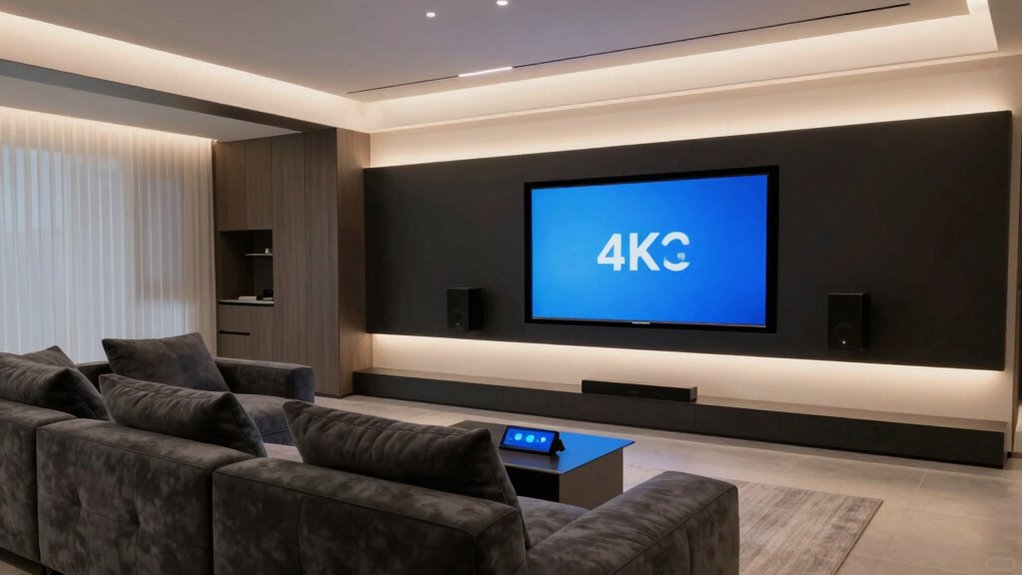
Creating a home theater doesn’t have to happen all at once; instead, you can build it in smart, manageable stages. Starting small allows you to enjoy your space sooner while planning for future upgrades. One of the first things to focus on is establishing the right soundproofing techniques. You want your theater to be immersive without disturbing the rest of your home. To do this, consider adding acoustic panels or foam to absorb sound waves, sealing gaps around doors and windows, and using thick curtains or mass-loaded vinyl barriers. These steps considerably reduce noise leakage and improve sound quality inside the room, setting a solid foundation for your home theater experience.
Once you’ve tackled soundproofing, think about your seating arrangements. Comfort and layout are key to creating an inviting space where everyone can enjoy the show. You don’t need to buy the most expensive recliners immediately; start with a few comfortable chairs or a sectional that fits your space. Position your seats at an ideal distance from the screen—about 1.5 to 2.5 times the diagonal size of your display—to ensure a good viewing angle and immersion. As your budget allows, you can upgrade to plush recliners or tiered seating to maximize comfort and visibility for everyone. Remember, the goal is to make the room cozy and functional without rushing into the most expensive options upfront.
Start with comfortable chairs or a sectional, and position seats 1.5 to 2.5 times the screen’s diagonal for optimal viewing.
As your theater takes shape, gradually add audio-visual equipment. Begin with a quality projector or large-screen TV, then enhance the experience with a surround sound system. Keep in mind that wiring can be a challenge, so plan your cable routes carefully to keep the space tidy and safe. When upgrading, prioritize easy-to-install components first, like a soundbar or streaming device, before moving onto more complex systems. This staged approach lets you enjoy the current setup while planning for future enhancements, such as better speakers or lighting controls. Incorporating emerging trends in digital publishing can also help you stay informed about new technology options and innovative features for your home theater. Additionally, understanding soundproofing techniques can further optimize your room for the best audio experience. To make the upgrade process smoother, consider researching modular systems that allow for flexible expansion over time. Staying updated on sustainable design practices can also help you make eco-friendly choices for your home theater setup. Furthermore, exploring nutritional insights from apple juice can be surprisingly relevant, as staying well-hydrated and healthy can keep you energized during long movie nights.
Finally, as your home theater evolves, incorporate lighting and decor that complement the space. Dimmer switches, blackout curtains, and themed accents can transform your room into a true escape. By building your theater in stages—starting with soundproofing and seating, then progressing to equipment and ambiance—you get to enjoy each phase along the way without feeling overwhelmed. This method ensures a personalized, high-quality space that grows with your needs and budget, making the entire process both enjoyable and sustainable.
As an affiliate, we earn on qualifying purchases.
Frequently Asked Questions
What Is the Ideal Room Size for a Home Theater?
The ideal room size for a home theater is around 12 by 20 feet, providing enough space for comfortable seating, best acoustic treatments, and effective lighting design. You want a room that’s not too small to cause sound reflections and not too large, which can make sound management difficult. Proper acoustic treatments and thoughtful lighting design will enhance your viewing experience, regardless of your room’s exact dimensions.
How Much Does a Basic Home Theater Setup Cost?
A basic home theater setup costs around $2,500 to $5,000, and did you know that 63% of home theater owners upgrade their systems within three years? You’ll want to prioritize lighting control and seating comfort for an immersive experience. Starting with a decent projector or TV, sound system, and comfy seating can keep costs manageable, allowing you to upgrade components gradually without breaking the bank.
What Are the Best Brands for Home Theater Equipment?
You should consider brands like Denon, Sony, and Klipsch for reliable home theater equipment. They offer quality speakers that are easy to calibrate, ensuring ideal sound. Look for systems with integrated lighting control options to enhance your viewing experience. These brands also provide user-friendly interfaces, making speaker calibration simple, so you can enjoy immersive audio without hassle. Prioritize brands known for durability and excellent customer support.
How Can I Soundproof My Home Theater Room?
You can soundproof your home theater room by adding acoustic treatments like foam panels or bass traps to reduce sound reflection. Installing soundproof doors with tight seals helps prevent noise leakage. Consider sealing gaps around windows and vents with weatherstripping or acoustic caulk. These steps create a quieter environment, enhancing your viewing experience while keeping noise from bothering others outside the room.
What Maintenance Is Required for Home Theater Systems?
Imagine your home theater humming smoothly, ready for your next movie night. You need to regularly check calibration techniques to keep the picture and sound crisp, ensuring an immersive experience. Keep a cleaning schedule for screens, speakers, and remote controls to prevent dust buildup and maintain clarity. Also, update firmware when prompted, and inspect cables for wear. Consistent maintenance guarantees top performance and longevity of your home theater system.
As an affiliate, we earn on qualifying purchases.
Conclusion
As you gracefully navigate the journey of upgrading your home theater, each stage brings a touch of elegance and subtle sophistication. Embrace the gradual enhancements, allowing your space to evolve seamlessly into a refined sanctuary for entertainment. With thoughtful planning and patience, you’ll find yourself immersed in a world of cinematic delight, where every detail whispers comfort and style. Ultimately, your home theater becomes a quietly impressive retreat, reflecting your discerning taste and appreciation for understated luxury.
As an affiliate, we earn on qualifying purchases.
As an affiliate, we earn on qualifying purchases.
Fall Picks
fall essentials
As an affiliate, we earn on qualifying purchases.