Upgrading from 4K to 8K TV can give you sharper images and better future-proofing, but it’s not for everyone just yet. 8K content is still limited, and prices are higher, so you might not notice much difference on smaller screens or from a typical viewing distance. If you want to explore whether the tech is worth your investment, there’s more to contemplate—details that can help you make an informed choice.
Key Takeaways
- 8K TVs offer sharper images with four times the resolution of 4K, but content availability is still limited.
- The high cost of 8K models may outweigh the benefits for most viewers currently.
- Advanced processing and AI upscaling enhance 8K visuals, but real-world improvements depend on content quality.
- Optimal viewing requires larger screens and closer distances to fully appreciate 8K detail.
- Widespread adoption and future-proofing benefits are promising but not yet fully realized.
As an affiliate, we earn on qualifying purchases.
Understanding the Differences in Resolution and Picture Quality

While both 4K and 8K TVs offer impressive picture quality, the main difference lies in their resolution, which directly impacts clarity and detail. 4K TVs have a resolution of 3,840 x 2,160 pixels, delivering sharp, vibrant images suitable for most viewing situations. In contrast, 8K TVs boast a resolution of 7,680 x 4,320 pixels, providing four times the pixel count of 4K. This resolution difference results in finer details and a crisper picture, especially on larger screens. Additionally, the resolution is only one factor; aspects like color accuracy, contrast ratio, and processing technology also significantly influence overall image quality. As technology advances, content with 8K resolution is becoming more accessible, making the potential benefits of upgrading more tangible for consumers. Moreover, screen size plays a crucial role in perceiving these resolution differences effectively. For many viewers, the availability of 8K content remains a limiting factor for fully enjoying the higher resolution.
As an affiliate, we earn on qualifying purchases.
Content Availability and Compatibility for 8K TVs
Although 8K TVs offer stunning resolution, their content availability is still limited, which can affect your viewing experience. You might encounter content limitations because most streaming services, broadcasters, and content creators haven’t fully adopted 8K yet. Compatibility issues can also arise, especially with existing devices and media players not supporting 8K playback. This means you may need additional hardware, like 8K-compatible sources or upscaling technology, to enjoy the full potential of your TV. While some 8K content is emerging, it remains scarce compared to 4K, making it challenging to access a wide variety of movies, shows, or live broadcasts. Until content providers expand their 8K offerings, you’ll find your options somewhat limited, which is an important consideration before upgrading.
As an affiliate, we earn on qualifying purchases.
Cost Comparison and Budget Considerations
8K TVs typically cost considerably more than 4K models, impacting your overall budget. You need to contemplate whether the extra investment aligns with your viewing habits and long-term plans. Understanding these costs helps you decide if an 8K TV is a feasible upgrade or better to save for a 4K option. Additionally, consider the effectiveness of eye patches in maintaining eye health, which can be an important aspect of overall well-being when investing in new tech devices that may cause eye strain.
Price Difference Overview
Generally, 8K TVs come with a considerably higher price tag compared to 4K models, making them a major consideration for budget-conscious buyers. The cost difference often reflects factors like brand reputation, as premium brands tend to price their 8K models higher due to advanced features and build quality. While 8K TVs may seem expensive upfront, you should also consider energy efficiency; newer models often incorporate technology that reduces power consumption, which can save you money in the long run. Additionally, understanding personality traits such as consumer preferences and decision-making styles can help you assess whether investing in an 8K TV aligns with your priorities. However, the initial investment remains significant, and not all brands offer the same value for price. If budget constraints are a concern, weighing the premium for 8K against its benefits is essential before making your decision.
Budget Impact Analysis
The higher price of 8K TVs directly impacts your budget, especially when comparing them to more affordable 4K options. Beyond the initial cost, consider potential expenses like upgrading your audio quality setup or investing in smart features to fully enjoy 8K content. These additional costs can add up quickly, making 8K a significant financial commitment. You might also need to factor in future expenses for compatible devices or accessories. Keep in mind that premium models often include advanced smart features, which can justify the higher price for some users. However, if budget constraints are tight, it’s worth weighing whether the enhanced audio quality and sharper visuals of 8K are worth the extra investment at this stage. Additionally, evaluating cost‑planning tools can help determine if the upgrade fits within your overall home entertainment budget.
Affordability for Buyers
While 8K TVs offer stunning visuals, their higher prices can be a significant hurdle for many buyers. Price trends show that 8K models remain more expensive than 4K TVs, partly due to limited manufacturing scale and advanced technology costs. Consumer preferences tend to favor affordability and value, making 4K models more attractive for most budgets. As 8K technology matures, prices are gradually decreasing, but they still haven’t reached a point where they’re widely accessible to the average buyer. If you’re budget-conscious, it’s essential to weigh whether the visual improvements justify the higher investment. For now, many consumers prioritize cost-effectiveness, which keeps 4K TVs as the more practical choice, especially when considering long-term value and current market options. Additionally, understanding aura colors can help consumers make more informed decisions about their overall entertainment and wellness environments. As the technology affordability improves, more buyers may consider upgrading to 8K in the future, but for now, 4K remains the dominant choice for most consumers seeking value. Recognizing the market demand for 8K displays can also influence future pricing and availability as consumer interest grows. Moreover, considering compact living spaces, where screen size and placement are crucial, can impact the decision between 4K and 8K models. A better understanding of display resolution can also help consumers evaluate the true benefits of higher pixel counts in different viewing scenarios.
As an affiliate, we earn on qualifying purchases.
Technological Advancements and Features in 8K Models
With 8K models, you’ll notice sharper image clarity that brings your content to life. They also feature advanced processing technologies that enhance picture quality and reduce noise. These innovations make 8K TVs a compelling choice for viewers seeking top-tier visual performance. Additionally, many 8K TVs incorporate improved resolution that further elevates viewing experiences by providing even more detailed images. Moreover, the integration of AI upscaling technology helps optimize lower-resolution content to better match the 8K display capabilities.
Enhanced Image Clarity
Thanks to cutting-edge technological advancements, 8K TVs deliver markedly enhanced image clarity compared to earlier models. You’ll notice improved visual realism, making scenes more lifelike, and exceptional color accuracy that brings content to life. These improvements mean sharper details and richer hues, elevating your viewing experience. Key features include:
- Higher pixel density, resulting in finer detail and sharper images
- Advanced panel technology that enhances contrast and depth
- Better color reproduction, ensuring true-to-life hues across the screen
- Additionally, cultural narratives are more vividly portrayed through these technological enhancements, enriching the storytelling experience. This leap in display technology also aligns with ongoing display resolution advancements, ensuring your TV stays current with industry standards. Moreover, image processing algorithms contribute significantly to the overall picture quality, refining motion and reducing artifacts for a seamless viewing experience. The integration of upscaling technology further enhances lower-resolution content, making it appear sharper and more detailed on 8K screens. Furthermore, the incorporation of creative practice principles can help viewers better appreciate and analyze the visual details in high-resolution content.
As a result, 8K models offer a clearer, more immersive picture that captures every detail with precision. This technological leap makes your favorite movies and shows more vibrant and realistic, creating a truly cinematic feel at home.
Advanced Processing Technologies
Building on the impressive visual improvements of 8K TVs, advanced processing technologies play a vital role in maximizing their potential. These features enhance your viewing experience by improving image clarity, optimizing motion, and refining color accuracy. For gaming, they reduce lag and enhance responsiveness, making gameplay smoother. Sound technology also benefits, delivering immersive audio that matches the stunning visuals. Many 8K models include AI upscaling, which turns lower-resolution content into near-8K quality, and HDR enhancements for richer contrast. These advancements guarantee you get the most out of your TV, whether for gaming, streaming, or movies. AI security advancements in processing technology also contribute to improved device and network protection, ensuring your smart devices are safeguarded against cyber threats. Additionally, processing power is crucial in managing these complex features seamlessly, providing a smooth and enjoyable viewing experience.
Viewing Distance and Screen Size: Does It Matter?

Choosing the right viewing distance and screen size is essential to fully enjoy your 4K or 8K TV. Your viewing distance impacts how sharp the image appears, especially with higher resolutions. A closer distance can reveal more detail, making 8K more appealing for large screens. Conversely, sitting too far can diminish the benefits of ultra-high resolution. When selecting screen size, consider the space available and your typical viewing habits. Larger screens provide an immersive experience but require appropriate viewing distances to avoid pixelation or blurriness. Keep these tips in mind:
Choosing the right viewing distance and screen size ensures optimal clarity and an immersive experience.
- For ideal clarity, sit about 1.5 to 2.5 times the screen diagonal away
- Larger screens benefit from closer viewing distances
- Smaller screens can be placed farther without losing detail
Proper pairing of viewing distance and screen size enhances your viewing experience considerably.
Future-Proofing: Will 8K Become the Standard?
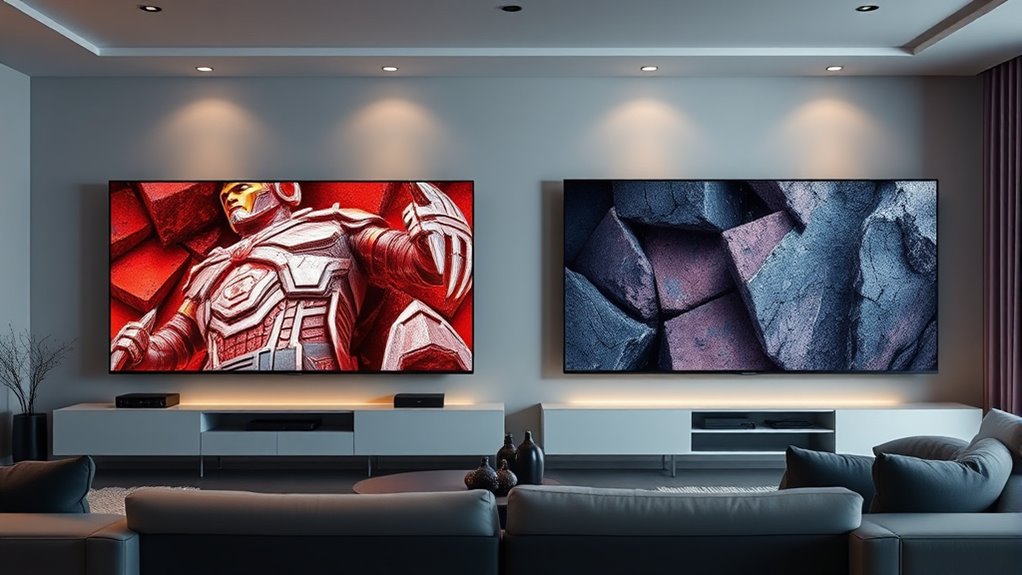
As 8K TVs become more available, many wonder if they will soon replace 4K as the standard. The resolution comparison shows 8K offers four times the pixels of 4K, promising sharper images and future-proofing your setup. However, the technology evolution is still in progress, with content availability and broadcasting standards lagging behind. While 8K may seem like the logical next step, it’s not yet clear if it will become the norm anytime soon. Manufacturers are investing heavily, hinting at a shift, but widespread adoption depends on improvements in streaming infrastructure and content creation. For now, 8K TV’s potential for future-proofing is promising, but it’s not guaranteed to become the standard in the immediate future.
Practical Benefits of Upgrading From 4K to 8K
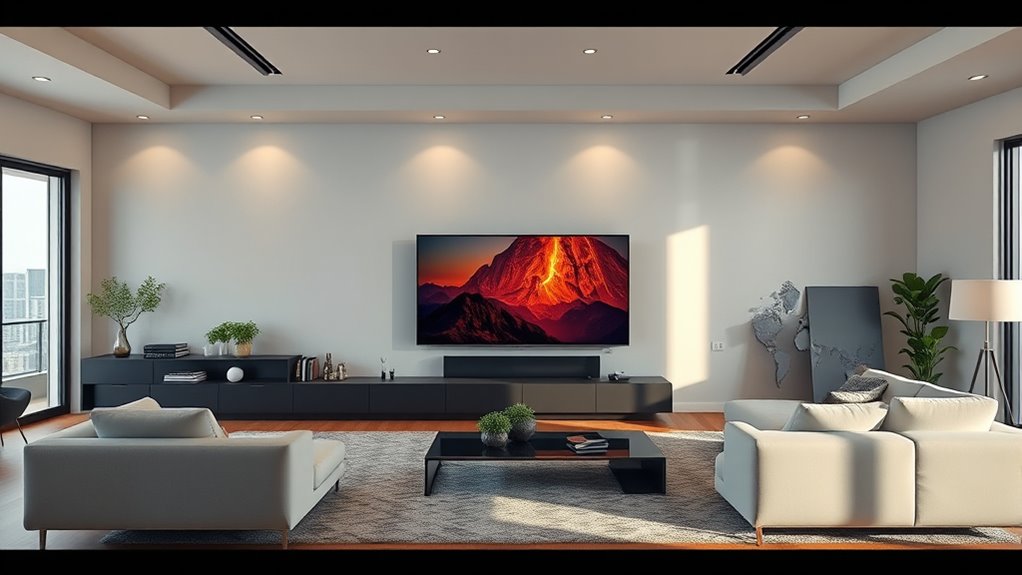
Upgrading from 4K to 8K can substantially enhance your viewing experience by delivering sharper and more detailed images, especially on larger screens. The increased resolution means you’ll notice improved color accuracy, making visuals more vibrant and true to life. Additionally, many 8K TVs come with advanced sound quality features, providing richer and more immersive audio to match the picture. This upgrade also benefits content creators and gamers who need finer detail and clarity, reducing pixelation and blurriness. Keep in mind, though, that the real-world benefits depend on the quality of your content and viewing conditions. An 8K TV offers a more immersive experience overall, especially if you’re upgrading from a 4K model or investing in a larger display.
Making an Informed Decision: Is Now the Right Time to Upgrade?

Deciding whether now is the right time to upgrade your TV depends on several factors, including your current setup, viewing habits, and budget. If you prioritize sound quality, upgrading can enhance your overall experience, especially with newer models offering better built-in speakers and audio technology. Energy efficiency is another critical consideration; newer 8K TVs tend to consume less power than older models, saving you money in the long run. However, if your current TV still meets your needs, and you’re not concerned with ultra-high resolutions, waiting might be wiser. Think about whether you’re ready to invest in a significant upgrade now or if delaying until 8K content becomes more accessible makes more sense. Making an informed decision ensures you get the best value for your investment.
Frequently Asked Questions
How Does 8K Impact Gaming Performance and Latency?
Upgrading to 8K can affect gaming performance and latency, but the impact mainly depends on your hardware. You may notice higher gaming latency if your GPU struggles to render at 8K resolution smoothly, leading to potential input lag. The performance impact can be significant, as rendering at 8K demands more from your system, possibly reducing frame rates. To minimize gaming latency, guarantee your setup is optimized for high-resolution gaming.
Are There Environmental Benefits to Choosing 8K Over 4K TVS?
Switching to an 8K TV might seem less eco-friendly due to higher energy consumption and manufacturing impact. However, newer models often use energy-efficient technology, reducing power use over time. If you choose an eco-conscious brand, you’re supporting sustainable manufacturing. While 8K displays may consume more energy initially, their longer lifespan and potential for fewer replacements can balance out environmental concerns, making them a more sustainable choice in the long run.
What Are the Warranty Differences Between 4K and 8K Models?
You’ll find that warranty coverage for 8K TVs is often similar to 4K models, typically offering one to two years of service duration. Some brands may include extended warranties or additional service plans for 8K models, but it’s not a universal rule. Check the manufacturer’s warranty details carefully, as coverage specifics can vary. Overall, you get comparable warranty protection, but always verify what’s included before making your choice.
How Do 8K TVS Perform in Bright or Challenging Lighting Conditions?
In bright or challenging lighting conditions, 8K TVs handle screen glare better than older models, thanks to improved anti-reflective coatings. While their higher resolution enhances color accuracy, glare can still be an issue if you sit directly opposite windows or strong light sources. To get the best viewing experience, position your TV away from direct sunlight and consider using curtains or blinds. Overall, 8K TVs perform well in varying lighting, but some glare may still occur.
Will Streaming Services Soon Support 8K Content Universally?
Streaming services are gradually improving their streaming compatibility with 8K content, but widespread support isn’t here yet. Currently, content availability remains limited, and most platforms primarily focus on 4K. If you’re keen to access 8K videos, you’ll need to check individual streaming service updates regularly. Upgrading now might not give you instant 8K content, but future updates could expand streaming compatibility, making it worth considering if you want the latest tech.
Conclusion
Deciding whether to upgrade now is like chasing a mirage—you might see a future where 8K is the norm, but right now, the landscape is still evolving. If you crave the latest tech and have the budget, jumping in could be exciting. But if content and affordability matter more, staying put might make more sense. Remember, the future’s promise is tempting, but patience may turn out to be your best investment.