If you want control over your coffee and enjoy the craft, a manual espresso machine may suit you better, though it requires learning and more maintenance. If you prefer quick, consistent results with less effort, a super automatic model is ideal, though it usually costs more and needs less skill. Think about your lifestyle, budget, and how involved you want to be in the brewing process—there’s more to take into account that can help you choose the best fit.

Get the latest gadgets delivered free — and shop member deals
- Fast, free delivery on millions of items
- Access to Prime Big Deal Days deals on October 6–7
- Prime Video, Amazon Music and more included
Key Takeaways
- Consider your skill level: manual machines suit enthusiasts; super automatics are ideal for quick, effortless brewing.
- Evaluate your budget: manual machines are generally cheaper upfront; super automatics cost more but offer convenience.
- Assess maintenance willingness: manual machines require regular cleaning and parts checks; super automatics are easier to clean but may have costly repairs.
- Determine desired control: manual machines provide customization and mastery; super automatics ensure consistent results with minimal effort.
- Match your kitchen space and lifestyle: manual machines fit craft-focused users with space for hands-on brewing; super automatics suit busy lifestyles.
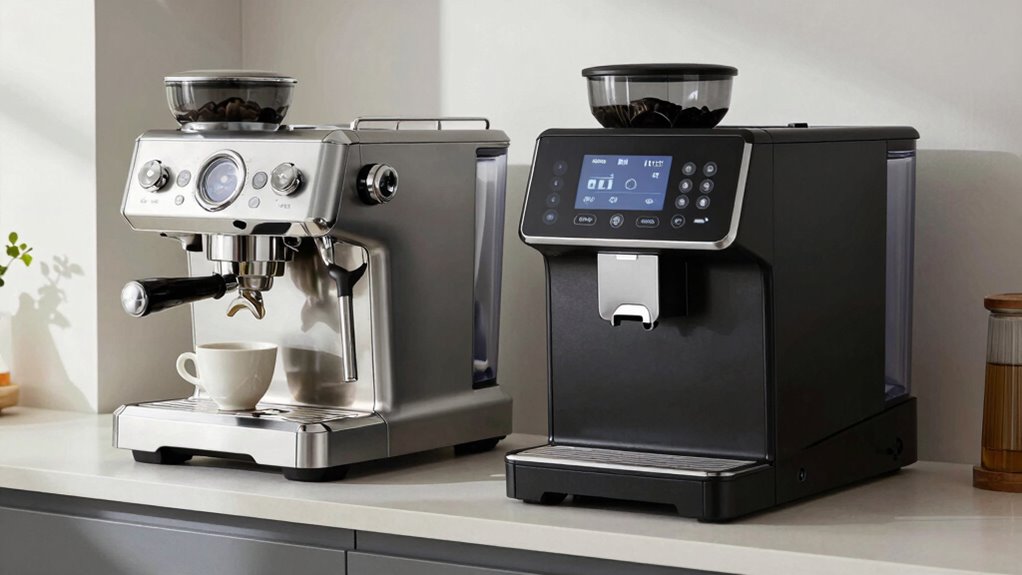
Are you overwhelmed by the variety of espresso machines on the market? It can feel like a daunting task to decide whether to go for a manual brewing machine or a super automatic model. Both options have their perks and challenges, so understanding what each brings to the table is key to making the right choice for your coffee routine. If you enjoy the craft of making your espresso and want to control every step, a manual brewing machine might be more your style. With manual machines, you get to grind your beans, tamp the grounds, and extract the espresso with precision. It offers a hands-on experience that many coffee enthusiasts find rewarding. However, manual brewing requires some practice, and you’ll need to learn maintenance tips to keep your machine functioning smoothly. Regularly cleaning the brew group, descaling as needed, and checking for worn-out parts ensure your machine produces quality shots over time.
On the other hand, super automatic espresso machines are designed for convenience and speed. With just the push of a button, you can have a freshly brewed espresso without much fuss. These machines grind, tamp, brew, and even froth milk automatically, making them perfect if you’re pressed for time or prefer a low-maintenance option. They also typically come with built-in grinders, adjustable settings, and easy-to-clean components, reducing the need for manual intervention. However, you should consider that super automatics tend to be more expensive upfront and can be costly to repair if something goes wrong. Additionally, since they handle most of the process, you might miss out on the tactile experience of manual brewing. Understanding chemical processes involved in espresso extraction can also enhance your appreciation for the craft and improve your brewing results. Familiarity with machine maintenance can help prevent breakdowns and extend the lifespan of your investment. Plus, exploring high-quality components in these machines can lead to better durability and performance over time. Learning about espresso extraction can deepen your knowledge of how different factors influence flavor and quality.
When choosing between the two, think about how much effort and involvement you want in your coffee making. If you love the art of brewing and don’t mind a bit of a learning curve, a manual machine offers a sense of mastery and customization. But if convenience and speed are your priorities, a super automatic machine can deliver consistent results with minimal effort. Proper maintenance tips—like regular cleaning, descaling, and replacing worn parts—are essential to keep your espresso machine in top shape. This ensures your investment lasts longer and continues to produce rich, flavorful coffee. Additionally, considering the design and layout of your kitchen can help determine which type of machine fits best with your space and workflow. Ultimately, the right choice hinges on your lifestyle, budget, and how involved you want to be in the brewing process.
As an affiliate, we earn on qualifying purchases.
Frequently Asked Questions
Which Machine Is Easier to Clean and Maintain?
A super automatic machine is easier to clean and maintain because it handles most cleaning routines automatically, saving you time and effort. You’ll spend less on maintenance costs since these machines typically require fewer parts and less frequent servicing. Espresso machines, on the other hand, often need manual cleaning of components like the portafilter and grinder, making their cleaning routines more involved and potentially increasing maintenance expenses over time.
How Much Noise Do These Machines Typically Produce?
You’ll find that noise levels vary between machines, with super automatics generally being quieter due to their integrated systems. Espresso machines tend to produce more noise during operation, especially when grinding beans or frothing milk. When considering noise, also think about machine durability; more durable models often have sturdy components that might impact noise levels. Ultimately, choose a machine that balances your noise preferences with long-term reliability.
Can I Make Other Beverages Besides Espresso?
Yes, you can make other beverages besides espresso. Many machines offer flavor customization options, allowing you to create lattes, cappuccinos, or even hot chocolate with ease. Super automatic models excel in beverage versatility, often featuring built-in milk frothers and multiple drink presets. With these machines, you get the convenience of preparing a variety of drinks at the push of a button, making them perfect for diverse tastes and preferences.
What’s the Typical Lifespan of Each Machine Type?
You can expect an espresso machine to last around 5-7 years, while super automatic models often last 7-10 years with proper care. Both machines can deliver consistent brew strength and coffee customization, but their lifespan depends on usage and maintenance. Regular cleaning, descaling, and replacing parts extend their durability. Ultimately, a super automatic’s convenience might mean a longer lifespan, but both offer reliable performance when well-maintained.
Are There Energy Efficiency Differences Between Models?
Super automatic models tend to be more energy-efficient because they use less energy during operation and often have standby modes, reducing overall energy consumption. Espresso machines with manual controls may use more power, especially if they stay heated for longer periods. To maximize power efficiency, look for machines with energy-saving features like auto-off timers. Your choice depends on your usage habits and how much emphasis you place on energy consumption.
super automatic espresso machine
As an affiliate, we earn on qualifying purchases.
As an affiliate, we earn on qualifying purchases.
Conclusion
So, now that you’re armed with all the info, go ahead—ditch the fancy machines that require a PhD to operate and embrace the glorious simplicity of a super automatic. After all, who needs barista skills when you can press a button and still enjoy that perfect shot? Whether you choose a manual or automatic, just remember: your coffee’s happiness depends on your choice, not your barista expertise—so pick wisely or risk brewing chaos in your kitchen!
As an affiliate, we earn on qualifying purchases.
milk frother for espresso machines
As an affiliate, we earn on qualifying purchases.
As an affiliate, we earn on qualifying purchases.
Fall Picks
fall essentials
As an affiliate, we earn on qualifying purchases.
![Mercurial, 20 years and counting: how are we still alive and kicking? [video]](https://techtrendtrove.com/wp-content/uploads/2026/05/mercurial-20-years-and-counting-how-are-we-still-alive-and-kicking-video-featured-560x300.jpg)