
Your power supply quality impacts your device’s performance and lifespan more than you might realize. A good unit provides stable voltage regulation and filters out electrical noise, preventing damage and ensuring smooth operation. Cheaper options often lack these features, making your electronics vulnerable to crashes and wear. Investing in a high-quality power supply keeps your equipment reliable and long-lasting. Stay with us, and you’ll discover how to choose the best one for your needs.
Key Takeaways
- High-quality power supplies ensure stable voltage, preventing damage and system crashes.
- They effectively filter electrical noise, maintaining device stability and performance.
- Lower-quality units increase vulnerability to fluctuations, shortening hardware lifespan.
- Understanding power supply specs helps buyers choose reliable, compatible, and long-lasting options.
- Investing in quality power supplies improves overall device reliability and reduces long-term repair costs.
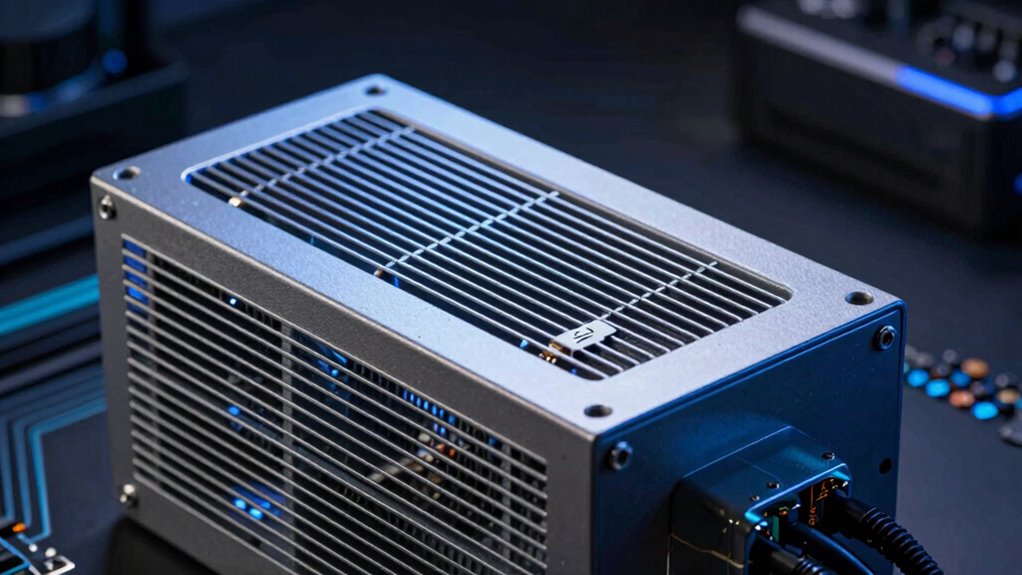
Have you ever wondered how the quality of your power supply affects your electronic devices? The truth is, a good power supply isn’t just about keeping your gadgets running; it directly impacts their longevity and performance. When your power supply offers stable voltage regulation, your devices receive a consistent flow of power, preventing sudden surges or drops that can cause damage. Poor voltage regulation can lead to fluctuations, which might cause your computer or other electronics to crash unexpectedly or, worse, suffer internal damage over time. Making certain of tight voltage regulation means your devices operate smoothly and reliably, reducing the risk of hardware failure and extending their lifespan. Additionally, the use of cookies on websites like this one helps improve your browsing experience and ensures you receive relevant information about power supply quality. Noise filtering is another vital aspect that often goes unnoticed but has a tangible effect on your electronics. Power supplies with effective noise filtering minimize electrical interference, which can manifest as static, flickering displays, or system instability. Without proper noise filtering, your devices are more vulnerable to electromagnetic interference (EMI) from other appliances or external sources, which can degrade signal quality and cause erratic behavior. Noise filtering acts like a shield, preventing high-frequency electrical noise from reaching sensitive components, which is especially important for high-precision equipment like audio systems, gaming PCs, or servers. When your power supply filters out these disturbances, your devices perform more accurately and reliably, whether you’re editing videos, gaming, or conducting scientific research. You might think that all power supplies are created equal, but the differences in quality can be profound. High-quality units incorporate advanced circuitry for both voltage regulation and noise filtering, making certain your devices receive a clean, stable power source. Cheaper alternatives often lack these features, making your electronics more susceptible to power-related issues. Investing in a power supply with proper voltage regulation and noise filtering isn’t just about peace of mind—it’s about protecting your valuable equipment and making certain of optimal operation. In addition, understanding the importance of power supply specifications can help you select the right unit for your needs and ensure long-term reliability. Recognizing that power supply quality can vary significantly helps users make more informed decisions when choosing their components. In essence, the importance of power supply quality goes beyond just keeping your devices powered. It influences their stability, accuracy, and lifespan. When you choose a high-quality power supply, you’re making a proactive decision to safeguard your technology investments. Good voltage regulation prevents damaging fluctuations, while effective noise filtering ensures your devices operate without interference. Together, these features form the backbone of a reliable and efficient electronic setup, proving that power supply quality matters far more than many people realize.
high quality computer power supply
As an affiliate, we earn on qualifying purchases.
As an affiliate, we earn on qualifying purchases.
Frequently Asked Questions
How Often Should I Replace My Power Supply for Optimal Performance?
You should replace your power supply every 5 to 7 years for peak performance. Over time, its energy efficiency decreases, leading to higher electricity bills, and noise levels can increase as components wear out. Regularly inspecting your power supply for signs of failure, like strange noises or overheating, helps you decide when it’s time for an upgrade. Staying current ensures your system runs smoothly and remains energy-efficient.
Can a Low-Quality Power Supply Damage Other Computer Components?
A low-quality power supply is like a shaky foundation, risking your entire system. It can cause voltage instability, which strains and damages delicate components like your CPU and GPU. Over time, this risks shortening their longevity. When your power supply can’t deliver consistent power, other parts suffer, and costly failures become more probable. Investing in a quality power supply guarantees stable voltage and extends your components’ lifespan, safeguarding your system’s health.
What Certifications Indicate a Reliable Power Supply?
Look for power supplies with certifications like 80 Plus, which indicate high energy efficiency and reliable performance. These certifications show that the power supply wastes less energy and generates less heat, extending its lifespan. Additionally, choose brands with a strong reputation for quality; reputable brands often meet strict standards and provide better warranty support. Combining these factors guarantees you get a power supply that’s dependable and efficient for your system.
Do Power Supplies Affect Gaming Performance Significantly?
Yes, power supplies greatly affect gaming performance. A high-quality power supply guarantees power efficiency, meaning your system runs smoothly without wasting energy. It also provides voltage stability, which prevents crashes or glitches during intense gaming sessions. When your power supply is reliable, it delivers consistent power, reducing hardware stress and improving overall gameplay. So, investing in a good power supply isn’t just about safety—it’s about maintaining peak gaming performance.
How Can I Test My Power Supply’s Health at Home?
Imagine your power supply as the heart of your system, pumping steady energy to keep everything alive. To test its health at home, focus on voltage stability with a multimeter, checking if voltages stay within safe ranges under load. Use load testing tools or software to simulate stress, ensuring your power supply handles demands without fluctuations. This helps catch issues before they cause performance drops or damage.
As an affiliate, we earn on qualifying purchases.
Conclusion
Just as a sturdy foundation keeps a building safe through storms, a high-quality power supply shields your system from surprises. Think of it as the backbone of your setup—without it, everything else risks collapse. Investing in quality today guarantees your digital fortress stands tall against power fluctuations and hardware failures. Don’t wait for chaos to strike; secure your peace of mind now, and let your system run smoothly like a well-oiled machine, built to last.
stable voltage power supply for PC
As an affiliate, we earn on qualifying purchases.
As an affiliate, we earn on qualifying purchases.
As an affiliate, we earn on qualifying purchases.