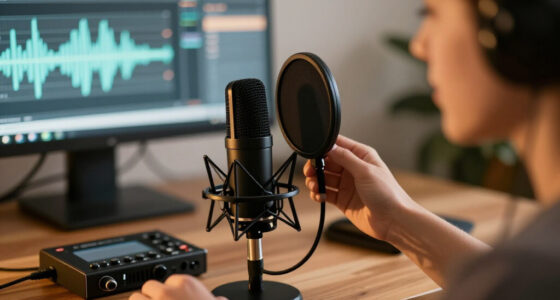
Open-back headphones offer better airflow, making them more comfortable for long listening sessions, and they provide a more natural, open sound. They let in ambient noise and leak sound, so they’re best for quiet indoor use. Closed-back headphones create a tight seal, block external noise, and prevent sound from leaking, making them suitable for noisy environments or recording. If you’re curious about how to choose the right pair, you’ll find helpful details as you explore further.

Get the latest gadgets delivered free with Prime
- Fast, free delivery on millions of items
- Prime Video, Amazon Music and more included
- Member-only deals all year
Key Takeaways
- Open-back headphones offer better airflow and sound quality but allow external noise and sound leakage.
- Closed-back headphones provide superior noise isolation and prevent sound leakage, ideal for noisy environments.
- Open-back models are more comfortable for long sessions due to lighter design and better ventilation.
- Closed-back headphones are better suited for privacy, recording, and blocking external noise.
- Noise cancellation technology is commonly found in closed-back headphones to enhance immersive listening.
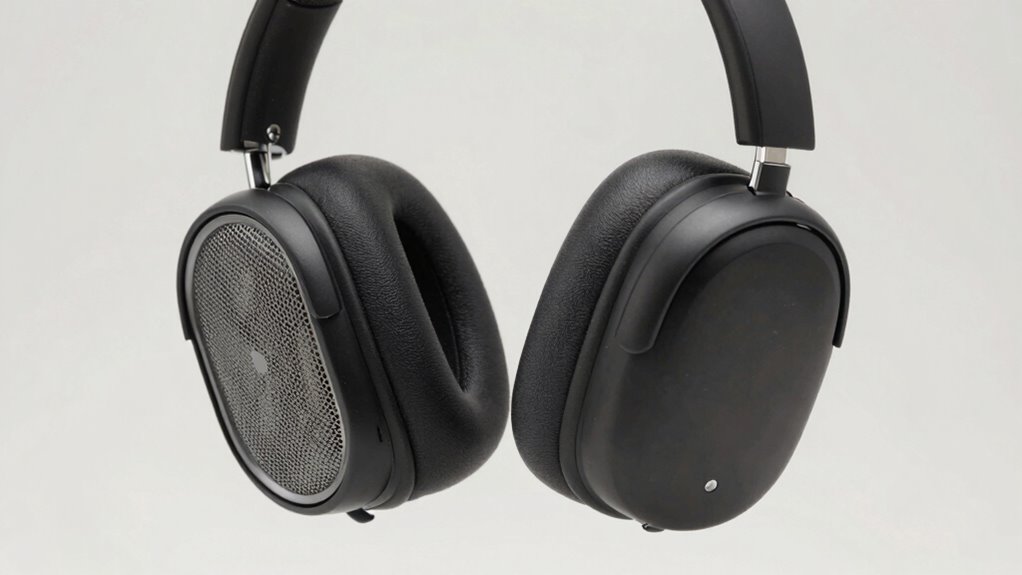
When choosing headphones, understanding the differences between open-back and closed-back designs is essential, as each offers distinct listening experiences suited to different needs. If you prioritize wireless comfort, open-back headphones often excel because their design typically allows for better airflow, reducing heat buildup around your ears. This can make long listening sessions more comfortable, especially if you wear headphones for hours at a time. Plus, open-back models tend to be lighter and less bulky, giving you a more natural feel without sacrificing sound quality. However, because they don’t seal tightly around your ears, they usually don’t provide effective noise cancellation. Instead, they let in ambient sounds, which might be a drawback if you need to block out distractions in noisy environments.
On the other hand, closed-back headphones are designed to create a tight seal around your ears, which significantly enhances noise isolation. If you often listen in noisy places or want to focus solely on your music or calls, closed-back models are your best bet. The sealed design minimizes sound leakage, so your audio won’t disturb those nearby, and external noise is less likely to interrupt your listening experience. This makes closed-back headphones ideal for commuting, working in busy offices, or recording sessions. While they can be less breathable, leading to increased heat and sweat during extended use, many modern closed-back headphones incorporate padding and ventilation features to improve comfort. Noise cancellation technology further amplifies this benefit, as active noise cancellation (ANC) can effectively eliminate unwanted sounds, giving you a more immersive experience. Additionally, understanding the market trends and advancements in headphone technology can help you choose a model that balances comfort, sound quality, and noise isolation for your specific needs.
open-back headphones for long listening sessions
As an affiliate, we earn on qualifying purchases.
As an affiliate, we earn on qualifying purchases.
Frequently Asked Questions
Which Headphones Are Better for Outdoor Use?
For outdoor use, closed-back headphones are better because they offer superior noise isolation, keeping outside sounds out and your music in. They’re also more portable, fitting easily into bags or pockets without worrying about sound leakage. Open-back headphones, while great for indoor listening, aren’t ideal outdoors since they don’t block noise well and can leak sound, disturbing others nearby. So, choose closed-back headphones for outdoor adventures.
Do Open-Back Headphones Leak Sound More?
Yes, open-back headphones leak more sound, surprisingly enough, because they’re designed to let air and sound escape. While they excel at sound quality and soundstage, they lack sound isolation and noise cancellation. So, if you’re in a quiet place, you’ll enjoy rich audio, but if you need privacy or don’t want to disturb others, they’re not your best choice. Ironically, their openness is their biggest flaw for noise-sensitive environments.
Are Closed-Back Headphones Suitable for Mixing Music?
Yes, closed-back headphones are suitable for mixing music because they provide excellent sound isolation and noise cancellation. This helps you focus on the details without external distractions, ensuring your mix translates well across different listening environments. Their sealed design minimizes sound leakage, so you won’t disturb others. This makes closed-back headphones ideal for professional mixing, recording, and critical listening sessions where clarity and isolation are essential.
How Long Do Open-Back Headphones Typically Last?
Open-back headphones often last around 2 to 5 years, depending on usage. Did you know that proper maintenance can extend their lifespan considerably? To boost headphone durability, regularly clean the ear cups and avoid exposure to extreme temperatures. Also, store them in a dry, safe place when not in use. Following these maintenance tips helps keep your open-back headphones functioning well and guarantees you get the most out of your investment.
Can I Use Open-Back Headphones for Gaming?
Yes, you can use open-back headphones for gaming, but keep in mind they prioritize open back comfort and soundstage over closed back durability. They offer a more natural, immersive audio experience, which can enhance gameplay. However, they tend to be less durable and more fragile than closed-back options, so handle them carefully. If you value open back comfort and a wider soundstage for gaming, they can be a good choice.
noise cancelling closed-back headphones
As an affiliate, we earn on qualifying purchases.
As an affiliate, we earn on qualifying purchases.
Conclusion
Ultimately, choosing between open-back and closed-back headphones depends on your preferences and priorities. Open-backs offer an airy ambiance, amplifying acoustics and allowing ambient awareness. Closed-backs deliver a concentrated, controlled capsule of sound, perfect for privacy and noise isolation. Consider your environment and needs—whether you crave clarity or crave connection. By balancing benefits and boundaries, you’ll boldly bolster your listening experience, bridging the gap between sound quality and situational suitability.
best open-back headphones for natural sound
As an affiliate, we earn on qualifying purchases.
As an affiliate, we earn on qualifying purchases.
closed-back headphones for noisy environments
As an affiliate, we earn on qualifying purchases.
As an affiliate, we earn on qualifying purchases.
Halloween Picks
halloween
As an affiliate, we earn on qualifying purchases.