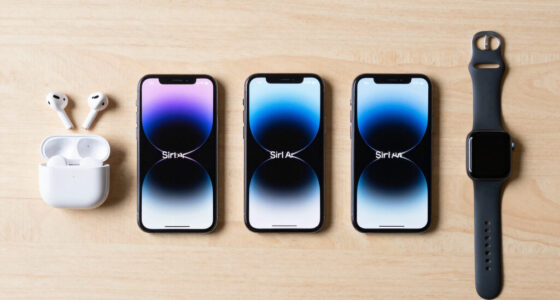
When choosing between budget and flagship phones, you’ll sacrifice camera quality, battery life, performance, and build in the budget options. Budget phones usually have decent cameras but lack advanced features like optical zoom or night modes, and their smaller batteries mean shorter usage. Flagships offer top-tier cameras, longer-lasting batteries, and better performance but come at a higher price. If you’re curious about which sacrifices matter most for your needs, there’s more to discover below.
Get ready for Prime Big Deal Days — try Prime free
Exclusive member deals on October 6–7, plus fast free delivery. Cancel anytime.
As an affiliate, we earn on qualifying purchases.
Key Takeaways
- Budget phones typically have lower camera quality, limited features, and poorer performance compared to flagship devices.
- They often feature smaller batteries, leading to shorter usage times and less support for fast or wireless charging.
- Build quality and display technology are generally inferior in budget models, affecting durability and visual experience.
- Budget phones lack advanced features like optical zoom, night mode, and high-refresh-rate screens found in flagships.
- Sacrifices are made in camera capabilities, battery life, performance, and build quality to keep costs lower.

When choosing a smartphone, you might wonder whether to go for a budget phone or splurge on a flagship device. The decision often comes down to what features matter most to you. If you’re someone who loves capturing memories, camera quality is a significant factor. Flagship phones generally have superior cameras with more advanced sensors, multiple lenses, and better low-light performance. They can take stunning photos and videos, making them ideal for enthusiasts or anyone who wants professional-quality images. Budget phones, on the other hand, usually have decent cameras, but they may struggle in challenging lighting conditions, produce less sharp images, or lack features like optical zoom or night mode. If photography is a priority, a flagship offers a clear advantage, but if casual snapping is enough, a budget device might suffice.
Battery longevity is another critical aspect to think about. Flagship phones often come with larger batteries and more optimized power management systems, allowing them to last longer throughout the day—even with heavy use. These devices often support fast charging and wireless charging, adding convenience. Budget phones tend to have smaller batteries, which can lead to shorter periods between charges, especially if they use less efficient processors or display technologies. If you’re someone who relies heavily on your phone all day—streaming, gaming, or working on the go—you might find that flagship devices better meet your needs in terms of battery life. Conversely, if your usage is light or you carry a charger with you, a budget phone’s shorter battery life might not be a dealbreaker.
Beyond these two factors, flagship phones usually feature more powerful processors, better displays, and higher build quality, but these come at a higher price. Budget phones are designed to offer good enough performance for everyday tasks but might lag in demanding applications or future software updates. If your main priorities are photography and battery life, investing in a flagship makes sense. However, if cost is a bigger concern and your needs are basic—calls, messaging, social media, occasional photos—a budget phone can be a smart choice. Ultimately, your decision hinges on balancing what you’re willing to sacrifice against what you value most in a device.
Frequently Asked Questions
Do Budget Phones Get Software Updates as Quickly as Flagships?
Budget phones usually don’t get software support and update frequency as quickly as flagships. You might find that official updates come later, or sometimes not at all, depending on the manufacturer. Flagship phones benefit from faster, more consistent updates, keeping your device secure and feature-rich longer. If timely software support matters to you, choosing a flagship guarantees you get security patches and OS upgrades sooner.
How Do Camera Qualities Compare Between Budget and Flagship Phones?
While budget phones offer decent camera performance, they often fall slightly short of flagship phones in photo quality. You might notice softer details, less accurate colors, or limited low-light capabilities. Flagship phones typically feature advanced sensors and image processing, giving you sharper, more vibrant photos. If capturing high-quality images is a priority, you’ll appreciate the superior camera performance of flagship models, though budget options still provide good results for everyday photography.
Are Budget Phones More Prone to Hardware Failures or Issues?
Budget phones are generally more prone to hardware failures or issues because they often have lower build quality, which makes their components less durable over time. When problems occur, repair costs tend to be higher relative to the device’s price, and you might find repairs less straightforward. To avoid frequent issues, you should handle your budget phone carefully and consider investing in extended warranties or protection plans.
Can Budget Phones Handle High-End Gaming as Well as Flagships?
Your budget phone might struggle to handle high-end gaming like a race car hitting a wall. While it can run less demanding games, its gaming performance often falls short of flagships, especially during intensive sessions. Hardware durability is also a concern, as prolonged high-performance gaming can overheat or strain the device. If you want seamless, top-tier gaming, a flagship phone is your better bet, offering superior hardware and longer-lasting performance.
What Is the Long-Term Value Difference Between Budget and Flagship Phones?
You’ll find that flagship phones generally offer better long-term value because they’re more durable, reducing worries about durability concerns over time. Plus, they tend to retain resale value better, meaning you can recoup more if you upgrade later. Budget phones might save you money upfront but often don’t last as long or hold their value, making them less cost-effective in the long run.
Conclusion
So, when choosing between budget and flagship phones, remember: it’s not just about price, but what you’re willing to give up. Think of your phone as a trusty sidekick—do you want the superhero or the sidekick? While budget phones save you cash, flagships offer the superhero powers. Decide what matters most to you. After all, in the end, it’s your pocket and your needs that hold the true power.
NFL season / tailgating Picks
team gear
As an affiliate, we earn on qualifying purchases.