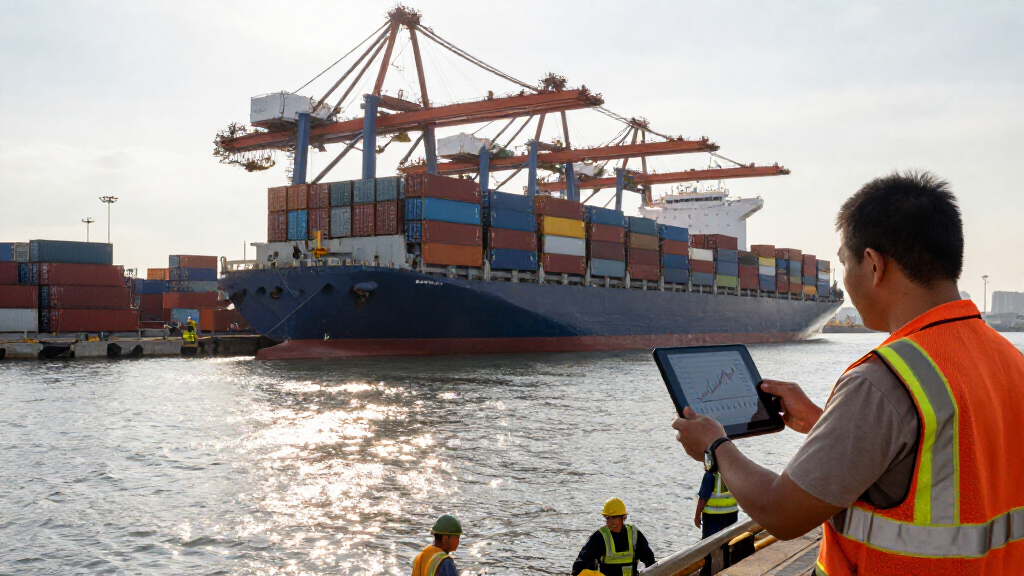
🔍 Read the full analysis: AI Helps Power China’s Trade Surplus Past $1 Trillion Once More on ThorstenMeyerAI.com

Get the latest gadgets delivered free with Prime
- Fast, free delivery on millions of items
- Prime Video, Amazon Music and more included
- Member-only deals all year
TL;DR
China’s preliminary customs figures put its goods trade surplus at $1.0426 trillion for January through October 2026, crossing $1 trillion a month earlier than in 2025. Exports of integrated circuits and computers and parts rose sharply, but the data do not establish how much of that growth was caused by AI demand.
China recorded a $1.0426 trillion goods trade surplus in the first 10 months of 2026, according to preliminary figures published November 10 by the General Administration of Customs. The country crossed the $1 trillion mark in October, a month earlier than in 2025, as exports of integrated circuits and computers and parts rose sharply amid global investment in AI infrastructure.
The customs office reported exports of $3.7828 trillion and imports of $2.7402 trillion from January through October. The export total was already above China’s full-year 2025 exports of $3.7719 trillion, a comparison calculated from the agency’s published tables. The figures are preliminary and cover goods trade.
Integrated-circuit exports reached $341.1 billion, up 111.1% from the same period in 2025. Exports of computers and parts—a category that includes servers—rose 60.6% to $266.5 billion. The customs tables put high-tech product exports at $1.1329 trillion, up 47.9%, or about 30% of total exports based on the source’s calculation.
October exports increased 35.2% year over year to $412.3 billion, while imports rose 41.6% to $307.1 billion. The monthly surplus was $105.3 billion, below September’s $133.5 billion. Reuters reported that October export and import growth both exceeded economists’ forecasts.
China’s goods surplus tops $1 trillion again
Preliminary customs figures show a record pace through October 2026, alongside sharp growth in chip and computer exports. The data do not show how much of that growth came from AI demand.
Export growth was uneven
Customs figures show different growth rates across major technology categories.
AI link has limits
News reports connect export strength to global investment in AI infrastructure; customs data record products and values, not their buyers’ intended use.
- Chip export value rose sharply.
- Computer and parts exports include servers.
- Chip export quantity rose 3.2%.
- How much growth came from AI demand.
- Why chip value rose faster than quantity.
- Which products drove partner balances.
Trade runs both ways
China exported chips while importing even more by value, linking its hardware trade to overseas suppliers.
| Integrated circuits | January–October 2026 |
|---|---|
| Exports | $341.1B |
| Imports | $566.5B |
| Calculated chip deficit | $225.4B |
AI Hardware and Trade Tensions
The figures show how strongly chips and computing equipment feature in China’s expanding export trade. Reuters attributed much of 2026’s export strength to the global push to build AI infrastructure, while CNBC has also reported demand for Chinese chips and other AI-related hardware. That is an explanation offered by news reports, not a cause established by the customs tables: the data record product categories and values, not buyers’ intended use.
The scale of the surplus matters to trading partners and companies with supply chains linked to China. Reuters reported that the imbalance could sharpen trade frictions, especially with the European Union. China’s surplus with the EU increased to $310.7 billion in January to October, from $241.6 billion a year earlier. For businesses, rising flows of servers, chips and components mean exposure to Chinese production remains significant, while tariff risks have not disappeared.
The trade figures also show that the export boom does not mean China makes every component domestically. The country imported $566.5 billion of integrated circuits, up 65.1%. The source calculates that its chip trade deficit widened to $225.4 billion. The AI hardware supply chain therefore connects Chinese exporters with overseas component suppliers as well as international buyers.
Products Worth Considering

Amazon Kindle Paperwhite (2024, 16 GB) – 7-inch Glare-Free Display, Black

Bose QuietComfort Earbuds (2nd Gen) – True Wireless Bluetooth Earbuds with Active Noise Cancellation

Apple AirPods Pro (1st Generation) with MagSafe Charging Case
As an affiliate, we earn on qualifying purchases.
How the Surplus Reached October
China’s customs office reports its trade balance as exports minus imports. In its preliminary January-to-October table, the balance is listed as 10,425.9 in units of 100 million U.S. dollars, equivalent to $1.0426 trillion. According to the same agency’s figures cited in the source report, China first passed $1 trillion in November 2025 and ended that year with a $1.189 trillion surplus.
Product-level figures point to uneven growth. Integrated-circuit export value rose 111.1%, but the number of chips exported increased only 3.2%. The customs data do not explain the gap. Higher prices, a shift toward more valuable products, or other changes in the export mix could contribute; the available figures do not distinguish among them.
Trade balances also differ by partner. China’s surplus with the United States rose to $266.5 billion, and its surplus with the 10 ASEAN countries reached $293.1 billion. At the same time, its deficit with South Korea grew to $100.5 billion and its deficit with Taiwan to $148.5 billion, according to calculations from the customs country table. The agency does not provide product-level detail for those bilateral balances, so the figures alone do not show which goods drove the changes.
““Topping US$1 trillion for a second consecutive year and reaching the milestone a month earlier than in 2025.””
— Reuters, as reported by The Straits Times
What Customs Data Cannot Show
The figures establish export values, import values and trade balances, but they do not identify how much of the growth came specifically from AI-related purchases. Customs categories such as integrated circuits and computers and parts cover a range of products and uses. The data also do not explain why the value of chip exports more than doubled while the exported quantity rose 3.2%.
Country-level totals do not establish which products account for China’s growing deficits with South Korea and Taiwan. Nor does the table show where goods shipped to Hong Kong ultimately go; Hong Kong is a major trading hub, and exports there rose 50.3%. The figures are preliminary, and the source does not provide a product-by-destination breakdown that would resolve these questions.
Next Data and Trade Decisions
China’s customs figures for later months will show whether export growth and the surplus continue through the end of 2026. The November 10 release is preliminary, so subsequent data may also revise the totals. Readers should distinguish the monthly balance from the cumulative figure: October’s surplus was $105.3 billion, while the January-to-October surplus reached $1.0426 trillion.
Trade policy is another factor to watch. Reuters reported that China and the United States extended their trade truce by two months; the source does not specify the details or terms of that extension. Any further decisions by the two governments, or by other trading partners responding to the surplus, could affect costs and supply chains. The customs release itself does not announce a policy change.
Key Questions
How large was China’s trade surplus?
China’s preliminary goods trade surplus was $1.0426 trillion for January through October 2026, based on figures published by its General Administration of Customs.
Why is the surplus being linked to AI?
Exports of integrated circuits rose 111.1% by value and exports of computers and parts rose 60.6%. Reuters linked much of the export strength to global AI infrastructure investment, but customs data do not identify which shipments were bought for AI use.
Did China export more chips than it imported?
No. China exported $341.1 billion of integrated circuits and imported $566.5 billion in the first 10 months, according to the reported figures. The source calculates a chip trade deficit of $225.4 billion.
Which trading partners had the largest changes in balances?
China’s surplus with the EU rose to $310.7 billion, while its deficits with South Korea and Taiwan increased to $100.5 billion and $148.5 billion, respectively. The customs country table does not identify which products drove those changes.
What remains uncertain about the figures?
The data do not establish how much export growth came from AI demand, why chip export value rose much faster than chip quantity, or where goods shipped through Hong Kong ultimately went. The customs figures are preliminary.
Source: ThorstenMeyerAI.com