
🔍 Read the full analysis: Tracing Narrative Resource Depletion Through “BLACKOUT” And AI on ThorstenMeyerAI.com

Get the latest gadgets delivered free with Prime
- Fast, free delivery on millions of items
- Prime Video, Amazon Music and more included
- Member-only deals all year
TL;DR
ThorstenMeyerAI.com has published BLACKOUT, a design experience set between 03:12 and 05:47 in Verlicht. It uses a staged decline and recovery to explore how interfaces for AI tools and automated workflows can communicate resource scarcity; technical implementation and performance claims are not provided.
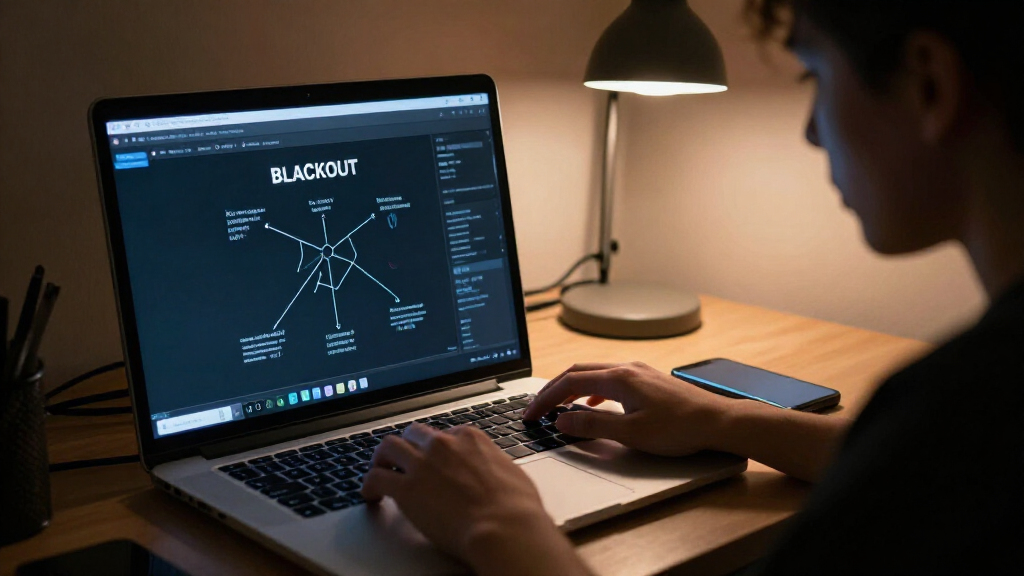
ThorstenMeyerAI.com has presented BLACKOUT, a live page experience that makes resource depletion the focus of its design, rather than treating it as a brief interruption. Set between 03:12 and 05:47 in Verlicht, the project follows an automated system as its capacity fades and then begins to recover, raising questions about how AI interfaces can communicate strain without losing user trust.
The project is described as a late-night field manual in which capacity declines in stages. Instead of relying only on a progress bar or alarm, the page uses changes in status, language and visual rhythm to show the reader what is happening as the system runs low on what it needs. The experience is designed to make scarcity visible while the operation is still underway.
BLACKOUT also makes recovery part of the narrative. The reader is meant to observe the page becoming whole again, rather than seeing recovery represented as a hidden process or a single switch. ThorstenMeyerAI.com says a full design teardown explains decisions from the first signs of strain through the return to a stable state. The announcement hints that one detail in that return changes how the failure is understood, but does not identify it.
The project is presented as a design exploration for people building AI tools and automated workflows. The material does not identify a particular AI model, system, or real-world failure, and it provides no technical specifications, user-testing results, or measurements of how the page affects trust. Its claims are about the intended experience and design approach, not a demonstrated operational outcome.
Making System Strain Visible
Interfaces often emphasize successful operation, but users also need to understand what is happening when a system has limited capacity or cannot complete a task as expected. BLACKOUT focuses on that less polished moment: how to communicate reduced capacity, what the system can still do, and whether it is recovering. For AI products, where users may not be able to see the processes behind an answer or automated action, clear status communication can shape expectations and confidence.
The design proposition is that scarcity can be conveyed through more than a warning. A gradual change in wording and visual presentation may help people follow an operation as it degrades and returns. That is an interface-design idea, not evidence of improved trust: no user research or comparative results are included in the announcement. Still, the project frames a concrete question for product teams—how to keep a failure legible without implying that recovery is immediate or guaranteed.
As an affiliate, we earn on qualifying purchases.
A Failure Told in Stages
BLACKOUT is identified in the announcement as a live room and is accompanied by a link to a design teardown. Its title includes the time range 03:12–05:47 and the place name Verlicht. The supplied description does not clarify whether those details refer to a fictional setting, a real operating period, or a specific system environment.
The project’s stated structure moves from early signs of strain through worsening capacity and toward recovery. That sequence distinguishes it from an interface that presents failure as a single alert. The announcement positions the work for people designing AI tools and automated workflows, but does not specify an industry or use case. No launch date, technical stack, or account of the system’s underlying resource constraints is given.
““when an operation is running on reserve, how can the interface earn trust while the system is still finding its way back?””
— ThorstenMeyerAI.com
As an affiliate, we earn on qualifying purchases.
Details Behind the Recovery
The announcement does not explain which resources are depleted, what triggers the decline, or whether BLACKOUT simulates a specific AI or automation system. It also gives no information about how the page was built, whether its progression responds to user input, or how it behaves across devices. The time and place in the title are not explained beyond the reference to Verlicht.
The promised teardown may clarify the design choices, including the hinted-at detail in the recovery sequence, but that detail is not disclosed in the announcement. There are also no reported user studies, trust measurements or performance data. It is not yet possible to assess whether the narrative approach improves users’ understanding compared with conventional status indicators.
As an affiliate, we earn on qualifying purchases.
The Teardown May Add Detail
The next material signposted is the full design teardown, which ThorstenMeyerAI.com says will explain the page’s progression from initial strain to recovery. Readers can also visit the live room to experience the design directly. No publication date for the teardown or further development milestones are specified.
Until more detail is available, BLACKOUT is best understood as a design-led exploration of how interfaces might represent resource scarcity. Further information about its implementation, the meaning of its setting, and any evaluation with users would help establish how its ideas could apply to deployed AI tools and automated workflows.
Source: ThorstenMeyerAI.com
automated workflow monitoring devices
As an affiliate, we earn on qualifying purchases.
As an affiliate, we earn on qualifying purchases.
Key Questions
What is BLACKOUT?
BLACKOUT is a live page experience from ThorstenMeyerAI.com that traces a system’s declining capacity and recovery through changes in status, language and visual rhythm.
Is BLACKOUT a report of a real AI system failure?
The announcement presents it as a design experience for people building AI tools and automated workflows. It does not identify a real system or say that the events shown document an operational failure.
What does the project say about recovery?
It aims to make recovery something the reader witnesses as it unfolds, rather than a process hidden behind a sudden change in the interface. The announcement does not explain the technical mechanism behind that progression.
Has BLACKOUT been shown to improve user trust?
No evidence of user testing or measured trust outcomes is provided. The project raises a design question about earning trust during reduced capacity, but the announcement does not claim that the approach has been validated.
Source: ThorstenMeyerAI.com
Fall Picks
fall essentials
As an affiliate, we earn on qualifying purchases.