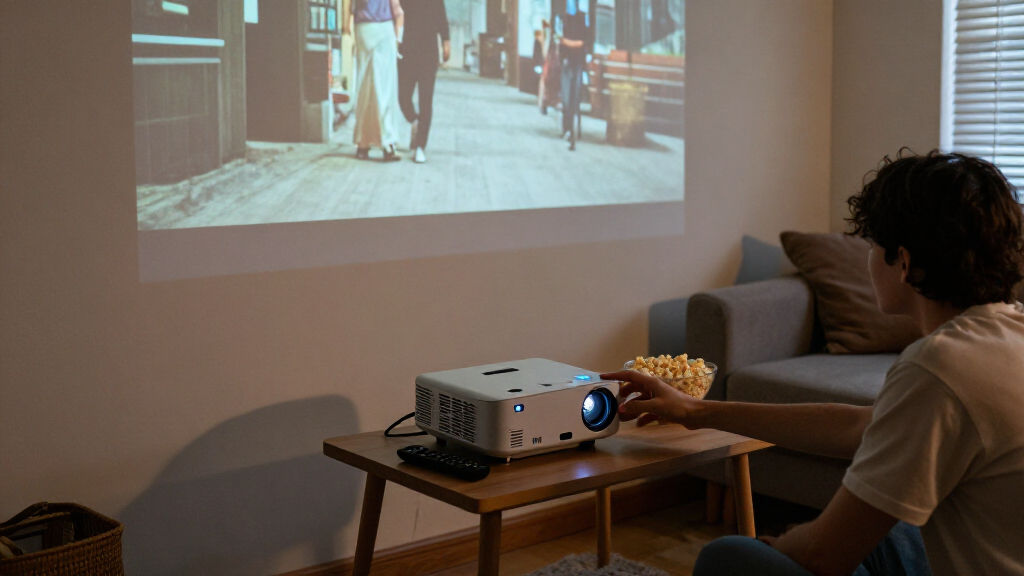

The best projectors under $1,000 balance usable brightness, clear resolution, and setup that suits your room. My best overall pick is the Epson EpiqVision Flex CO-W01 for its 3LCD design and flexible placement, while the ViewSonic LS740HD stands out for laser projection and the ViewSonic PX701-4K for 4K detail. The tradeoff is clear: brighter, more capable home-theater models tend to be less portable, while compact smart projectors simplify streaming but often give up brightness and image detail. Native resolution, not a 4K input label, is one of the differences that matters most. Read on for the full breakdown and help matching a projector to your space and viewing habits.

Get the latest gadgets delivered free with Prime
- Fast, free delivery on millions of items
- Prime Video, Amazon Music and more included
- Member-only deals all year
Complete the kit



Key Takeaways
- The Epson EpiqVision Flex CO-W01 is my best overall pick because its 3LCD approach and portable design offer a useful balance for buyers who want a flexible projector rather than a fixed installation.
- The ViewSonic LS740HD and PX701-4K serve different performance priorities: the LS740HD uses a laser light source, while the PX701-4K targets buyers who want 4K image detail.
- Smart features and image quality are separate strengths. Several compact models advertise built-in apps or Android TV, but app access does not make them equivalent to brighter, higher-resolution home projectors.
- Native resolution matters more than 4K decoding language. Models described as supporting or decoding 4K may accept a 4K signal without displaying a native 4K image.
- Portability comes with tradeoffs. Mini projectors such as the Aurzen Roku TV E1R or HAPPRUN H1 are easier to move and set up, while larger models are a better match for a dedicated viewing space.
| Epson EpiqVision Flex CO-W01 Portable 3LCD Projector |  | Best for Bright Portable Presentations | Native resolution: 1280 × 800 | Brightness: 3,000 lumens | Display technology: 3-chip 3LCD | VIEW LATEST PRICE | See Our Full Breakdown |
| ViewSonic LS740HD Full HD Laser Projector |  | Best for Bright, Fixed Installations | Native resolution: 1920 × 1080 | Brightness: 5,500 ANSI lumens | Light source: Laser phosphor | VIEW LATEST PRICE | See Our Full Breakdown |
| Philoent Mini Projector with WiFi 6, Bluetooth 5.4, and Built-In Apps |  | Best for Compact, Casual Streaming | Native resolution: 1280 × 720 | Maximum supported resolution: 1920 × 1080 | Brightness: 200 ANSI lumens | VIEW LATEST PRICE | See Our Full Breakdown |
| HAPPRUN Outdoor Smart Projector with 4K Decoding, Built-in Apps and 30W Dolby Audio |  | Best All-in-One Pick for Outdoor Movie Nights | Brightness: 1,500 ANSI lumens | Resolution information: 4K decoding; native resolution not specified | Contrast ratio: 20,000:1 | VIEW LATEST PRICE | See Our Full Breakdown |
| HAPPRUN H1 Native 1080p Portable Bluetooth Projector |  | Best for Affordable Native Full HD | Native resolution: 1920 × 1080 | Brightness: 300 ANSI lumens | Display type: LCD | VIEW LATEST PRICE | See Our Full Breakdown |
| Portable Mini Projector with Android TV, Wi-Fi 6, Bluetooth 5.4, and Auto Keystone |  | Best for Lightweight Streaming | Native resolution: 1280 x 720 | Maximum display resolution: 4096 x 2160 pixels | Brightness: 300 ANSI lumens | VIEW LATEST PRICE | See Our Full Breakdown |
| Aurzen Roku TV E1R Smart Portable Mini Projector |  | Best for Roku Households | Native resolution: 1280 x 720 | Brightness: 160 lm | Display type: LCD | VIEW LATEST PRICE | See Our Full Breakdown |
| HY300Pro Portable Mini Projector with Wi-Fi 6, Bluetooth 5.4, Android 14, and 4K Support |  | Best for Short-Throw Bedrooms | Native resolution: 1280 x 720 | Maximum supported resolution: 3840 x 2160 pixels | Brightness: 200 ANSI lumens | VIEW LATEST PRICE | See Our Full Breakdown |
| YGSKK Mini Projector with Wi-Fi 6, Bluetooth 5.3, and Built-In Streaming Apps |  | Best Native 1080p Value | Resolution: Native 1080p; compatible with 4K input | Brightness: 300 ANSI lumens | Connectivity: Wi-Fi 6, 5 GHz and 2.4 GHz Wi-Fi, Bluetooth 5.3, HDMI, USB, 3.5 mm audio | VIEW LATEST PRICE | See Our Full Breakdown |
| Portable Mini Projector with 4K Input Support and Short Throw |  | Best for Flexible Wired Setup | Native resolution: 1080p | Maximum display resolution: 1920 x 1080 | Maximum image size: 200 inches | VIEW LATEST PRICE | See Our Full Breakdown |
| TMY V08 Portable Projector with Two-Way Bluetooth and 80-Inch Screen |  | Best Value Bundle | Native resolution: 1280 × 720 | Display type: LCD | Included screen: 80-inch foldable | VIEW LATEST PRICE | See Our Full Breakdown |
| Lisowod L03Pro V2.0 Smart Projector, Native 1080P with 4K Support, Wi-Fi 6 and Bluetooth 5.2 |  | Best Smart 1080p Pick | Model: L03Pro V2.0 | Resolution: Native 1080p; supports 4K content playback at 1080p | Operating system: CinemOS | VIEW LATEST PRICE | See Our Full Breakdown |
| ViewSonic PX701-4K UHD DLP Projector |  | Best for 4K Gaming and Bright Rooms | Resolution: 3840 × 2160 | Display type: DLP | Brightness: 3,200 ANSI lumens | VIEW LATEST PRICE | See Our Full Breakdown |
| Magcubic HY300PRO Portable Mini Projector with Wi-Fi and Bluetooth |  | Best Compact Projector for Flexible Placement | Native resolution: 1280 × 720 | Maximum supported resolution: 3840 × 2160 | Brightness: 200 ANSI lumens | VIEW LATEST PRICE | See Our Full Breakdown |
| AKIYO Mini Projector with Wi-Fi and Bluetooth |  | Best for Lightweight Travel | Native resolution: 1280 × 720 | Maximum supported resolution: 3840 × 2160 | Brightness: 200 ANSI lumens | VIEW LATEST PRICE | See Our Full Breakdown |
| projectors under $1,000 | Brightness | Connectivity | Native resolution |
|---|---|---|---|
| Epson EpiqVision Flex CO-W01 P | 3,000 lumens | HDMI, USB | 1280 × 800 |
| ViewSonic LS740HD Full HD Lase | 5,500 ANSI lumens | 2 HDMI 1.4 inputs, USB Type-A, RS232, 3.5 mm audio out | 1920 × 1080 |
| Philoent Mini Projector with W | 200 ANSI lumens | WiFi 6, Bluetooth 5.4, HDMI, USB | 1280 × 720 |
| HAPPRUN Outdoor Smart Projecto | 1,500 ANSI lumens | — | — |
| HAPPRUN H1 Native 1080p Portab | 300 ANSI lumens | HDMI, USB, 3.5 mm audio, Bluetooth 5.3, IR | 1920 × 1080 |
| Portable Mini Projector with A | 300 ANSI lumens | Wi-Fi 6, Bluetooth 5.4, HDMI, USB | 1280 x 720 |
| Aurzen Roku TV E1R Smart Porta | 160 lm | Wi-Fi, Bluetooth 5.2, HDMI, USB | 1280 x 720 |
| HY300Pro Portable Mini Project | 200 ANSI lumens | Wi-Fi 6, Bluetooth 5.4, HDMI, USB | 1280 x 720 |
| YGSKK Mini Projector with Wi-F | 300 ANSI lumens | Wi-Fi 6, 5 GHz and 2.4 GHz Wi-Fi, Bluetooth 5.3, HDMI, USB, 3.5 mm audio | — |
| Portable Mini Projector with 4 | — | HDMI, USB, 3.5 mm jack | 1080p |
| TMY V08 Portable Projector wit | — | Bluetooth, HDMI, USB, 3.5 mm jack | 1280 × 720 |
| Lisowod L03Pro V2.0 Smart Proj | — | — | — |
| ViewSonic PX701-4K UHD DLP Pro | 3,200 ANSI lumens | Dual HDMI, USB-A | — |
| Magcubic HY300PRO Portable Min | 200 ANSI lumens | — | 1280 × 720 |
| AKIYO Mini Projector with Wi-F | 200 ANSI lumens | 2.4/5 GHz Wi-Fi, Bluetooth 5.2, HDMI, USB, 3.5 mm audio output | 1280 × 720 |
More Details on Our Top Picks
Epson EpiqVision Flex CO-W01 Portable 3LCD Projector
The Epson EpiqVision Flex CO-W01 is the strongest fit here for buyers who need a projector that can move between work presentations and casual movie nights. Its 3,000 lumens and 3-chip 3LCD system give it a brightness advantage over the HAPPRUN H1 and its listed 300 ANSI lumens, making a large image more practical in a room that is not fully dark. The 1280 × 800 resolution is the compromise: it is suited to slides and general video, but it does not offer the crisp Full HD detail of the ViewSonic LS740HD or HAPPRUN H1. Its portable body, HDMI input, and built-in speaker keep setup simple, though streaming needs a separate compatible device. I’d choose it for flexible, bright use rather than a dedicated high-definition home theater.
Pros:- 3,000 lumens of color and white brightness suit presentations and less-than-dark rooms
- 3-chip 3LCD technology produces vivid color
- Portable design is easier to relocate than the stationary ViewSonic LS740HD
- HDMI and USB connections support external streaming and media devices
Cons:- 1280 × 800 native resolution falls short of the Full HD ViewSonic LS740HD and HAPPRUN H1
- Streaming requires a separate compatible device and a wireless connection
- The built-in speaker is a convenience feature rather than a substitute for a dedicated sound system
Best for: Presenters and households who want one portable projector for slides and occasional entertainment in rooms with some ambient light
Not ideal for: Buyers prioritizing native Full HD movie detail or an all-in-one streaming setup, since resolution is 1280 × 800 and streaming requires another device
- Native resolution:1280 × 800
- Brightness:3,000 lumens
- Display technology:3-chip 3LCD
- Maximum image size:378 inches
- Connectivity:HDMI, USB
- Minimum throw distance:2.11 feet
- Maximum throw distance:34.1 feet
- Light source operating life:5,000 hours
Our verdict“Choose the CO-W01 if portability and bright presentation use matter more than native Full HD resolution or built-in streaming.”
ViewSonic LS740HD Full HD Laser Projector
The ViewSonic LS740HD is the clear pick for a permanent setup where a bright, large image matters more than portability. Its 5,500 ANSI lumens give it a substantial advantage over the portable Epson CO-W01 and its 3,000-lumen rating, particularly for classrooms, presentation spaces, and other rooms with ambient light. Native 1080p resolution also gives text and video more detail than the Epson’s 1280 × 800 image. Optical zoom, 4-corner adjustment, and 360-degree projection help with tricky mounting positions, while the laser light source avoids routine lamp changes. The tradeoffs are its stationary, ceiling-mount-oriented design and 1080p ceiling; buyers seeking 4K detail or a projector to carry between rooms should look elsewhere. Its feature set makes more sense for an installed venue than casual portable viewing.
Pros:- 5,500 ANSI lumens help maintain a visible image in brighter spaces
- Native 1920 × 1080 resolution delivers sharper detail than the Epson CO-W01
- Optical zoom, keystone correction, and 4-corner adjustment offer installation flexibility
- Laser light source is rated for up to 30,000 hours in Dynamic Eco mode
Cons:- Stationary design is less convenient for portable use than the Epson CO-W01 or HAPPRUN H1
- Native resolution is limited to 1080p
- Ceiling-mount-oriented setup is more involved than a compact tabletop projector
Best for: Schools, meeting rooms, and home golf-simulator owners who need a bright Full HD projector for a fixed installation
Not ideal for: Travelers and buyers seeking native 4K resolution, since this is a stationary 1080p projector
- Native resolution:1920 × 1080
- Brightness:5,500 ANSI lumens
- Light source:Laser phosphor
- Light source life:Up to 30,000 hours in Dynamic Eco mode
- Image size:30–300 inches
- Throw ratio:1.13–1.47
- Optical zoom:1.3×
- Connectivity:2 HDMI 1.4 inputs, USB Type-A, RS232, 3.5 mm audio out
- Built-in speaker:15 W
Our verdict“Pick the LS740HD for a bright, flexible fixed installation, but skip it if portability or 4K resolution is a priority.”
Philoent Mini Projector with WiFi 6, Bluetooth 5.4, and Built-In Apps
The Philoent is the easiest choice in this group to pack away or point at a bedroom wall for an informal viewing session. At 0.85 lb, it is much easier to move than the Epson CO-W01, and its built-in apps, autofocus, and automatic vertical keystone correction reduce the number of accessories and setup steps. The 180-degree rotation adds a useful option for ceiling viewing. Its limits are just as clear: 200 ANSI lumens is far below the Epson’s 3,000-lumen rating and the ViewSonic LS740HD’s 5,500 ANSI lumens, so this model belongs in a dark room. Native resolution is 720p, and the listed maximum image size is 86 inches. I’d choose it for convenience and occasional close-range viewing, not for a bright living room or a large, detailed home-cinema image.
Pros:- Built-in apps allow streaming without a separate TV stick
- Autofocus and automatic vertical keystone correction simplify setup
- 180-degree rotation supports wall or ceiling placement
- At 0.85 lb, it is easier to pack and move than the Epson CO-W01
Cons:- 200 ANSI lumens is substantially dimmer than the Epson CO-W01 and ViewSonic LS740HD
- Native resolution is 1280 × 720, despite support for higher-resolution content
- Maximum listed image size of 86 inches is smaller than the large-screen options in this roundup
Best for: Dorm residents and casual viewers who want a lightweight projector with built-in apps for dark-room viewing
Not ideal for: People planning daytime viewing, large-screen movie nights, or sharp Full HD playback, given its 200 ANSI lumens and native 720p resolution
- Native resolution:1280 × 720
- Maximum supported resolution:1920 × 1080
- Brightness:200 ANSI lumens
- Maximum image size:86 inches
- Throw ratio:0.8:1
- Connectivity:WiFi 6, Bluetooth 5.4, HDMI, USB
- Rotation:Up to 180 degrees
- Weight:0.85 lb (387 g)
Our verdict“Choose the Philoent for lightweight, app-based viewing in a dark room, not for bright spaces or large, high-detail projection.”
HAPPRUN Outdoor Smart Projector with 4K Decoding, Built-in Apps and 30W Dolby Audio
The HAPPRUN J7 is the most self-contained entertainment option here: built-in streaming apps and dual 15 W Dolby Audio speakers mean fewer add-ons for a backyard or living-room setup. Its listed 1,500 ANSI lumens give it a brightness advantage over the Philoent and HAPPRUN H1, whose ratings are 200 and 300 ANSI lumens respectively, though outdoor viewing still works best after dark. AI autofocus and WiFi 6 make setup and streaming more convenient, and Bluetooth 5.2 provides another audio connection option. The main caveat is that “4K decoding” is not the same as native 4K resolution; the supplied specifications do not state a native resolution. It also has no built-in battery, so outdoor use requires access to external power. I’d pick it for app-led convenience, not cordless viewing.
Pros:- Built-in streaming apps reduce dependence on an external streaming device
- Listed 1,500 ANSI lumens exceed the brightness ratings of the Philoent and HAPPRUN H1
- Dual 15 W Dolby Audio speakers provide more built-in sound output than the other portable picks here
- AI autofocus and WiFi 6 simplify setup and wireless streaming
Cons:- No built-in battery, so outdoor use requires an external power source
- 4K decoding does not establish native 4K resolution
- Built-in speakers may not fill a large outdoor area as effectively as a separate sound system
Best for: Households planning evening outdoor movie sessions who want streaming apps and built-in stereo audio without a separate media player
Not ideal for: Campers or other buyers who need battery-powered operation, and viewers who require a clearly specified native 4K image
- Brightness:1,500 ANSI lumens
- Resolution information:4K decoding; native resolution not specified
- Contrast ratio:20,000:1
- Color gamut:95%
- Audio power:15 W × 2, Dolby Audio
- Wireless connectivity:WiFi 6, Bluetooth 5.2
- Ports:HDMI, USB, 3.5 mm headphone jack
Our verdict“Choose the J7 for app-based outdoor viewing with strong built-in audio, provided you can supply power and do not require native 4K.”
HAPPRUN H1 Native 1080p Portable Bluetooth Projector
The HAPPRUN H1 stands out for one specific reason: it offers native 1920 × 1080 resolution in a portable format, rather than merely decoding higher-resolution content like the HAPPRUN J7. That makes it a more straightforward choice for buyers who want Full HD detail from an HDMI source. It can project an image up to 200 inches and supports desktop, tripod, or ceiling mounting, while Bluetooth 5.3 lets you send audio to external speakers or headphones. Brightness is its limiting factor: at 300 ANSI lumens, it is far below the Epson CO-W01 and is best reserved for dim or dark rooms. Unlike the J7, it also lacks built-in streaming apps, so a streaming stick or compatible adapter is needed. I’d choose it for native resolution over all-in-one convenience.
Pros:- Native 1920 × 1080 resolution provides Full HD detail
- Portable design supports desktop, tripod, or ceiling mounting
- Bluetooth 5.3 can connect audio to external speakers or headphones
- Listed image-size range of 40 to 200 inches supports flexible placement
Cons:- 300 ANSI lumens is much dimmer than the Epson CO-W01 and ViewSonic LS740HD
- Streaming stick and phone-to-HDMI adapter are sold separately
- Bluetooth supports audio, not video casting
Best for: Movie viewers who want native Full HD from an HDMI-connected source and can watch in a dark or dim room
Not ideal for: Daytime viewers and buyers who want built-in streaming apps or a bright image in a room with ambient light
- Native resolution:1920 × 1080
- Brightness:300 ANSI lumens
- Display type:LCD
- Image size:40–200 inches
- Contrast ratio:10,000:1
- Connectivity:HDMI, USB, 3.5 mm audio, Bluetooth 5.3, IR
- Mounting options:Desktop, tripod, or ceiling mount
- Throw distance:1.2–7 meters
Our verdict“Pick the HAPPRUN H1 for native Full HD in a dark-room portable setup, but choose the J7 for built-in apps or the Epson for greater brightness.”
Portable Mini Projector with Android TV, Wi-Fi 6, Bluetooth 5.4, and Auto Keystone
I’d pick this model for casual streaming in a dim bedroom or while traveling, where its 0.8-pound body and built-in Android TV apps mean less gear to carry. Its 720p native resolution is the main limit: 4K playback through HDMI accepts a higher-resolution source, but the projected image remains 720p. Compared with the YGSKK Mini Projector, which offers native 1080p, this is the less detailed choice for films and large images. Its 300 ANSI lumens also call for controlled lighting, and the 3W speaker is better treated as backup audio than a replacement for an external speaker. I see its advantage as simple, lightweight setup rather than a bright, high-definition home theater.
Pros:- Android TV apps and smartphone casting reduce the need for a separate streaming device.
- At 0.8 pounds, it is easy to move between rooms or pack for a trip.
- Wi-Fi 6 and Bluetooth 5.4 provide current wireless connections for streaming and audio.
- Tabletop, ceiling, wall, bracket, and tripod mounting options allow flexible placement.
Cons:- Native 720p resolution gives less image detail than the YGSKK’s native 1080p.
- 300 ANSI lumens limits practical use to dim or dark rooms.
- The 3W speaker is modest for films and larger viewing spaces.
Best for: Travelers and bedroom viewers who want built-in streaming apps in a very lightweight projector and can dim the room.
Not ideal for: Buyers prioritizing sharp Full HD detail, bright-room viewing, or strong built-in sound.
- Native resolution:1280 x 720
- Maximum display resolution:4096 x 2160 pixels
- Brightness:300 ANSI lumens
- Connectivity:Wi-Fi 6, Bluetooth 5.4, HDMI, USB
- Built-in speaker:3W RMS stereo
- Maximum image size:100 inches
- Weight:0.8 lbs
- Light source lifespan:30,000 hours
Our verdict“Choose this compact pick for easy streaming in dark, small spaces, but choose a native 1080p model if image detail matters more than portability.”
Aurzen Roku TV E1R Smart Portable Mini Projector
The built-in Roku TV makes this a straightforward choice for viewers who already use Roku and want a compact projector without a separate streaming stick. Its 180-degree rotating stand, automatic vertical keystone correction, and focus wheel simplify aiming when there is no permanent setup. Compared with the Android TV projector in this roundup, this model centers the experience on Roku and adds Apple AirPlay support, but it is less flexible for people who prefer a different built-in platform. Its listed brightness of 160 lumens is a serious constraint; I’d reserve it for a dark room rather than expect a vivid picture with lights on. The native 720p resolution also trails the YGSKK’s 1080p detail. Activation requires internet access and a Roku account, another small hurdle for occasional or offline use.
Pros:- Roku TV streaming apps are built in, so a separate streaming player is not required.
- Under-one-pound design and included carrying strap make it easy to transport.
- Rotating stand and automatic vertical keystone correction help with quick placement.
- Two-way Bluetooth and Apple AirPlay support add wireless audio and casting options.
Cons:- Listed brightness of 160 lumens makes dark-room viewing the practical fit.
- Native 720p resolution is less detailed than the YGSKK’s 1080p.
- Activation requires an internet connection and Roku account.
Best for: Roku users who want a lightweight bedroom or travel projector with simple aiming and AirPlay support.
Not ideal for: Viewers who need brighter-room performance, native Full HD detail, or setup without an internet connection and Roku account.
- Native resolution:1280 x 720
- Brightness:160 lm
- Display type:LCD
- Maximum image size:120 inches
- Connectivity:Wi-Fi, Bluetooth 5.2, HDMI, USB
- Stand rotation:180 degrees
- Maximum throw distance:9.6 feet
- Weight:Under 1 lb
Our verdict“Pick the E1R if Roku convenience and a rotating stand matter most, and skip it if you need a brighter or sharper picture.”
HY300Pro Portable Mini Projector with Wi-Fi 6, Bluetooth 5.4, Android 14, and 4K Support
With a 0.9:1 throw ratio, this HY300Pro is aimed at rooms where a projector cannot sit far from the wall. Its stated 35–135-inch image range and 180-degree lens rotation give it more placement flexibility than the Roku E1R, whose listed maximum image size is 120 inches. Android 14, Wi-Fi 6, and Bluetooth 5.4 also provide built-in streaming and wireless connections. Those conveniences do not change the core picture limits: the projector’s native resolution is 720p, and its 200 ANSI lumens favor dark viewing. The YGSKK is a better fit if you want native 1080p detail, while this model makes more sense when close placement and flexible angles matter more. Its 5W speaker is useful for casual viewing, though I wouldn’t choose it for room-filling sound.
Pros:- Short-throw 0.9:1 ratio suits rooms with limited distance between projector and wall.
- Android 14 and Wi-Fi 6 provide built-in smart features and wireless streaming.
- 180-degree lens rotation and multiple mounting options help with awkward placements.
- Lightweight 0.77-pound design is easy to move or store.
Cons:- Native 720p resolution falls short of the YGSKK’s native 1080p.
- 200 ANSI lumens is best suited to dark rooms.
- Built-in 5W speaker may not provide satisfying sound for a larger space.
Best for: Bedroom viewers and renters who need a compact projector that can make a large image from a short distance.
Not ideal for: Buyers seeking native 1080p detail, bright-room viewing, or fuller built-in audio.
- Native resolution:1280 x 720
- Maximum supported resolution:3840 x 2160 pixels
- Brightness:200 ANSI lumens
- Throw ratio:0.9:1
- Projection distance:0.75–2.65 meters
- Image size:35–135 inches
- Connectivity:Wi-Fi 6, Bluetooth 5.4, HDMI, USB
- Weight:0.77 lb
Our verdict“Choose this model for close-up placement and flexible angles in a dim bedroom, not for bright rooms or Full HD image detail.”
YGSKK Mini Projector with Wi-Fi 6, Bluetooth 5.3, and Built-In Streaming Apps
The YGSKK stands apart from the smaller 720p options here by offering native 1080p resolution, a meaningful advantage for readable subtitles and finer image detail. It also combines built-in streaming apps with electric focus and a 210-degree rotating base, so setup is less fiddly than on a basic projector that relies on manual focus. Compared with the HY300Pro, it gives up the latter’s short-throw specification and 180-degree lens rotation, but gains higher native resolution. Its 300 ANSI lumens still point to dark-room use, and the advertised 200-inch maximum image is not a promise of bright viewing at that size. Wireless audio has a catch: Bluetooth is for audio devices, not smartphone connections, and Android mirroring requires an app. I’d favor it when image detail matters more than easy phone casting.
Pros:- Native 1080p resolution provides more detail than the 720p mini projectors in this group.
- Built-in streaming apps and app store reduce reliance on an external streaming device.
- Electric focus and 210-degree rotating base simplify adjustment and placement.
- HDMI, USB, 3.5 mm audio, and wireless mirroring support a range of sources.
Cons:- 300 ANSI lumens limits performance in rooms with substantial ambient light.
- Bluetooth does not support smartphone connections, and Android mirroring requires an app.
- The 200-inch maximum image may be less practical than smaller sizes in a dim room.
Best for: Budget-minded movie viewers who want native 1080p and built-in streaming for a dark bedroom or small home theater.
Not ideal for: Bright-room users or buyers who want straightforward smartphone connections over Bluetooth, especially Android mirroring without an extra app.
- Resolution:Native 1080p; compatible with 4K input
- Brightness:300 ANSI lumens
- Connectivity:Wi-Fi 6, 5 GHz and 2.4 GHz Wi-Fi, Bluetooth 5.3, HDMI, USB, 3.5 mm audio
- Projection size:50–200 inches
- Focus:Electric focus
- Rotation:210-degree rotating base
- Built-in features:Streaming apps, app store, stereo speakers
- Warranty:3 years
Our verdict“Choose the YGSKK if native 1080p detail is your priority among these compact picks, provided you can keep the room dark.”
Portable Mini Projector with 4K Input Support and Short Throw
This projector is the most straightforward pick here for buyers who want native 1080p without relying on built-in apps or Bluetooth. Its 270-degree rotating stand, electric focus, and electric digital keystone correction help aim and square the image when projecting from an unconventional position. Compared with the YGSKK, it trades built-in streaming apps and wireless connectivity for a more direct HDMI and USB setup; you’ll need a compatible streaming device, console, or laptop. It supports 4K input, but the listed maximum display resolution is 1920 x 1080, so the projected image is not 4K. A claimed image size up to 200 inches offers flexibility, though brightness is not specified in the provided data, making it difficult to judge large-screen performance. I’d choose it for placement options, not an all-in-one smart experience.
Pros:- Native 1080p output provides more detail than the 720p models in this batch.
- 270-degree rotating stand supports flexible projection angles, including ceiling viewing.
- Electric focus and digital keystone correction make image adjustment easier.
- HDMI, USB, and 3.5 mm connections accommodate several external sources.
Cons:- No built-in apps, so streaming requires an external device.
- No Bluetooth support for wireless headphones or speakers.
- 4K input compatibility does not raise the listed maximum display resolution above 1920 x 1080.
Best for: Buyers with a streaming stick, laptop, or console who want native 1080p and a stand that can aim the projector in varied directions.
Not ideal for: People who want built-in streaming apps, Bluetooth audio, or a projector with a stated brightness figure for judging bright-room use.
- Native resolution:1080p
- Maximum display resolution:1920 x 1080
- Maximum image size:200 inches
- Throw distance:2.5–16.5 feet
- Contrast ratio:20000:1
- Stand rotation:270 degrees
- Connectivity:HDMI, USB, 3.5 mm jack
- Light source operating life:50,000 hours
Our verdict“Pick this projector for native 1080p and flexible wired placement if you already have a source device and do not need smart apps or Bluetooth.”
TMY V08 Portable Projector with Two-Way Bluetooth and 80-Inch Screen
The TMY V08 makes its case with an 80-inch foldable screen included, so buyers can assemble a basic movie setup without sourcing a screen separately. Its portable body, HDMI and USB ports, and two-way Bluetooth offer more flexibility than a bare-bones projector, while the built-in speaker can handle casual viewing. The main compromise is native 720p resolution: accepting higher-resolution inputs does not make the projected image 1080p. Compared with the Lisowod L03Pro V2.0, it gives up native Full HD and built-in smart features, but the included screen may suit a simpler, occasional-use setup. Phone adapters are not included, and some streaming apps restrict phone mirroring, so a connected streaming device may be a better source.
Pros:- Includes an 80-inch foldable screen
- Portable design with two-way Bluetooth audio and a built-in speaker
- HDMI and USB connections support a range of source devices
- Projects images from 32 to 220 inches
Cons:- Native resolution is 1280 × 720, even when higher-resolution content is supplied
- Phone adapters for some connections are not included
- Some streaming apps limit phone mirroring
Best for: First-time projector buyers who want a portable starter setup with a screen included for occasional movie nights.
Not ideal for: Viewers who prioritize sharp Full HD detail or want built-in streaming apps without connecting another device.
- Native resolution:1280 × 720
- Display type:LCD
- Included screen:80-inch foldable
- Projected image size:32–220 inches
- Projection distance:1.5–6 m
- Connectivity:Bluetooth, HDMI, USB, 3.5 mm jack
- Aspect ratio:16:9
- Lamp life:10,000 hours
Our verdict“Choose the TMY V08 if an included screen and straightforward portability matter more than native Full HD or integrated streaming.”
Lisowod L03Pro V2.0 Smart Projector, Native 1080P with 4K Support, Wi-Fi 6 and Bluetooth 5.2
The Lisowod L03Pro V2.0 stands apart from the entry-level portable models here by pairing native 1080p resolution with a built-in app store, Netflix compatibility, and live channels. That combination can reduce reliance on external streaming hardware, while automatic focus and screen alignment simplify setup for buyers who move a projector between rooms. Its 4K support means it can play 4K-source content, not show it at native 4K; playback is 1080p. Compared with the ViewSonic PX701-4K, the Lisowod gives up true 4K output and gaming-focused refresh performance, but its integrated smart platform is more convenient for streaming-first households. The missing brightness measurement makes it harder to judge how well it will handle ambient light, so a darker viewing space is the safer fit.
Pros:- Native 1080p image with support for 4K content playback
- CinemOS includes Netflix compatibility, an app store, and live channels
- Automatic focus, keystone, obstacle avoidance, and screen alignment ease setup
- Wi-Fi 6 and Bluetooth 5.2 support wireless connections
Cons:- 4K content is played back at 1080p rather than native 4K
- No brightness measurement is provided
- Its smart features may matter less to buyers who already use a separate streaming device
Best for: Streaming-focused households seeking native 1080p, onboard apps, and automatic picture setup in one projector.
Not ideal for: Buyers seeking native 4K detail, a documented brightness figure, or a projector primarily for high-refresh gaming.
- Model:L03Pro V2.0
- Resolution:Native 1080p; supports 4K content playback at 1080p
- Operating system:CinemOS
- Wireless connectivity:Wi-Fi 6, Bluetooth 5.2
- Setup features:AI autofocus, auto keystone, obstacle avoidance, screen alignment
- Apps and channels:1,000+ apps and 1,000+ live channels
- Audio compatibility:Dolby Audio
- Color gamut:98% NTSC
Our verdict“Pick the Lisowod if built-in streaming and easy setup take priority over native 4K performance or a clearly specified brightness level.”
ViewSonic PX701-4K UHD DLP Projector
The ViewSonic PX701-4K is the lineup’s clear step-up for buyers who want native 4K resolution, rather than the 1080p playback offered by the Lisowod L03Pro V2.0. Its 3,200 ANSI lumens give it a stronger case for rooms with some ambient light, and 4.2ms input lag with a 240Hz refresh rate suits responsive gaming. Auto keystone and four-corner adjustment help with placement, but this is still a more stationary choice than the TMY V08 or the mini projectors: it is designed for ceiling mounting and has only 1.1× optical zoom. The listed 300-inch maximum is a supported image size, not a guarantee of a bright, clear picture at that scale. Built-in audio details are not specified, so plan around external sound if speaker performance matters.
Pros:- Native 3840 × 2160 resolution with HDR and HLG support
- 3,200 ANSI lumens suit brighter viewing spaces better than the low-lumen mini projectors
- 4.2ms input lag and 240Hz refresh rate support responsive gaming
- Auto keystone and four-corner adjustment provide placement flexibility
Cons:- Ceiling-mount design is less convenient for portable or frequently moved setups
- The 1.1× optical zoom offers limited lens-based placement flexibility
- Built-in audio details are not specified
Best for: Gamers and home-theater buyers who want native 4K detail, low input lag, and higher brightness in a fixed setup.
Not ideal for: People who need a highly portable projector, built-in smart apps, or a specified onboard audio solution.
- Resolution:3840 × 2160
- Display type:DLP
- Brightness:3,200 ANSI lumens
- Refresh rate:240Hz
- Input lag:4.2ms
- HDR support:HDR/HLG
- Maximum image size:300 inches
- Optical zoom:1.1×
- Connectivity:Dual HDMI, USB-A
Our verdict“Choose the ViewSonic PX701-4K for a fixed room where native 4K, brightness, and gaming response matter more than portability or built-in apps.”
Magcubic HY300PRO Portable Mini Projector with Wi-Fi and Bluetooth
At 0.67 kg, the Magcubic HY300PRO is built for portability, and its 180-degree rotating stand makes it easier to aim at a wall or ceiling than a fixed-footed projector. Built-in apps, a speaker, Wi-Fi, and Bluetooth keep a simple setup self-contained. That convenience comes with a firm limit: its native resolution is 720p, and 200 ANSI lumens points to dark-room viewing rather than daytime use. The AKIYO Mini Projector shares the same listed brightness and native resolution, but offers a 360-degree rotating stand and a longer stated light-source life; the Magcubic counters with built-in apps. Its 130-inch maximum image size is more modest than the AKIYO’s listed maximum, and 4K input support does not create a 4K image.
Pros:- Lightweight 0.67 kg portable design
- 180-degree rotating stand supports flexible aiming
- Built-in apps and speaker can simplify casual viewing
- Wi-Fi, Bluetooth, HDMI, and USB connectivity
Cons:- Native resolution is 1280 × 720 despite support for 4K input
- 200 ANSI lumens is best suited to dark rooms
- Maximum listed image size is 130 inches
Best for: Travelers and casual viewers who want a lightweight projector with built-in apps and a stand that can point upward.
Not ideal for: People who watch with lights on, want native Full HD, or need a large image with strong brightness.
- Native resolution:1280 × 720
- Maximum supported resolution:3840 × 2160
- Brightness:200 ANSI lumens
- Display type:LCD
- Image size:30–130 inches
- Throw distance:0.6–2.6 m
- Rotation:180 degrees
- Weight:0.67 kg
Our verdict“Pick the Magcubic HY300PRO for a lightweight, app-equipped projector in a dark room, not for bright spaces or high-resolution viewing.”
AKIYO Mini Projector with Wi-Fi and Bluetooth
The AKIYO Mini Projector is the most travel-focused pick here: at 360 grams and only 4.8 × 3.7 × 3.3 inches, it is easy to pack for a trip or move between rooms. Its 360-degree rotating stand, automatic vertical keystone correction, dual-band Wi-Fi, and Bluetooth 5.2 give it more positioning flexibility than the Magcubic HY300PRO, whose stand rotates 180 degrees. Image quality is the tradeoff: this projector is natively 720p, and 200 ANSI lumens favors dark viewing spaces. The advertised support for higher-resolution input does not equal native 4K output. Phone mirroring may also block copyrighted streaming video, so HDMI-connected streaming hardware is a more dependable route than relying on a phone alone.
Pros:- Compact 360-gram design suited to travel
- 360-degree rotating stand and automatic vertical keystone correction
- Dual-band Wi-Fi and Bluetooth 5.2 support wireless connections
- HDMI, USB, and 3.5 mm audio output offer wired options
Cons:- 200 ANSI lumens works best in a dark room
- Native resolution is 1280 × 720 despite higher-resolution input support
- Some copyrighted streaming content may not play through phone mirroring
Best for: Travelers who want an especially small projector for dark-room viewing and flexible placement on the go.
Not ideal for: Viewers who need bright-room performance, native Full HD or 4K, or reliable playback through phone mirroring alone.
- Native resolution:1280 × 720
- Maximum supported resolution:3840 × 2160
- Brightness:200 ANSI lumens
- Contrast ratio:2000:1
- Connectivity:2.4/5 GHz Wi-Fi, Bluetooth 5.2, HDMI, USB, 3.5 mm audio output
- Image size:30–300 inches
- Stand:360-degree rotating
- Dimensions and weight:4.8 × 3.7 × 3.3 inches; 360 grams
- Warranty:2 years
Our verdict“Choose the AKIYO for its very light travel design and flexible stand, provided dark-room viewing and a 720p image meet your needs.”
How We Picked
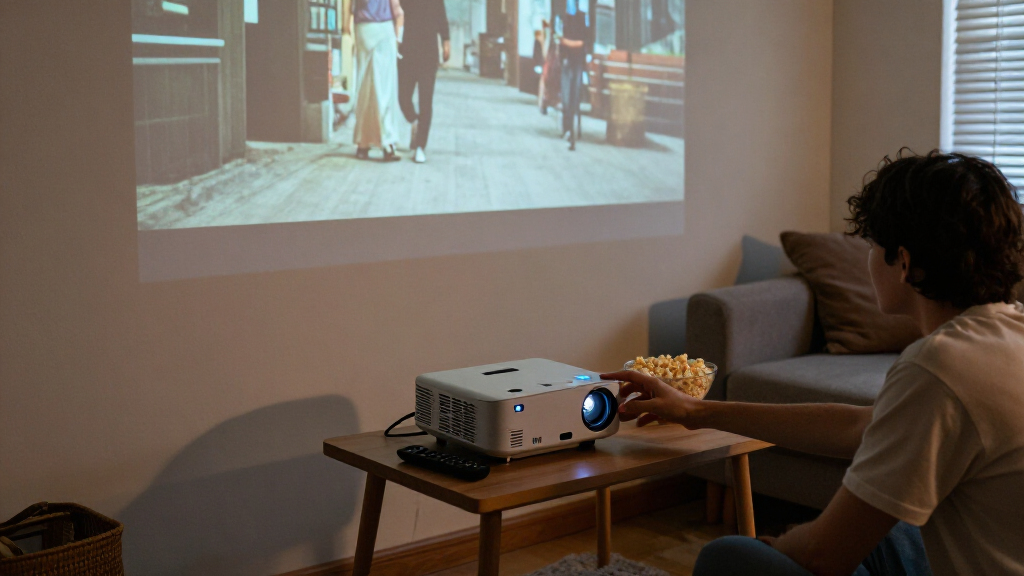
I compared these 15 projectors on factors that change the day-to-day viewing experience: native resolution, stated light source and brightness claims, setup flexibility, streaming options, portability, and connection features. I also separated native 1080p or 4K display claims from terms such as “4K support,” which can refer to accepting a signal rather than projecting at that resolution. Product naming and advertised features alone do not establish image quality, so the ranking gives more weight to clearly described display capabilities and practical fit than to a long list of connectivity claims.
The order reflects how broadly useful each model appears for its intended role, not a claim that one projector suits every room. The Epson leads as a flexible all-round choice; ViewSonic’s laser and 4K models rank highly for buyers prioritizing those specific strengths. Portable smart models remain useful for casual viewing and easy setup, but rank below models with clearer performance advantages when their advertised resolution, brightness, or app environment is less clearly specified. I also account for the compromises buyers should expect: a compact body, built-in streaming, or a low-hassle setup may matter more to some households than maximum image detail.
Factors to Consider When Choosing Best Projectors Under $1,000
Before choosing from this list, decide what the projector needs to do in your actual room. Screen size, ambient light, throw distance, and source devices can matter as much as the model name. These factors help separate a suitable projector from one that looks appealing on a feature list but cannot fit your space or viewing habits.
Match Brightness to the Room, Not the Marketing
Room light is one of the biggest limits on a projector image, particularly at larger screen sizes. If you plan to watch with lamps on or during daylight, prioritize a model with credible brightness information and use curtains or a smaller image to preserve contrast. A projector suited to a dark bedroom can look washed out in a bright living room even if its resolution is higher. Be cautious about comparing brightness figures when manufacturers do not use the same measurement standard. A common mistake is buying for the biggest advertised screen rather than the screen size the room can support clearly.
Check Native Resolution Before Paying for 4K Labels
Native resolution describes the number of pixels the projector can display, while “4K support” or “4K decoding” may only mean it can accept or process a 4K input. For movie detail and text clarity, that distinction affects what you will actually see on the wall. Buyers comparing a native 1080p projector with a model advertised as 4K compatible should verify the displayed resolution in the manufacturer’s specifications. A higher-resolution source cannot make a lower-resolution projector show every source pixel. If you sit close to a large screen, native resolution deserves more attention than streaming or connectivity claims.
Measure Throw Distance and Placement First
Throw distance determines how far the projector must sit from the screen to create your desired image size. Measure the intended location before buying, then compare the projector’s throw information with your room dimensions and mounting plans. Short-throw claims can help in smaller rooms, but they do not mean every placement will produce a large, well-focused image. Keystone correction can make a tilted image look rectangular, but relying on heavy correction may reduce usable image detail. Check for lens shift, zoom range, and mounting options when the projector will live in a fixed spot.
Decide Whether Built-In Streaming Is Worth the Tradeoff
Built-in apps can cut down on cables and make casual viewing easier, especially for a portable projector used in several rooms. They also add another software layer: app availability, interface speed, and update support can vary by device. A projector without the streaming service you need may require a separate streaming stick or console, so check compatibility before treating “smart” as a complete solution. External streamers can offer a familiar interface and may be easier to replace than the projector itself. Choose built-in streaming for convenience, not as proof of stronger picture performance.
Account for Sound, Power, and Portability
A portable projector is only convenient if its power needs, built-in speakers, and connections suit where you plan to use it. Built-in audio can be enough for occasional viewing, but a larger room or outdoor gathering may call for a Bluetooth speaker or wired sound system. Bluetooth is useful for audio pairing, though wireless audio can introduce delay that is distracting during games. Check whether the projector needs to stay near a power outlet and whether its size makes frequent setup practical. For outdoor use, plan for darkness, a stable surface, and external audio rather than assuming portability alone solves the setup.
Spend More Only for a Benefit You Will Notice
Paying more can make sense when it brings a specific improvement you will use, such as a laser light source, native 4K display, or better fit for a permanent room. It is less useful to pay for a long feature list if you mainly watch occasional shows on a small screen. Compare the full setup cost too: a screen, mount, streaming device, or speaker may be needed even when the projector has built-in apps. Buyers often focus on the projector alone and overlook those additions. Set priorities in order—image quality, room fit, convenience, then extras—so the purchase reflects how you actually watch.
Frequently Asked Questions
Does a projector that supports 4K display a native 4K image?
Not necessarily. “4K support” can mean the projector accepts a 4K signal but displays it at a lower native resolution. Check the manufacturer’s stated native resolution rather than relying on compatibility language. That distinction is especially useful when comparing compact models with the ViewSonic PX701-4K, which is identified as a 4K UHD projector. If fine detail matters, verify the display specification before choosing.
Can I use one of these projectors in a bright living room?
Some may be more suitable than others, but no projector is immune to ambient light washing out the image. A bright room generally calls for stronger stated brightness, a smaller screen, and control over daylight or lamps. The ViewSonic LS740HD is the laser-focused option in this group, while compact mini projectors are more naturally suited to casual viewing in dimmer spaces. Check the brightness specification and measurement standard, then judge it against your room rather than a maximum screen-size claim.
Should I choose built-in apps or connect a streaming device?
Built-in apps make a simple setup possible, but they may not offer every service or the interface you prefer. A streaming stick or console can provide a more familiar app environment and is easy to replace if software support changes. If you move the projector between rooms, built-in streaming can reduce the number of accessories to carry. If the projector will be used mostly for movies or gaming, prioritize image and connection needs first. Check the specific app support before buying either way.
Is a mini projector a good choice for outdoor movie nights?
A mini projector can be convenient outdoors because it is easy to carry and set up, but it works best after sunset and with a modest screen size. Outdoor light, wind, uneven surfaces, and limited power access can affect the experience more than they would indoors. Plan for a stable stand, a power source, and a separate speaker if the built-in audio will not cover your group. Models such as the HAPPRUN H1 and Aurzen Roku TV E1R emphasize portability, while a larger projector may suit a permanent indoor setup better. Check weather protection separately; portable does not mean weatherproof.
What should I prioritize if this will be my first projector?
Start with easy placement, a clear setup process, and connections that match the devices you already own. Check throw distance and screen size before buying, since a projector that cannot fit your room may be frustrating regardless of its smart features. Built-in apps or automatic keystone can reduce setup steps, but they do not replace checking focus, image quality, and available inputs. The Epson EpiqVision Flex CO-W01 is the broad-use pick here, while compact smart options favor convenience. Choose based on where you will watch most often, not on the longest feature list.
Conclusion
For the broadest mix of flexibility and everyday use, I recommend the Epson EpiqVision Flex CO-W01 as best overall. Buyers focused on a laser light source should compare the ViewSonic LS740HD, while those seeking a more explicitly 4K-oriented home projector should look to the ViewSonic PX701-4K as the best premium-style pick in this group. For a first projector, the Epson is my easiest all-round starting point; anyone prioritizing built-in streaming and simple portable use can consider the Aurzen Roku TV E1R. For outdoor or room-to-room viewing, the HAPPRUN H1 is a portability-focused choice, while buyers who want low-cost smart features should compare the compact models carefully and verify native resolution, app support, and brightness before choosing. Match the projector to your room first, then decide which extras are worth having.
Columbus Day / Indigenous Peoples' Day Picks
long weekend sales
As an affiliate, we earn on qualifying purchases.