
🔍 Read the full analysis: Explore The Features Of SenseTime's Xiao Huanxiong AI Office Agent On Your Phone on ThorstenMeyerAI.com
TL;DR
SenseTime has announced a mobile version of its AI office agent, Xiao Huanxiong, allowing users to send instructions from their phones for execution on desktop computers. Key features and availability details remain limited, but the development signals a shift toward cross-device AI task delegation.
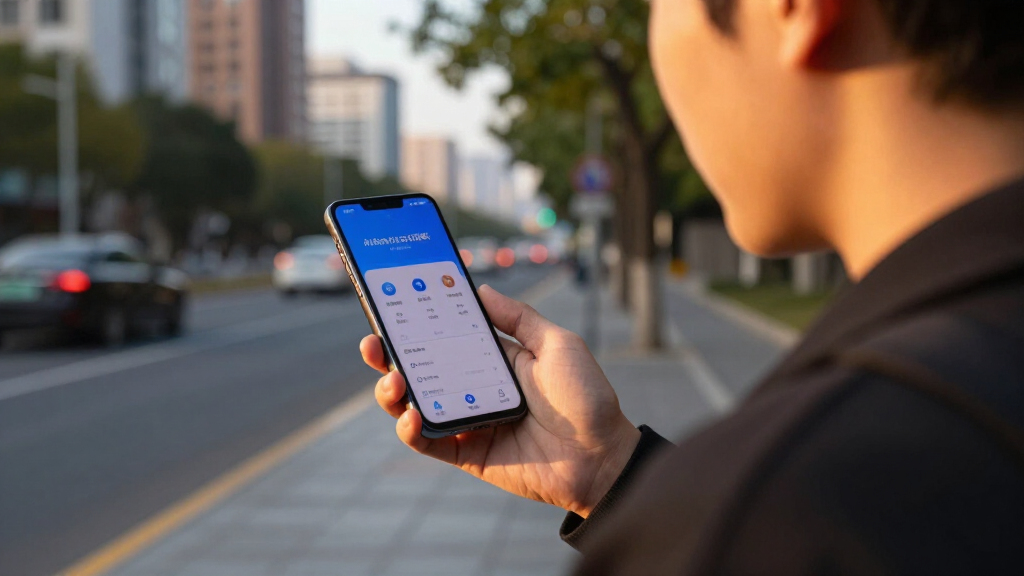
SenseTime has officially released a mobile version of Xiao Huanxiong, its AI office agent, allowing users to send instructions from their phones while the agent continues executing tasks on a connected desktop computer. This development aims to facilitate seamless, remote office workflows, reducing the need to be physically at a desk.
The new mobile feature enables cross-device task delegation, meaning users can dispatch commands from their smartphones—whether during commutes or outside the office—and the agent on their desktop will carry out the tasks without further input. According to SenseTime, this approach supports continuous execution, allowing work to proceed on the computer even when the user is away from their desk.
While the announcement highlights the core capability, specific details about supported applications, device compatibility, security protocols, and pricing remain undisclosed. For a detailed overview, see the original analysis. The company has not clarified whether the app supports iOS, Android, Windows, or macOS, nor how remote access is authenticated and safeguarded against unauthorized use. These unknowns are critical for assessing practical deployment in enterprise settings, especially as AI task delegation becomes more prevalent.
Potential Impact of Cross-Device AI Delegation
This development reflects an industry shift towards more flexible AI office assistants that extend beyond single-device interactions. If proven reliable, the ability to initiate and monitor complex tasks remotely could transform how knowledge workers manage workflows—starting a task on a phone during a commute and completing it on a desktop before arriving at the office.
For SenseTime, this move is part of a broader strategy to commercialize large AI models through practical enterprise tools. The focus on remote task delegation aligns with trends toward autonomous AI agents capable of handling multi-step processes with minimal supervision, potentially giving SenseTime a competitive edge in the fast-evolving AI productivity market.
smartphone remote desktop control app
As an affiliate, we earn on qualifying purchases.
As an affiliate, we earn on qualifying purchases.
SenseTime’s Shift Toward Practical AI Office Tools
Originally recognized for computer vision and facial recognition, SenseTime has increasingly pivoted toward large AI models and enterprise applications over recent years. Its desktop agent, capable of automating repetitive office tasks, was an early step in this direction. The new mobile version completes a remote control loop, enabling users to send commands from their phones and have the agent execute them on their computers.
This aligns with a wider industry trend where AI tools are moving from simple chatbots to autonomous agents that can operate software, perform multi-step workflows, and act independently within desktop environments. Competitors in China and globally are pursuing similar capabilities, intensifying the race for practical, productivity-enhancing AI solutions.
As an affiliate, we earn on qualifying purchases.
Unanswered Questions About Mobile Deployment
Many key details remain unconfirmed: the exact timeline for broad availability, supported platforms (iOS, Android, Windows, macOS), required hardware or software dependencies, and security measures for remote access. Additionally, the list of supported applications and how the system handles errors or interruptions during unattended execution are still unclear. Independent testing of the feature’s reliability and security is yet to be conducted, leaving questions about its readiness for widespread enterprise use.
cross-device task delegation software
As an affiliate, we earn on qualifying purchases.
As an affiliate, we earn on qualifying purchases.
Next Steps for SenseTime’s Mobile Office Agent
SenseTime is expected to publish detailed documentation outlining supported devices, applications, security protocols, and pricing tiers as the app becomes publicly available. Early user reviews and real-world testing results will be critical to evaluate the feature’s dependability and practical value. The company may also announce enterprise deployment partnerships or integrations in the near future, providing further insight into its commercial viability.
mobile app for desktop task management
As an affiliate, we earn on qualifying purchases.
As an affiliate, we earn on qualifying purchases.
Key Questions
When will the SenseTime Xiao Huanxiong mobile app be available to the public?
Specific release dates have not yet been announced. Expect official updates as the rollout progresses.
Which devices and operating systems are supported?
Details remain unclear; SenseTime has not specified supported platforms such as iOS, Android, Windows, or macOS.
What applications can Xiao Huanxiong operate on the desktop?
The supported applications and workflows are not yet disclosed. Further information is expected with upcoming documentation.
How secure is the remote command system?
Security protocols and authentication methods are still unspecified, raising questions about remote access safety.
Will this feature be available for enterprise use?
Potential enterprise deployment plans are not yet confirmed; more details are anticipated in future announcements.
Primary source: SenseTime · via ThorstenMeyerAI.com