
If you’re searching for the 9 best astrophotography cameras in 2026, you’re likely balancing performance, ease of use, and budget. The SVBONY SV605CC stands out for its high sensitivity and cooled design, making it ideal for detailed deep-sky imaging. The Celestron NexImage 20 offers a straightforward setup for planetary shots, perfect for hobbyists. However, each camera involves tradeoffs—some offer superb image quality but require advanced setup, while others prioritize simplicity at the expense of resolution. Continue reading for a detailed breakdown of these options to find the best fit for your astrophotography goals.

Get the latest gadgets delivered free with Prime
- Fast, free delivery on millions of items
- Prime Video, Amazon Music and more included
- Member-only deals all year
Complete the kit



Key Takeaways
- Cooled cameras like the SVBONY SV605CC deliver better long-exposure images but come at a higher cost and complexity.
- Sensor size and resolution significantly impact image detail, with larger sensors providing more data for processing.
- Ease of use varies; dedicated astrophotography cameras often require more setup than mirrorless options but yield better results.
- Budget constraints influence whether to prioritize high-end specialized cameras or more versatile, entry-level options.
- Compatibility with existing equipment, such as telescopes and mounts, is essential for seamless integration and optimal performance.
| SVBONY SV105 Telescope Camera, 1.25″ IMX307 CMOS Color Eyepiece Camera |  | Best for Beginners and Basic Planetary Imaging | Sensor: 1/2.8″ IMX307 CMOS | Resolution: 1920×1080 | Frame Rate: Up to 30 fps | VIEW ON AMAZON | See Our Full Breakdown |
| Celestron NexImage 20 Solar System Imager – Lunar & Planetary Camera, Color |  | Best for High-Resolution Solar System Imaging | Sensor Resolution: 5240 x 3840 | Sensor Type: AR2020 CMOS | Pixel Size: 1.4 microns | VIEW ON AMAZON | See Our Full Breakdown |
| SVBONY SV605CC Cooled Color Astrophotography Camera, 9MP IMX533 |  | Best for Deep Sky and Panoramic Imaging | Sensor: IMX533 | Resolution: 3008×3008 | Cooling: Dual-layer semiconductor, down to 30°C below ambient | VIEW ON AMAZON | See Our Full Breakdown |
| 4K 8MP USB Astronomy Camera for Telescope Eyepiece 1.25 Inch |  | Best for Beginners and Video Capture | Sensor: 8MP | Video Resolution: 4K | Focus Type: Manual | VIEW ON AMAZON | See Our Full Breakdown |
| SVBONY SV305C Pro Telescope Camera, USB 3.0 High-Speed, 2MP IMX662 Sensor |  | Best for Fast, High-Detail Planetary and Celestial Imaging | Sensor Type: CMOS | Sensor Resolution: 2 MP | Video Capture Resolution: 1080p | VIEW ON AMAZON | See Our Full Breakdown |
| OM SYSTEM OM-3 Astro Mirrorless Camera, Silver |  | Best for Versatile Astrophotography and Creative Use | Sensor: 20.4 Megapixel Four Thirds BSI Stacked CMOS | Autofocus: 1053-point Quad Pixel AF | Video Capabilities: 4K at 60fps (H.265 10-bit), 1080p at 60fps | VIEW ON AMAZON | See Our Full Breakdown |
| SVBONY SC571CC Cooled Color Astronomy Camera, IMX571 CMOS APS-C Sensor |  | Best for Deep-Sky Long-Exposure Imaging | Sensor: IMX571 CMOS APS-C | Resolution: 26MP | Cooling: Dual-stage TEC, -35°C below ambient | VIEW ON AMAZON | See Our Full Breakdown |
| SVBONY SC311 Upgraded WiFi Telescope Camera, IMX662 Astrophotography Camera |  | Best for Moon, Planet, and Short-Exposure Deep Sky Imaging | Sensor: IMX662 | Resolution: 2.1MP | Exposure Time: up to 30 seconds | VIEW ON AMAZON | See Our Full Breakdown |
| SVBONY SC715C Planetary Camera with IMX715 Sensor, 1.45μm Micro Pixels, USB 3.0, Autoguider Interface | 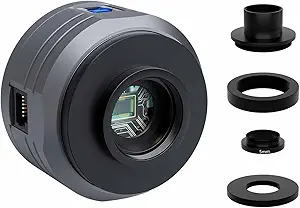 | Best for High-Resolution Planetary and Autoguide Imaging | Sensor: IMX715 | Pixel Size: 1.45μm | Image Resolution: 4K | VIEW ON AMAZON | See Our Full Breakdown |
| astrophotography camera | Sensor |
|---|---|
| SVBONY SV105 Telescope Camera | 1/2.8" IMX307 CMOS |
| Celestron NexImage 20 Solar Sy | — |
| SVBONY SV605CC Cooled Color As | IMX533 |
| 4K 8MP USB Astronomy Camera fo | 8MP |
| SVBONY SV305C Pro Telescope Ca | — |
| OM SYSTEM OM-3 Astro Mirrorles | 20.4 Megapixel Four Thirds BSI Stacked CMOS |
| SVBONY SC571CC Cooled Color As | IMX571 CMOS APS-C |
| SVBONY SC311 Upgraded WiFi Tel | IMX662 |
| SVBONY SC715C Planetary Camera | IMX715 |
More Details on Our Top Picks
SVBONY SV105 Telescope Camera, 1.25″ IMX307 CMOS Color Eyepiece Camera
The SVBONY SV105 stands out as an entry-level option perfect for those just starting out in planetary and lunar imaging. Its high-resolution 1920×1080 sensor delivers sharp, detailed images comparable to more advanced cameras like the Celestron NexImage 20, but with a much simpler setup. Unlike the NexImage, which is geared specifically towards Solar System objects, the SV105 offers broader compatibility with Windows, Linux, and macOS, making it accessible for most hobbyists. However, it’s limited in features for advanced astrophotographers, lacking deep-sky capabilities or extensive software controls. This makes it ideal for beginners seeking straightforward operation without a steep learning curve, but less suitable for those wanting professional-grade results or advanced features.
Pros:- Plug-and-play setup with no driver required
- High-resolution imaging suitable for planetary detail
- Compatible with Windows, Linux, and macOS
Cons:- Limited to basic astrophotography features
- No support for iOS devices or mobile platforms
- Requires additional software for full functionality
Best for: Beginners interested in planetary and lunar imaging with easy setup and broad OS compatibility
Not ideal for: Advanced astrophotographers aiming for deep-sky astrophotography or high-end imaging features
- Sensor:1/2.8″ IMX307 CMOS
- Resolution:1920×1080
- Frame Rate:Up to 30 fps
- Video Recording:2K at high speed
- Connection:USB 2.0
- Compatibility:Windows, Linux, macOS
Our verdict“This camera is best for novices wanting an easy, reliable entry point into planetary imaging without complex features.”
Celestron NexImage 20 Solar System Imager – Lunar & Planetary Camera, Color
The Celestron NexImage 20 makes a strong case for planetary imaging with its impressive 20 MP CMOS sensor, delivering incredible detail for Moon, planets, and Sun shots. Its USB-C connection allows fast data transfer, which is crucial for capturing high-resolution videos. Compared to the SVBONY SV105, which is more beginner-friendly, the NexImage 20 is tailored toward users seeking high-end planetary detail and autoguiding support, making it suitable for more serious amateurs. Its primary limitation is that it’s mainly focused on Solar System objects; it lacks the deep-sky capabilities of dedicated deep-sky cameras. This pick is ideal for astrophotographers dedicated to planetary detail but less suitable for those wanting a more versatile astrophotography setup overall.
Pros:- High-resolution 20 MP sensor captures fine planetary details
- Easy plug-and-play setup
- Includes autoguiding support for precise tracking
Cons:- Limited to Solar System imaging, not ideal for deep-sky objects
- No mention of included filters or accessories
- Requires compatible telescope and software setup
Best for: Amateurs focused primarily on lunar and planetary imaging with high resolution and autoguiding support
Not ideal for: Deep-sky astrophotographers seeking wide-field or nebula imaging, as it’s designed mainly for Solar System objects
- Sensor Resolution:5240 x 3840
- Sensor Type:AR2020 CMOS
- Pixel Size:1.4 microns
- Connectivity:USB-C
- Compatibility:Telescope, computer
Our verdict“This camera suits serious planetary imagers who want high resolution and straightforward operation, but isn’t suited for deep-sky pursuits.”
SVBONY SV605CC Cooled Color Astrophotography Camera, 9MP IMX533
The SVBONY SV605CC is designed for enthusiasts seeking high-quality deep sky images. Its 9MP IMX533 sensor provides detailed resolutions, while the dual-layer refrigeration ensures images are cleaner with less noise, a key advantage over uncooled models like the SVBONY SV105. Its compact form factor and robust build make it suitable for outdoor use, though its IP54 waterproof rating might limit use in persistent rain or very wet conditions. The setup can be tricky for newcomers, especially those unfamiliar with calibration or cooling adjustments. Compared to the SVBONY SV305C Pro, which is more geared toward planetary imaging, the SV605CC excels in long-exposure and deep-sky shots, making it ideal for those expanding into advanced astrophotography but less for casual observers.
Pros:- Effective cooling reduces noise significantly
- High-resolution 9MP sensor for detailed images
- Suitable for deep sky and panoramic astrophotography
Cons:- Requires compatible optical systems for best results
- Limited waterproof rating may restrict outdoor use
- Setup and calibration can be complex for beginners
Best for: Intermediate to advanced deep-sky astrophotographers wanting reduced noise and high detail
Not ideal for: Casual or planetary-focused users, as setup complexity and outdoor limitations may be a hurdle
- Sensor:IMX533
- Resolution:3008×3008
- Cooling:Dual-layer semiconductor, down to 30°C below ambient
- Form Factor:Compact
- Waterproof Rating:IP54
- Connectivity:USB
Our verdict“This camera is perfect for dedicated deep-sky hobbyists ready to handle more complex calibration and outdoor conditions.”
4K 8MP USB Astronomy Camera for Telescope Eyepiece 1.25 Inch
The 4K 8MP USB Astronomy Camera offers a straightforward, budget-friendly solution for newcomers interested in Moon, planets, and bright objects. Its 4K video resolution and high frame rate make it ideal for capturing dynamic scenes or creating detailed videos, similar to the SVBONY SV105‘s video capabilities but with higher resolution. Its removable IR cut filter allows some control over image quality, though it lacks autofocus or advanced imaging modes, limiting flexibility for more experienced users. Its compatibility across Windows, macOS, and Linux makes it accessible, but the basic features mean it’s better suited for hobbyists rather than professionals seeking high precision or deep-sky imaging.
Pros:- Supports 4K video and high frame rate capture
- Compatible with multiple operating systems
- Lightweight, compact, and easy to handle
Cons:- Requires manual focus adjustment
- Lacks autofocus feature
- Limited advanced imaging features
Best for: Beginners interested in lunar and planetary video recording with simple operation
Not ideal for: Advanced astrophotographers wanting autofocus, high-precision imaging, or deep-sky capabilities
- Sensor:8MP
- Video Resolution:4K
- Focus Type:Manual
- Mount:1.25 inch telescope eyepiece
- Focal Length:25 mm
- Compatibility:Windows, macOS, Linux
Our verdict“This camera is ideal for beginners wanting to record Moon and planets in 4K without complex controls.”
SVBONY SV305C Pro Telescope Camera, USB 3.0 High-Speed, 2MP IMX662 Sensor
The SVBONY SV305C Pro excels in capturing fast-moving celestial objects thanks to its impressive 107 FPS frame rate and high sensitivity. Its 2 MP IMX662 sensor produces sharp, detailed planetary images, outperforming lower-sensitivity models like the SV105 in dynamic scenes. The USB 3.0 interface allows rapid data transfer, reducing lag during high-speed imaging sessions. Its HDR capability further enhances contrast, especially useful in challenging lighting conditions. On the downside, it lacks water resistance, making outdoor use in wet conditions problematic, and the weight isn’t specified, which might affect portability. Compared with the other cameras, it offers the fastest frame rate and best suited for capturing planets or other fast-moving objects with precision and speed.
Pros:- Very high frame rate (107 FPS) for sharp, real-time imaging
- High sensitivity with low noise for detailed planetary images
- USB 3.0 transfer speeds streamline workflow
Cons:- No water resistance, limiting outdoor use in wet environments
- No weight info, affecting portability considerations
- Limited to planetary and fast-moving objects
Best for: Celestial observers wanting high-speed, detailed planetary imaging with excellent sensitivity
Not ideal for: Users seeking deep-sky or long-exposure astrophotography, as it’s optimized for rapid planetary captures
- Sensor Type:CMOS
- Sensor Resolution:2 MP
- Video Capture Resolution:1080p
- Frame Rate:107 FPS
- Shutter Speed:1800 seconds
- Interface:USB 3.0
Our verdict“This camera is best suited for astrophotographers focused on high-speed planetary imaging and celestial tracking, but less so for static deep-sky targets.”
OM SYSTEM OM-3 Astro Mirrorless Camera, Silver
The OM SYSTEM OM-3 stands out for its balanced combination of high-resolution imaging and portability, making it well-suited for astrophotographers who want a camera that can handle both deep-sky shots and everyday photography. Its 20.4MP Four Thirds sensor delivers sharp, vibrant images, comparable to dedicated astrophotography cameras like the SVBONY SC571CC, but with the added benefit of versatility. The autofocus system is an advantage for quick setup, though it may fall short for extremely precise star tracking compared with specialized astro cameras. Its weather sealing and lightweight design make it ideal for outdoor adventures, but the lack of detailed specifications on viewfinder options and certain features suggests it’s better for users who prioritize flexibility over specialized astrophotography features. Compared to a dedicated astro camera, this model may require more post-processing to achieve the same deep-sky detail, and its higher price may deter casual hobbyists.
Pros:- High-resolution 20.4MP sensor for detailed images
- Advanced autofocus with 1053-point coverage
- Compact, lightweight design ideal for travel and outdoor use
- Excellent low-light performance with wide ISO range
Cons:- Limited details on viewfinder and specific astrophotography features
- No built-in flash or specialty star-tracking capabilities
Best for: Travelers and outdoor photographers who want a capable camera for astronomy and general photography.
Not ideal for: Pure astrophotographers seeking maximum sensitivity and dedicated long-exposure features, as this camera is more versatile than specialized.
- Sensor:20.4 Megapixel Four Thirds BSI Stacked CMOS
- Autofocus:1053-point Quad Pixel AF
- Video Capabilities:4K at 60fps (H.265 10-bit), 1080p at 60fps
- Image Stabilization:7.5-stop in-body stabilization
- ISO Range:200 to 25,600
- Weight:14.56 oz (413g)
Our verdict“This camera is best for astrophotographers who want a versatile, high-performance mirrorless camera for both space and everyday photography.”
SVBONY SC571CC Cooled Color Astronomy Camera, IMX571 CMOS APS-C Sensor
The SVBONY SC571CC is designed for serious deep-sky astrophotography, with its 26MP IMX571 APS-C sensor providing exceptionally fine detail, surpassing smaller sensors like the IMX662 used in the SC311. Its dual-stage TEC cooling system is effective at reducing noise during long exposures, a key advantage over less cooled cameras such as the SVBONY SV305C, especially for capturing faint galaxies and nebulae. The front-window heater helps prevent dew buildup, ensuring consistent imaging sessions under dew-prone skies. While its weight of over a pound makes mounting more demanding, this camera’s high resolution and cooling capabilities justify the tradeoff for dedicated deep-sky imaging. Its size and setup complexity mean it’s better suited for experienced astrophotographers with compatible telescopes and software. Compared to more compact cameras, it delivers superior detail but requires a more stable mount and careful calibration.
Pros:- High-resolution 26MP sensor captures intricate deep-sky details
- Effective dual-stage TEC cooling reduces noise during long exposures
- Dew heater prevents moisture buildup for consistent imaging
- Fast USB 3.0 data transfer streamlines data collection
Cons:- Relatively heavy, requiring sturdy mounting equipment
- Requires compatible software and telescope setup, not plug-and-play
Best for: Deep-sky astrophotographers seeking high-resolution, noise-reduced long exposures with robust cooling.
Not ideal for: Casual users or those new to astrophotography, as setup and calibration are more involved than simpler cameras.
- Sensor:IMX571 CMOS APS-C
- Resolution:26MP
- Cooling:Dual-stage TEC, -35°C below ambient
- Sensor Size:23.4×15.7mm
- Pixel Size:3.76 µm
- Connectivity:USB 3.0
Our verdict“This camera is best suited for dedicated deep-sky astrophotographers who prioritize high detail and low noise in long-exposure imaging.”
SVBONY SC311 Upgraded WiFi Telescope Camera, IMX662 Astrophotography Camera
The SVBONY SC311 offers a practical entry point into astrophotography with its IMX662 sensor and built-in WiFi, making it especially convenient for capturing lunar and planetary images. Its 2.1MP resolution is modest compared to dedicated deep-sky cameras like the SC571CC but still provides sufficient detail for close-up planetary work and short-exposure deep-sky objects. The upgradable WiFi feature simplifies remote operation, although the absence of real-time image preview in photo mode can slow workflow. Its exposure capability of up to 30 seconds opens opportunities for capturing low-light objects without extensive setup, making it more flexible than basic models. Compared to the SC715C, it’s less suitable for high-resolution planetary imaging, but its portability and wireless operation make it a good choice for casual users or those with limited space.
Pros:- Supports exposure times up to 30 seconds for faint objects
- Built-in WiFi allows remote and mobile device control
- Expandable storage up to 256GB for data flexibility
- Standard 1.25-inch interface for wide compatibility
Cons:- No live image preview in photo mode can hinder real-time assessment
- Manual operation and learning curve for app and controls
Best for: Beginner to intermediate astrophotographers focusing on planetary and short-exposure deep-sky imaging with convenience.
Not ideal for: Advanced astrophotographers requiring high-resolution, long-exposure deep-sky imaging or detailed planetary video capture.
- Sensor:IMX662
- Resolution:2.1MP
- Exposure Time:up to 30 seconds
- Objective Lens Diameter:31.75 mm
- Storage Support:up to 256GB TF card
- Dimensions:2.95″D x 3.4″W x 5.9″H
Our verdict“This camera is well-suited for beginners and casual astrophotographers seeking a wireless, easy-to-use device for moon and planetary imaging.”
SVBONY SC715C Planetary Camera with IMX715 Sensor, 1.45μm Micro Pixels, USB 3.0, Autoguider Interface
The SVBONY SC715C brings professional-grade planetary imaging with its IMX715 sensor, capable of capturing stunning 4K detail at high frame rates. Its 1.45μm pixel size and USB 3.0 interface enable smooth, high-resolution video streams, making it ideal for planetary detail and autoguiding. Compared with the SC311, this model offers much higher resolution and more precise planetary images, though it lacks smartphone compatibility and built-in focus mechanisms. Its rugged aluminum body ensures durability in outdoor conditions, but users need to dedicate time to software calibration and focusing, as it’s not a plug-and-play device. This pick is best for experienced astrophotographers who want detailed planetary videos or need an autoguider interface for long-exposure setups. It’s less suitable for general astrophotography or quick shots due to manual focus requirements.
Pros:- High-resolution 4K imaging with detailed planetary views
- Fast USB 3.0 data transfer at 45.5 fps for smooth video
- Durable aluminum body for outdoor use
- Compatible with popular astronomy software
Cons:- No compatibility with smartphones or simple plug-and-play use
- Requires dedicated software and manual focusing
Best for: Experienced planetary astronomers and autoguider users needing detailed 4K images and precise tracking.
Not ideal for: Beginners or those seeking an all-in-one astrophotography camera, as setup and calibration are more complex.
- Sensor:IMX715
- Pixel Size:1.45μm
- Image Resolution:4K
- Interface:USB 3.0
- Autoguider Interface:ST4
- Weight:147g
Our verdict“This camera is ideal for seasoned planetary astronomers and autoguider applications demanding high detail and precision.”

How We Picked
The selection process for these astrophotography cameras focused on critical factors that influence image quality, user experience, and value. Performance metrics like sensor sensitivity, resolution, and cooling capabilities were prioritized, as they directly affect astrophotography results. Usability features, including connection options and software support, were also considered to ensure that both beginners and experienced users could operate the cameras effectively. Additionally, build quality, price point, and compatibility with common telescopes and mounts shaped the rankings. Cameras offering a balance of advanced features and accessibility earned higher positions, while tradeoffs like price or complexity influenced placement accordingly.Factors to Consider When Choosing 9 Best Astrophotography Cameras
Choosing the right astrophotography camera involves evaluating several key factors that impact your imaging results and ease of use. It’s important to understand how sensor size, cooling, connection types, and budget interact to meet your specific needs. Making informed decisions can help you avoid common pitfalls, like overspending on features you won’t use or selecting a camera incompatible with your existing setup. This guide highlights the most important considerations to help you select a camera that aligns with your skill level and astrophotography ambitions.Sensor Size and Resolution
The sensor size and resolution determine how much light the camera can capture and the level of detail in your images. Larger sensors generally produce sharper, more detailed photos of deep-sky objects, but they also tend to be more expensive and require compatible mounts. Higher resolution sensors can reveal more fine detail, but they also generate larger files that demand powerful processing and storage solutions. Balancing sensor size and resolution with your current setup and processing capabilities is key to choosing a camera that delivers quality without unnecessary complexity.
Cooling Capabilities
Cooled cameras significantly reduce thermal noise during long exposures, which is essential for capturing faint deep-sky objects. These models are ideal if you’re planning to do serious astrophotography, as they enable longer exposures with cleaner images. However, cooling systems add to the camera’s cost and complexity, often requiring additional power and maintenance. For casual or planetary imaging, uncooled cameras may suffice, providing simpler operation at a lower price point. Understanding your imaging goals will help determine whether investing in cooling technology is worthwhile.
Connectivity and Compatibility
Most astrophotography cameras connect via USB, but the type (USB 2.0 vs. USB 3.0) and supported software can influence ease of use and data transfer speeds. Compatibility with your telescope, mount, and computer system must be verified before purchase. Some cameras integrate autoguiding features or support WiFi, adding convenience but potentially increasing cost and complexity. Ensuring seamless compatibility minimizes frustration and maximizes your time capturing images rather than troubleshooting hardware issues.
Ease of Use and Learning Curve
Entry-level cameras with straightforward interfaces are better suited for beginners, enabling quick setup and minimal technical fuss. Advanced models, while offering superior image quality, often require a learning curve involving software calibration and detailed settings. Consider your current technical skills and how much time you’re willing to invest in mastering new equipment. Investing in a user-friendly camera can make the difference between enjoying astrophotography and feeling overwhelmed, especially when starting out.
Budget and Long-Term Value
Astrophotography cameras vary widely in price, from affordable beginner models to premium, feature-rich options. While it might be tempting to opt for the cheapest camera, investing a bit more often yields better results and longer lifespan. High-end models with advanced cooling, larger sensors, and better build quality can provide more flexibility and improved images over time. Conversely, if you’re just exploring the hobby, a budget-friendly option may be enough, but be mindful of potential upgrades needed as your skills grow.
Frequently Asked Questions
Do I need a cooled camera for astrophotography?
A cooled camera is highly recommended if you’re planning to capture deep-sky objects with long exposures, as it reduces thermal noise and produces cleaner images. For planetary or lunar imaging, cooling is less critical because shorter exposures are typical, and noise is less of an issue. However, cooling systems do add complexity and cost, so evaluate your target objects and budget before deciding. For serious astrophotographers, investing in a cooled camera often results in significantly better image quality in the long run.
Can I use a regular mirrorless camera for astrophotography?
Yes, many mirrorless cameras can be used for astrophotography, especially with appropriate adapters and mounts. They offer high-resolution sensors and user-friendly interfaces, making them accessible for beginners. However, they typically lack dedicated cooling systems, which means noise can increase during long exposures, especially in warm conditions. To maximize their potential, you’ll want to use them with tracking mounts and consider post-processing to reduce noise. They are a versatile choice for hobbyists who want an all-in-one solution.
What is the importance of sensor sensitivity in astrophotography?
Sensor sensitivity, often indicated by ISO or gain settings, directly impacts your ability to capture faint objects in the night sky. A highly sensitive sensor can detect dim stars and nebulae more effectively, reducing the need for extremely long exposures. This means clearer images with less noise and fewer tracking errors. Cameras with high sensitivity are especially beneficial for deep-sky imaging, but they also require good noise reduction techniques. Selecting a camera with strong sensitivity capabilities can make a noticeable difference in your astrophotography results.
Should I prioritize resolution or sensor size?
Both resolution and sensor size influence your imaging quality, but their importance depends on your goals. Larger sensors typically capture more light and detail, leading to better deep-sky images, while higher resolution sensors provide finer detail in planetary imaging. If you primarily focus on planets and lunar shots, resolution might be more beneficial. For deep-sky objects, sensor size often has a bigger impact on the overall image quality. Balancing these factors based on your target objects and processing capacity will lead to the best results.
Is software compatibility a concern when choosing a camera?
Absolutely. Compatibility with your preferred imaging software and operating system can significantly influence your workflow. Some cameras come with dedicated software, while others rely on third-party applications. Incompatibility can lead to frustration, limited features, or the need for additional hardware or adapters. Before purchasing, verify that the camera supports your existing setup and software ecosystem, ensuring smooth operation and efficient image capture. This consideration can save time and prevent headaches during your astrophotography sessions.
Conclusion
The best overall pick for most users is the SVBONY SV605CC due to its combination of high sensitivity, cooled operation, and versatility, making it suitable for serious deep-sky imaging. For those new to astrophotography or on a tight budget, the Celestron NexImage 20 offers straightforward planetary imaging with minimal setup. The SVBONY SC571CC stands out as a premium choice for advanced users seeking larger sensors and higher resolution. Hobbyists focusing on planetary shots will appreciate the SVBONY SC715C for its dedicated planetary features. Ultimately, selecting the right camera depends on your target objects, experience level, and budget, but this list provides a solid foundation to make an informed decision.
As an affiliate, we earn on qualifying purchases.Halloween Picks
halloween