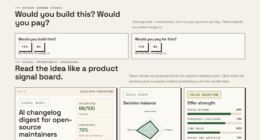

📊 Full opportunity report: Capital: The Lever Beneath the Levers on ThorstenMeyerAI.com — validation score, market gap, and execution plan.
TL;DR
In 2026, major AI companies are raising over $4 trillion, transferring risk from private investors to the public market. This capital flow creates vulnerabilities in the AI ecosystem, with potential economic impacts.
In June 2026, SpaceX, Anthropic, and OpenAI announced their plans for major public stock offerings, valuing over $4 trillion combined, marking a significant shift in AI funding and risk transfer to the public markets. This development underscores how capital, the underlying lever of AI expansion, is shaping the industry’s future and exposing systemic vulnerabilities.
On June 12, SpaceX, now including xAI, listed on Nasdaq with a valuation near $1.77 trillion, briefly surpassing $2 trillion in early trading. The offering was heavily oversubscribed, with retail investors receiving a larger-than-normal share of stocks. Simultaneously, Anthropic and OpenAI are preparing for public listings valued at approximately $965 billion and between $730–850 billion, respectively, with the total private value of these firms approaching $4 trillion.
Bank of America describes this as a large-scale transfer of risk from early investors to the public market, with many insiders already cashing out billions in stock prior to the IPOs. This pattern indicates a cycle where private capital is being reallocated to the public, often at peak valuations, raising concerns about market stability.
The flow of capital is highly circular. Major tech firms like Microsoft, Amazon, and Google invest heavily into Nvidia, which supplies the chips for AI infrastructure. Nvidia, in turn, funds AI companies like OpenAI and others, creating a loop of internal demand. This circularity risks demand overestimation and mispricing of capacity, potentially leading to systemic fragility.
Recent signs of caution include Microsoft reducing its commitment to supply all of OpenAI’s compute needs, allowing other cloud providers to fill the gap. This indicates emerging vulnerabilities in the tightly coupled demand cycle, which could trigger broader economic repercussions if demand wanes.
Capital: The Lever Beneath the Levers
Every chokepoint costs money — so whoever can fund the buildout decides who builds at all. In 2026 the bill came due in public: a trillion-dollar IPO wave, financed by a circle of firms paying each other, now sold to everyone else.
The meta-chokepoint: it gates the other five, because you can’t build any of them without clearing the capital bar. A synchronized machine has no natural brake — no one can slow first — and the IPO wave moves the risk to the public as insiders take gains. The hedge is solvency that doesn’t depend on the music playing: sane burn, own what’s cheap, self-host where you can.
Why Capital Flows in AI Signal Broader Risks
The massive capital investments and risk transfers in AI signal a fragile ecosystem heavily reliant on circular demand and debt-financed infrastructure. This interconnectedness amplifies the potential for cascading failures, which could impact the broader economy, especially as AI companies constitute a growing share of stock market valuations. The risk transfer to public markets at high valuations raises questions about sustainability and systemic stability.
AI server compute hardware
As an affiliate, we earn on qualifying purchases.
As an affiliate, we earn on qualifying purchases.
The 2026 AI Funding Surge and Its Origins
Over the past year, private AI companies like SpaceX, Anthropic, and OpenAI have raised unprecedented sums, collectively approaching $4 trillion in valuation. These firms are preparing for major IPOs, transferring risk from early private investors to the public. This cycle is driven by a tight circular flow of capital among tech giants, AI developers, and hardware suppliers, creating a self-reinforcing demand loop.
Historically, AI funding has been concentrated among private investors, but 2026 marks a shift as valuations reach record highs and public offerings become imminent. The pattern echoes previous tech bubbles but is unique in its scale and circular funding structure.
Analysts warn that this concentrated funding, combined with high debt levels and limited consumer demand, introduces systemic risks that could trigger a broader economic slowdown if demand falters or valuations correct sharply.
“There is more greed than fear right now, and liquidity remains abundant—conditional on continued optimism in AI growth.”
— Goldman Sachs CEO
AI data storage solutions
As an affiliate, we earn on qualifying purchases.
As an affiliate, we earn on qualifying purchases.
Uncertainties Surrounding AI Market Sustainability
It remains unclear how long the current funding cycle can sustain high valuations before a correction occurs. The potential for demand slowdown, credit tightening, or macroeconomic shocks could trigger a rapid devaluation, but timing and magnitude are uncertain.
Additionally, the actual impact of these IPOs on the broader economy and whether systemic risks will materialize remains under debate among economists and industry insiders.

AI Systems Performance Engineering: Optimizing Model Training and Inference Workloads with GPUs, CUDA, and PyTorch
As an affiliate, we earn on qualifying purchases.
As an affiliate, we earn on qualifying purchases.
Next Steps for Monitoring AI Funding and Market Stability
In the coming months, close monitoring of AI company valuations, IPO performance, and demand signals from cloud providers will be critical. Regulatory scrutiny may also increase as authorities assess systemic risks. Market reactions to any signs of slowdown could influence the broader economic outlook, making these developments key to watch.
Further disclosures from firms about their infrastructure commitments and investor sentiment will help gauge whether the current cycle can continue or if a correction is imminent.
cloud computing for AI
As an affiliate, we earn on qualifying purchases.
As an affiliate, we earn on qualifying purchases.
Key Questions
Why are AI companies raising such large amounts of money now?
They are preparing for public listings, seeking to capitalize on high valuations, and transferring private risk to the public market amid a cycle of circular capital flows.
What risks does this funding pattern pose to the economy?
It increases systemic fragility due to overleveraged infrastructure, demand overestimation, and potential valuation corrections that could cascade through financial markets.
How does circular demand among tech giants affect the industry?
It creates a self-reinforcing loop that inflates demand and capacity estimates, risking mispricing and making the ecosystem vulnerable to shocks if demand falters.
What signs suggest the current cycle might be unsustainable?
Recent reductions in commitments by major players like Microsoft and the high level of insider cashing out indicate caution, raising concerns about overvaluation and potential corrections.
Who controls the main capital chokepoint in AI funding?
The largest tech firms—Microsoft, Amazon, and Google—along with major hardware suppliers like Nvidia, form a small group that effectively controls the flow of capital and infrastructure in AI development.
Source: ThorstenMeyerAI.com