
📊 Full opportunity report: VigilSAR Benchmark: There Is No Best Model on ThorstenMeyerAI.com — validation score, market gap, and execution plan.
TL;DR
The VigilSAR Benchmark demonstrates that no AI model is universally superior for defense applications. Rankings vary based on user needs, emphasizing the importance of context in model selection. The benchmark focuses on trustworthiness, deployability, and compliance, not just capability.
The VigilSAR Benchmark has revealed that there is no single ‘best’ AI model for defense-related tasks. Instead, rankings vary significantly based on the specific needs and constraints of the user, such as deployment environment, compliance requirements, and reliability. This challenges the common perception that capability leaderboard rankings identify the most suitable model for all scenarios, emphasizing the importance of context in AI deployment decisions.
The VigilSAR Benchmark evaluates models across five axes: Capability, Reliability, Robustness, Safety & Compliance, and Efficiency & Deployability. Unlike traditional leaderboards that focus solely on raw intelligence or performance, VigilSAR explicitly incorporates deployment considerations relevant to defense and regulated environments.
One of the key findings is that models ranked highest in capability do not always rank highest in safety or deployability. For example, a model optimized for maximum performance in cloud environments may be unsuitable for air-gapped or on-premises deployment, critical for defense agencies. Conversely, models that excel in safety and compliance may sacrifice some capability but are more trustworthy and easier to deploy in sensitive settings.
Furthermore, the benchmark introduces a novel approach by re-ranking models based on three profiles: cloud-centric, sovereign edge (on-premises or air-gapped), and compliance-first (adhering to EU regulations like GDPR and the AI Act). This results in different models being top-ranked depending on the specific user profile, demonstrating that no single model is universally best. The design explicitly excludes scoring offensive or harmful capabilities, focusing instead on trustworthy, defense-relevant competence.
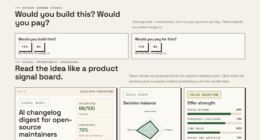
VigilSAR Benchmark — there is no best model
Capability leaderboards measure who’s smartest. This one scores who’s deployable — across five axes — then re-ranks by who’s actually asking.
Independent commentary, produced with AI assistance under human editorial oversight. The views are the author’s own and may change. VigilSAR Benchmark is an early-stage, in-development public benchmark; methodology, scope and results will evolve and are not a certification, authority, or guarantee of any model’s fitness, safety, or compliance. It scores defense-relevant competence and explicitly excludes weaponeering, targeting, CBRN, and exploit-generation tasks. Benchmark results are indicative, can be gamed or in error, and require independent verification; nothing here endorses any model. Model and company names are trademarks of their respective owners; mention does not imply endorsement.
Impact of Context-Dependent AI Rankings on Defense Decisions
This development underscores that organizations cannot rely solely on capability leaderboards when selecting AI models for defense or regulated environments. The VigilSAR Benchmark highlights the importance of considering deployment context, safety, and compliance, which directly influence the suitability and trustworthiness of AI systems. For policymakers and defense agencies, this means adopting a more nuanced, multi-criteria approach to AI procurement, reducing risks associated with deploying models that are powerful but unsafe or incompatible with operational constraints.
It also signals a shift away from vendor lock-in and promotes the use of multiple models tailored to specific operational needs, fostering a more resilient and responsible AI ecosystem in defense sectors.
defense AI deployment models
As an affiliate, we earn on qualifying purchases.
As an affiliate, we earn on qualifying purchases.
Evolution of Defense AI Benchmarking and Its Focus Areas
Traditional AI leaderboards have primarily measured models based on raw performance metrics, often emphasizing capability and intelligence scores. However, in defense and regulated sectors, practical deployment considerations—such as safety, robustness, compliance, and hardware constraints—are paramount. The VigilSAR Benchmark was developed to fill this gap, focusing specifically on defense-relevant competence and trustworthy deployment.
Earlier efforts in AI benchmarking have largely ignored these practical constraints, leading to a disconnect between academic performance metrics and real-world applicability. VigilSAR’s approach, introduced in early 2024, redefines evaluation by integrating multiple axes and user profiles, emphasizing that the ‘best’ model depends heavily on the operational context. This marks a significant shift toward more comprehensive, deployment-aware AI assessment tools for defense and intelligence applications.
“There is no one-size-fits-all model. Rankings depend on who is asking and what they need—capability alone is not enough.”
— Thorsten Meyer, Lead Developer of VigilSAR
trustworthy AI model for defense
As an affiliate, we earn on qualifying purchases.
As an affiliate, we earn on qualifying purchases.
Unresolved Questions About Benchmark Methodology and Adoption
As the VigilSAR Benchmark is still in early development and subject to methodological evolution, some details remain uncertain. It is not yet clear how the scoring will adapt to emerging AI models or how widely the benchmark will be adopted by defense agencies and industry. Additionally, the precise weighting of different axes and the impact on model selection in real-world procurement processes are still being refined.
There is also ongoing discussion about how the benchmark will handle future models that integrate multimodal capabilities or more advanced safety features, and whether it will influence vendor strategies or regulatory standards.
AI compliance tools for defense agencies
As an affiliate, we earn on qualifying purchases.
As an affiliate, we earn on qualifying purchases.
Next Steps for Benchmark Validation and Industry Adoption
Moving forward, the VigilSAR team plans to refine its methodology based on community feedback and real-world testing. They aim to expand the benchmark’s scope, incorporate more diverse models, and develop clearer guidelines for organizations to interpret rankings within their operational contexts. Widespread adoption by defense and intelligence agencies is anticipated over the next year, potentially influencing procurement standards and model development priorities.
Additionally, ongoing updates are expected to address emerging AI capabilities and regulatory requirements, ensuring the benchmark remains relevant and practical for deployment decisions.
edge AI hardware for secure deployment
As an affiliate, we earn on qualifying purchases.
As an affiliate, we earn on qualifying purchases.
Key Questions
Why is there no single ‘best’ AI model according to VigilSAR?
Because the suitability of an AI model depends on the specific deployment environment, safety, compliance, and operational needs. The benchmark shows rankings vary based on these factors, making one-size-fits-all solutions impractical.
How does VigilSAR evaluate models differently from traditional leaderboards?
It assesses models across five axes—Capability, Reliability, Robustness, Safety & Compliance, and Efficiency & Deployability—and re-ranks them based on user profiles, focusing on trustworthiness and practical deployment rather than raw performance alone.
Will this benchmark influence defense procurement decisions?
Yes, it encourages a more nuanced approach, emphasizing safety, compliance, and deployment constraints, which are critical factors in defense procurement but often overlooked in traditional performance metrics.
Is the VigilSAR Benchmark still evolving?
Yes, it is in early stages, with ongoing development to refine methodology, expand scope, and improve applicability for real-world defense and intelligence use cases.
Does this mean capability is less important?
Not necessarily, but the benchmark demonstrates that capability alone does not determine suitability. Trustworthiness, safety, and deployability are equally vital for operational use.
Source: ThorstenMeyerAI.com