
TL;DR
The EU e-truck industry is skeptical about a new battery-swapping network proposed by CATL and Octopus. Industry concerns focus on technical compatibility and market viability, casting doubt on the plan’s success.
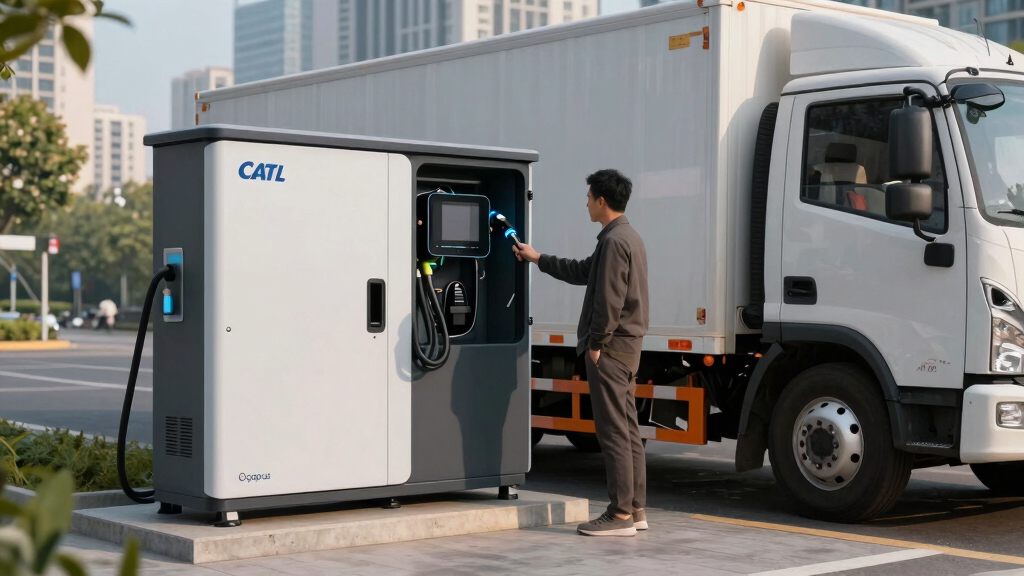
Britain’s largest household energy provider, Octopus, and CATL, China’s leading battery manufacturer, announced a joint venture to establish a battery-swapping network for electric trucks across Europe. Despite the announcement, industry skepticism and technical challenges have raised doubts about the plan’s feasibility and market acceptance.
The joint venture aims to create a network of battery-swapping stations designed to enable quick battery replacements for electric trucks, potentially reducing downtime and increasing operational efficiency. The initiative was publicly disclosed by Octopus on July 1, 2026, with the companies emphasizing the potential to accelerate electric freight adoption in Europe.
However, several industry players and analysts have expressed reservations about the plan. Critics cite the technical complexity of standardizing batteries across diverse truck models and manufacturers, which could hinder widespread adoption. Additionally, concerns about market fragmentation and investment costs have been raised, with some industry insiders suggesting that the plan may struggle to gain traction without broader industry support and regulatory alignment.
Industry Resistance Highlights Challenges for EV Infrastructure
This skepticism underscores the difficulties in establishing standardized battery-swapping systems for electric trucks in Europe, a market characterized by diverse vehicle models and manufacturers. The hesitance from industry stakeholders suggests that mass adoption of battery swapping may face significant hurdles, potentially impacting the pace of electric freight adoption and infrastructure development across the continent.
electric truck battery swapping station
As an affiliate, we earn on qualifying purchases.
As an affiliate, we earn on qualifying purchases.
European E-Truck Market and Battery Swapping Initiatives
The concept of battery swapping for electric trucks has gained attention as a means to address charging infrastructure limitations and reduce downtime. Companies like CATL have demonstrated such systems in China, where the technology is more established due to a more uniform vehicle fleet. In Europe, however, the market is more fragmented, with numerous truck manufacturers and models, complicating the implementation of a standardized swapping infrastructure.
Previously, various European firms and policymakers have explored alternative charging solutions, but large-scale battery swapping remains largely untested outside China. The announcement by Octopus and CATL marks a significant step, though industry experts warn that technical and market barriers could slow or derail the initiative.
“Investing in a swapping network without clear standards or industry buy-in could lead to stranded assets and limited usage.”
— a representative from a European logistics firm

UPLUS BCI Group 48 Car Battery, AGM-L70-M 12V 70Ah 760CCA 120RC AGM H6
- Battery Size: BCI Group 48 (H6 L3)
- Dimensions: 10.98 x 6.81 x 7.51 inches
- Terminal Layout: Left negative, right positive
As an affiliate, we earn on qualifying purchases.
As an affiliate, we earn on qualifying purchases.
Unclear Market Adoption and Regulatory Support
It is still uncertain whether European truck manufacturers will support the standardization needed for the swapping network, or if regulatory frameworks will facilitate or hinder its deployment. The level of industry cooperation remains a key unknown as discussions continue.

Power Supply Equipment Standalone Level 3 DC Fast Dispenser for Truck Parks
- Customizable Charging Station: Multiple configuration options for various needs
- High-Power DC Fast Charger: Optimized for commercial parking and transit centers
- Heavy-Duty Pedestal Compatibility: Industrial-grade GB/T plug and connector
As an affiliate, we earn on qualifying purchases.
As an affiliate, we earn on qualifying purchases.
Next Steps in Industry Engagement and Technical Development
Further discussions between CATL, Octopus, truck manufacturers, and regulators are expected to clarify technical standards and market support. Pilot projects or demonstrations may be launched to test the system’s viability, but widespread adoption remains uncertain in the near term.

Nilight 12V 140A Dual Battery Isolator Kit W/Smart VSR 6AWG Cable RV
- Voltage Thresholds: Charges at 13.3V, cuts out at 12.8V
- Automatic Battery Charging: Charges auxiliary battery when main is full
- Durable Construction: High-quality casing with silicone seal
As an affiliate, we earn on qualifying purchases.
As an affiliate, we earn on qualifying purchases.
Key Questions
What is battery swapping for electric trucks?
Battery swapping involves replacing a depleted battery with a fully charged one at dedicated stations, allowing for quick turnaround times compared to traditional charging.
Why are European industry players skeptical?
Concerns center on technical compatibility across diverse truck models, high investment costs, and uncertain market acceptance without industry-wide standards.
How does this compare to China’s battery-swapping systems?
China has established more uniform vehicle standards and a supportive regulatory environment, making battery swapping more feasible there. Europe’s fragmented market presents greater challenges.
What are the potential benefits of battery swapping?
It could significantly reduce downtime for freight operations, lower infrastructure costs per station, and accelerate the adoption of electric trucks.
What is the timeline for this project?
The joint venture was announced in July 2026, with pilot projects likely to follow. Widespread deployment depends on resolving technical and market challenges, which could take years.
Source: Nikkei Asia