
📊 Full opportunity report: The Switch: You Never Owned the AI You Depend On on ThorstenMeyerAI.com — validation score, market gap, and execution plan.

Get the latest gadgets delivered free with Prime
- Fast, free delivery on millions of items
- Prime Video, Amazon Music and more included
- Member-only deals all year
TL;DR
Recent events demonstrate that AI models are controlled via access points that can be cut off instantly by governments or companies. This exposes a critical chokepoint in AI reliance, emphasizing vulnerability despite the convenience of API-based AI services.
Recent actions by U.S. authorities and major AI companies have confirmed that AI models are not owned but accessed through controllable APIs, which can be cut off instantly. On June 12, the U.S. government issued an export-control directive forcing Anthropic to disable its latest models, Fable 5 and Mythos 5, worldwide within approximately ninety minutes, citing national security concerns. Simultaneously, OpenAI retired several older models, including GPT-4o, with API shutdowns scheduled, effectively removing access without ownership transfer. This demonstrates that dependence on external access points makes AI reliance vulnerable to sudden disruption, whether by government action or corporate decision.
The recent U.S. export control directive targeted Anthropic’s models, leading to their immediate shutdown worldwide, illustrating how government power can switch off AI models at will. The directive lacked detailed rationale, and the models were disabled within hours, highlighting the ability of a government to exert an immediate chokehold on AI services. Meanwhile, OpenAI’s deprecation of GPT-4o and other models was driven by economic factors, such as reducing operational costs, but still resulted in abrupt loss of access for users relying on those models. Both incidents reveal that AI models are accessed via APIs controlled by third parties, not owned outright, making them susceptible to instant revocation or modification. These access points are managed by different actors—governments, AI labs, cloud providers—each capable of turning off models through various mechanisms, including legal orders, deprecation, geofencing, or pricing changes.
The Switch: You Never Owned It
In 2026 a government turned off a frontier model worldwide in ~90 minutes — and a company retired a beloved one with ~2 weeks’ notice. You don’t own the model you build on. You access it. Access can be revoked.
Access is the only chokepoint that flips in an afternoon — and the version that hits you won’t be Washington, it’ll be a deprecation. Open weights you host can’t be deprecated, geofenced, repriced, or revoked. Short of that: route through a provider-agnostic gateway, keep a tested fallback, and treat every model string as a dependency that will be pulled.
Implications of Instant AI Model Disruptions
This pattern of access control demonstrates a fundamental vulnerability in AI reliance: users and organizations depend on external APIs that can be switched off at any moment. Such dependence raises concerns about stability, security, and sovereignty in AI deployment. Governments can enforce sudden shutdowns under national security pretexts, while companies may deprecate older models or reprice services, all without ownership transfer. The result is a landscape where AI is less a possession and more a service controlled by external actors, creating risks for critical applications, cyber defense, and business continuity. Recognizing this chokepoint is essential for developing strategies that mitigate reliance on controllable access points and promote ownership or decentralized alternatives.
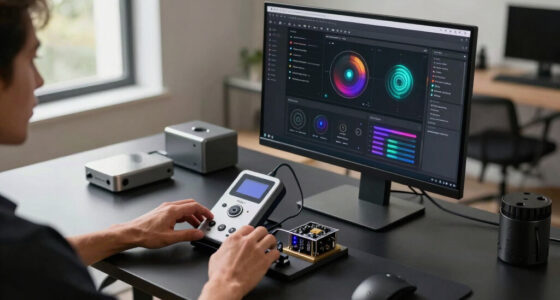
personal AI model ownership device
As an affiliate, we earn on qualifying purchases.
As an affiliate, we earn on qualifying purchases.
The Evolution of AI Access Control
The current landscape of AI deployment has shifted from owning models to accessing them via APIs provided by labs and cloud services. Historically, AI models were trained and stored locally, but the rise of API-based services democratized AI adoption by removing the need for extensive infrastructure. However, this convenience came with a trade-off: reliance on external control points. Recent incidents—such as the U.S. export restrictions on Anthropic’s models and OpenAI’s deprecation of older models—highlight how these access points can be revoked suddenly, either for security reasons or economic decisions. This evolution underscores the importance of understanding that users do not own the models they depend on, only access them, which makes them vulnerable to instant shutdowns or modifications.
“Using export controls on AI models as an emergency switch is baffling, especially when it can be used against allies or for security concerns.”
— Former U.S. administration AI adviser
AI model local deployment hardware
As an affiliate, we earn on qualifying purchases.
As an affiliate, we earn on qualifying purchases.
Unclear Long-Term Impact of Access Control
It remains uncertain how widespread or permanent these access disruptions will become, and whether future regulations or technological solutions will mitigate this vulnerability. The scope of government powers and corporate deprecation policies could evolve, but the fundamental issue of dependency on controllable access points persists. Additionally, it is unclear how organizations will adapt—whether through ownership models, decentralized AI, or other strategies—to reduce reliance on external control points in the future.
AI model backup and redundancy tools
As an affiliate, we earn on qualifying purchases.
As an affiliate, we earn on qualifying purchases.
Future Strategies to Reduce Dependency on External Access
Looking ahead, organizations and governments may pursue approaches such as owning and hosting their own models, developing decentralized AI architectures, or establishing standards for model ownership and control. Regulatory discussions around AI sovereignty and security are likely to intensify, possibly leading to new frameworks that limit reliance on external APIs. Meanwhile, AI providers might introduce more granular control, ownership options, or secure deployment methods to address dependency concerns. Monitoring policy developments and technological innovations will be critical for understanding how the AI landscape will evolve to mitigate these vulnerabilities.
As an affiliate, we earn on qualifying purchases.
Key Questions
Can AI models be owned outright instead of accessed via APIs?
Yes, some organizations are exploring local hosting and ownership of AI models, but this remains less common due to high costs and complexity.
What are the risks of relying on external AI APIs?
The main risks include sudden shutdowns, deprecation, changes in pricing or terms, and geopolitical or regulatory restrictions that can disrupt service unexpectedly.
Could future regulations prevent governments from turning off AI models at will?
It is uncertain, but regulatory efforts may aim to limit arbitrary shutdowns and promote model ownership or decentralized deployment to reduce dependency risks.
How can organizations protect themselves from model shutdowns?
Organizations can consider owning and hosting their own models, diversifying providers, or developing hybrid solutions to reduce reliance on external API control points.
Source: ThorstenMeyerAI.com
Halloween Picks
halloween
As an affiliate, we earn on qualifying purchases.