
TL;DR

Get the latest gadgets delivered free — and shop member deals
- Fast, free delivery on millions of items
- Access to Prime Big Deal Days deals on October 6–7
- Prime Video, Amazon Music and more included
The June Bootids meteor shower peaks next week and is renowned for its unpredictability. While typically modest, past outbursts make this event worth watching for sky enthusiasts.
The June Bootids meteor shower is expected to reach its peak next week, from June 20 to June 27, and is notable for its unpredictable activity levels. While most years see only a few meteors per hour, past outbursts have produced up to 100 meteors per hour, making it a compelling event for skywatchers.
The June Bootids are caused by Earth passing through debris left by comet 7P/Pons-Winnecke, which orbits the sun roughly every six years. The shower’s activity varies significantly, with historical outbursts in 1998 and 2004, when meteors peaked at 20-50 per hour and up to 100 per hour, respectively.
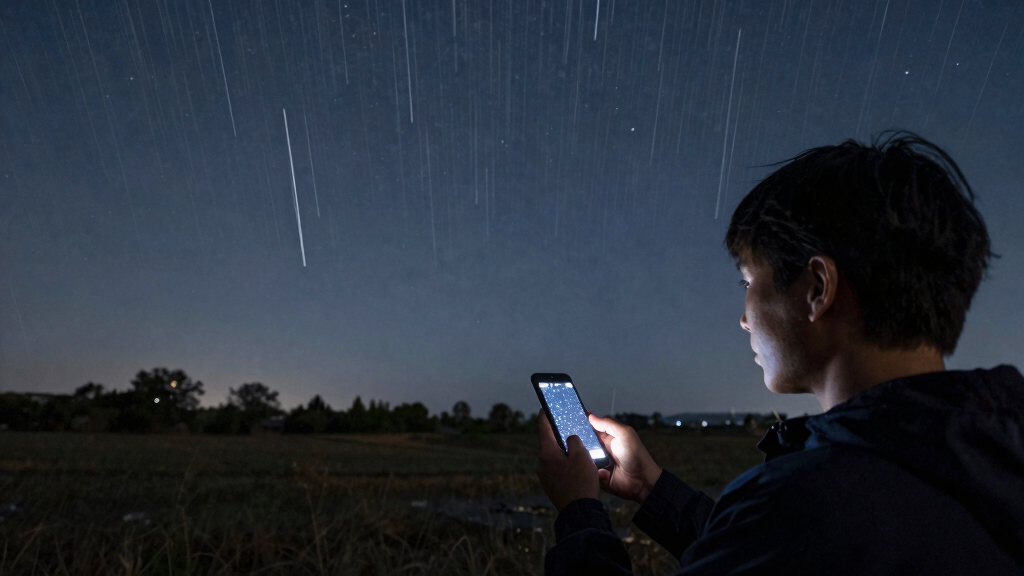
Most years, the shower produces only a handful of meteors per hour, but the potential for surprise remains high. The radiant point lies in the constellation Boötes, visible high in the western and southwestern sky during the evening in the Northern Hemisphere. Observers are advised to find dark skies away from city lights and scan a broad area of the sky, rather than focusing directly on the radiant.
Why the June Bootids’ Unpredictability Matters
This meteor shower’s unpredictable nature keeps it intriguing for astronomers and amateur skywatchers alike. While most annual showers follow a predictable pattern, the June Bootids’ history of surprise outbursts provides opportunities for unexpected displays, potentially revealing new insights into comet debris and space weather phenomena.
For observers, the event offers a rare chance to witness a potentially spectacular sky show, despite its typically modest activity levels. Its unpredictability emphasizes the importance of tracking celestial events and maintaining flexible viewing plans.
portable telescope for stargazing
As an affiliate, we earn on qualifying purchases.
As an affiliate, we earn on qualifying purchases.
Historical Patterns and Past Outbursts of the June Bootids
The June Bootids are associated with debris from comet 7P/Pons-Winnecke, which orbits the sun approximately every six years. The shower is active from late June, with the peak traditionally occurring between June 20 and June 27. Historically, the shower has produced only a few meteors per hour, but notable outbursts have occurred in 1998 and 2004, with rates reaching up to 100 meteors per hour during those events.
Predicting the shower’s activity remains challenging due to the irregular nature of debris encounters. In 2010, astronomers expected an outburst, but activity was limited to fewer than 10 meteors per hour, illustrating the unpredictability of this event.
“The June Bootids have a long history of surprises, and this year’s peak could bring an unexpected display of meteors.”
— an anonymous researcher
As an affiliate, we earn on qualifying purchases.
Unpredictable Activity and Future Observations
While the peak date range is established, the actual activity levels during the event remain uncertain. Past outbursts have been sporadic, and it is not yet clear whether this year’s shower will produce a significant increase in meteor rates or remain modest. Astronomers continue to monitor debris streams and space weather conditions to improve predictions, but surprises are still possible.
As an affiliate, we earn on qualifying purchases.
Monitoring and Preparing for the Meteor Shower Peak
As the peak approaches, astronomers and skywatchers are advised to stay updated through official forecasts and alerts. Observers should plan to view from dark, open locations during the night of June 20-27, with the best times typically after midnight. Continued observation and data collection during this period will help refine understanding of the shower’s behavior and potentially improve predictions for future outbursts.
As an affiliate, we earn on qualifying purchases.
Key Questions
When is the best time to observe the June Bootids?
The best viewing opportunities are expected between June 20 and June 27, especially after midnight, from dark locations away from city lights.
How many meteors can I expect to see during the peak?
Most years, only a few meteors per hour are visible, but past outbursts have produced up to 100 meteors per hour, so surprises are possible.
What is the radiant point for the June Bootids?
The meteors appear to originate from the constellation Boötes, which is high in the western and southwestern sky during the evening.
Why are the June Bootids so unpredictable?
Their activity depends on debris from comet 7P/Pons-Winnecke, which varies in density and distribution, making outbursts sporadic and hard to forecast accurately.
What equipment is best for viewing or photographing the shower?
Using a dark sky location, a wide-viewing area, and a camera with good low-light performance, such as the Sony A7R IV, can improve your chances of capturing meteors.
Source: Space.com
Fall Picks
fall essentials
As an affiliate, we earn on qualifying purchases.