TL;DR

Get the latest gadgets delivered free — and shop member deals
- Fast, free delivery on millions of items
- Access to Prime Big Deal Days deals on October 6–7
- Prime Video, Amazon Music and more included
A German warehouse has been found to contain hundreds of Cold War-era computers from Eastern Bloc countries. The collection includes mainframes, minicomputers, and media from the 1930s to 1980s, offering valuable insights into computing history.
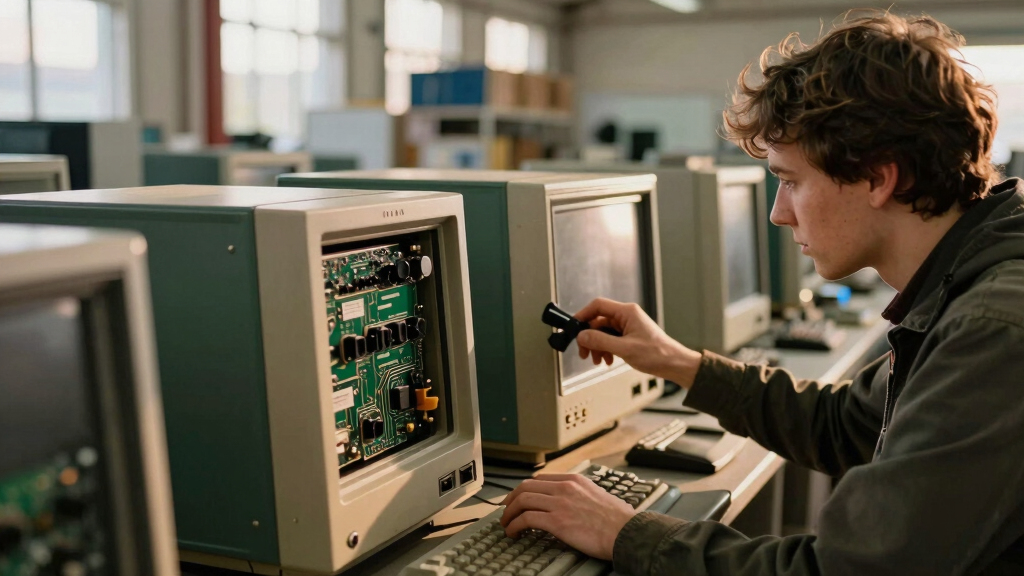
In July 2006, researchers from the Computer History Museum confirmed the existence of a large collection of Cold War-era computers stored in a German warehouse in Castrop-Rauxel, revealing a collection of Eastern Bloc computing artifacts from the 1930s to the 1980s.
The collection was uncovered after an email tip from a freelance tax advisor, leading CHM curators Dag Spicer and Alex Bochannek to visit the site. Inside a three-story warehouse, they found hundreds of items including mainframes, minicomputers, punch cards, magnetic tapes, manuals, and analog/hybrid computers, many of which are rare or previously undocumented.
The artifacts appear to have been assembled by Professor Walter Ameling, associated with RWTH Aachen University, and include equipment from IBM, CDC, Siemens, Telefunken, and Soviet systems from Bulgaria and other Eastern European countries. The collection spans from the earliest punched card systems to Cold War-era Soviet computers, providing a broad overview of the technological landscape of that period.
Over ten days, the curators examined over 1,000 items, verifying their significance and cataloging them for potential acquisition by the museum. The find includes notable systems such as a rare TRICE differential analyzer and a Soviet computer system from 1982, among many other hardware and media.
Implications for Cold War Computing History
This discovery offers new information about the technological development of Eastern Bloc countries during the Cold War. It contributes to the historical record by providing access to hardware and media that are often rare or unique. The collection can support research and educational initiatives related to Cold War technology and history.
It also highlights the importance of preserving such artifacts, which are susceptible to deterioration or loss. The collection may facilitate further research, exhibitions, and educational programs focused on Cold War science and technology, enhancing public understanding of this period in computing history.
As an affiliate, we earn on qualifying purchases.
Historical Background of Cold War Computing Collections
During the Cold War, Eastern Bloc countries developed their own computing systems, often in secrecy or in parallel with Western innovations. Many of these systems were classified or kept out of public view, with limited documentation available today. Previous known collections are scattered, and few have been as comprehensive as this recent find in Germany.
Prior to this discovery, most knowledge about Soviet and Eastern European computing was based on sporadic reports, limited museum holdings, and surviving hardware in private collections. This find significantly expands the available material, offering new avenues for research and understanding of the technological rivalry during the Cold War.
“This collection provides valuable insights into the Cold War era, particularly regarding Eastern Bloc technological developments, which have been less accessible until now.”
— Dag Spicer, CHM Senior Curator
As an affiliate, we earn on qualifying purchases.
Unresolved Questions About the Collection’s Origins
While the collection appears to have been assembled by Professor Walter Ameling, detailed provenance and ownership history remain unclear. It is not yet confirmed how long the artifacts have been stored or whether additional items are still undiscovered within the warehouse.
Further research is needed to verify the full scope of the collection, its condition, and its historical significance. The extent of potential restoration or digitization efforts is also still under consideration.
As an affiliate, we earn on qualifying purchases.
Next Steps for Preservation and Research
The Computer History Museum plans to continue cataloging and studying the artifacts, with an aim to include many in upcoming exhibitions or digital archives. They will also investigate the provenance further and explore potential collaborations with universities and research institutions.
Additionally, efforts are underway to secure funding for conservation, possible restoration, and long-term preservation of the hardware and media. The museum anticipates that further discoveries or documentation may emerge as research progresses.
As an affiliate, we earn on qualifying purchases.
Key Questions
How significant is this collection for Cold War history?
The collection provides rare insight into Eastern Bloc computing efforts, filling gaps in the historical record and offering material for research, education, and exhibitions.
Are these computers operational or just historical artifacts?
Most items are likely non-operational due to age and condition, but some may be restored or used for educational demonstrations with proper conservation.
What is the provenance of these artifacts?
While believed to have been assembled by Professor Walter Ameling, detailed provenance is still under investigation, and further research is needed to confirm ownership history.
Will the public have access to these artifacts?
The museum plans to include many of these items in future exhibitions and digital archives, making them accessible to researchers and the public.
What challenges are involved in preserving these artifacts?
Challenges include deterioration of media, hardware preservation, and the need for specialized restoration efforts, which require funding and expertise.
Source: Hacker News
Fall Picks
fall essentials
As an affiliate, we earn on qualifying purchases.


![A Walkable ASCII Cyberpunk City In One HTML File [Video]](https://techtrendtrove.com/wp-content/uploads/2026/09/a-walkable-ascii-cyberpunk-city-in-one-html-file-video-featured-560x300.jpg)