
TL;DR
Get ready for Prime Big Deal Days — try Prime free
Exclusive member deals on October 6–7, plus fast free delivery. Cancel anytime.
As an affiliate, we earn on qualifying purchases.
Thorsten Meyer AI has published a 2026 cooler shortlist for AI workstations, arguing that sustained inference and compute loads require different CPU cooler choices than gaming systems. The report favors large air coolers for most quiet builds, with 360mm liquid cooling reserved for high-TDP CPUs and tight multi-GPU cases.
Thorsten Meyer AI has released a 2026 quiet CPU cooler shortlist for AI workstations, naming the Noctua NH-D15 G2, Thermalright Peerless Assassin 120 SE, be quiet! Dark Rock Pro 5, Arctic Liquid Freezer III Pro 360 and Noctua NH-P1 as leading picks for sustained compute loads, a use case where heat and noise can build for hours rather than seconds.
The report’s main finding is that cooler selection for AI rigs should be based on sustained thermal performance at low fan speeds, not only peak cooling capacity. The site says inference, data loading, prompt processing and CPU-offloaded work can keep a processor under heavy load for long periods, unlike many gaming workloads that spike and then fall back.
The guide names the Noctua NH-D15 G2 as the best overall air cooler, the Thermalright Peerless Assassin 120 SE as the value pick, the be quiet! Dark Rock Pro 5 as the silence-focused air option, the Arctic Liquid Freezer III Pro 360 as the liquid-cooling pick for high-TDP workloads, and the Noctua NH-P1 as the fanless choice for managed low-to-moderate loads. Thorsten Meyer AI says these rankings are based on 2026 cooler roundups, independent reviews and manufacturer noise figures, with the warning that results vary by case airflow, fan curve, CPU power limit and ambient temperature.
Independent testing broadly supports parts of the list. PC Gamer ranks the Noctua NH-D15 G2 as its best current air cooler and says it is suited to low-noise, high-reliability builds. Tom’s Hardware reported that Arctic’s Liquid Freezer III Pro handled more than 265 watts in its testing with a Core i7-14700K and Ryzen 9 9950X3D, while also flagging the 38mm radiator and 63mm total thickness as a case-compatibility issue buyers must measure before purchase.
Why It Matters
The report matters because AI workstation buyers often size cooling around gaming benchmarks or short synthetic tests, which may not reflect all-day compute work. A cooler that keeps a CPU within limits during a brief benchmark can still become loud, thermally constrained or uncomfortable to work near during a long inference, encoding or training-adjacent job.
The recommendations also point to a practical split: most quiet AI systems can stay on air cooling if the CPU and GPU are power-managed, while the hottest CPUs under sustained all-core load may benefit from a 360mm AIO. The tradeoff is reliability and maintenance. Air coolers avoid pump noise and pump failure risk; liquid coolers can add thermal headroom but introduce another moving part.
As an affiliate, we earn on qualifying purchases.
Background
The guide is positioned as part of Thorsten Meyer AI’s broader workstation heat-and-noise series. It follows the site’s advice to first reduce GPU heat through undervolting and power caps before buying more cooling hardware. The cooler, in that framing, is the second step: it manages the heat that remains after power tuning.
The selected products occupy different parts of the market. Noctua’s NH-D15 G2 is a premium dual-tower air cooler with a listed 24.8 dB(A) fan noise figure on Noctua’s specification page. be quiet! lists the Dark Rock Pro 5 at 8.9, 16.3 and 23.3 dB(A) at 50%, 75% and 100% in Quiet Mode. Thermalright lists the Peerless Assassin 120 SE fan noise at up to 25.6 dB(A), while PC Gamer’s 2026 review found it strong for the price but not the quietest option.
“A cooler is how you handle the heat that’s left.”
— Thorsten Meyer AI
“There’s no single “best”; there’s a best for you.”
— Thorsten Meyer AI
“The best CPU air cooler right now is the Noctua NH-D15 G2.”
— PC Gamer
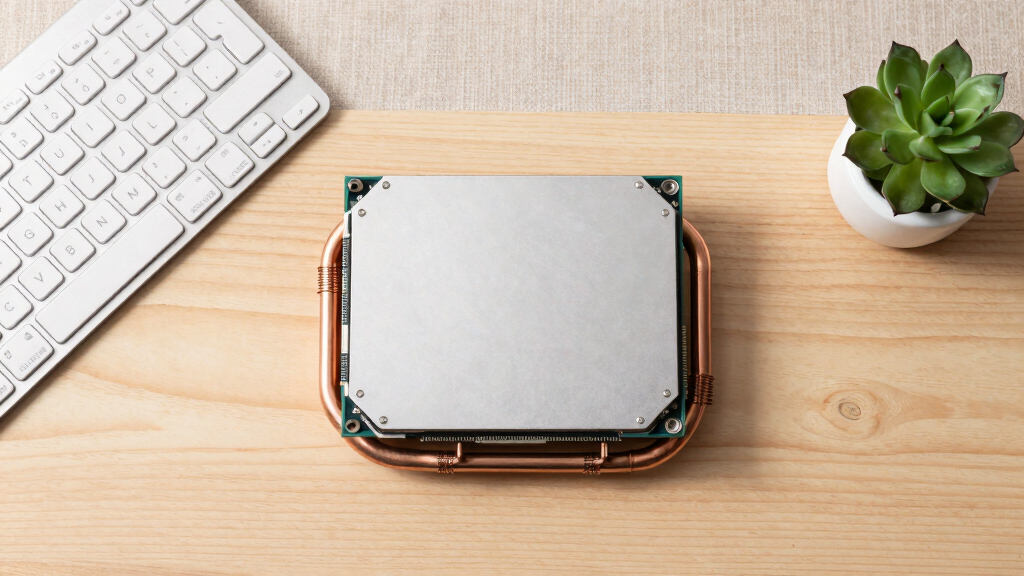
“first passive CPU cooler”
— Noctua
Arctic Liquid Freezer III Pro 360
As an affiliate, we earn on qualifying purchases.
As an affiliate, we earn on qualifying purchases.
What Remains Unclear
Several points remain unsettled for individual buyers. The report does not establish a single lab-controlled ranking across all listed coolers under the same AI workload, CPU, case and fan curve. Noise levels are also hard to compare across reviewers because measurement distance, ambient noise, case choice and fan-control settings differ.
Pricing is another moving target. The guide includes an affiliate disclosure and warns that prices and availability change often. Socket support, RAM clearance, case height and radiator thickness also need confirmation before purchase. For the Noctua NH-P1, the main caveat is load management: Tom’s Hardware testing found that very high sustained power can overwhelm the fanless cooler, so it is not a general replacement for active cooling on high-wattage CPUs.
As an affiliate, we earn on qualifying purchases.
What’s Next
Buyers comparing quiet CPU coolers for AI workstations should next check current pricing, socket compatibility, case clearance and the CPU’s sustained package power. The next test to watch is how these coolers perform under longer AI-adjacent workloads with fixed noise targets, because that better reflects the systems this report is aimed at.
As an affiliate, we earn on qualifying purchases.
Key Questions
What is the best quiet CPU cooler named in the report?
The report names the Noctua NH-D15 G2 as the best overall air cooler for quiet sustained-load builds. It is not the cheapest option, and buyers still need to check case height and memory clearance.
Is air or liquid cooling better for an AI workstation?
The report favors air cooling for most quiet, 24/7 AI workstations because it has no pump and needs little maintenance. It points to 360mm liquid cooling for top-tier CPUs under sustained all-core load or for cases where a large air tower will not fit.
Why is gaming cooler performance not enough to judge AI workloads?
Gaming often produces short CPU load spikes. AI and compute tasks can hold heavy CPU load for hours, so steady heat dissipation at a quiet fan speed matters more than short peak performance.
Is the Thermalright Peerless Assassin 120 SE still a good value pick?
Yes, the report names it as the value pick, and PC Gamer’s 2026 review found strong performance for the price. It may be louder than more expensive rivals, so silence-focused buyers may prefer the Dark Rock Pro 5 or NH-D15 G2.
Can the Noctua NH-P1 handle a high-end AI workstation?
Only in managed builds with low-to-moderate CPU heat output and good case convection. It is fanless, but independent testing shows high sustained power can exceed what passive cooling can handle.
Source: Thorsten Meyer AI
NFL season / tailgating Picks
team gear
As an affiliate, we earn on qualifying purchases.