
TL;DR

Get the latest gadgets delivered free — and shop member deals
- Fast, free delivery on millions of items
- Access to Prime Big Deal Days deals on October 6–7
- Prime Video, Amazon Music and more included
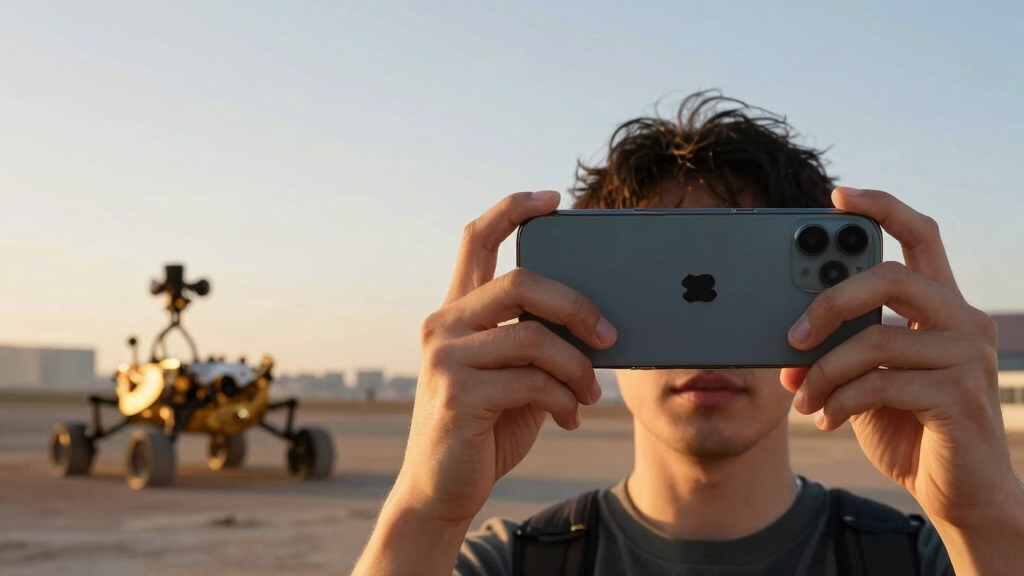
NASA’s Perseverance rover took its sixth selfie on Mars, capturing terrain beyond Jezero Crater. Separately, satellite megaconstellation launches are contributing to atmospheric pollution, with potential climate impacts.
NASA’s Perseverance rover has taken its sixth selfie from Mars during a recent exploration in the region west of Jezero Crater, while new research indicates satellite megaconstellation launches are contributing significant soot pollution to Earth’s atmosphere, with potential climate effects.
On March 11, NASA’s Perseverance rover captured a detailed selfie from a rocky outcrop called ‘Arathusa’ within the Lac de Charmes region on Mars, representing some of the most scientifically valuable terrain visited during its mission. The image was created from 61 individual photos taken by the rover’s robotic arm camera. Subsequently, the rover moved to a new site named ‘Arbot,’ where NASA’s Mastcam-Z camera assembled a panoramic view from 46 images on April 5. This panorama reveals large rocks, some as tall as skyscrapers, likely deposited by a meteorite impact approximately 3.9 billion years ago, and possibly a volcanic dike, indicating geological activity in the distant past.
Meanwhile, a study published this week in Earth’s Future highlights the environmental impact of the rapid increase in satellite launches by companies like SpaceX and Amazon. Since 2019, SpaceX has launched nearly 12,000 satellites for its Starlink network, with over 10,300 still operational. The research estimates that by 2029, these megaconstellation launches could deposit about 870 metric tons of soot into Earth’s upper atmosphere annually. This pollution could linger for years, potentially causing mild cooling effects by reducing sunlight, but also raising concerns about unintended climate consequences. Eloise Marais of UCL emphasized that this pollution acts like a small-scale, unregulated geoengineering experiment with possible serious environmental risks.
Why It Matters
This development is significant because it underscores two key issues: the ongoing scientific exploration of Mars, which advances our understanding of planetary geology and potential past life, and the growing environmental impact of space activities on Earth’s climate. The satellite pollution, while currently small, could increase substantially, influencing global climate patterns and prompting regulatory and industry responses.
As an affiliate, we earn on qualifying purchases.
Background
Perseverance has been exploring Mars’ Jezero Crater since 2020, aiming to find signs of ancient microbial life and collect samples for future analysis. Its recent activities include venturing beyond the crater rim to areas like ‘Arathusa’ and ‘Arbot,’ which contain some of the oldest rocks on the planet. Meanwhile, Earth’s atmosphere is experiencing increased soot levels due to the proliferation of satellite megaconstellations launched over the past decade, driven by private companies seeking to expand global internet coverage. This rise in launches has raised environmental concerns, with scientists warning of potential climate impacts from increased atmospheric pollution.
“The selfie shows Perseverance in a rocky outcrop called ‘Arathusa,’ representing some of the most scientifically compelling terrain the rover has visited.”
— NASA/JPL-Caltech
“The space industry pollution is like a small-scale, unregulated geoengineering experiment that could have many unintended and serious environmental consequences.”
— Eloise Marais, UCL Geography
As an affiliate, we earn on qualifying purchases.
What Remains Unclear
It is still unclear how much the soot pollution from satellite launches will increase in the coming years and what precise climate effects it may have. The long-term environmental impact remains a subject of ongoing research and debate.
satellite pollution monitoring kit
As an affiliate, we earn on qualifying purchases.
As an affiliate, we earn on qualifying purchases.
What’s Next
Next steps include continued monitoring of Earth’s atmospheric soot levels, further analysis of Mars’ geological features by Perseverance, and potential policy discussions regarding regulation of satellite launches to mitigate environmental impacts.
As an affiliate, we earn on qualifying purchases.
Key Questions
What is the significance of Perseverance’s recent selfie?
The selfie provides detailed visual data of Mars’ terrain beyond Jezero Crater, aiding scientific understanding of the planet’s geological history and potential past habitability.
How do satellite megaconstellation launches impact Earth’s climate?
These launches release soot into the upper atmosphere, which can cause mild cooling effects and contribute to climate change, with effects potentially increasing as launch numbers grow.
Are there regulations to control space pollution?
Currently, space pollution regulation is limited; increased awareness and potential policy measures are under discussion to address environmental impacts of satellite launches.
What are the long-term risks of atmospheric soot from satellites?
The long-term risks include potential alterations to climate patterns, impacts on solar radiation, and the possibility of unforeseen environmental consequences that are still being studied.
Fall Picks
fall essentials
As an affiliate, we earn on qualifying purchases.