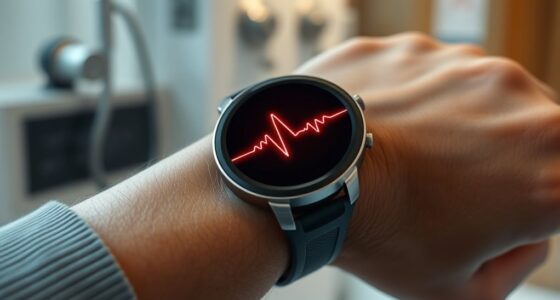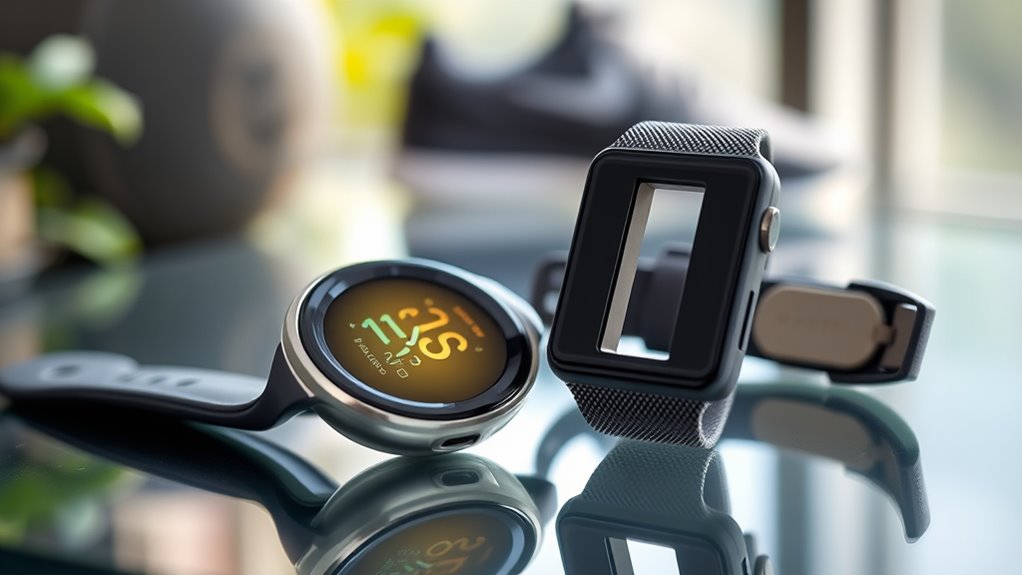

If you want a device that tracks your health and fits your style, a smartwatch may be right for you, offering notification alerts, customizable designs, and smart home controls. On the other hand, if your priority is monitoring activity and sleep without distractions, a fitness tracker provides focused health insights at a lower price. To choose the best fit, consider your daily routines, device compatibility, and whether extra features matter—more details can help you decide.
Key Takeaways
- Choose a smartwatch for notifications, social updates, and versatile style; opt for a fitness tracker for focused activity and health monitoring.
- Consider battery life: fitness trackers often last longer, while smartwatches may need daily charging.
- For comprehensive health insights and sleep tracking, select a device with advanced health features.
- If smart home control and voice assistants are priorities, a smartwatch offers better integration.
- Budget and lifestyle determine the best fit: fitness trackers are more affordable, while smartwatches provide multifunctionality.
Key Features and Functionality

When comparing smartwatches and fitness trackers, understanding their key features and functionalities is essential. Sleep monitoring is a major feature, helping you track your rest patterns and improve sleep quality. Many fitness trackers excel here, providing detailed insights into sleep stages and duration. Smartwatches also offer sleep tracking but often include additional data like heart rate during sleep. Voice control is another important feature; with it, you can command your device hands-free to set reminders, check the weather, or navigate apps. This feature enhances convenience and accessibility, especially when your hands are busy. Both devices incorporate these functionalities, but the depth and integration of features can vary. Knowing how each device handles sleep monitoring and voice control helps you choose the one that best fits your lifestyle. Additionally, some advanced wearables include air quality monitoring features, which can be beneficial for users concerned about their environment. Moreover, wearable device compatibility with smartphones and other smart home devices can greatly extend their functionality and convenience. It is also worth noting that battery life varies significantly between models, impacting how often you need to recharge your device. To maximize your device’s capabilities, consider how water resistance features align with your activity level.
Design and Comfort

The design and comfort of a device play a significant role in how often you’ll wear it and how effectively it fits into your daily routine. A comfortable, well-designed device encourages consistent use and seamless integration into your lifestyle. When considering a smartwatch or fitness tracker, think about clothing compatibility—does it suit your wardrobe? Style versatility matters too, especially if you want a device that complements both casual and formal outfits. Incorporating ergonomic design features can further enhance comfort during extended wear. Choosing a device that balances aesthetics with comfort ensures you’ll wear it regularly without discomfort, making it a useful addition rather than a distraction. Additionally, selecting materials that are easy to clean and maintain can prolong the lifespan of your device and ensure it remains hygienic with daily use. Considering wearable technology trends can also help you choose a device that stays stylish and functional over time. Recognizing the importance of user experience can lead you to select a device that is not only comfortable but also intuitive to operate. Moreover, paying attention to material durability can help ensure your device withstands daily wear and tear effectively.
Battery Life and Charging
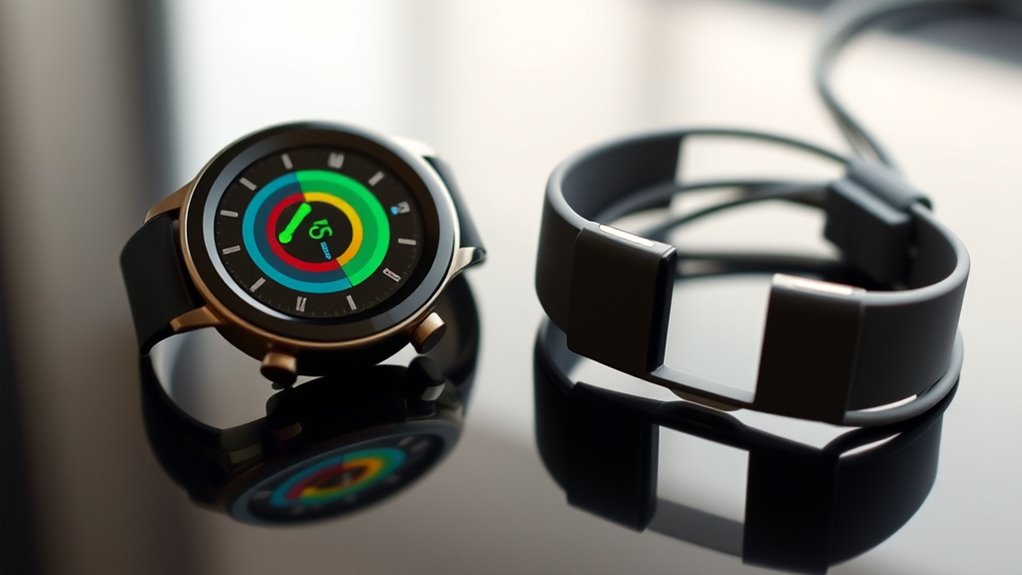
You’ll notice that smartwatches typically need daily charging, while fitness trackers often last several days or even weeks. Charging methods also vary, with some devices offering quick and easy options, and others requiring more effort. Considering your routine, it’s important to choose a device that fits your charging habits and battery needs. Additionally, AI discoveries can lead to more efficient power management solutions in wearable technology, enhancing battery life and reducing charging frequency. Innovations in Kia Tuning have shown that integrating advanced energy-efficient components can significantly extend device power longevity and optimize performance. Furthermore, ongoing research into sound healing science may inspire future wearable features that promote relaxation and stress reduction through subtle sound vibrations.
Battery Duration Differences
Battery life is a key factor to contemplate when choosing between a smartwatch and a fitness tracker, as they often differ markedly in how long they can go between charges. Smartwatches typically need daily or every few days of charging due to their high-resolution screens and constant notifications, whereas fitness trackers can last up to a week or more. Factors influencing battery duration include screen brightness, water resistance, and how frequently you use advanced features. For example, lowering screen brightness can extend battery life, and water resistance often requires additional power for sensors. Additionally, automation in devices such as power-saving modes can help maximize battery longevity during extended use. Implementing software optimizations can further enhance battery performance by reducing background activity and managing sensor usage efficiently. Moreover, utilizing battery-saving settings effectively can make a significant difference in extending device usage between charges, especially when combined with choosing devices with efficient power management systems. To further improve battery longevity, some devices incorporate adaptive brightness and intelligent sensors that adjust power consumption based on usage patterns.
Charging Convenience and Methods
Charging convenience varies considerably between smartwatches and fitness trackers, impacting how easily you can keep them powered throughout the day. Many smartwatches support wireless charging, making it simple to recharge without fumbling with cables. Some models even come with dedicated charging docks, providing a stable place to set your device while it charges. Fitness trackers, on the other hand, often rely on standard USB chargers or proprietary cables, which can be less convenient if you’re always on the go. Wireless charging offers a seamless experience, especially if you forget to plug in. Charging docks help keep your device upright and accessible, reducing wear and tear on charging ports. Overall, the ease of charging depends on the device’s design, but wireless options generally boost convenience. Additionally, charging methods can influence the overall user experience and device longevity. A battery life that lasts throughout the day can also lessen the frequency of charging, adding to the device’s overall convenience. Longer-lasting batteries can help support ecosystem diversity by reducing the need for frequent replacements, which benefits environmental sustainability. Moreover, the durability of the charging port can affect long-term usability and maintenance.
Compatibility and Integration
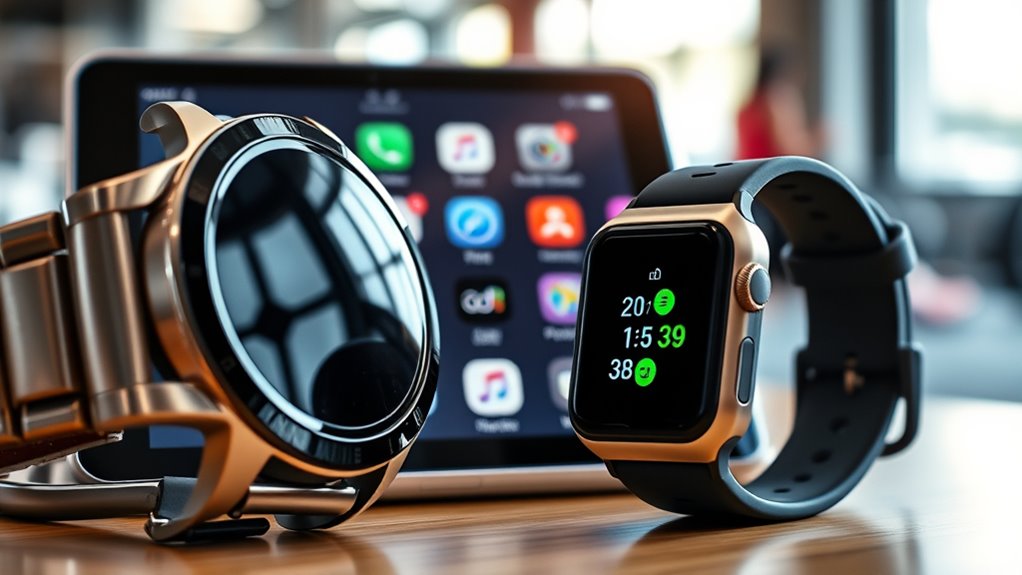
Your choice of device depends on its compatibility with your smartphone and other gadgets. Consider how well the smartwatch or fitness tracker supports app ecosystems and smart home features you already use. Ensuring seamless integration makes it easier to stay connected and streamline your daily routines. Additionally, choosing a device with robust security features helps protect your personal data from potential threats.
Device Compatibility Range
When choosing between a smartwatch and a fitness tracker, understanding their compatibility and integration options is essential. You need to verify the device seamlessly works with your smartphone’s operating system and supports third-party accessories. Compatibility varies, so check if it syncs easily with your device’s apps and services. Additionally, consider the warranty policies, especially if you plan to customize with third-party accessories, which might affect coverage. Key points include:
- Compatibility with iOS, Android, or both
- Support for third-party accessories like bands or chargers
- Warranty policies covering accidental damage or third-party additions
This clarity helps prevent issues down the line and guarantees your device integrates smoothly into your daily routine, maximizing its functionality and longevity.
App Ecosystem Support
Since app ecosystem support determines how well your smartwatch or fitness tracker integrates with other devices and services, it’s crucial to assess their compatibility and synchronization capabilities. A strong app ecosystem ensures you can seamlessly connect your wearable to your smartphone, third-party apps, and health platforms. Check whether the device supports popular operating systems like iOS or Android, as this impacts device compatibility. A broader app ecosystem offers more features, such as detailed health tracking, workout plans, or notifications. Additionally, consider if the wearable’s companion app receives regular updates and supports third-party integrations. This support enhances your user experience by providing smoother data sharing and better customization options, ultimately helping you make the most of your device’s capabilities.
Smart Home Integration
Smart home integration enhances the usefulness of your smartwatch or fitness tracker by enabling seamless control over connected devices. With compatibility for voice control and smart home automation, you can manage lights, thermostats, and security systems directly from your wearable. Your device’s ability to connect with popular platforms like Apple HomeKit, Google Assistant, or Amazon Alexa ensures smooth interactions. Look for features such as:
- Compatibility with voice-controlled smart home hubs
- Support for automating routines and scenes
- Easy syncing with existing smart devices and apps
This integration makes managing your environment more intuitive and efficient, turning your wearable into a central control point. Whether adjusting the temperature or turning off lights, you gain convenience and enhanced smart home functionality.
Price Range and Value

Price range and value vary substantially between smartwatches and fitness trackers, making it important to think about what features you need most. Smartwatches generally follow a premium pricing strategy, often costing between $200 and $500, reflecting their advanced features and brand names. Fitness trackers tend to be more affordable, usually between $50 and $150, focusing on core activity tracking. When doing a value comparison, consider whether the extra features of a smartwatch justify the higher price for your needs. If basic health monitoring suffices, a fitness tracker offers great value for money. However, if you want a device that combines fitness tracking with notifications and apps, investing in a smartwatch could be worthwhile despite the higher cost. Your choice depends on your budget and what you prioritize most.
Fitness and Health Tracking Capabilities

Fitness and health tracking capabilities are key factors to contemplate when choosing between a smartwatch and a fitness tracker. Both devices offer features like sleep monitoring and calorie counting, but their accuracy and depth can differ. Fitness trackers often excel at continuous activity tracking and provide detailed insights into your sleep patterns. Smartwatches typically combine these with additional health metrics, such as heart rate variability and stress levels. Consider if you want basic activity insights or more all-encompassing health data.
- Sleep monitoring with detailed sleep stages
- Precise calorie counting based on activity levels
- Heart rate and health trend analysis
Your choice depends on your focus—whether it’s simple fitness tracking or an integrated health overview.
Best Uses and Target Users
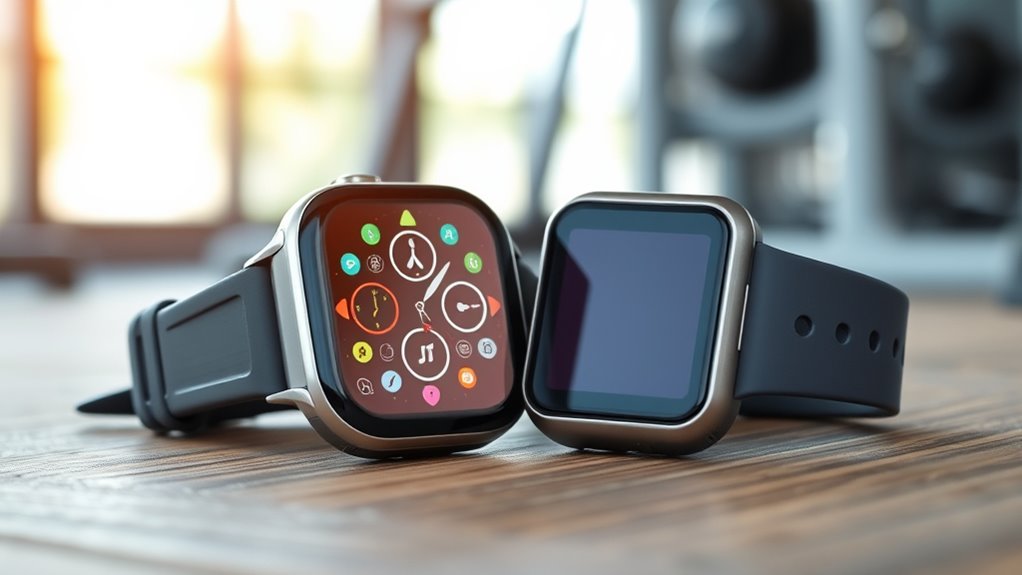
Are you trying to decide which device best fits your lifestyle and goals? If you’re into fashion trends and want to make a style statement, a smartwatch often fits better, especially with customizable bands and sleek designs. It’s also perfect if social media updates and notifications are part of your daily routine, keeping you connected on the go. On the other hand, if you mainly focus on fitness goals and simple activity monitoring, a fitness tracker offers targeted features without unnecessary distractions. Think about your daily habits—do you want a device that doubles as a fashion accessory or a straightforward fitness companion? Understanding your target users helps you choose the right wearable, whether it’s a stylish smartwatch or a dedicated fitness tracker.
Frequently Asked Questions
Can a Smartwatch Replace a Dedicated Fitness Tracker Entirely?
A smartwatch can replace a dedicated fitness tracker for many people, but it depends on your needs. While smartwatches offer versatile features and stylish design aesthetics, their battery life may be shorter than fitness trackers, which are optimized for long-lasting activity monitoring. If you prioritize detailed health metrics and extended use, a fitness tracker might still be the better choice. Otherwise, a smartwatch provides convenience and style in one device.
Which Device Offers Better Sleep Monitoring Accuracy?
Think of sleep tracking like tuning a musical instrument; precision matters. When comparing accuracy, fitness trackers often provide more detailed sleep data, especially for monitoring stages like REM and deep sleep. I once used both devices, and the fitness tracker’s sleep monitoring was noticeably more reliable. For better sleep tracking accuracy comparison, choose a dedicated fitness tracker if detailed insights are your priority, but smartwatches are improving steadily.
Are There Any Privacy Concerns With Wearable Data Sharing?
Yes, there are privacy concerns with wearable data sharing. You should guarantee your device uses data encryption to protect your information from hackers. Additionally, check that it has clear permission management options, so you control what data you share and with whom. Stay vigilant about privacy settings and regularly review app permissions to keep your personal health and activity data secure from unauthorized access.
How Durable Are These Devices in Extreme Weather Conditions?
These devices are generally quite durable in extreme weather conditions thanks to water resistance and sturdy material resilience. Most smartwatches and fitness trackers feature water resistance ratings, allowing you to wear them in rain or even swimming. Additionally, they’re built with tough materials like reinforced plastics and stainless steel, which help withstand harsh environments. Just make sure to check each device’s specific water resistance level and material specifications to ensure it suits your needs.
Do Smartwatches Have More App Options Than Fitness Trackers?
Smartwatches are like Swiss Army knives—they offer more app options than fitness trackers. You’ll find a wide range of third-party apps and customization options, letting you tailor your device to your needs. Fitness trackers focus mainly on health metrics, so their app selection is limited. If you want versatility and variety, a smartwatch’s expansive app ecosystem makes it the better choice for your busy lifestyle.
Conclusion
Choosing between a smartwatch and a fitness tracker ultimately depends on what you need. Do you want a device that combines style, notifications, and health features? Or are you just looking for a simple, focused fitness companion? Think about your daily routines and priorities. Whichever you pick, make sure it aligns with your goals. After all, isn’t the right wearable the one that keeps you motivated and connected every step of the way?