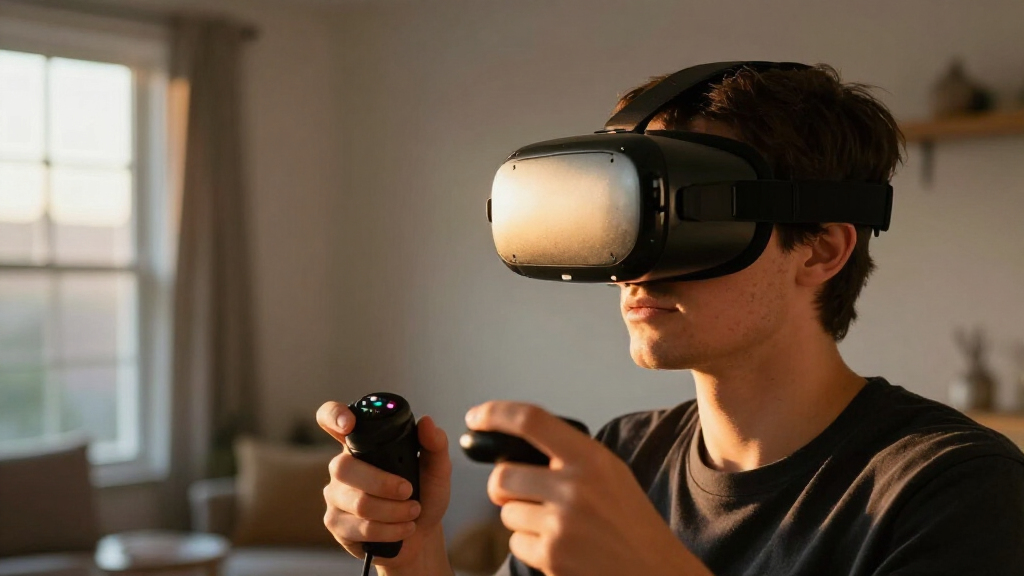

The best VR glasses for most people in this lineup are the Meta Quest 3 512GB, which pair standalone convenience with mixed-reality features and ample storage. For high-end PC VR, the Pimax Crystal Super targets buyers who prioritize visual detail, while the Meta Quest 3S offers a more accessible way to start. The key tradeoffs are display capability, freedom from a PC, comfort, storage, and whether included extras match how you play. A larger, more advanced headset may suit dedicated simulation fans but be excessive for casual sessions. Read on for how the seven options compare and which buyer each one best serves.

Get the latest gadgets delivered free with Prime
- Fast, free delivery on millions of items
- Prime Video, Amazon Music and more included
- Member-only deals all year
Complete the kit

Key Takeaways
- Meta Quest 3 512GB is the most balanced pick here: it combines standalone VR and mixed reality without requiring a gaming PC.
- Pimax Crystal Super is the specialist choice for PC VR buyers seeking advanced display features; its PC-focused setup is less convenient than a standalone Quest.
- Meta Quest 3S models make entry into standalone VR simpler, but buyers should decide whether the included Elite Strap or GOLF+ bundle adds value for their use.
- The two Quest 3 512GB bundles share the same core headset, so the choice between GOLF+ and Elite Strap should follow play habits and comfort needs.
- Quest Pro occupies a different niche from the newer Quest 3 family: compare its productivity and field-trip bundle against the broader everyday appeal of Quest 3.
| Pimax Crystal Super PC VR Headset with Micro-OLED Displays and Eye Tracking |  | Best for High-Resolution PC VR | Display type: Micro-OLED | Resolution: 3840 × 3552 per eye | Field of view: 116° | VIEW LATEST PRICE | See Our Full Breakdown |
| Meta Quest Pro 256 GB VR Headset with VR Field Trips Subscription |  | Best for Mixed-Reality Multitasking | Storage: 256 GB | RAM: 12 GB | Display: LCD, 1920 × 1080 per eye | VIEW LATEST PRICE | See Our Full Breakdown |
| Meta Quest 3S 128GB VR Headset (Renewed Premium) |  | Best Renewed Standalone Pick | Condition: Renewed Premium | Storage: 128 GB | Memory: 8 GB RAM | VIEW LATEST PRICE | See Our Full Breakdown |
| Meta Quest 3S 128GB Mixed Reality Headset with Elite Strap |  | Best for a More Adjustable Fit | Storage: 128 GB | Resolution: 1832 × 1920 per eye | Refresh rate: 90 Hz | VIEW LATEST PRICE | See Our Full Breakdown |
| Meta Quest 3 512GB VR Headset with GOLF+ |  | Best Standalone Pick for a Large Game Library | Storage: 512 GB | Memory: 8 GB RAM | Processor: Snapdragon XR2 Gen 2 | VIEW LATEST PRICE | See Our Full Breakdown |
| Meta Quest 3S 128GB VR Headset with GOLF+ Included |  | Best for Golf-Focused Beginners | Storage: 128 GB | RAM: 8 GB | Processor: Snapdragon XR2 Gen 2 | VIEW LATEST PRICE | See Our Full Breakdown |
| Meta Quest 3 512GB VR Headset with Elite Strap |  | Best for a Large Game Library | Storage: 512 GB | Display: LCD | Resolution: 1920 × 1080 per eye | VIEW LATEST PRICE | See Our Full Breakdown |
| VR glasse | Refresh rate | Field of view | Connectivity | Storage |
|---|---|---|---|---|
| Pimax Crystal Super PC VR Head | 90 Hz | 116° | DisplayPort | — |
| Meta Quest Pro 256 GB VR Heads | 90 Hz | 110° | Wi-Fi; USB Type-C | 256 GB |
| Meta Quest 3S 128GB VR Headset | 90 Hz | 96° | USB Type-C; 3.5 mm jack | 128 GB |
| Meta Quest 3S 128GB Mixed Real | 90 Hz | 110° | USB Type-C | 128 GB |
| Meta Quest 3 512GB VR Headset | 120 Hz | — | Bluetooth; USB Type-C | 512 GB |
| Meta Quest 3S 128GB VR Headset | 60 Hz | 110 degrees | — | 128 GB |
| Meta Quest 3 512GB VR Headset | 90 Hz | 110 degrees | USB Type-C | 512 GB |
More Details on Our Top Picks
Pimax Crystal Super PC VR Headset with Micro-OLED Displays and Eye Tracking
The Pimax Crystal Super is the display-focused pick here: its 3840 × 3552 resolution per eye and 53 PPD are aimed at detailed PC VR visuals, while the 116° field of view gives scenes a broad view. Eye tracking and inside-out 6DOF tracking add useful interaction without requiring external tracking equipment. Compared with the Meta Quest 3, it favors visual detail over standalone convenience: it needs a PC VR setup and a DisplayPort connection rather than offering wireless play. That tether also limits where it can be used, and the listed 8.8-pound weight is a notable comfort concern for long sessions. I’d choose it for demanding PC-based simulation or visual work, not as an easy first headset. The included face cushion covers are a practical extra, but they do not change its PC-dependent setup.
Pros:- 3840 × 3552 resolution per eye supports highly detailed PC VR scenes.
- 116° field of view provides a broader view than the listed Meta Quest 3S.
- Eye tracking and inside-out 6DOF tracking are built in.
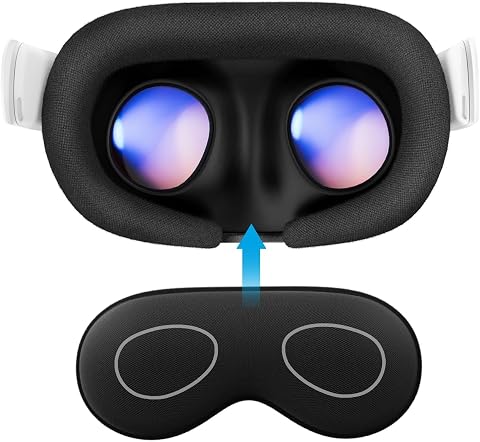
- Includes Studioform face cushion covers.
Cons:- Requires a PC VR setup and a DisplayPort connection.
- Listed weight of 8.8 pounds may make extended wear uncomfortable.
- PC tethering limits freedom of movement compared with standalone Meta Quest headsets.
Best for: PC VR enthusiasts and simulation players with a capable computer and DisplayPort who prioritize per-eye resolution and a wide view.
Not ideal for: Buyers who want wireless, self-contained VR, a lightweight headset, or a simple first-time setup.
- Display type:Micro-OLED
- Resolution:3840 × 3552 per eye
- Field of view:116°
- Refresh rate:90 Hz
- Pixel density:53 PPD
- Tracking:Inside-out 6DOF; eye tracking
- Connectivity:DisplayPort
- Weight:8.8 pounds
Our verdict“Choose the Pimax Crystal Super if high-resolution PC VR matters more to you than wireless freedom and a lighter headset.”
Meta Quest Pro 256 GB VR Headset with VR Field Trips Subscription
The Meta Quest Pro is the specialist choice for buyers who want mixed reality and virtual workspaces, not simply a standalone gaming headset. Its full-color passthrough and multiple resizable virtual displays support a setup that can blend digital panels with the room around you. Pancake lenses keep the optical design compact, while the Touch Pro controllers add self-tracking and haptic feedback for precise interactions. Compared with the Meta Quest 3, the Pro emphasizes multitasking and controller features; the Quest 3 is the clearer fit for buyers focused on broad standalone use and a larger stated storage capacity. The subscription offer needs checking before purchase: its duration is inconsistently described as one month and 12 months. The listed eight-hour battery life also makes charging part of longer sessions.
Pros:- Full-color passthrough supports mixed-reality use in a real room.
- Multiple resizable virtual displays suit multitasking.
- Pancake lenses support a compact optical design.
- Touch Pro controllers offer self-tracking and multi-point haptics.
Cons:- The included field-trip subscription duration is inconsistent in the product information.
- Listed battery life is eight hours, so extended use may require charging.
- Its work and mixed-reality focus may be unnecessary for buyers who only want basic VR gaming.
Best for: Remote workers, educators, and mixed-reality users who want resizable virtual displays, color passthrough, and advanced controllers.
Not ideal for: Buyers mainly seeking a straightforward VR gaming headset, or anyone relying on a clearly stated subscription term or long sessions without charging.
- Storage:256 GB
- RAM:12 GB
- Display:LCD, 1920 × 1080 per eye
- Refresh rate:90 Hz
- Field of view:110°
- Lens technology:Pancake lenses
- Connectivity:Wi-Fi; USB Type-C
- Battery life:8 hours
- Controllers:Touch Pro motion-sensing controllers
Our verdict“Pick the Meta Quest Pro if virtual workspaces and advanced mixed-reality controls matter more than a simpler gaming-first headset.”
Meta Quest 3S 128GB VR Headset (Renewed Premium)
This renewed Meta Quest 3S makes sense for buyers who want a self-contained headset for games, video, and color-passthrough experiences without adding a PC. Its Snapdragon XR2 Gen 2 processor, 8GB of RAM, hand tracking, and Touch controllers give it a broad set of ways to interact. Compared with the Meta Quest 3S 128GB with Elite Strap, this listing does not specify an Elite Strap, so fit upgrades may need separate attention; it also carries renewed-product status, backed here by the Amazon Renewed Guarantee. The 128GB storage is enough for a selective library, but frequent installers may need to remove apps as they rotate games. Battery life is listed as just a few hours, and the 96° field of view is narrower than the 110° stated for the Elite Strap Quest 3S listing. That makes this a practical wireless entry point, not a long-session or widest-view option.
Pros:- Standalone wireless design avoids the PC and DisplayPort requirements of the Pimax Crystal Super.
- Snapdragon XR2 Gen 2 processor and 8GB RAM support gaming and mixed-reality apps.
- Dual RGB cameras enable full-color passthrough.
- Includes both hand tracking and Touch controllers.
Cons:- Battery life is listed as two to three hours.
- 128GB storage can constrain a large installed game library.
- Renewed status may not suit buyers who specifically want a new device.
Best for: Buyers who want standalone wireless VR and color passthrough in a renewed headset, and are comfortable managing a 128GB library.
Not ideal for: People who want a new headset, longer sessions between charges, a wider stated field of view, or abundant installed storage.
- Condition:Renewed Premium
- Storage:128 GB
- Memory:8 GB RAM
- Processor:Snapdragon XR2 Gen 2
- Display resolution:2064 × 2208 pixels
- Refresh rate:90 Hz
- Field of view:96°
- Connectivity:USB Type-C; 3.5 mm jack
- Warranty:1 year
Our verdict“Choose this renewed Quest 3S if you want wireless standalone VR and can accept limited storage, short sessions, and renewed condition.”
Meta Quest 3S 128GB Mixed Reality Headset with Elite Strap
This Meta Quest 3S bundle pairs standalone VR and mixed reality with an included Elite Strap, making it the more fit-focused choice among the two Quest 3S listings here. The strap’s adjustment dial, flexible top strap, and silicone support are meant to help distribute the headset’s weight, which can matter during active games or longer viewing sessions. Compared with the renewed Meta Quest 3S, the main distinction is the included strap and the different listed display and field-of-view figures, rather than a larger storage capacity: both offer 128GB. The 1832 × 1920-per-eye resolution and 90 Hz refresh rate serve general use, while the 110° field-of-view figure is wider than the renewed model’s listed 96°. The tradeoffs are practical: a 3.5mm headset needs a separate USB-C adapter, and this bundle does not fit in the Compact Carrying Case.
Pros:- Included Elite Strap has a dial and flexible top strap for fit adjustment.
- Silicone support is designed to help distribute weight.
- Supports both mixed reality and virtual reality.
- 110° listed field of view is wider than the renewed Quest 3S listing.
Cons:- Does not fit in the Compact Carrying Case.
- Using 3.5mm headphones requires a separately sold USB-C adapter.
- 128GB storage may limit users who keep many apps and games installed.
Best for: Standalone VR buyers who want an included adjustable Elite Strap and silicone support for a more configurable fit.
Not ideal for: Travelers who need the Compact Carrying Case, or users who want to connect 3.5mm headphones without buying an adapter.
- Storage:128 GB
- Resolution:1832 × 1920 per eye
- Refresh rate:90 Hz
- Field of view:110°
- Platform:Standalone
- Included strap:Elite Strap with adjustment dial
- Included support:Silicone support
- Connectivity:USB Type-C
- Carry case fit:Does not fit the Compact Carrying Case
Our verdict“Choose this Quest 3S bundle if an adjustable included strap is a higher priority than compact carrying or wired headphone convenience.”
Meta Quest 3 512GB VR Headset with GOLF+
The Meta Quest 3 512GB is the most versatile standalone choice in this group for buyers who want room for a substantial collection of games and apps. Its 512GB capacity is four times the 128GB offered by the Meta Quest 3S listings, reducing the need to uninstall titles as often. The Quest 3 also combines wireless play, full-color passthrough, a stated 120 Hz refresh rate, and a 2064 × 2208-per-eye resolution for gaming, fitness, and mixed reality without a PC tether. That convenience contrasts with the Pimax Crystal Super, which targets much higher per-eye resolution but requires a DisplayPort-connected PC. Here, the compromises are a listed 2.2-hour battery life and an LCD display, which may not suit buyers seeking a different display technology. GOLF+ and a three-month games catalog trial add variety, though the short battery runtime remains the main limit for extended sessions.
Pros:- 512GB storage offers much more room than the 128GB Quest 3S models.
- Standalone wireless design supports play without a PC connection.
- Full-color passthrough supports mixed-reality experiences.
- 120 Hz refresh rate and included GOLF+ offer support varied use.
Cons:- Listed battery life is 2.2 hours, limiting longer sessions without recharging.
- LCD display may not fit buyers seeking another display type.
- The very wide 360° field-of-view specification is listed in the product data and may not match typical headset viewing expectations.
Best for: Standalone VR players who keep many games installed and want one headset for gaming, fitness, and color-passthrough mixed reality.
Not ideal for: Buyers who need long untethered sessions, want a display other than LCD, or prioritize PC VR resolution above wireless convenience.
- Storage:512 GB
- Memory:8 GB RAM
- Processor:Snapdragon XR2 Gen 2
- Display:LCD
- Resolution per eye:2064 × 2208 pixels
- Refresh rate:120 Hz
- Battery life:2.2 hours
- Connectivity:Bluetooth; USB Type-C
- Included offer:GOLF+ with 1,800 in-game credits; three-month games catalog trial
Our verdict“Choose the Quest 3 512GB if you want a versatile wireless headset with ample room for games and can plan around its short listed battery life.”
Meta Quest 3S 128GB VR Headset with GOLF+ Included
I’d pick this Quest 3S bundle for someone who wants a standalone headset and plans to spend time in GOLF+. The included game content and catalog trial give a new owner ways to start playing without adding a PC or console. Its Snapdragon XR2 Gen 2 processor and 8GB RAM support VR and mixed-reality experiences, while wireless operation avoids a tether during room-scale play. Compared with the Meta Quest 3 512GB with Elite Strap, this model has far less storage and a shorter listed refresh rate, so it suits a smaller library better than a long-term collection of large games. The tradeoff is practical: 128GB storage can fill quickly, and the listed battery life is 2.5 hours. I’d choose it for its golf-focused bundle, not for maximum capacity.
Pros:- Standalone wireless use supports untethered play without a PC
- Includes GOLF+ content with 1,800 in-game credits
- Three-month games catalog trial adds more ways to try VR
- Snapdragon XR2 Gen 2 processor and 8GB RAM support VR and mixed-reality experiences
Cons:- 128GB storage leaves less room for a growing collection than the Quest 3 512GB
- Listed battery life is 2.5 hours
- 60 Hz listed refresh rate is lower than the 90 Hz listed for the Quest 3 512GB
Best for: New VR owners who want a wireless headset for GOLF+ and a limited number of other games
Not ideal for: Players who plan to keep a large game library installed or want longer sessions without charging breaks
- Storage:128 GB
- RAM:8 GB
- Processor:Snapdragon XR2 Gen 2
- Display:LCD
- Resolution:1832 x 1920 per eye
- Refresh rate:60 Hz
- Field of view:110 degrees
- Battery life:2.5 hours
- Included content:GOLF+ with 1,800 in-game credits; three-month games catalog trial
Our verdict“Choose this bundle if GOLF+ is a priority and you want a wireless entry into VR; skip it if storage headroom matters more.”
Meta Quest 3 512GB VR Headset with Elite Strap
This Quest 3 bundle makes the strongest case for buyers who want to keep plenty of games and apps installed: 512GB of storage gives it a clear capacity advantage over the Quest 3S 128GB with GOLF+. The included Elite Strap and adjustable headband offer a more secure fit than a basic headset setup, while the IPD adjustment dial lets users set lens spacing to suit their eyes. Its standalone platform keeps play free of a PC tether, and the listed 90 Hz refresh rate is higher than the Quest 3S listing’s 60 Hz. The tradeoff is that the product data lists an LCD display and 1920 × 1080 resolution per eye, so I wouldn’t choose it for a premium display specification over the Pimax Crystal Super. This is the more practical pick for a broad Quest library, not a PC-focused visual showcase.
Pros:- 512GB storage provides substantially more room for apps and games than the Quest 3S 128GB
- Elite Strap is included for a more secure fit
- IPD adjustment dial allows lens spacing adjustments
- Standalone operation does not require a PC
Cons:- LCD display may not suit buyers prioritizing higher-end display technology
- Listed resolution is 1920 × 1080 per eye
- Compatibility is listed as Oculus Quest devices, which may leave other platform expectations unclear
Best for: Standalone VR players who want to keep many games and apps installed and value an included secure-fit strap
Not ideal for: Buyers focused on PC VR or seeking a headset with a higher-end display technology than LCD
- Storage:512 GB
- Display:LCD
- Resolution:1920 × 1080 per eye
- Refresh rate:90 Hz
- Field of view:110 degrees
- Connectivity:USB Type-C
- Platform:Standalone
- Included accessory:Elite Strap
- Fit adjustments:Adjustable headband and IPD adjustment dial
Our verdict“Pick this Quest 3 if you want a large standalone library and an included Elite Strap, rather than a headset aimed at PC VR visuals.”
How We Picked
I ranked these headsets by how well they serve distinct VR buyers, rather than treating every specification as equally useful. The main criteria were visual capability, standalone convenience versus PC dependence, comfort-related accessories, storage, mixed-reality flexibility, and the practical value of included software or subscriptions. I also separated core hardware differences from bundle differences, since an added strap or game does not change a headset’s underlying capabilities.
That logic puts the Quest 3 512GB first for its broad appeal, followed by options that make clearer compromises or serve narrower needs. The Pimax Crystal Super ranks highly for demanding PC VR but lower for convenience; the Quest 3S models offer simpler entry points, and their bundles matter more than small differences in headline features. The Quest Pro remains relevant for buyers drawn to its specific bundle and use case, but it is not the most straightforward choice for general gaming.
| VR glasse | Connectivity | Display |
|---|---|---|
| Pimax Crystal Super PC VR Head | DisplayPort | — |
| Meta Quest Pro 256 GB VR Heads | Wi-Fi; USB Type-C | LCD, 1920 × 1080 per eye |
| Meta Quest 3S 128GB VR Headset | USB Type-C; 3.5 mm jack | — |
| Meta Quest 3S 128GB Mixed Real | USB Type-C | — |
| Meta Quest 3 512GB VR Headset | Bluetooth; USB Type-C | LCD |
| Meta Quest 3S 128GB VR Headset | — | LCD |
| Meta Quest 3 512GB VR Headset | USB Type-C | LCD |
Factors to Consider When Choosing Best VR Glasses
Before choosing among these headsets, I would match the device to where and how you plan to use VR. A headset that excels in a dedicated PC setup can be the wrong fit for quick, untethered sessions, and bundles can distract from comfort or compatibility questions.
Choose Standalone Freedom or PC-Driven VR
A standalone headset runs experiences without a computer, which makes setup and room-to-room use simpler. PC VR can open a different performance and content path, but it adds hardware requirements, setup steps, and often a tether or wireless network dependency. Before buying a PC-oriented model, check that your computer and play space can support the experience you want. A common mistake is choosing based on the headset alone while overlooking the cost and effort of the rest of the system. If you want spontaneous play, prioritize standalone use; if you already have a capable PC and value demanding simulations, a PC-focused headset may make more sense.
Think About Display Priorities, Not Just Headline Specs
Display quality matters most when your sessions involve fine detail, reading virtual interfaces, or sustained visual focus. A headset built around advanced displays may reward those uses, but its advantages matter less if you mostly play casual games or watch short experiences. Fit and lens positioning also affect how clearly you see the image, so a specification sheet cannot settle comfort or clarity for every face. Try to identify the content you expect to use most before paying for capabilities aimed at specialist workloads. For broad game libraries, convenience and content access can outweigh pursuing the most ambitious display hardware.
Treat Comfort as a Session-Length Decision
Comfort becomes more important as sessions get longer, and the strap is part of that equation rather than a minor accessory. An included Elite Strap may be attractive for buyers who expect frequent or extended play, while occasional users may prefer to start with a simpler setup. Weight balance, facial contact, adjustment range, and the ability to share the headset all affect day-to-day fit. Avoid assuming that one included strap will suit every head shape. If possible, check the return and fit policies before committing, especially when the headset is intended for multiple people.
Pick Storage Based on Your Library Habits
Storage needs depend on how many large games and apps you keep installed at once, not only on how often you play. A spacious library can reduce the need to remove and reinstall content, while a smaller capacity may be perfectly workable for a rotating set of favorites. Bundled software can also occupy space, so account for it when planning your library. Buyers often overestimate how much they need if they mainly play a few titles, or underestimate it when they download frequently. Consider whether you prefer keeping everything ready or managing installations as your interests change.
Separate Bundle Value From Headset Value
A game, subscription, or comfort accessory can make a bundle more useful, but it does not improve the headset’s core display or processing capabilities. Compare the included extra with what you would genuinely choose on its own: GOLF+ is most relevant to golfers, while a strap is broadly useful to people who care about fit and longer sessions. Subscription offers can have limits or renewal terms, so check the conditions rather than treating access as permanent. A common buying error is selecting a bundle for its headline extra and then never using it. Choose the bundle that supports your actual routine, not the one with the longest list of inclusions.
Check Your Content and Social Use Before You Buy
Headsets can differ in how well they fit gaming, fitness, mixed reality, productivity, and shared experiences, so start with the activities that matter most. Confirm that the apps and games you care about run on the headset and that any PC connection or subscription requirement fits your setup. Mixed reality is useful only if you expect to use experiences that place digital objects in your physical room. For family use, also think about account setup, fit adjustment, and how easily different people can take turns. A clear use case prevents paying for specialized features that rarely leave the menu.
Frequently Asked Questions
Should I choose the Meta Quest 3 or Quest 3S for a first headset?
Both are standalone options, so either can provide a relatively simple start without a gaming PC. The Quest 3 is the stronger all-around choice in this group for buyers who want the broader feature set and more storage, while the Quest 3S is a sensible entry point for those who want to keep the setup straightforward. Think about how often you expect to use VR and whether you will keep a large library installed. If comfort matters, compare the specific bundle accessories rather than assuming the two packages fit the same way. Choose based on the experience and storage you need, not only on being new to VR.
Do I need a gaming PC to use the Pimax Crystal Super?
The Pimax Crystal Super is the PC-focused choice in this roundup, so buyers should plan around a compatible computer rather than expect the same standalone simplicity as a Quest headset. Check the headset’s current system requirements against your PC before purchase, including graphics hardware and connection needs. A capable computer can add cost and setup work if you do not already own one. If your priority is picking up a headset for untethered play, the Quest options are a more natural fit. Choose Pimax when its PC-oriented use and display ambitions match your existing setup.
Is an Elite Strap bundle a better choice than a game bundle?
It depends on whether comfort or specific content is the bigger part of your decision. An Elite Strap may be useful across many sessions, especially if you expect longer play or want a different fit from a basic strap. A GOLF+ bundle is more appealing if golf is already a central reason for buying VR. Neither extra changes the headset’s core capabilities, so compare the underlying headset first. Check bundle terms and included items closely, then choose the addition you would actually use.
Is the Meta Quest Pro a better buy than a Quest 3 for work or learning?
Not automatically; the right choice depends on the apps and activities you plan to use. The Quest Pro bundle may appeal to buyers interested in productivity or guided virtual field trips, while the Quest 3 is the more broadly positioned option for everyday VR and mixed-reality use. Verify that the work or learning software you need supports the headset and its features. Also factor in whether the bundle’s subscription suits your schedule and remains useful beyond an initial trial period. If your needs are general rather than tied to a specific Pro-oriented use, the Quest 3 is the safer all-purpose direction.
How much headset storage should I choose if I mostly play a few games?
A smaller-capacity headset can work well if you keep a short list of favorites and are comfortable removing apps you no longer use. More storage is useful when you want a larger collection installed, share the headset with others, or download content frequently. Remember that games and media use space alongside the system and other apps. Bundled content may also affect how much room remains for your own library. For a few regularly played titles, prioritize fit and the headset’s experience over storage alone; for a broad library, extra capacity can reduce ongoing management.
Conclusion
For the best overall choice, I recommend the Meta Quest 3 512GB: it is the clearest all-around fit for standalone gaming and mixed reality. The best value for a straightforward entry is the Quest 3S, with the Elite Strap bundle better suited to comfort-minded buyers and the GOLF+ version to golf fans. For best premium PC VR, choose the Pimax Crystal Super only if you have a capable PC and want a specialized setup. The Quest Pro makes most sense for buyers specifically drawn to its productivity or field-trip bundle, rather than as a default gaming pick. If you are unsure, start with the Quest 3 for versatility; choose the 3S for a simpler entry, Pimax for PC-focused visual ambition, or a bundle whose extra matches what you will actually use.