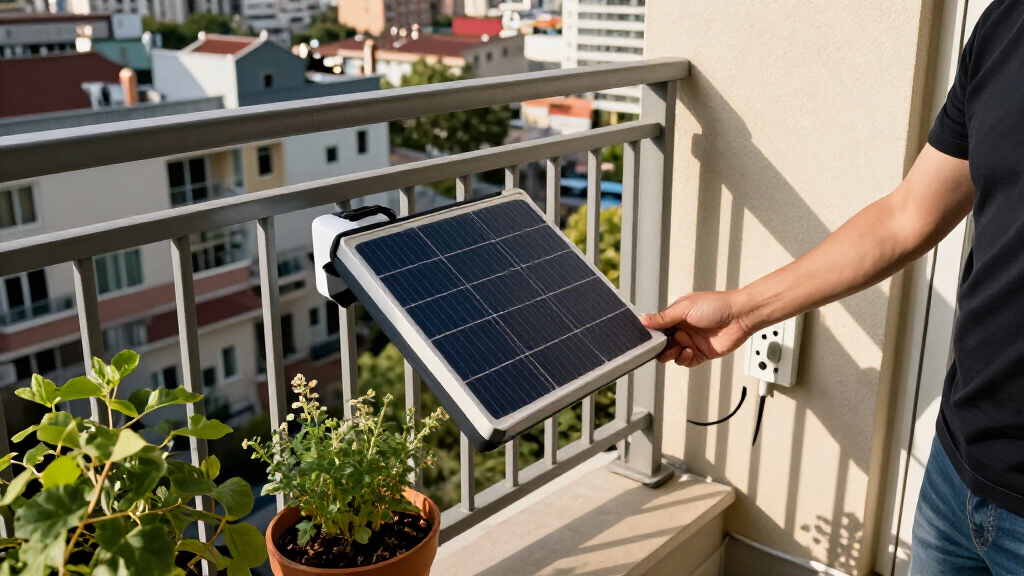

Choosing among plug-in solar panels is less about the biggest number on the box and more about matching system capacity, outlet setup, mounting space, and verifiable inverter details to your home. I rank the PluggedSolar 1800W Grid Tie Kit first for its five larger panels and stated UL 1741 inverter compliance, while the PLUGGEDSOLAR 1200W Balcony Kit brings the largest listed panel array and Wi-Fi monitoring. For smaller footprints, the 800W APsystems kit has a named inverter platform and balcony-focused design, and the other 800W kit includes a long cord and monitoring but has a specification conflict that deserves a closer look.

Get the latest gadgets delivered free with Prime
- Fast, free delivery on millions of items
- Prime Video, Amazon Music and more included
- Member-only deals all year
These systems are not interchangeable shortcuts to a lower electric bill. Their listed capacities, certification descriptions, panel weights, shipment arrangements, and installation requirements differ, and sunlight and local rules shape real output. I focus this roundup on those decision points: what is included, how the grid connection is described, what claims need confirmation, and who should choose each kit. Before buying or plugging in any grid-tied system, check local regulations, utility requirements, outlet suitability, and the manufacturer’s current installation instructions.
Complete the kit



Key Takeaways
- Best overall capacity: The PluggedSolar 1800W kit has five 360W panels and three microinverters, but its stated AC output is 1500W, not 1800W.
- Largest listed panel array among the 1200W options: The PLUGGEDSOLAR 1200W kit includes six 200W panels, two microinverters, Wi-Fi monitoring, and a 50-foot cord.
- Best compact balcony pick: The 800W APsystems kit specifies four panels, Wi-Fi monitoring, and UL 3700 and UL 1741 certification claims; its 90-pound listed weight calls for a solid mounting plan.
- Check the power discrepancy: The other 800W kit lists an 800W panel array but also gives a maximum power of 320W, so buyers should ask the seller to clarify expected AC output before ordering.
- Plug-in does not mean universally permitted: Grid connection rules, utility approval, outlet condition, dedicated-circuit needs, mounting safety, and shade can affect whether a kit is suitable.
| PluggedSolar 1800W Solar Grid Tie Kit with Micro Inverter, Plug-in Wall Outlet, Utility Approved |  | Best Overall for Buyers Seeking the Largest Clearly Specified Array | Panel configuration: 5 × 360W monocrystalline panels | Total panel capacity: 1800W | Maximum AC power: 1500W | VIEW LATEST PRICE | See Our Full Breakdown |
| PLUGGEDSOLAR 1200W Plug-In Balcony Solar Kit with Wi-Fi Monitoring |  | Best for a Larger Balcony-Style Array with Remote Monitoring | Panel configuration: 6 × 200W monocrystalline panels | Total panel capacity: 1200W | Inverters: 2 microinverters | VIEW LATEST PRICE | See Our Full Breakdown |
| PLUGGEDSOLAR 800W Plug-in Balcony Solar Kit (4-Panel) with APsystems Microinverter |  | Best Compact Balcony Pick with a Named Inverter | Panel configuration: 4 × 200W monocrystalline panels | Total panel capacity: 800W | Inverter: APsystems microinverter | VIEW LATEST PRICE | See Our Full Breakdown |
| PluggedSolar 800W Plug-and-Play Solar Panel System with Micro-Inverter |  | Best for Buyers Who Want an 800W Kit and Will Confirm the Power Specification | Panel configuration: 4 × 200W monocrystalline panels | Stated panel capacity: 800W | Listed maximum power: 320W; conflicts with the 800W system title | VIEW LATEST PRICE | See Our Full Breakdown |
| plug-in solar panel | Panel configuration | Output voltage | Total panel capacity | Cord length |
|---|---|---|---|---|
| PluggedSolar 1800W Solar Grid | 5 × 360W monocrystalline panels | 120V AC | 1800W | — |
| PLUGGEDSOLAR 1200W Plug-In Bal | 6 × 200W monocrystalline panels | 120V AC | 1200W | 50 feet |
| PLUGGEDSOLAR 800W Plug-in Balc | 4 × 200W monocrystalline panels | 120V AC | 800W | 50 feet |
| PluggedSolar 800W Plug-and-Pla | 4 × 200W monocrystalline panels | 120V AC | — | 50 feet |
More Details on Our Top Picks
PluggedSolar 1800W Solar Grid Tie Kit with Micro Inverter, Plug-in Wall Outlet, Utility Approved
I put the PluggedSolar 1800W kit first because it offers the largest stated panel capacity in this lineup and gives more detail about the conversion hardware than either 800W alternative. Five 360W monocrystalline panels add up to 1800W DC nameplate capacity, while three microinverters are listed and the system’s maximum AC output is given as 1500W. That gap matters: buyers should compare the AC limit, not assume all panel capacity will reach household loads at once.
The seller describes the microinverters as UL 1741 certified with anti-islanding protection, a key grid-tie safety claim to verify against the actual equipment label and documentation. The kit is intended to connect to a standard outlet without batteries, which makes it a different proposition from a storage system: it contributes power when generating, rather than keeping solar energy available after sunset or during an outage. The stated annual generation of roughly 3000kWh is an estimate; roof or ground orientation, shade, location, and system limits can change the result.
Compared with the 1200W PLUGGEDSOLAR kit, this model has fewer panels but more panel capacity per panel and a higher listed system total. Compared with the APsystems 800W kit, it is the more ambitious option, not the easier one: a 50-pound listed system still needs sound support, and mounting hardware is not included. I would shortlist it for a homeowner with adequate sunny space who wants more generating capacity and is prepared to arrange mounting and check the utility and outlet requirements. I would skip it if a simple balcony fit, included mounting solution, or battery backup is the priority.
Pros:- Five 360W monocrystalline panels provide the lineup’s largest listed panel capacity at 1800W.
- Three microinverters are listed, with UL 1741 compliance and anti-islanding protection claimed.
- Stated maximum AC output is specified as 1500W, giving buyers a more useful conversion limit than panel wattage alone.
- Designed for grid-tied plug-in use without batteries or home-run wiring.
Cons:- Mounting hardware is not included, adding a separate planning and compatibility step.
- The 1500W AC maximum is below the 1800W panel nameplate capacity.
- The 50-pound listed weight and five-panel footprint call for careful support and placement.
Best for: Homeowners with room for five panels who want the highest stated panel capacity in this comparison and can arrange secure mounting.
Not ideal for: Renters with limited balcony space, buyers who need battery backup, or anyone unwilling to verify the 1500W AC limit and source mounting hardware.
- Panel configuration:5 × 360W monocrystalline panels
- Total panel capacity:1800W
- Maximum AC power:1500W
- Microinverters:3
- Output voltage:120V AC
- Maximum voltage:240V
- Safety claim:UL 1741; anti-islanding protection stated
- Warranty:25 years on panels
Our verdict“I rank this first for its larger, relatively well-detailed array, provided buyers confirm the AC limit, approvals, and mounting plan.”
PLUGGEDSOLAR 1200W Plug-In Balcony Solar Kit with Wi-Fi Monitoring
The PLUGGEDSOLAR 1200W kit is the middle ground I would examine first when the 1800W system feels too large but an 800W array seems modest. Six 200W monocrystalline panels provide 1200W of stated panel capacity, paired with two microinverters and Wi-Fi power monitoring. Its 50-foot cord gives more flexibility between a sunny mounting position and a suitable outlet, although cord length does not make an unsuitable outlet or connection acceptable.
Compared with the 1800W PluggedSolar kit, this one uses more, smaller panels and has a lower total capacity; that layout may better suit a buyer planning several balcony panels, but it also means six separate panels to place and secure. The listed total weight is 120 pounds, which is a significant mounting consideration. The product description says the inverter complies with UL 1741 and describes the system as UL 3700 certified. I would request documentation for the exact supplied configuration rather than relying on a listing summary, especially because certification claims can refer to specific components or operating arrangements.
There is a practical delivery tradeoff as well: the panels ship separately in multiple packages, so the kit may not arrive as one ready-to-assemble shipment. The advertised generation and savings depend on site conditions and should not be treated as guaranteed. Relative to the APsystems 800W kit, this option supplies more panel capacity and a longer listed cord, while the 800W kit names its inverter brand and weighs less. I would choose this model for a buyer who values a six-panel layout and app-style monitoring, but skip it if heavy balcony loading, staggered delivery, or incomplete certification documentation would cause problems.
Pros:- Six 200W panels provide 1200W total stated panel capacity.
- Includes two microinverters and Wi-Fi power monitoring.
- A 50-foot cord allows flexible placement relative to a suitable 120V outlet.
- Designed for plug-in grid-tied operation without batteries.
Cons:- The listed 120-pound weight makes balcony loading and mounting capacity a serious check.
- Panels ship separately across multiple packages, which can delay a complete installation.
- Certification descriptions should be checked against documentation for the exact supplied system.
Best for: A buyer with a suitable balcony or patio, enough support capacity for a 120-pound array, and a preference for Wi-Fi monitoring.
Not ideal for: Renters or apartment owners who cannot confirm structural approval, buyers needing a lightweight setup, or anyone expecting every component in one shipment.
- Panel configuration:6 × 200W monocrystalline panels
- Total panel capacity:1200W
- Inverters:2 microinverters
- Cord length:50 feet
- Output voltage:120V AC
- Panel dimensions:4.5 × 2.2 feet each
- Listed weight:120 pounds
- Certification claims:UL 3700; inverter stated to comply with UL 1741
Our verdict“I would choose this for a monitored six-panel installation when mounting capacity and the certification paperwork both check out.”
PLUGGEDSOLAR 800W Plug-in Balcony Solar Kit (4-Panel) with APsystems Microinverter
For a buyer whose main constraint is space rather than maximum panel capacity, the PLUGGEDSOLAR 800W APsystems kit has a clear role. It pairs four 200W monocrystalline panels with an APsystems microinverter, Wi-Fi monitoring, and a 50-foot cord. The listing describes balcony and patio use, with a 120V AC connection and no batteries. Compared with the 1200W kit, it cuts the panel count and stated capacity, which can make a smaller project easier to plan, though four panels measuring 4.5 by 2.2 feet each still need real mounting area.
Its advantage over the other 800W kit is the named inverter and a cleaner match between the stated 800W panel total and the system’s headline capacity. The listing also cites UL 3700 and UL 1741, Wi-Fi monitoring, and the ability to stack up to three systems on one dedicated plug. Those are useful claims, but I would confirm the precise permitted configuration and circuit requirements with the seller and a qualified professional before treating multiple kits as one installation. “Plug and play” does not remove local code, utility, or building restrictions.
The main drawback is physical: the listed weight is 90 pounds, and the kit arrives in three separate packages. Its expected output depends on direct sun; a shaded balcony can undercut the point of choosing a solar kit at all. Compared with the 1800W option, this model gives up capacity and a larger array in favor of a balcony-oriented package and a named inverter. I would pick it where a four-panel footprint and monitoring fit the site, but I would not choose it simply because its installation is described as easy if the railing, wall, or patio cannot safely carry the load.
Pros:- Four 200W panels give a straightforward 800W stated panel total.
- Names an APsystems microinverter rather than leaving the inverter brand unspecified.
- Includes Wi-Fi monitoring and a 50-foot cord.
- Listing claims UL 3700 and UL 1741 compliance and describes a balcony-focused setup.
Cons:- The 90-pound listed weight needs a secure mounting surface and support check.
- Ships in three separate packages that may arrive at different times.
- Generation depends strongly on direct sun and may be limited on shaded balconies.
Best for: Balcony or patio users seeking an 800W-class four-panel kit with a named APsystems inverter and Wi-Fi monitoring.
Not ideal for: Buyers with shaded mounting positions, weak or unverified supports, or a need for more capacity than an 800W panel array can provide.
- Panel configuration:4 × 200W monocrystalline panels
- Total panel capacity:800W
- Inverter:APsystems microinverter
- Output voltage:120V AC
- Cord length:50 feet
- Panel dimensions:4.5 × 2.2 feet each
- Listed weight:90 pounds
- Certification claims:UL 3700 and UL 1741
Our verdict“I favor this over the other 800W kit when inverter identification and a balcony-focused package matter more than maximizing capacity.”
PluggedSolar 800W Plug-and-Play Solar Panel System with Micro-Inverter
The PluggedSolar 800W system includes four 200W monocrystalline panels, one microinverter with built-in Wi-Fi monitoring, and a 50-foot cord. On paper, that is a familiar 800W panel array in a comparatively simple package. Its description says the system converts solar output to 120V AC without batteries, and it claims UL 1741 anti-islanding protection. Those features make the listing sound like a direct alternative to the APsystems balcony kit, but one specification makes me reluctant to rank it higher.
The supplied specifications list a maximum power of 320W, despite the 800W system title and four panels totaling 800W. That may describe a particular inverter limit, a listing error, or another value, but the product information does not resolve the discrepancy. Buyers should ask the seller to state the continuous AC output and provide the exact inverter model before ordering. If 320W is the real maximum output, the system’s usable contribution would differ sharply from what many buyers infer from an 800W title.
Compared with the APsystems 800W kit, this model offers a similar panel count, monitoring, and 50-foot cord, while its inverter is described generically rather than named. Its stated listed weight is only five pounds, a figure that appears unlikely to cover the panels and inverter together; I would verify what that weight applies to before planning transport or mounting. The panels and inverter also ship separately. I would consider it only when the seller clarifies both the power and weight details in writing. Buyers who want a straightforward comparison should favor the APsystems option, whose supplied information is more coherent, or the 1200W kit if they can support a heavier array.
Pros:- Includes four 200W monocrystalline panels for an 800W stated panel total.
- Built-in Wi-Fi power monitoring is listed with the microinverter.
- Includes a 50-foot plug-in cord and is described as battery-free.
- UL 1741 anti-islanding protection is claimed in the product information.
Cons:- The listed 320W maximum power conflicts with the 800W title and 800W panel total.
- The five-pound listed weight is unclear for a kit that includes four full-size panels.
- Panels and inverter ship separately, and the inverter model is not specified.
Best for: A buyer interested in a four-panel 800W kit who is willing to obtain written clarification of inverter output and listed weight before purchasing.
Not ideal for: Anyone who needs dependable, clearly stated AC output for system planning or does not want to resolve conflicting listing details.
- Panel configuration:4 × 200W monocrystalline panels
- Stated panel capacity:800W
- Listed maximum power:320W; conflicts with the 800W system title
- Inverter:Micro grid-tie inverter with built-in Wi-Fi monitoring
- Cord length:50 feet
- Output voltage:120V AC
- Safety claim:UL 1741 anti-islanding protection
- Listed item weight:5 pounds; clarify what the figure covers
Our verdict“I would buy this only after written confirmation of its actual AC output and what the listed weight represents.”

How We Picked
I ranked these kits by how clearly their specifications support a buyer’s decision about plug-in grid-tied solar. Capacity matters, but I did not treat a higher panel-wattage total as proof of higher usable AC output. The PluggedSolar 1800W kit leads because its five 360W panels, three microinverters, stated 1500W AC maximum, and UL 1741 claim make a comparatively detailed case for a larger installation. That position comes with an important caveat: the AC output is below the panel nameplate total, and mounting hardware is not included.
I also weighed inverter information, monitoring, included cord, panel count, listed weight, and disclosure gaps. The 1200W kit earns a strong place for its six panels and 50-foot cord, though its certification wording and split shipments merit verification. The APsystems 800W kit ranks ahead of the other 800W model because it names its inverter and provides certification claims, while its weight is substantial. The remaining 800W system offers convenient monitoring and a long cord, but the listed 320W maximum conflicts with its 800W title and panel total. I treat that mismatch as a decision-critical drawback, not a detail to gloss over.
These rankings rely on the supplied product specifications and descriptions, not independent testing. Annual generation figures are estimates, not promises; actual output depends on orientation, shading, weather, inverter limits, and installation. I also do not assume that a “plug-in” label overrides building codes or utility rules. Buyers should confirm the exact kit configuration, certificates, permitted connection method, and mounting requirements with the seller, a qualified electrician, and their utility before purchase.
| plug-in solar panel | Safety claim | Certification claims | Inverter |
|---|---|---|---|
| PluggedSolar 1800W Solar Grid | UL 1741; anti-islanding protection stated | — | — |
| PLUGGEDSOLAR 1200W Plug-In Bal | — | UL 3700; inverter stated to comply with UL 1741 | — |
| PLUGGEDSOLAR 800W Plug-in Balc | — | UL 3700 and UL 1741 | APsystems microinverter |
| PluggedSolar 800W Plug-and-Pla | UL 1741 anti-islanding protection | — | Micro grid-tie inverter with built-in Wi-Fi monitoring |
Factors to Consider When Choosing Best Plug-in Solar Panels
I would compare plug-in solar kits by the usable system details, not just by the wattage in the title. The panel array, inverter output, connection rules, installation surface, and local approval all shape whether a kit fits a home. These checks matter even when a product is marketed as DIY or plug-and-play.
Separate panel capacity from AC output
Panel wattage describes the array’s rated DC capacity under specified conditions; it does not guarantee that much power at a wall outlet. The 1800W PluggedSolar kit lists a 1500W maximum AC output, while the other 800W PluggedSolar listing also gives a 320W maximum that conflicts with its panel total. I would ask for the inverter’s continuous AC rating, any per-outlet limit, and the expected system output before comparing annual production claims. A clear inverter limit is more useful than a headline panel number when estimating how much the kit can contribute to household use.
Check the inverter and certification paperwork
A grid-tied inverter synchronizes with the utility and should stop feeding power when the grid is down; this is commonly described as anti-islanding protection. The product listings cite UL 1741 and, in two cases, UL 3700, but buyers should confirm the exact inverter model and documentation for the kit being shipped. Certification claims should match the supplied hardware and the connection method, not just a general product-page statement. I would also ask the utility or a qualified electrician what approvals, interconnection steps, and equipment are required locally.
Treat outlet connection as a safety and code question
A standard 120V plug description does not prove that any available receptacle is suitable. Circuit capacity, wiring condition, grounding, outdoor protection, and rules for grid-connected generation can all affect installation. A 50-foot cord, included with three kits here, can help with placement but should not be treated as permission to use an extension cord or bypass manufacturer instructions. Verify whether the system requires a dedicated circuit, a particular receptacle, or professional installation, and follow the current instructions and local requirements.
Measure mounting space and load before ordering
Count panels and measure the real installation area, including room for safe clearances and secure attachment. Each 200W panel in the balcony kits is listed at 4.5 by 2.2 feet; four panels already need a substantial footprint. The 1200W kit is listed at 120 pounds and the APsystems 800W kit at 90 pounds, so balcony capacity and mounting hardware are not minor details. The 1800W kit lists 50 pounds but does not include mounting hardware. Confirm the total installed load, wind exposure, attachment method, and approval from a property owner or building manager where applicable.
Match array size to shade and household use
More panels do not automatically mean better results if a balcony or yard is shaded for much of the day. Panel direction, tilt, seasonal sun, weather, and nearby obstructions affect energy generation. The 1200W kit suits buyers with room for six panels; the APsystems 800W kit is more plausible where a four-panel layout is the practical limit. Think about daytime electricity use as well: plug-in generation typically contributes while the system is producing, and these listed kits do not include batteries. They should not be treated as outage backup or as a way to store daytime energy for evening use.
Confirm what arrives and what the warranty covers
Three listings describe panels or system components shipping in separate packages, so the full installation may not be ready when the first box arrives. Check the included-parts list, shipment plan, connector compatibility, and whether mounting hardware is included or must be sourced separately. The 1800W kit lists a 25-year panel warranty, but that does not automatically describe inverter, cord, or labor coverage. Read warranty terms for each component, including who handles a claim and whether the warranty depends on a particular installer or approved mounting arrangement.
Frequently Asked Questions
Can I plug a grid-tied solar kit into any household outlet?
No. A plug-in label does not confirm that every outlet, circuit, or installation location is suitable. Local electrical and building rules, utility requirements, circuit capacity, grounding, and the manufacturer’s instructions all matter. I would confirm the permitted connection method with the utility and a qualified electrician before connecting a grid-tied system, and I would not assume an extension cord is allowed unless the manufacturer explicitly says so.
Do these plug-in solar panels provide power during an outage?
The listed kits are grid-tied and do not include batteries. Their inverters are described as having anti-islanding protection, which means they are intended to stop sending power to the grid when utility power fails. That safety behavior generally means they should not be treated as outage backup. A buyer who needs electricity during an outage should look for a system specifically designed for backup operation, with suitable storage and transfer equipment.
Which kit has the highest stated capacity?
The PluggedSolar 1800W kit has the highest stated panel capacity in this comparison: five 360W panels total 1800W. Its listed maximum AC output is 1500W, so the panel total is not the same as the maximum outlet-side output. The 1200W kit is next by stated panel capacity, while both smaller systems are presented as 800W kits. One of those 800W listings also gives a conflicting 320W maximum power figure that should be clarified with the seller.
How much electricity will a plug-in solar kit generate?
Actual production depends on location, sun hours, panel direction and tilt, shade, weather, inverter limits, and system condition. The 1800W kit’s roughly 3000kWh annual figure and the APsystems 800W kit’s estimated 1500kWh figure are claims, not guaranteed outcomes. I would treat such estimates as starting points and request a site-specific production estimate based on the proposed panel position. A shaded balcony or poor orientation can materially reduce output compared with an unobstructed sunny location.
Which kit is the easiest to choose between?
The APsystems 800W balcony kit has a comparatively clear four-panel configuration and names its inverter, while the 1800W kit gives detailed panel and AC output figures for a larger installation. The 1200W kit suits buyers looking for six panels and Wi-Fi monitoring, but its 120-pound listed weight and split shipments deserve attention. I would not choose the other 800W kit until the seller explains why its listed maximum power is 320W despite the 800W title and panel total.
Conclusion
For the largest stated panel array and the clearest listed AC limit, I would start with the PluggedSolar 1800W kit, provided there is room and mounting hardware is arranged separately. Buyers who want a six-panel, monitored middle option can look at the PLUGGEDSOLAR 1200W kit, but only after confirming support capacity and the exact certification documents. For a smaller balcony installation with a named inverter, the APsystems 800W kit is the stronger of the two 800W choices in this lineup, though its 90-pound listed weight still demands a secure mounting plan.
I would put the other PluggedSolar 800W kit on hold until its seller resolves the 320W maximum-power discrepancy and clarifies the five-pound listed weight. Whichever model fits, I would verify the equipment, utility and local requirements, outlet and circuit suitability, and mounting method before purchase. These systems can supplement daytime electricity use, but the listed kits are not battery backups, and neither product wattage nor an annual estimate guarantees what a particular home will generate.
Halloween Picks
halloween
As an affiliate, we earn on qualifying purchases.