
Editorial update log
November 27, 2026:
Deal update: RoundupForge price history now flags ASIN B0BP9SNVH9 on amazon.com as below its typical tracked range. RF labels the deal as all_time_low.
Exact pricing remains intentionally gated through the live Grimfaste price module in the article.
The best streaming sticks pair a responsive interface with the picture quality and app support your TV can use. My best overall pick is the Roku Streaming Stick 4K for its broad 4K format support and straightforward Roku experience; the Amazon Fire TV Stick 4K Max stands out for buyers invested in Alexa and Amazon services, while the Xiaomi TV Stick 4K (2nd Gen) is a strong Google TV alternative. The main tradeoffs are HD versus 4K, platform preference, Wi-Fi demands, and whether a compact plug-in design matters more than extra features. Renewed and older models can suit tighter budgets, but their age and condition merit closer scrutiny. Read on for the full breakdown and guidance on choosing the right stick for your setup.

Get the latest gadgets delivered free with Prime
- Fast, free delivery on millions of items
- Prime Video, Amazon Music and more included
- Member-only deals all year
Complete the kit



Key Takeaways
Roku leads for simple, broad-use streaming: the Roku Streaming Stick 4K is the most balanced pick here, while the HD Roku models suit older TVs that cannot show 4K.
Fire TV offers the strongest Amazon-centered choices: the 4K Max is the premium option, while the HD and 4K Select models make more sense when advanced features are not a priority.
Google TV gives Xiaomi a distinct role: the Xiaomi TV Stick 4K (2nd Gen) pairs 4K formats with Google TV and Wi-Fi 6, making it a good fit for viewers who prefer Google’s interface and services.
Not every 4K stick is an upgrade for every TV: HD models such as the onn 2K FHD and Roku Streaming Stick (2025) can be a better match for a 1080p screen or a simpler secondary setup.
Renewed and older sticks need extra scrutiny: the Roku 3600R and renewed Roku 4K options may appeal for basic or lower-cost use, but newer models offer a safer path to current features and ongoing usability.
| Roku Streaming Stick 4K with Voice Remote (Renewed) | 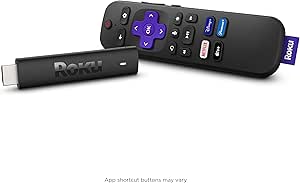 | Best Renewed 4K Pick | Brand: Roku | Model: 3820R | Connectivity: Wi-Fi | VIEW LATEST PRICE | See Our Full Breakdown |
| Roku Streaming Stick+ HD/4K/HDR Streaming Device with Long-Range Wi-Fi and Voice Remote |  | Best for Private Listening | Connectivity: Wi-Fi | Resolution: 4K, HD | HDR: Supported; specific formats not listed | VIEW LATEST PRICE | See Our Full Breakdown |
| onn Android TV 2K FHD Streaming Stick with Voice Remote |  | Best for Google Casting on a 1080p TV | Resolution: 1080p | Aspect ratio: 16:9 | HDR format: HDR10 | VIEW LATEST PRICE | See Our Full Breakdown |
| Roku Streaming Stick 4K with Voice Remote |  | Best Overall Roku 4K Stick | Brand: Roku | Model: 3820CA2 | Connectivity: Wi-Fi | VIEW LATEST PRICE | See Our Full Breakdown |
| Amazon Fire TV Stick HD with Alexa Voice Remote |  | Best for Alexa Homes and Full HD TVs | Resolution: Full HD | Wi-Fi: Wi-Fi 6 | Power: Powered by TV via included USB-C cable | VIEW LATEST PRICE | See Our Full Breakdown |
| onn Android TV 4K UHD Streaming Device with Voice Remote and HDMI Cable |  | Best Value for Google TV Fans | Operating system: Android TV | Video output: 3840 × 2160 pixels | Connectivity: HDMI and Wi-Fi | VIEW LATEST PRICE | See Our Full Breakdown |
| Amazon Fire TV Stick 4K Plus with Alexa Voice Remote |  | Best for Wi-Fi 6 Households | Processor: Quad-core 1.7 GHz | Storage: 8 GB | Wi-Fi: Wi-Fi 6 dual-band, 2.4 GHz and 5 GHz | VIEW LATEST PRICE | See Our Full Breakdown |
| Xiaomi TV Stick 4K (2nd Gen) with Google TV, Dolby Vision and Atmos, Wi-Fi 6, and Bluetooth Voice Remote |  | Best Compact Google TV Pick | Resolution: 4K, 3840 × 2160 pixels | Processor: 6 nm, 2.5 GHz quad-core | RAM: 2 GB | VIEW LATEST PRICE | See Our Full Breakdown |
| Amazon Fire TV Stick 4K Max (2nd Gen) Streaming Device |  | Best Premium Streaming Stick | Processor: Quad-core 2.0 GHz | GPU: 850 MHz | Storage: 16 GB | VIEW LATEST PRICE | See Our Full Breakdown |
| Roku Streaming Stick (2025), HD Streaming Device with Voice Remote |  | Best for Simple HD and Travel | Resolution: 1080p (1920 × 1080), with upscaling from 720p | Connectivity: Wi-Fi | Connector: HDMI | VIEW LATEST PRICE | See Our Full Breakdown |
| Xiaomi TV Stick 4K (2nd Gen) Streaming Device |  | Best for Google Assistant and Casting | Resolution: 4K (3840 × 2160) | Operating system: Android TV 11 | RAM: 2 GB | VIEW LATEST PRICE | See Our Full Breakdown |
| Amazon Fire TV Stick 4K with Alexa+ and Wi-Fi 6 |  | Best for Wi-Fi 6 and Private Listening | Resolution: 4K | HDR: HDR10+ | Wi-Fi: Wi-Fi 6 | VIEW LATEST PRICE | See Our Full Breakdown |
| Roku Streaming Stick Plus 4K HDR10+ Streaming Device with Voice Remote (Renewed) |  | Best Compact Roku Pick | Model: 3830XB | Resolution: 4K | HDR: HDR10+ | VIEW LATEST PRICE | See Our Full Breakdown |
| Amazon Fire TV Stick 4K Select Streaming Device |  | Best for Alexa Cross-App Search | Output resolution: 2160p, 1080p and 720p up to 60 fps | Supported video formats: HDR10, HDR10+, HLG, H.265, H.264, VP9, AV1 | Processor: Quad-core 1.7 GHz | VIEW LATEST PRICE | See Our Full Breakdown |
| Roku Streaming Stick (3600R) HD Streaming Player |  | Best for HD-Only TVs and Private Listening | Model: 3600R | Connectivity: Dual-band Wi-Fi | Connector: HDMI | VIEW LATEST PRICE | See Our Full Breakdown |
| streaming stick | Connectivity | Resolution |
|---|---|---|
| Roku Streaming Stick 4K with V | Wi-Fi | — |
| Roku Streaming Stick+ HD/4K/HD | Wi-Fi | 4K, HD |
| onn Android TV 2K FHD Streamin | HDMI, Wi-Fi | 1080p |
| Roku Streaming Stick 4K with V | Wi-Fi | — |
| Amazon Fire TV Stick HD with A | HDMI, Bluetooth | Full HD |
| onn Android TV 4K UHD Streamin | HDMI and Wi-Fi | — |
| Amazon Fire TV Stick 4K Plus w | — | — |
| Xiaomi TV Stick 4K | Wi-Fi 6, Bluetooth, HDMI, and USB | 4K, 3840 × 2160 pixels |
| Amazon Fire TV Stick 4K Max | — | — |
| Roku Streaming Stick | Wi-Fi | 1080p (1920 × 1080), with upscaling from 720p |
| Xiaomi TV Stick 4K | Bluetooth, USB, Wi-Fi | 4K (3840 × 2160) |
| Amazon Fire TV Stick 4K with A | HDMI, Bluetooth | 4K |
| Roku Streaming Stick Plus 4K H | HDMI, Wi-Fi | 4K |
| Amazon Fire TV Stick 4K Select | — | — |
| Roku Streaming Stick | Dual-band Wi-Fi | — |
More Details on Our Top Picks
Roku Streaming Stick 4K with Voice Remote (Renewed)
This renewed Roku makes sense for buyers who want 4K with Dolby Vision and HDR10+ in a stick that stays out of sight behind the TV. Its voice remote also handles TV power and volume, so everyday control is simpler than using separate remotes. Compared with the standard Roku Streaming Stick 4K in this lineup, the core video and remote features are similar; the meaningful difference is the renewed status and its 90-day limited warranty. Long-range Wi-Fi is intended to help when the router is farther away, but it cannot compensate for an unreliable connection. This is a capable format-rich option if you are comfortable buying renewed. I would choose the standard model for a longer-term purchase when the warranty terms matter more.
Pros:- Supports 4K, Dolby Vision, and HDR10+
- Compact stick connects directly to an HDMI port
- Voice remote controls streaming, TV power, and volume
- Long-range Wi-Fi is designed to improve reception farther from the router
Cons:- Renewed model has a 90-day limited warranty
- Streaming quality depends on a strong Wi-Fi connection
Best for: Viewers seeking a compact Roku 4K stick with Dolby Vision and HDR10+ who are comfortable with a renewed device and a limited warranty.
Not ideal for: Buyers who want a longer warranty or prefer new hardware; the standard Roku Streaming Stick 4K avoids the renewed-device tradeoff.
- Brand:Roku
- Model:3820R
- Connectivity:Wi-Fi
- Connector:HDMI
- Video resolution:4K
- Supported formats:Dolby Vision, HDR10+
- Storage capacity:4 GB
- Voice assistant compatibility:Siri, Alexa, Google Assistant
- Warranty:90-day limited warranty
Our verdict“Choose this renewed Roku if you want its broad 4K format support and can accept the shorter warranty.”
Roku Streaming Stick+ HD/4K/HDR Streaming Device with Long-Range Wi-Fi and Voice Remote
The Roku Streaming Stick+ earns its place for buyers who want 4K streaming and long-range Wi-Fi alongside a useful mobile-app feature: private listening. That lets you listen through the Roku app rather than the TV speakers, a practical advantage the Roku Streaming Stick 4K listings do not specify. Its voice remote also covers TV power, volume, and search, keeping routine viewing straightforward. The tradeoff is that the supplied details list HDR support without naming Dolby Vision or HDR10+, so viewers seeking those specific formats should favor the Roku Streaming Stick 4K. The connector is listed as 4-Pin Mini DIN, an unusual description for a streaming stick; check the connection details before buying to confirm it suits your setup.
Pros:- Supports 4K, HD, and HDR content
- Long-range wireless receiver is designed for use farther from the router
- Voice remote controls TV power, volume, and streaming searches
- Roku mobile app supports private listening
Cons:- Listed connector type is 4-Pin Mini DIN, so connection compatibility needs checking
- HDR formats are not specified as Dolby Vision or HDR10+
- Requires an internet connection for streaming
Best for: Roku users who want 4K and remote voice search, with private listening through the mobile app for late-night viewing.
Not ideal for: Viewers specifically seeking Dolby Vision or HDR10+, or buyers who need a clearly specified standard HDMI connection.
- Connectivity:Wi-Fi
- Resolution:4K, HD
- HDR:Supported; specific formats not listed
- Supported services:Apple TV, HBO, Hulu with Live TV, Netflix, Prime Video, Showtime, Google Play, The Roku Channel
- Controller:Remote control with voice control
- Storage capacity:16 GB
- Dimensions:3.7 × 0.8 × 0.47 in
- Connector type:4-Pin Mini DIN
Our verdict“Pick the Streaming Stick+ for Roku features and app-based private listening, but verify the connector and HDR details first.”
onn Android TV 2K FHD Streaming Stick with Voice Remote
For a Full HD television, the onn Android TV stick offers a useful combination of 1080p streaming and built-in Chromecast. Casting photos, videos, or music from a phone, tablet, or PC gives it a different strength from the Roku Streaming Stick 4K, which is the better match for 4K screens and Dolby Vision or HDR10+ content. The onn remote adds voice access to a virtual assistant, while Google Play Store apps and YouTube broaden the ways to find entertainment. HDR10 and Dolby Audio add format support, but the 1080p ceiling limits its appeal for 4K setups. Its listed three-month warranty is also short, making this a more focused pick for a secondary TV than a future-proof main-room device.
Pros:- Built-in Chromecast supports casting from mobile devices and PCs
- Voice remote provides access to a virtual assistant
- Google Play Store apps and YouTube are available
- Supports HDR10 and Dolby Audio
Cons:- Maximum resolution is 1080p
- Warranty is limited to three months
- Requires Wi-Fi for streaming and casting features
Best for: Owners of a 1080p TV who want Google Play apps and easy Chromecast casting from phones, tablets, or PCs.
Not ideal for: 4K-TV owners or buyers seeking Dolby Vision and HDR10+; the Roku Streaming Stick 4K supports higher resolution and those formats.
- Resolution:1080p
- Aspect ratio:16:9
- HDR format:HDR10
- Connectivity:HDMI, Wi-Fi
- Screen mirroring:Miracast
- Audio output:Dolby Audio
- Included HDMI cable:11.8 in
- Warranty:3 months
Our verdict“Choose the onn stick for casting and Google apps on a Full HD TV, not for a 4K upgrade.”
Roku Streaming Stick 4K with Voice Remote
This standard Roku Streaming Stick 4K is the clearest all-around Roku choice in this batch: it pairs 4K, Dolby Vision, and HDR10+ with a stick that plugs directly into the TV and a remote for both streaming and basic TV controls. Compared with the renewed Roku Streaming Stick 4K, it avoids the explicitly stated 90-day limited warranty attached to that listing, making it the more straightforward pick for buyers who do not want renewed hardware. Long-range Wi-Fi may help when the router is not nearby, though the supplied details do not remove the need for a capable home network. Some content also depends on TV compatibility, regional channel availability, or a subscription. I would pick this over the onn 1080p stick for a 4K television, but not for viewers who do not need 4K.
Pros:- Supports 4K resolution, Dolby Vision, and HDR10+
- Compact design plugs directly into the TV’s HDMI port
- Voice remote controls the streamer, TV power, and volume
- Long-range Wi-Fi receiver is designed to support stronger reception
Cons:- Available picture quality depends on the TV and the content
- Channel availability varies by region, and some channels require payment
Best for: Viewers with a 4K TV who want Roku’s straightforward interface, Dolby Vision and HDR10+ support, and one remote for streaming and TV controls.
Not ideal for: Owners of Full HD TVs who do not need 4K, or viewers without reliable Wi-Fi and access to the services they want.
- Brand:Roku
- Model:3820CA2
- Connectivity:Wi-Fi
- Connector:HDMI
- Video resolution:3840 × 2160
- Video formats:H.265/HEVC, Dolby Vision, HDR10+
- Remote control:Voice control with TV power and volume controls
- Dimensions:0.45 × 0.83 × 3.72 in
Our verdict“Choose this as the straightforward Roku pick for a 4K TV if you want Dolby Vision, HDR10+, and TV controls on one remote.”
Amazon Fire TV Stick HD with Alexa Voice Remote
The Fire TV Stick HD is a sensible fit for a Full HD screen and a household already using Alexa. Its Alexa Voice Remote can find content and control compatible TVs, soundbars, and receivers, while smart-home controls and Bluetooth private listening give it jobs beyond basic playback. Wi-Fi 6 support is a newer wireless standard, but the stick still streams in Full HD rather than 4K. That makes the Roku Streaming Stick 4K the stronger match for an ultra-high-definition TV or Dolby Vision and HDR10+ content. This model instead emphasizes an uncomplicated HDMI setup, TV-powered operation through the included USB-C cable, and Alexa integration. Some content requires subscriptions, and an HDMI port is mandatory; buyers seeking higher-resolution playback should choose a 4K model instead.
Pros:- Wi-Fi 6 support
- Alexa remote includes power and volume controls
- TV-powered setup uses the included USB-C cable
- Bluetooth supports private listening, and Alexa can control compatible smart-home devices
Cons:- Playback is limited to Full HD
- Some content requires a subscription
- Requires a TV with an HDMI port
Best for: Alexa households with a Full HD television that want voice search, compatible-device controls, and Bluetooth listening.
Not ideal for: Owners of 4K TVs who want 4K playback or Dolby Vision and HDR10+; the Roku Streaming Stick 4K is a better format match.
- Resolution:Full HD
- Wi-Fi:Wi-Fi 6
- Power:Powered by TV via included USB-C cable
- Connectivity:HDMI, Bluetooth
- Remote:Alexa Voice Remote with power and volume buttons
- Voice features:Voice search and smart-home controls
- Private listening:Bluetooth
Our verdict“Choose the Fire TV Stick HD for Alexa features and private listening on a Full HD TV, not for 4K viewing.”
onn Android TV 4K UHD Streaming Device with Voice Remote and HDMI Cable
The onn Android TV 4K UHD Streaming Device makes a strong case for buyers who want 4K streaming and Google Assistant without needing a separate HDMI cable. Its Android TV interface, Google Play app access, and built-in Chromecast suit households that already cast videos from phones or tablets. Compared with the Xiaomi TV Stick 4K (2nd Gen), it offers the same 4K resolution and Google-focused experience, while including an HDMI cable; Xiaomi lists support for newer HDR and audio formats that this onn model does not specify. The tradeoff is a modest 8 GB of storage and a U.S.-only design, which limits its fit for international buyers. Choose it for straightforward Google-powered streaming, not for the broadest format support or most future-ready wireless setup.
Pros:- Supports 4K Ultra HD output up to 3840 × 2160.
- Google Assistant voice control helps with searches and compatible smart-home commands.
- Built-in Chromecast supports casting from Android and iOS devices.
- Includes an HDMI cable, reducing the need to supply a separate connection cable.
Cons:- Designed for use in the United States and not compatible with other regions.
- 8 GB of storage can limit room for apps.
- Requires both an HDMI-equipped TV and Wi-Fi for streaming.
Best for: U.S. households seeking an affordable-feeling Google-powered 4K device with Chromecast casting and an included HDMI cable.
Not ideal for: Buyers outside the United States, or anyone prioritizing Dolby Vision, advanced audio formats, or more than 8 GB of storage.
- Operating system:Android TV
- Video output:3840 × 2160 pixels
- Connectivity:HDMI and Wi-Fi
- RAM:2 GB
- Storage:8 GB
- Video codecs:H.264 and H.265/HEVC
- Included accessories:Voice remote control and HDMI cable
- Region compatibility:United States
Our verdict“Choose this onn device for simple U.S.-based Google TV-style 4K streaming and phone casting, but skip it if you need broader HDR or regional support.”
Amazon Fire TV Stick 4K Plus with Alexa Voice Remote
The Amazon Fire TV Stick 4K Plus is a sensible match for viewers with a 4K HDR television and a busy Wi-Fi 6 network. Dolby Vision, HDR10+, and Dolby Atmos provide a broad set of formats for compatible TVs and sound systems, while Alexa voice search can also control supported TV and smart-home functions. Compared with the Fire TV Stick 4K Max (2nd Gen), this model gives up Wi-Fi 6E, extra storage, and a faster listed processor, but still covers the main 4K HDR formats. That makes it a better fit for buyers who do not need the Max model’s expanded hardware. Its advantages depend on compatible equipment and services, and cloud gaming requires separate subscriptions and a controller. Wi-Fi 6 performance also calls for a compatible router.
Pros:- Supports 4K output with Dolby Vision, HDR10+, and Dolby Atmos.
- Wi-Fi 6 dual-band connectivity is suited to networks shared with multiple devices.
- Alexa Voice Remote can control compatible TV power and volume.
- Supports cloud gaming through compatible services.
Cons:- Wi-Fi 6 benefits require a compatible router.
- 4K and HDR playback depend on compatible equipment, services, and subscriptions.
- Cloud gaming requires a separate subscription and compatible controller.
Best for: Households with a 4K HDR TV, a Wi-Fi 6 router, and an interest in Alexa voice control across streaming and compatible devices.
Not ideal for: Viewers with only an HD television, or buyers who want Wi-Fi 6E, more storage, or cloud gaming without extra subscriptions and accessories.
- Processor:Quad-core 1.7 GHz
- Storage:8 GB
- Wi-Fi:Wi-Fi 6 dual-band, 2.4 GHz and 5 GHz
- Bluetooth:Bluetooth 5.2 + BLE
- Video formats:Dolby Vision, HDR10, HDR10+, HLG, H.265, H.264, VP9, AV1
- Audio support:Dolby Atmos, 7.1 surround sound, stereo, and HDMI audio pass-through up to 5.1
- Output resolutions:2160p, 1080p, and 720p up to 60 fps
- Remote:Alexa Voice Remote included; Fire TV app supported
Our verdict“Pick the 4K Plus for a capable Wi-Fi 6-based Fire TV setup, while buyers wanting more storage and Wi-Fi 6E should move up to the Fire TV Stick 4K Max.”
Xiaomi TV Stick 4K (2nd Gen) with Google TV, Dolby Vision and Atmos, Wi-Fi 6, and Bluetooth Voice Remote
The Xiaomi TV Stick 4K (2nd Gen) pairs a compact design with Google TV and a strong format list, including Dolby Vision, HDR10+, Dolby Atmos, and DTS:X. That combination suits viewers who want a small device for a 4K setup, plus Google Cast and Bluetooth voice search. Compared with the onn Android TV 4K UHD Streaming Device, Xiaomi specifies Dolby Vision, HDR10+, and newer Wi-Fi 6 connectivity, making its feature set more appealing for compatible TVs and routers. The onn, however, includes an HDMI cable, while Xiaomi lists an HDMI extender and power accessories. Both are limited to 8 GB of storage, so app-heavy users may want a different option. The listed supported services include major streaming apps, but the compact body does not remove the need for HDMI, power, and internet access.
Pros:- Supports 4K with Dolby Vision and HDR10+.
- Adds Dolby Atmos and DTS:X audio support.
- Includes Google Cast and a Bluetooth voice remote.
- Compact, lightweight design is convenient to carry.
Cons:- 8 GB of storage leaves limited room for apps.
- Requires an HDMI port and an internet connection.
- Advanced video and audio formats depend on compatible equipment and content.
Best for: Google TV users who want a compact 4K stick with Dolby Vision, HDR10+, and casting for a compatible home or travel setup.
Not ideal for: People who install many apps or need generous onboard storage, or buyers whose TV and audio equipment cannot use its advanced formats.
- Resolution:4K, 3840 × 2160 pixels
- Processor:6 nm, 2.5 GHz quad-core
- RAM:2 GB
- Storage:8 GB
- Connectivity:Wi-Fi 6, Bluetooth, HDMI, and USB
- Video codec:H.265
- Supported services:Google TV, Hulu, Netflix, Prime Video, and YouTube
- Included components:Bluetooth voice remote, power supply, HDMI extender, and USB-C power cable
- Warranty:1 year
Our verdict“Choose Xiaomi for compact Google TV streaming with broad HDR and audio support; skip it if storage capacity matters more than size and format coverage.”
Amazon Fire TV Stick 4K Max (2nd Gen) Streaming Device
The Amazon Fire TV Stick 4K Max (2nd Gen) earns the premium spot through Wi-Fi 6E, 16 GB of storage, and a faster listed processor. Those upgrades matter most if you keep a large app library, use a compatible 6 GHz network, or want a more responsive-feeling Fire TV setup. It retains Dolby Vision, HDR10+, and Dolby Atmos support, so it covers the same core premium formats as the Fire TV Stick 4K Plus. The Plus remains a reasonable choice for households with Wi-Fi 6 and fewer storage demands; the Max’s extra hardware is not useful to every buyer. Wi-Fi 6E requires a compatible router, and 4K/HDR access still depends on the TV and streaming service. Buyers should choose this model for its added headroom, not simply because it carries the Max name.
Pros:- 16 GB of storage provides more room for apps and games than the 4K Plus.
- Wi-Fi 6E tri-band connectivity includes the 6 GHz band.
- Quad-core 2.0 GHz processor and 850 MHz GPU are listed.
- Supports Dolby Vision, HDR10+, and Dolby Atmos with compatible equipment.
Cons:- Wi-Fi 6E requires a compatible router to use its 6 GHz connectivity.
- 4K and HDR availability depends on the TV, service, region, and subscription.
- Some remote functions may not work with every compatible device.
Best for: Fire TV households with a Wi-Fi 6E router, a 4K HDR setup, and a large app or game library that can use the extra storage.
Not ideal for: Viewers with an HD-only TV, a router that cannot use Wi-Fi 6E, or modest streaming needs better served by the Fire TV Stick 4K Plus.
- Processor:Quad-core 2.0 GHz
- GPU:850 MHz
- Storage:16 GB
- Wi-Fi:Wi-Fi 6E tri-band, 2.4 GHz, 5 GHz, and 6 GHz
- Bluetooth:Bluetooth 5.2 + BLE
- Video formats:Dolby Vision, HDR10, HDR10+, HLG, H.265, H.264, VP9, AV1
- Audio:Dolby Atmos, 7.1 surround, stereo, and HDMI audio pass-through up to 5.1
- Supported resolutions:2160p, 1080p, and 720p up to 60 fps
- Warranty:1-year limited warranty
Our verdict“Choose the 4K Max if you can use its Wi-Fi 6E and extra storage; otherwise, the Fire TV Stick 4K Plus covers the central streaming formats with less hardware overhead.”
Roku Streaming Stick (2025), HD Streaming Device with Voice Remote
The Roku Streaming Stick (2025) is the lineup’s straightforward pick for an HD television, a tidy setup, or travel. It tops out at 1080p rather than 4K, but its compact HDMI form and TV-powered design keep extra hardware and cables out of the way. The voice remote also handles TV power and volume, while Roku supports smart-home platforms including Alexa, Apple AirPlay and HomeKit, and Google Home. Compared with the onn Android TV 4K UHD Streaming Device, Roku gives up 4K playback and Google Assistant casting in exchange for a simpler HD-focused fit and a design meant to travel easily. That resolution ceiling is a real limitation for 4K TV owners. It is best for buyers who value convenience over picture-format upgrades.
Pros:- Compact HDMI stick is designed to leave neighboring ports unobstructed.
- Powered by the TV, avoiding a separate power plug socket.
- Voice remote controls streaming, TV power, and volume.
- Portable design suits travel and temporary setups.
Cons:- Maximum output is 1080p, with no native 4K playback.
- Requires an HDMI-equipped TV and Wi-Fi connectivity.
- HD output makes it less suitable for buyers building a 4K setup.
Best for: Travelers and owners of HD televisions who want a compact Roku stick, voice search, and TV power and volume controls.
Not ideal for: Owners of 4K televisions who want native 4K playback, or viewers seeking Dolby Vision, HDR10+, or advanced audio formats.
- Resolution:1080p (1920 × 1080), with upscaling from 720p
- Connectivity:Wi-Fi
- Connector:HDMI
- Video codecs:H.264 and H.265/HEVC
- Compatible devices:HD TVs
- Smart-home compatibility:Alexa, Apple AirPlay and HomeKit, Google Home
- Included accessories:Voice remote, two pre-installed batteries, USB-C to USB-A power cable, and user guide
- Dimensions:5.51 × 1.65 × 0.79 in
Our verdict“Choose the Roku Streaming Stick (2025) for uncomplicated HD viewing and travel convenience, but buy a 4K model if your television can show higher-resolution content.”
Xiaomi TV Stick 4K (2nd Gen) Streaming Device
Android TV 11, built-in Chromecast, and Google Assistant make this Xiaomi a natural fit for households that already use Google services. Its 4K output and support for AV1, VP9, and H.265 cover common modern streaming formats, while the Bluetooth-and-IR remote can handle navigation and compatible TV or soundbar controls. Compared with the Amazon Fire TV Stick 4K with Alexa+, it puts Google casting and voice control at the center rather than Alexa features and Wi-Fi 6. The compact stick is also easy to pack for travel. The tradeoff is modest capacity: 2 GB of RAM and 8 GB of storage leave less room for apps and multitasking than some buyers may want, and it lacks the newer Google TV platform found on another Xiaomi model in this roundup.
Pros:- 4K output supports sharp playback on compatible TVs
- Built-in Chromecast makes casting from compatible devices straightforward
- Google Assistant voice control helps search and navigate hands-free
- Bluetooth and IR remote can control the stick and compatible TV or soundbar
Cons:- 8 GB of storage limits space for installed apps
- 2 GB of RAM may constrain multitasking
- Android TV 11 is an older platform than the Google TV system on the newer Xiaomi stick in this roundup
Best for: Google Assistant users who want 4K streaming and easy casting from a phone or tablet
Not ideal for: People who install many apps or want the newer Google TV experience, since this model has 8 GB of storage and runs Android TV 11
- Resolution:4K (3840 × 2160)
- Operating system:Android TV 11
- RAM:2 GB
- Storage:8 GB
- Bluetooth:Bluetooth 5.2
- Connectivity:Bluetooth, USB, Wi-Fi
- Video codecs:AV1, VP9, H.265, H.264, MPEG-2, MPEG-1
- Remote:Bluetooth with IR
Our verdict“Choose this Xiaomi if you want a compact 4K stick centered on Google Assistant and Chromecast rather than Alexa or Roku.”
Amazon Fire TV Stick 4K with Alexa+ and Wi-Fi 6
This Fire TV Stick’s strongest case is its Wi-Fi 6 support paired with 4K and HDR10+, a useful combination for homes with compatible routers and TVs. The included remote handles TV power and volume, while Bluetooth headphone support gives viewers a way to listen privately without relying on a phone app. Compared with the Amazon Fire TV Stick 4K Select, this model specifically lists Wi-Fi 6 and Alexa+, making it the more fitting choice for buyers prioritizing those features. Its limits are less about the basic setup and more about the ecosystem: some apps and content require subscriptions, and its Alexa-focused interface may not suit households that prefer Roku or Google TV. It also needs an HDMI port, so it cannot serve a TV without one.
Pros:- 4K streaming with HDR10+ support on compatible TVs
- Wi-Fi 6 is suited to compatible home networks
- Remote includes TV power and volume controls
- Bluetooth headphone support enables private listening
Cons:- Some apps and content require separate subscriptions
- Requires a TV with an HDMI port
- Wi-Fi 6 benefits depend on having a compatible router
Best for: Households with a Wi-Fi 6 router and compatible 4K TV that want Alexa voice control and Bluetooth headphone listening
Not ideal for: Viewers who prefer a Roku or Google TV interface, or whose router does not support Wi-Fi 6 and who would not use its listed connectivity feature
- Resolution:4K
- HDR:HDR10+
- Wi-Fi:Wi-Fi 6
- Connectivity:HDMI, Bluetooth
- Power:Direct power from TV
- Voice assistant:Alexa+
- Remote features:Voice control, TV power and volume controls, navigation ring, shortcut and Live TV buttons
Our verdict“Pick this Fire TV Stick if Wi-Fi 6, Alexa+ and Bluetooth private listening matter more to you than a platform-neutral interface.”
Roku Streaming Stick Plus 4K HDR10+ Streaming Device with Voice Remote (Renewed)
A slim, TV-powered design makes this Roku appealing when a bulky box or another power cord would be inconvenient. It supports 4K and HDR10+, and the remote provides voice search plus basic TV power and volume controls. Roku’s familiar app selection, including services such as Netflix, Hulu, and Apple TV+, makes it a straightforward alternative to the Alexa-centered Fire TV Stick 4K Select. Compared with the older Roku Streaming Stick (3600R), this model adds 4K output and HDR10+; the older stick is an HD option instead. The key compromise is its renewed condition, which may not appeal to buyers who want a new unit. It also depends on Wi-Fi and an HDMI-equipped TV, and TV-powered operation may not suit every setup.
Pros:- 4K resolution and HDR10+ support
- Compact shape stays out of sight and avoids blocking neighboring HDMI ports
- Powered from the TV without an extra wall power cord
- Voice remote includes TV power and volume controls
Cons:- Renewed condition may not suit buyers who want a new device
- Requires an HDMI-equipped TV and Wi-Fi connection
- TV-powered setup depends on the television’s available power support
Best for: Roku fans seeking a discreet 4K stick that draws power from the TV and keeps neighboring HDMI ports clear
Not ideal for: Buyers who want a new, unused device or need a streaming player that works without Wi-Fi
- Model:3830XB
- Resolution:4K
- HDR:HDR10+
- Connectivity:HDMI, Wi-Fi
- Power:Powered from TV
- Weight:80 g
- Dimensions:3.7 × 0.8 × 0.5 in
- Supported services:Apple TV+, Disney+, Hulu, Netflix, Prime Video, YouTube
- Warranty:1 year manufacturer
Our verdict“Choose this renewed Roku if you want a discreet, TV-powered 4K streamer and are comfortable buying in renewed condition.”
Amazon Fire TV Stick 4K Select Streaming Device
The Fire TV Stick 4K Select suits viewers who want Alexa voice search across apps without needing the Wi-Fi 6 feature highlighted on the other Fire TV Stick 4K in this lineup. It delivers 4K output with HDR10+, and its dual-band, dual-antenna MIMO Wi-Fi is designed to help maintain a connection across supported networks. The included remote can control compatible TVs and audio devices, so everyday viewing takes fewer control changes. Compared with the Fire TV Stick 4K with Alexa+, this model lists Wi-Fi 5-class 802.11ac rather than Wi-Fi 6, but adds stated support for cloud gaming. That gaming feature has strings attached: a subscription and compatible controller are required. Buyers should also account for the 8 GB storage, micro-USB power connection, and 90-day limited warranty.
Pros:- 4K output with HDR10+, HDR10 and HLG support
- Alexa voice search can find and launch content across apps
- Dual-band, dual-antenna MIMO Wi-Fi supports a range of compatible networks
- Remote can control compatible TVs, soundbars and A/V receivers
Cons:- Cloud gaming requires a subscription and compatible controller
- Some apps and content require separate subscriptions, and not all support 4K or HDR
- 90-day limited warranty is shorter than the one-year manufacturer warranty listed for the renewed Roku option
Best for: Alexa users who want cross-app voice search, 4K HDR10+ playback, and remote control of compatible TV or audio gear
Not ideal for: Wi-Fi 6 shoppers or cloud gamers who do not want to arrange a subscription and compatible controller
- Output resolution:2160p, 1080p and 720p up to 60 fps
- Supported video formats:HDR10, HDR10+, HLG, H.265, H.264, VP9, AV1
- Processor:Quad-core 1.7 GHz
- Storage:8 GB
- Wi-Fi:Dual-band, dual-antenna MIMO; 802.11a/b/g/n/ac
- Bluetooth:Bluetooth 5.0 and Bluetooth Low Energy
- Ports:HDMI output; micro-USB for power
- Weight:1.5 oz (42 g)
- Warranty:90-day limited warranty
Our verdict“Pick the 4K Select for Alexa search and broad remote controls, but choose the other Fire TV 4K model if Wi-Fi 6 is your priority.”
Roku Streaming Stick (3600R) HD Streaming Player
For an older HDTV that does not need 4K, the Roku Streaming Stick (3600R) keeps the setup simple with HDMI, dual-band Wi-Fi, and a voice remote. Its most distinctive extra is private listening through the Roku mobile app, which can be useful when others are asleep or sharing the room. Compared with the Roku Streaming Stick Plus 4K HDR10+, this model is the lower-resolution alternative: it does not list 4K or HDR support, so it makes less sense for a newer 4K television. The provided resolution spec is ambiguous, so I would not treat it as confirmation of 4K capability. Its portability and phone-based listening remain practical strengths, but the listing gives no exact Wi-Fi standard or app-based voice assistant details beyond the remote.
Pros:- Portable stick design can move between compatible HDTVs
- Dual-band Wi-Fi and a quad-core processor are listed
- Voice remote includes TV power and volume controls
- Roku mobile app supports private listening and phone-based control
Cons:- No 4K or HDR support is listed, unlike the Roku Streaming Stick Plus 4K
- Requires an HDMI-equipped HDTV and Wi-Fi connection
- The supplied video-output resolution specification is unclear
Best for: Owners of an HDMI-equipped HDTV who want Roku apps, a voice remote, and phone-based private listening without a 4K requirement
Not ideal for: People buying for a 4K or HDR television, or anyone who needs a clearly specified modern resolution before choosing
- Model:3600R
- Connectivity:Dual-band Wi-Fi
- Connector:HDMI
- Video output resolution:3840 pixels (as listed)
- Video codecs:H.265/HEVC, H.264
- Supported services:Amazon Instant Video, Google Play, Hulu, Vudu, Netflix
- Included items:Roku Streaming Stick, Point Anywhere Remote, 2 AAA batteries
- Color:Black
Our verdict“Choose this older Roku for an HD television and mobile-app private listening, not for a 4K setup.”

How We Picked
I compared these 15 sticks around the factors that affect daily viewing: supported resolution and HDR formats, platform and app ecosystem, wireless features, voice-control options, and ease of setup. I also looked at how well each model fits a particular television and household rather than treating every added feature as an automatic advantage. A 4K device brings little benefit to an HD-only display, while a household that relies on Alexa or Google services may value its preferred platform more than a slightly broader feature set.
The ranking favors models that combine useful capabilities with a clear audience and few avoidable compromises. That puts the Roku Streaming Stick 4K first as a broadly suitable choice, with the Fire TV Stick 4K Max and Xiaomi 4K model ranked for buyers who value their respective ecosystems and feature sets. HD, entry-level, renewed, and older models rank lower because their appeal depends on narrower needs, but they can still be sensible when matched to the right TV, budget, or room.
Factors to Consider When Choosing Best Streaming Sticks
Before choosing, match the stick to your TV, home network, and preferred streaming interface. A feature list matters only when it changes what you can watch or makes everyday use easier.
Match Resolution to the TV You Own
Start with the television’s native resolution, not the resolution printed on the streaming stick. A 4K stick can still work with an HD TV, but it will not make HD content look like native 4K, so paying for higher-resolution support may not help that setup. If you plan to replace the TV soon, a 4K model can give you more room to grow. Check the TV’s HDMI ports and available space around them, especially if other cables or wall mounting make access awkward. For a bedroom or older set, an HD model may deliver the same practical viewing experience with fewer unused capabilities.
Choose a Platform That Fits Your Household
Roku, Fire TV, and Google TV organize apps and recommendations differently, so the home screen can shape daily use as much as the remote does. Prioritize the services and voice assistant your household already uses rather than assuming one platform is universally easiest. If several people share the TV, check whether the interface makes switching profiles and finding familiar apps straightforward. Also check app availability for any less common streaming service before buying; platform catalogs can vary by region and change over time. A stick tied to an ecosystem you do not use can add friction even when its hardware looks appealing.
Treat Wi-Fi Features as a Setup Question
Wireless specifications matter most when your router, internet plan, and TV location can make use of them. A newer Wi-Fi standard may help in a crowded network or with a compatible router, but it cannot fix a weak signal caused by distance, walls, or interference. Streaming in 4K also places more demand on a stable connection than watching HD, so test the connection near the TV if buffering is already a problem. Some sticks are designed to sit behind the screen, which can make placement tidy but may affect reception in a difficult spot. Improve router placement or coverage before paying extra for wireless features that do not address the actual bottleneck.
Look Beyond the Number of HDR Labels
HDR support only helps when the TV supports the same format and the content is available in it. A stick may list several HDR standards, but a mismatch between the source device, television, and streaming title can leave the picture in a more basic format. Check the TV’s specification sheet for the formats it accepts, especially if you are choosing between similarly positioned 4K models. Dolby Vision or HDR10+ can be a useful deciding point for compatible equipment, but it should not outweigh app access or a good network connection. For an HD-only TV, these format differences are unlikely to justify a premium.
Decide Whether Premium Features Solve a Real Problem
Higher-end sticks make the most sense when their added capabilities match how you watch. Frequent app switching, demanding 4K playback, a compatible Wi-Fi setup, or a strong preference for a platform’s voice features can make a premium model worthwhile. A secondary TV used for occasional shows may need only reliable app access and a clear remote. Avoid paying for capabilities that duplicate a smart TV’s built-in apps if those apps already work well. On the other hand, a stick can be a useful way to replace a sluggish or outdated TV interface without replacing the screen.
Check Age, Condition, and Included Accessories
Older and renewed products can be appealing, but the model name alone does not tell you how well a particular listing will suit your needs. Confirm what is included, such as the voice remote, power adapter, and any extension cable, and check the seller’s condition and return terms. Older hardware may lack newer wireless or video features, and software support can change over time. A renewed 4K stick may be a reasonable fit if its condition and support details are clear; an older HD model is harder to justify if you expect long-term use or plan to upgrade your TV. Compare the complete package, not just the headline specification.
Frequently Asked Questions
Should I buy a 4K streaming stick if my TV is only 1080p?
You can use a 4K stick with an HD television, but the screen will display content at its own supported resolution. That means the 4K capability will not improve the picture on your current set. Choose 4K if you expect to upgrade the TV soon or want a model with other features you value. Otherwise, an HD stick such as the Roku Streaming Stick (2025), Amazon Fire TV Stick HD, or onn 2K FHD may be a better match. Check which apps and voice controls matter to you before choosing among them.
Which streaming stick is the best fit if I already use Alexa or Google Home?
Start with the platform that connects most naturally to your existing devices and services. The Fire TV models are the clearest fit for households built around Alexa and Amazon services, while the Xiaomi TV Stick 4K (2nd Gen) uses Google TV and is a natural option for Google-focused viewers. Roku is a distinct choice if you prefer a more platform-neutral streaming interface. Voice features and integrations can vary by model and region, so check the specific device details before buying. Ecosystem fit often matters more for everyday convenience than a small difference in video specifications.
Is a renewed streaming stick a sensible choice?
A renewed model can make sense when you want its specific features and the listing clearly states its condition, included accessories, and return terms. In this roundup, the renewed Roku Streaming Stick 4K is more compelling for a buyer who wants 4K support than an older HD-only model. Still, renewed stock can vary, and the purchase may come with less certainty about wear or included parts. Compare it with the standard Roku Streaming Stick 4K rather than assuming the renewed option has the same package. If you want fewer unknowns, choose a current standard model.
Will a streaming stick fix buffering or weak Wi-Fi?
Not by itself. Buffering can come from a weak signal, an overloaded network, a slow internet connection, or a problem with the streaming service. A stick with newer Wi-Fi features may help when the router supports them and the wireless network is the limiting factor, but it cannot overcome poor coverage on its own. Try moving the router, reducing obstacles, or improving network coverage near the TV before changing devices. If the connection is stable elsewhere but not behind the television, placement and signal strength deserve particular attention.
When does it make sense to choose the Fire TV Stick 4K Max over the Roku Streaming Stick 4K?
Choose the Fire TV Stick 4K Max when its Amazon and Alexa integration, platform features, or wireless capabilities better match your household. The Roku Streaming Stick 4K is the more straightforward broad-use choice for viewers who want Roku’s interface and supported 4K formats without centering their setup on Amazon. Your TV’s supported HDR formats and your home network can also affect which device makes better use of its capabilities. If you mainly want to watch common streaming apps, platform preference may settle the choice. Do not pay for advanced features unless your TV, router, and viewing habits can make use of them.
Conclusion
For most buyers, my best overall recommendation is the Roku Streaming Stick 4K, thanks to its balanced fit for 4K viewing and Roku’s straightforward platform. Best value depends on the TV: choose the onn Android TV 2K FHD for a simple HD setup, or the standard onn Android TV 4K if you want 4K without stepping up to a premium model. For a premium Amazon-centered setup, pick the Fire TV Stick 4K Max; for Google TV and Wi-Fi 6 features, choose the Xiaomi TV Stick 4K (2nd Gen). Beginners who favor a simple interface can start with the Roku Streaming Stick (2025), while buyers replacing an older 4K Roku stick can compare the standard Roku 4K with the renewed version and check the listing details. Match the stick to your TV’s resolution and the ecosystem you actually use, and the choice becomes much clearer.