
TL;DR

Get the latest gadgets delivered free with Prime
- Fast, free delivery on millions of items
- Prime Video, Amazon Music and more included
- Member-only deals all year
The Maldives is experimenting with 3D-printed coral reefs to restore damaged ecosystems caused by climate change. This innovative approach aims to help protect the country’s vital tourism industry and marine biodiversity. The project is still in early stages, with ongoing testing and evaluation.
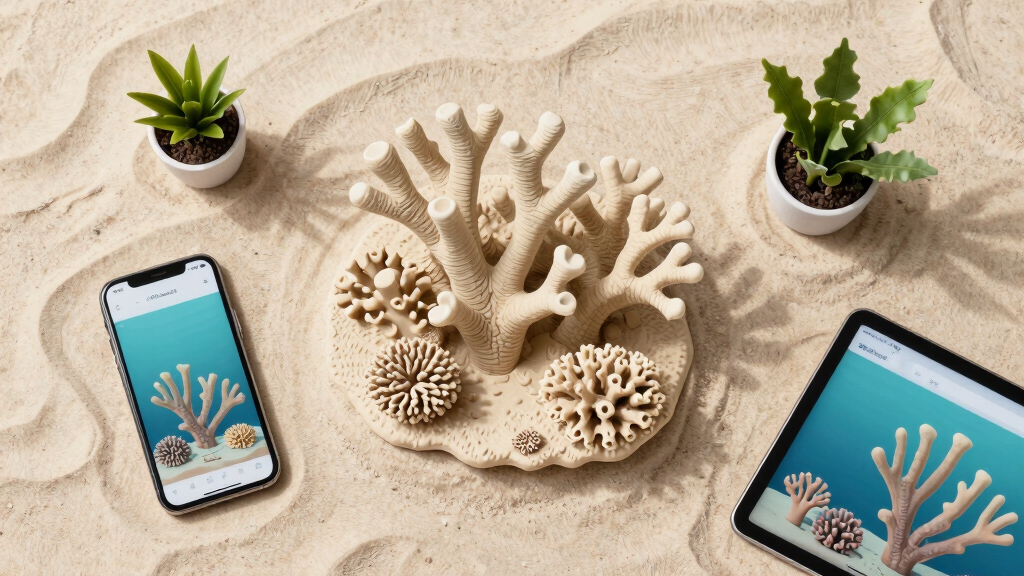
The Maldives has begun deploying 3D-printed coral reefs in its waters as part of a new conservation effort aimed at restoring degraded marine ecosystems affected by climate change. This initiative is designed to help safeguard the country’s vital tourism industry and marine biodiversity, making it a significant development in coral restoration efforts.
According to reports from Nikkei Asia, the Maldives is testing 3D-printed coral structures in the North Ari Atoll, where coral bleaching has severely impacted natural reefs. These artificial reefs are created using environmentally friendly materials and are designed to mimic natural coral formations, providing a substrate for coral larvae to settle and grow.
Officials and environmental experts involved in the project emphasize that this approach could offer a scalable and resilient solution to the ongoing crisis of coral bleaching driven by rising sea temperatures. The project is still in the experimental phase, with scientists monitoring how well the 3D-printed structures support coral growth and withstand environmental stresses. The Maldives’ government and local resorts see this as a potential way to restore the beauty and health of their marine environment, which is central to their tourism economy.
Potential Impact on Maldives’ Ecosystem and Economy
This initiative could significantly impact the Maldives’ efforts to combat coral loss caused by climate change. Restoring healthy reefs is crucial for marine biodiversity, fish populations, and the overall health of the ocean. For the Maldives, whose economy depends heavily on tourism driven by vibrant coral reefs and clear waters, successful implementation could help preserve its natural attractions and economic stability amid rising seas.
However, experts caution that the technology is still in early testing stages, and its long-term effectiveness remains uncertain. If successful, this approach could serve as a model for other coral-dependent regions facing similar environmental threats.
As an affiliate, we earn on qualifying purchases.
Climate Change and Coral Bleaching in the Maldives
The Maldives has experienced increasing coral bleaching events over the past decade, linked to rising sea temperatures caused by climate change. In January, photos showed severe bleaching at reefs in the North Ari Atoll, threatening both marine life and the tourism industry. Traditional coral restoration methods have struggled to keep pace with the scale of damage and environmental stresses.
In response, the Maldives has been exploring innovative solutions, including artificial reefs and reef restoration projects, to protect its marine ecosystems. The use of 3D printing technology for coral restoration is among the latest efforts aimed at addressing these challenges more effectively.
“The 3D-printed reefs are designed to provide a stable substrate for coral larvae, potentially accelerating recovery in damaged areas.”
— an anonymous researcher involved in the project
artificial coral reef for marine restoration
As an affiliate, we earn on qualifying purchases.
As an affiliate, we earn on qualifying purchases.
Long-Term Effectiveness and Environmental Impact Unknown
It is still unclear how well the 3D-printed reefs will perform over the long term, especially under ongoing environmental stresses like warming seas and storms. The durability, ecological integration, and scalability of this technology are still being tested, and results are pending.
Experts warn that while promising, the approach may face unforeseen challenges in real-world deployment, and its success is not yet guaranteed.
As an affiliate, we earn on qualifying purchases.
Monitoring, Evaluation, and Potential Expansion of Projects
The Maldives plans to continue monitoring the pilot reefs over the coming months and years to assess coral growth and ecosystem recovery. If results are positive, the government and partners may expand the use of 3D-printed reefs to other affected areas. Further research will focus on optimizing materials, designs, and deployment techniques to improve outcomes.
coral larvae settlement substrates
As an affiliate, we earn on qualifying purchases.
As an affiliate, we earn on qualifying purchases.
Key Questions
How do 3D-printed coral reefs work?
They are artificially created structures made from environmentally friendly materials that mimic natural coral formations, providing a substrate for coral larvae to settle and grow, aiding reef restoration.
Are 3D-printed reefs environmentally safe?
Designers claim the materials used are eco-friendly and safe for marine life, but long-term environmental impacts are still being studied.
Can this technology fully replace natural coral reefs?
Currently, it is viewed as a supplementary measure to traditional restoration efforts, not a complete replacement for natural reefs.
What are the main challenges for this project?
The main challenges include ensuring durability under environmental stress, ecological integration, and scaling the technology for widespread use.
When will the results of the pilot project be available?
Monitoring is ongoing, with initial assessments expected within the next year to evaluate coral growth and reef stability.
Source: Nikkei Asia
Halloween Picks
halloween
As an affiliate, we earn on qualifying purchases.