
TL;DR
A recent experiment demonstrates that running smaller local AI models, like Qwen 3.5 9B, on a Mac M4 with 24GB RAM is feasible for basic tasks. While not comparable to state-of-the-art models, it offers a private, low-dependence solution for research and coding tasks.
Recent experiments confirm that it is possible to run smaller AI models, such as Qwen 3.5 9B, locally on a Mac M4 with 24GB of memory, enabling basic research, coding, and planning tasks without internet dependence.

Get the latest gadgets delivered free with Prime
- Fast, free delivery on millions of items
- Prime Video, Amazon Music and more included
- Member-only deals all year
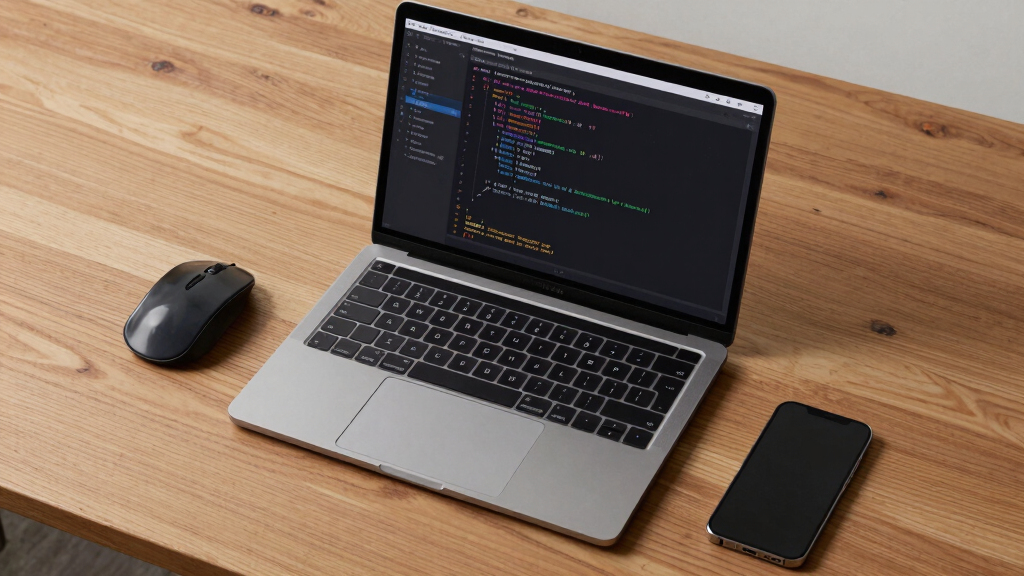
The experiment involved configuring models like Qwen 3.5 9B using tools such as LM Studio and OpenCode, with the model operating at approximately 40 tokens per second and supporting a 128K context window. While these models are not as advanced as state-of-the-art (SOTA) models, they can perform useful tasks like code suggestions and research assistance.
Setup required selecting appropriate inference configurations, enabling ‘thinking’ modes, and adjusting parameters such as temperature and top-p. The user reported that models like Qwen 3.5 9B could run on a Mac M4 with 24GB RAM while leaving sufficient space for other applications, though performance and reliability are limited compared to larger, cloud-based models.
Why It Matters
This development matters because it demonstrates that high-end personal hardware can support functional local AI models, reducing reliance on cloud services and increasing privacy. It also offers a pathway for developers and researchers to experiment with AI without needing access to expensive or resource-heavy infrastructure.
Products Worth Considering

Samsung Galaxy Tab A11+ 11-Inch Wi-Fi Tablet, 128GB, 6GB RAM, Silver

Bose Lifestyle Ultra Wireless Home Speaker, White Smoke

Bose Home Speaker 500 Smart Bluetooth Speaker, Black
As an affiliate, we earn on qualifying purchases.
Background
Previously, running large language models locally was limited to high-end servers and cloud platforms due to their substantial memory and compute requirements. Recent efforts have focused on optimizing smaller models for local deployment, with users experimenting on various hardware configurations. The Mac M4 with 24GB RAM presents a new, accessible platform for such experiments, though performance remains constrained compared to dedicated AI servers or cloud solutions.
“It’s surprisingly good for something that can run on a 24GB Macbook Pro while leaving space for lots of other things.”
— Hacker News user
“These models aren’t near SOTA performance, but they still provide useful capabilities for research and coding tasks.”
— Hacker News user
What Remains Unclear
It remains unclear how well these models will perform on more complex or long-term tasks, or how stable and scalable the setup will be for continuous use. The performance may vary based on configuration choices and hardware specifics, and compatibility with different software tools is still being tested.
What’s Next
Next steps include optimizing configurations for better stability and performance, testing additional models, and exploring integration with various development environments. Further experiments are expected to clarify the limits and potential of local AI deployment on consumer hardware.
Key Questions
Can I run larger models on a Mac M4 with 24GB RAM?
Currently, larger models like SOTA variants are not feasible on this hardware due to memory constraints. Only smaller models, such as Qwen 3.5 9B, can be run with some limitations.
What software do I need to set up local models on a Mac M4?
Tools like LM Studio, llama.cpp, or OpenCode are commonly used. Configuration involves adjusting inference parameters, enabling ‘thinking’ modes, and ensuring compatibility with your chosen model.
How does the performance compare to cloud-based models?
Local models on a Mac M4 are significantly less powerful than cloud SOTA models, especially for complex, multi-step tasks. They are best suited for basic research, coding assistance, and small-scale tasks.