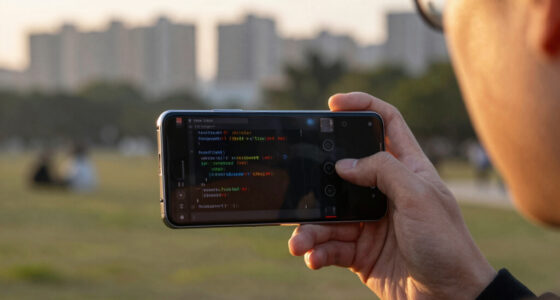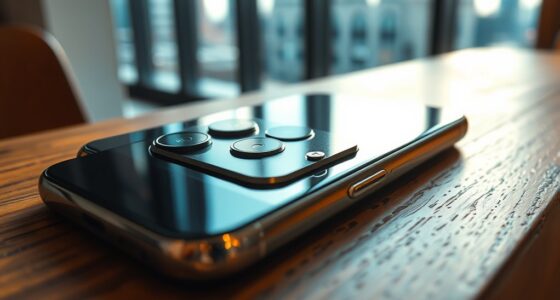
Foldable phones offer a larger, more versatile screen, making them appealing if you want innovation and multi-functionality. However, they are generally less durable than regular smartphones and need careful handling to avoid damage, scratches, or cracks. While ongoing advances improve their resilience, they still can’t match the sturdiness of traditional phones. To learn more about the trade-offs and whether foldables fit your needs, consider the key factors discussed here.
Key Takeaways
- Foldable phones offer larger, versatile screens but are more vulnerable to scratches and damage than traditional phones.
- Modern foldables have improved durability with reinforced screens and hinge technology, yet they remain less durable than standard smartphones.
- Handling with care is essential to prevent long-term damage, making durability a key consideration for potential users.
- Foldables often compromise on battery life but provide innovative, compact designs for larger displays.
- The decision to choose a foldable depends on balancing the benefits of versatility against concerns over fragility and longevity.
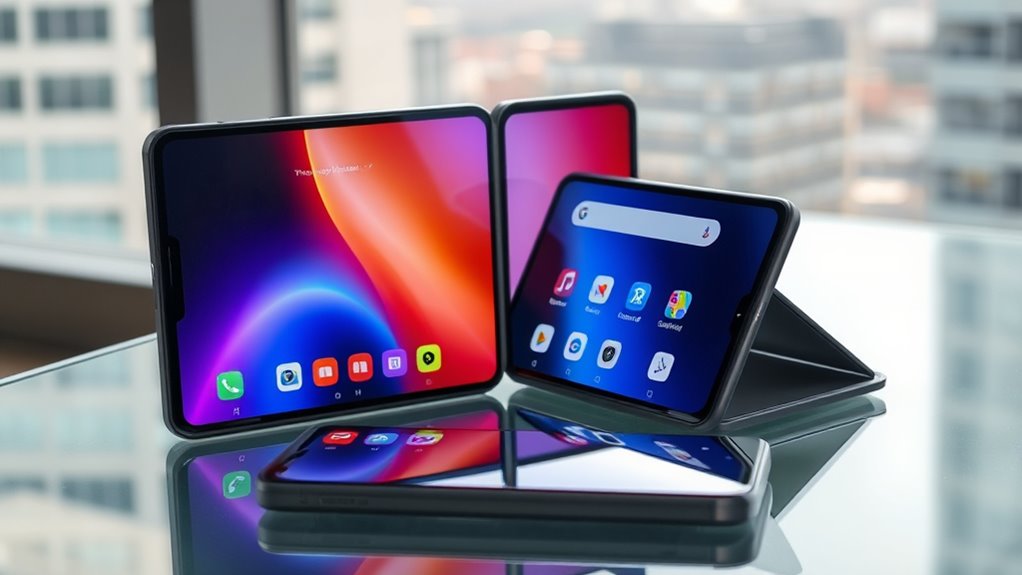
The flexible screens of foldable phones are delicate by nature, and their durability depends heavily on the quality of the materials used and how well you handle the device. Modern foldables typically feature ultra-thin glass or plastic layers designed to withstand daily wear and tear, but they still remain more susceptible to scratches, cracks, and damage from impacts than traditional glass screens. Manufacturers have improved hinge design and protective coatings, but you should still treat a foldable carefully. You’ll want to avoid putting excessive pressure on the fold or dropping the device, as even small impacts can cause long-term issues with the flexible display. On the upside, many foldables now come with reinforced screens and better hinge technology, making them more resilient than earlier models. Still, you should keep in mind that their display durability isn’t quite at the level of traditional smartphones yet, and extra caution is advisable. Additionally, display durability remains a key consideration for potential users. Ultimately, whether foldable phones are worth it depends on how you balance these factors. If you’re willing to accept some compromises in battery longevity and handle your device with care, foldables can offer a compelling, versatile experience. They bring innovation that traditional phones can’t match, with their foldable screens providing a larger display in a compact form. But if you prioritize long battery life and a rugged, scratch-resistant screen, sticking with a regular phone might still be the smarter choice—at least for now.
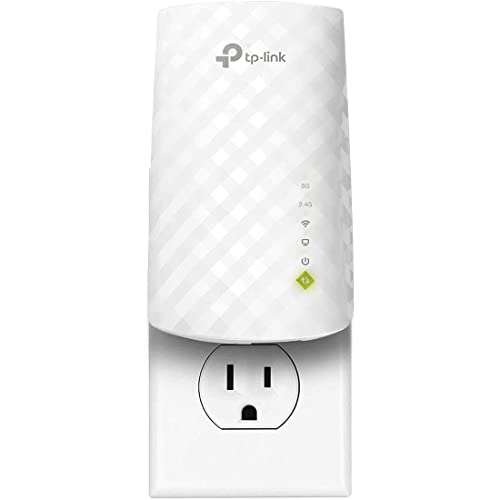
TP-Link WiFi Extender with Ethernet Port, Dual Band 5GHz/2.4GHz, Up to 44% More Bandwidth Than Single Band, Covers Up to 1200 Sq.ft and 30 Devices, Signal Booster Amplifier Supports OneMesh(RE220)
- Dual Band WiFi Extender: Up to 44% more bandwidth
- Coverage Area: Covers up to 1200 sq.ft
- Device Connectivity: Supports up to 30 devices
As an affiliate, we earn on qualifying purchases.
Frequently Asked Questions
How Durable Are Foldable Screens Over Time?
Foldable screens are improving in durability, but material durability and screen flexibility still matter. You might notice that over time, frequent folding can cause wear or creases, especially if the hinge or flexible material isn’t top quality. While newer foldables use better materials to enhance longevity, you should handle them gently and avoid excessive folding to keep the screen flexible and in good condition longer.
Are Foldable Phones More Expensive to Repair?
Yes, foldable phones tend to be more expensive to repair, especially when it comes to costly repairs like screen replacements. Their complex folding mechanisms and delicate screens mean repairs often cost more than regular phones. You’ll likely pay a premium for fixing foldable screens or other internal components because they require specialized parts and skills. So, if you own a foldable, be prepared for higher repair costs compared to standard smartphones.
Do Foldable Phones Support All Apps Fully?
Yes, foldable phones do support most apps fully, but app compatibility can vary. You might notice some apps aren’t perfectly optimized for the foldable screen, which can affect user experience. Developers are improving software optimization for foldables, making apps more adaptable. Overall, while support is strong, you may encounter occasional glitches or layout issues, but the landscape is rapidly evolving to guarantee seamless use across all applications.
How Do Foldables Impact Battery Life?
Foldables can impact your battery life by increasing battery consumption due to their larger or more complex displays and multi-tasking capabilities. However, manufacturers improve power efficiency through optimized hardware and software, helping you get better battery performance. While the extra features may drain your battery faster, advancements in technology are making foldable phones more efficient, so you can enjoy their benefits without significant compromises on power.
Are Foldable Phones Suitable for Outdoor Use?
Yes, foldable phones are suitable for outdoor use, but you should consider screen protection and outdoor visibility. Their flexible screens are more fragile, so using a durable case and a screen protector helps prevent damage. Bright outdoor visibility varies; some foldables have high brightness levels, making them easier to see outside. Just be cautious of reflections and glare, and avoid exposing the device to extreme weather conditions for ideal performance.
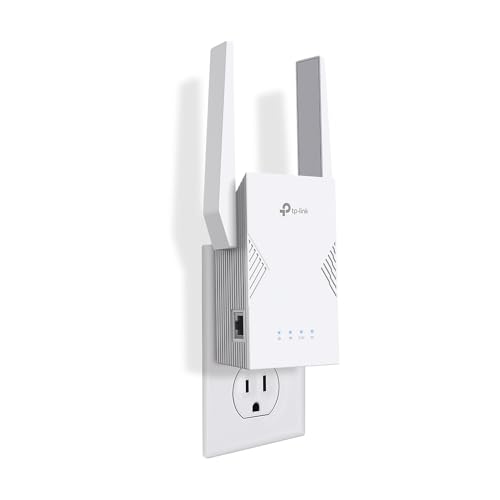
TP-Link BE3200 Wi-Fi 7 Range Extender RE223BE w/Ethernet Port | 3.2 Gbps Dual-Band Wireless Repeater | Internet Signal Booster for Home | Up to 2400 sq.ft, 64 Devices | MLO, EasyMesh | No 6 GHz Band
- Next-Gen Wi-Fi 7 Performance: Supports MLO, Multi-RUs, 160 MHz, 4K-QAM
- Dual-Band Wi-Fi Speeds: Up to 2594 Mbps on 5 GHz, 688 Mbps on 2.4 GHz
- Wide Coverage Area: Up to 2400 sq.ft with 4 antennas
As an affiliate, we earn on qualifying purchases.
Conclusion
Ultimately, whether you choose a foldable or regular phone depends on what you value most. Foldables are like a window opening to new possibilities, offering versatility and innovation. But traditional phones remain reliable and straightforward. Think of foldables as the future’s promise—a blooming flower ready to reshape how you use your device. Whichever you pick, remember, technology is always evolving, so stay curious and open to what’s next.
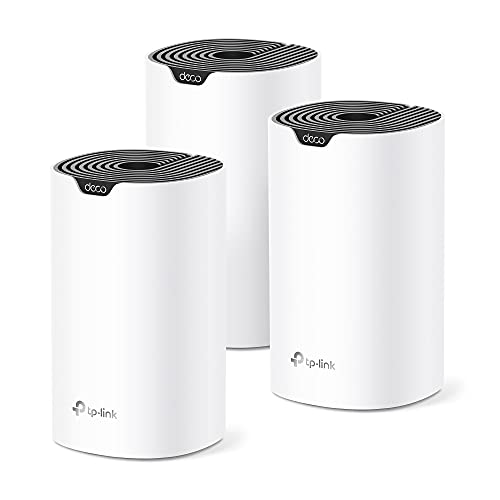
TP-Link Deco S4 Mesh AC1900 WiFi System - Up to 5,500 Sq.ft. Coverage, Replaces WiFi Router and Extender, Gigabit Ports, Works with Alexa, Deco S4(3-Pack)
- WiFi Technology: Deco Mesh for faster speeds
- Coverage Area: Up to 5,500 sq.ft.
- Whole Home Coverage: Eliminates dead zones
As an affiliate, we earn on qualifying purchases.

TP-Link AC1200 WiFi Extender - 1.2Gbps Home Signal Booster, Dual Band 5GHz/2.4GHz, Up to 1600 Sq.ft and 32 Devices, EasyMesh Compatible, One Ethernet Port (RE315)
- Enhanced Wi-Fi Coverage: Eliminates dead zones with strong signal
- Dual Band Speed: Supports 867 Mbps on 5GHz and 300 Mbps on 2.4GHz
- Wide Coverage Area: Covers up to 1500 sq.ft with adjustable antennas
As an affiliate, we earn on qualifying purchases.