
When considering smart home devices, your biggest privacy questions involve what data they collect, how securely it’s protected, and who might access it. Devices gather voice commands, videos, and location info, often sharing this data with third parties, raising concerns about targeted ads or breaches. Encryption and user controls can help, but transparency from manufacturers is essential. To protect yourself, you need to understand how your data is handled. Explore further to uncover more ways to safeguard your privacy.
Key Takeaways
- How is my personal data collected, used, and shared by smart home device manufacturers?
- Are robust data encryption and security measures in place to protect my information?
- Do manufacturers provide transparent privacy policies and clear user controls over data?
- What risks exist from third-party data sharing and targeted advertising?
- How can I verify and manage my privacy settings to ensure personal data safety?

As smart home devices become more integrated into daily life, it’s natural to wonder about your privacy. These devices gather a lot of data—voice commands, video footage, location info—and sometimes, it feels like your personal space is more exposed than you realize. One of the most important questions you should ask is how your data is protected. Data encryption plays a pivotal role here. When your device transmits information—say, a voice command to your smart speaker—encryption ensures that the data is scrambled, making it unreadable to anyone who intercepts it. This layer of security is essential to prevent hackers or unauthorized parties from accessing sensitive information. However, encryption alone isn’t enough. You should also consider whether the manufacturer is transparent about how they handle your data. Manufacturer transparency means being clear about what data is collected, how it’s stored, and who has access to it. It’s reassuring when companies openly share their privacy policies and update you about any changes, so you’re not left in the dark.
Smart home privacy depends on encryption and transparent data handling by manufacturers.
Knowing whether your device uses robust data encryption methods and if the manufacturer is upfront about data handling practices can greatly influence your trust in the device. If a company is vague or dismisses your privacy concerns, it’s worth questioning whether they value user privacy or prioritize their interests. Transparency also involves providing options to control your data, such as settings to delete recorded audio or disable data collection altogether. When companies are transparent, they empower you to make informed decisions about your privacy. data handling practices are an essential aspect to consider when assessing the overall security of your smart home devices. Additionally, understanding encryption methods can help you evaluate how well your data is protected from potential breaches. Incorporating privacy policies that detail data management practices can further enhance your confidence in the device’s security.
Beyond encryption and transparency, you should consider how your data is stored and whether it’s shared with third parties. Some manufacturers may share data with advertisers or other partners, which can lead to targeted ads or more worrying privacy breaches. Always review privacy policies carefully and look for clear explanations about third-party sharing. Additionally, be mindful of firmware updates and security patches, as these often improve data security standards. Regular updates can close vulnerabilities that hackers might exploit.
Being aware of cookie categories and how they relate to your privacy can help you better understand what data is being collected and how it might be used.
In the end, your privacy with smart home devices hinges on both the technological safeguards like data encryption and the honesty of the manufacturer. Staying informed and cautious helps you enjoy the convenience of smart technology without sacrificing your personal privacy. Remember, the more transparent and secure a manufacturer is about your data, the more confident you can feel in integrating their devices into your home.

Smart Home Protection for Beginners: Secure Your Devices, Cameras, Network, and Family Privacy
As an affiliate, we earn on qualifying purchases.
As an affiliate, we earn on qualifying purchases.
Frequently Asked Questions
Can Smart Home Data Be Hacked or Intercepted?
Yes, smart home data can be hacked or intercepted if security measures aren’t strong enough. Hackers may exploit firmware vulnerabilities or intercept unencrypted data. To protect yourself, make sure your devices use robust encryption protocols and regularly update firmware. Staying vigilant and practicing good cybersecurity habits helps prevent unauthorized access, keeping your smart home devices and personal information safe from potential threats.
How Secure Are Voice Command Recordings?
Your voice command recordings are like open books if unprotected. They’re generally secured through voice data encryption, which shields your data from prying eyes. However, the true safeguard lies in user consent policies, which specify how your recordings are stored and used. Stay vigilant by reviewing and customizing these policies, ensuring your voice data remains private and under your control, rather than a story told to others without your knowledge.
Do Smart Devices Share Data With Third Parties?
Yes, smart devices often share data with third parties, but they usually do so only after securing your user consent. Companies implement data encryption to protect your information during transmission, reducing the risk of unauthorized access. However, it’s essential that you read privacy policies carefully, so you know what data is shared and how it’s used. Staying informed helps you maintain control over your privacy when using smart home devices.
Are There Ways to Delete Stored Smart Home Data?
Like a wizard wielding a wand, you can control your data with smart home devices. Yes, there are data deletion options and user privacy controls available through device settings or app interfaces. You can delete stored data, manage what’s kept, and even turn off certain data-sharing features. Regularly reviewing these controls helps guarantee your privacy stays protected, turning you into the master of your digital domain.
What Are the Privacy Risks of Smart Home Cameras?
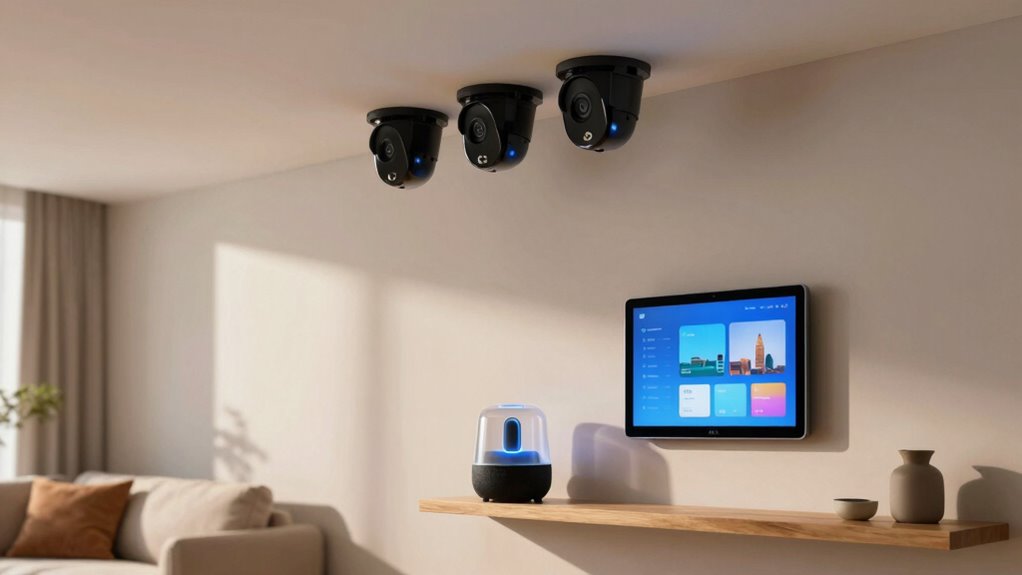
Smart home cameras pose privacy risks because hackers can potentially access your footage if data encryption isn’t strong enough or if your network isn’t secure. If you don’t give clear user consent, your footage might be stored or shared without your knowledge. To protect yourself, make sure your cameras use robust data encryption, and always review and control your privacy settings and permissions.
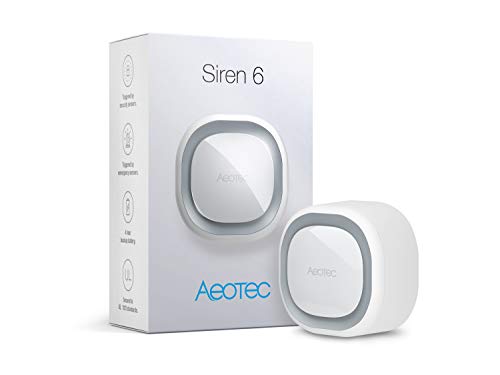
Aeotec Siren 6, Z-Wave Plus S2 Enabled Zwave Siren Safety Speaker, Wall-Mounted Sound & Light Security Intruder Zwave Alarm with Backup Battery, 110dB
Aeotec Zwave Siren 6 is your home smart indoor siren. Built with Z-Wave Plus S2 to be a…
As an affiliate, we earn on qualifying purchases.
As an affiliate, we earn on qualifying purchases.
Conclusion
While privacy concerns may seem overwhelming, don’t let fear hold you back from enjoying the convenience of smart home devices. Staying informed and proactive about your privacy settings can give you control and peace of mind. Remember, you don’t have to sacrifice security for comfort—smart technology can be safe if you’re vigilant. Take small steps today, and you’ll be able to enjoy the future of connected living with confidence and trust.

GNCC 2K Security Cameras 4pcs, Home Security Camera Indoor with 360° Motion Detection for Pets/Baby/Dog, Two-Way Audio, Night Vision, 24/7 SD Card Storage, Cloud Storage, Compatible with Alexa
【2K & Night Vision】: GNCC Security Camera Indoor comes with 2K FHD quality video and images. You can…
As an affiliate, we earn on qualifying purchases.
As an affiliate, we earn on qualifying purchases.

Amazon Echo Hub (newest model), 8", Redesigned with customizable control and Alexa+, Compatible with thousands of devices
Echo Hub — An easy-to-use smart home control panel redesigned for your home. Arrange controls on your dashboard…
As an affiliate, we earn on qualifying purchases.
As an affiliate, we earn on qualifying purchases.