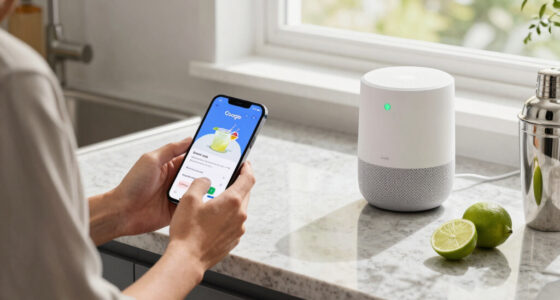
Smart home hubs offer a central control point that simplifies managing all your devices, no matter the brand or protocol. They provide a unified interface, reducing the need for multiple apps and minimizing compatibility issues. Plus, they support voice commands, enhance security with local processing, and keep your system running smoothly even during internet outages. If you want a more reliable, integrated smart home experience, you’ll discover how hubs can make a difference as you explore further.
Prime for Young Adults — start your free trial
Fast free delivery, streaming and member deals for eligible 18–24 year olds.
As an affiliate, we earn on qualifying purchases.
Key Takeaways
- Centralized control simplifies device management, reducing the need for multiple apps and improving user experience.
- Enhanced voice integration allows for seamless, multi-device voice commands across various ecosystems.
- Protocol translation enables compatibility with diverse devices, supporting complex automation routines.
- Local processing enhances privacy, security, and system reliability during internet outages.
- Firmware updates and environmental resilience extend device longevity and maintain system stability.
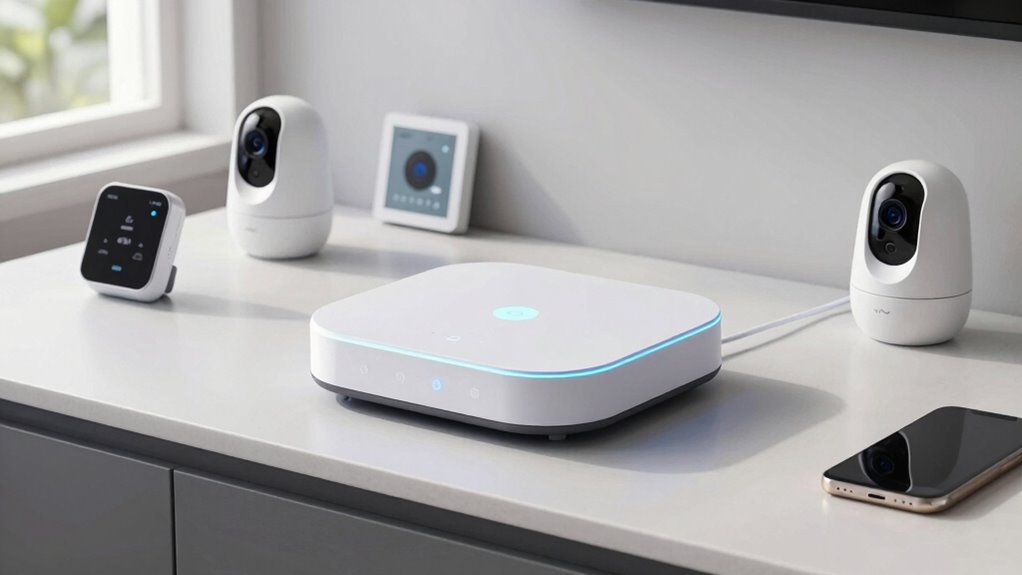
When it comes to setting up a smart home, you might wonder whether a dedicated hub or just using individual apps is the better choice. While app-only setups can seem straightforward, smart home hubs still excel in certain areas, especially when it comes to voice control and device integration. A hub acts as a central command center, seamlessly connecting all your smart devices, regardless of their brand or protocol. This means you don’t have to juggle multiple apps or worry about compatibility issues. Instead, you get a unified interface that simplifies managing everything in your home.
One of the biggest advantages of a smart home hub is its superior voice control capabilities. With a hub, you can set up a more extensive voice assistant experience, enabling you to control multiple devices with a single command. Rather than issuing separate commands to individual apps or device-specific assistants, a hub consolidates voice control, making it easier to automate routines and respond to your commands quickly. Plus, many hubs support popular voice assistants like Alexa, Google Assistant, or Siri, allowing you to choose the ecosystem that works best for you. This level of integration offers a smoother, more natural interaction with your smart home.
Device integration is another area where hubs shine. Most smart home devices operate on different protocols—Wi-Fi, Zigbee, Z-Wave, or Bluetooth—and managing these separately can become complicated. A dedicated hub acts as a translator, connecting all these protocols into one integrated system. This means that even if your smart bulbs use Zigbee while your security cameras run on Wi-Fi, the hub can bring them together, allowing you to create complex automation routines. Without a hub, you often end up with siloed devices that require multiple apps and manual control, complicating your setup and reducing reliability. Additionally, power storage and weatherproofing can improve the stability and longevity of your smart home equipment, especially in varying environmental conditions. Also, a local processing capability in hubs can enhance privacy and security, as data does not need to transit through external servers. Furthermore, hubs tend to be more reliable for automation. They keep devices connected and synchronized, reducing lag and disconnects that sometimes occur in app-only setups. An additional benefit is that regular firmware updates can enhance device performance and security, ensuring your system stays current. The ability to operate locally even during internet outages is another significant benefit, ensuring your smart home keeps functioning without interruption. In fact, this resilience is vital if you rely on your smart home for security or automation routines.
smart home hub with Zigbee and Z-Wave
As an affiliate, we earn on qualifying purchases.
As an affiliate, we earn on qualifying purchases.
Frequently Asked Questions
Can Smart Home Hubs Reduce Overall Setup Time?
Yes, smart home hubs can reduce your overall setup time. They streamline device connections using voice recognition, allowing you to add and control devices quickly without manual configuration. Plus, hubs often include energy management features, making it easier to optimize your home’s efficiency right from the start. This integrated approach minimizes the time and effort needed to get everything up and running, providing a more seamless smart home experience.
Do Hubs Improve Device Compatibility?
Yes, hubs improve device compatibility by centralizing control and supporting a wider range of hardware. You’ll benefit from better voice recognition, as hubs often feature integrated microphones and AI-powered assistants, making it easier to command multiple devices via voice. Instead of juggling separate apps, a hub guarantees your smart home devices work seamlessly together, reducing frustration and enhancing your overall experience.
Are Hubs More Secure Than App-Only Controls?
Hubs can be more secure than app-only controls because they centralize device management, reducing potential security vulnerabilities. By consolidating your smart devices, hubs help you monitor and control access more effectively, protecting your user privacy. However, they still present risks if not properly secured. You should keep firmware updated and use strong, unique passwords to minimize threats. Overall, hubs can enhance security when managed carefully.
How Do Hubs Affect Future Device Integrations?
Hubs considerably impact future device integrations by providing centralized control, making it easier to add new gadgets without cluttering your app. While some believe hubs limit scalability, they often streamline future updates and compatibility. This centralized approach guarantees that your smart home remains flexible, adaptable, and easier to manage as technology evolves. So, hubs actually enhance future scalability, giving you a smoother path to integrating the latest devices.
Do Hubs Require Ongoing Maintenance or Updates?
Yes, hubs do require ongoing maintenance and updates. You’ll need to keep firmware updates current to guarantee security and compatibility with new devices. Additionally, technical support can help troubleshoot issues that arise over time. Regular updates enhance stability and performance, reducing glitches. Staying on top of these updates can save you headaches and ensure your smart home system runs smoothly, making the hub worth the occasional maintenance effort.
best smart home hub for voice control
As an affiliate, we earn on qualifying purchases.
As an affiliate, we earn on qualifying purchases.
Conclusion
Think of a smart home hub as the conductor of an orchestra, seamlessly coordinating your devices into harmonious harmony. While app-only setups can feel like juggling too many notes at once, hubs keep everything in sync, ensuring your home responds smoothly to your every command. Just like a maestro guiding a symphony, a hub transforms chaos into comfort, making your smart home experience effortless and elegant. Embrace the hub, and let your smart sanctuary sing.
central smart home automation controller
As an affiliate, we earn on qualifying purchases.
As an affiliate, we earn on qualifying purchases.
smart home hub compatible with Alexa and Google Assistant
As an affiliate, we earn on qualifying purchases.
As an affiliate, we earn on qualifying purchases.
Fall Picks
fall essentials
As an affiliate, we earn on qualifying purchases.