
TL;DR

Get the latest gadgets delivered free with Prime
- Fast, free delivery on millions of items
- Prime Video, Amazon Music and more included
- Member-only deals all year
Developer Spencer Kittleson says his home’s core automations keep running when its internet connection is unavailable, a design rule he has followed for about 10 years. His setup uses locally owned hardware and software, while cloud services such as Alexa remain optional ways to control devices.
Home automation developer Spencer Kittleson says his household’s essential devices continue to work when the internet is disconnected, describing a local-first approach he has followed for about 10 years. In a report published in October 2026, he outlined rules for keeping lights, switches and automations available without relying on a device maker’s servers.
Kittleson’s system runs on hardware he owns, including ESP boards using Tasmota firmware, an MQTT broker and Node-RED on a Raspberry Pi, much like setups built around smart home hubs. Those tools let devices and automations communicate within his home network. He says the basic functions do not depend on an outside vendor’s server being available.
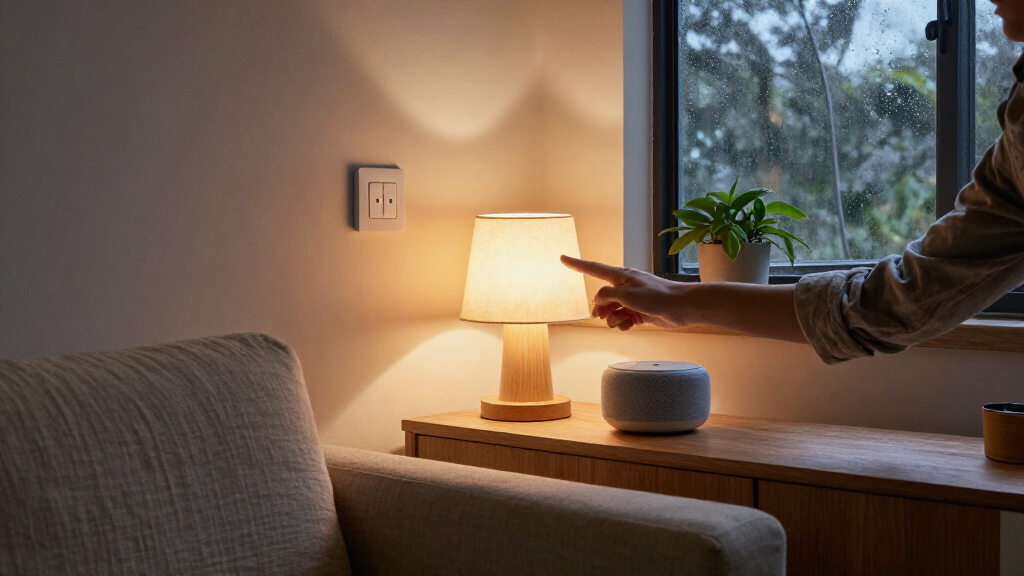
Cloud services still have a role, but Kittleson describes them as optional controls. He uses Amazon Alexa to operate some devices, while saying wall switches and a wall-mounted dashboard remain available if Alexa or the internet is down. His rule is that voice control can be “a way in,” but must not be the only way to operate something.
The report also describes practical design choices: retaining familiar physical controls when adding smart functions, keeping configuration in one place where possible, and checking automations for conflicts when using connected smart home devices. Kittleson recounts finding four scheduled triggers controlling the same garden pump, an example of how locally run systems still need maintenance and review.
Keeping Controls Available Offline
A smart device that depends on a vendor’s cloud can lose functions when a home internet connection fails, a service is unavailable or an integration changes. Kittleson’s account shows one way to reduce that dependency: keep essential control paths and automation logic inside the home, and treat remote or voice services as additional options rather than requirements.
That approach can matter for everyday access, not just technical resilience. A conventional wall switch gives household members a familiar way to operate a light, while locally stored automations can continue without an outside service. It also avoids making a single app, account or company’s infrastructure the only route to a device.
There are trade-offs. Kittleson says his setup involves hardware, configuration and upkeep, while cloud-connected devices can be easier to install. His report is an account of his own system, not an independent test or a claim that every smart-home product can operate offline.
Products Worth Considering

DJI Osmo Action 4 Essential Combo Waterproof 4K Action Camera

Bose Lifestyle Ultra Compact Wireless Smart Home Speaker Bundle, Black

Sony WH-1000XM6 Wireless Noise-Canceling Headphones, Black
As an affiliate, we earn on qualifying purchases.
From Cloud Failures to Local Rules
Kittleson says a previous Nest integration worked until Google changed its API, an experience that shaped his preference for systems he can operate locally. He also points to examples from talks he has given: a Samsung refrigerator displaying a TLS certificate error on its screen, and a Camp Chef grill controller that, he says, needs Wi-Fi to show its temperature.
His setup is not entirely disconnected from online services. The report says he uses Alexa and some AWS services, and describes them as nonessential to the home’s core operation. The distinction is between having internet-connected features and making basic household functions depend on a connection.
Other rules in the report reflect the demands of a changing household: keep systems inexpensive to adjust, retain the old control method when adding a new one, and use more than one interface where practical. Kittleson also favors MQTT, a publish-and-subscribe messaging method, so devices can send information without being tied directly to a single controller.
“Nothing core in my house depends on a vendor’s server. If the internet goes down, the house keeps running.”
— Spencer Kittleson, in his report
Limits of the Offline Account
The report describes Kittleson’s own home and does not provide independent verification, outage testing data or a full inventory of which devices retain which functions offline. It is also not clear from the report how every cloud-connected device in the home behaves during an internet or vendor-service outage.
Offline operation can mean different things: a physical switch may still work even if remote access does not, while an automation may depend on a local server or network equipment. The report does not establish that all of Kittleson’s devices, or smart-home products generally, have the same degree of offline capability. Nor does it specify the effect of a failure within his local hardware or home network.
Maintaining the Local System
Kittleson presents the rules as ongoing practices, not a finished system. He says rooms and household needs change, devices are added, and automations can break or conflict. His next steps, as described in the report, are to keep reviewing those workflows, retain multiple ways to control important devices and avoid installing cloud-dependent products without adequate visibility into how they work.
The report does not announce a new product, rollout or planned technical milestone. For readers choosing devices, the practical next step is to check product documentation for what works without internet access and whether local controls remain available if an app or cloud service cannot be reached.
Key Questions
What does local-first smart-home control mean?
It means that core devices and automations can operate on hardware and software within the home, rather than requiring a manufacturer’s remote server for every function. Kittleson’s system uses Tasmota, MQTT and Node-RED.
Does Kittleson avoid cloud services altogether?
No. His report says he uses Alexa and some AWS services. He describes them as optional, with other controls available for core functions.
Will every smart device work when the internet is down?
No such general claim is established by the report. Offline behavior varies by product and feature; buyers should check which functions work locally and which require internet access or a vendor service.
What is one practical safeguard against losing control?
Keep a dependable alternative to an app or voice assistant for essential devices. Kittleson’s examples include wall switches and a wall dashboard, alongside optional Alexa control.
Source: docodethatmatters.com