📊 Full opportunity report: The City That Watches Itself: The Living Digital Twin, And The God’s-Eye View We’re Building on ThorstenMeyerAI.com — validation score, market gap, and execution plan.
TL;DR
Cities are building real-time, dynamic digital twins that can monitor, simulate, and answer questions about urban environments. These systems combine advanced sensors and AI, raising both planning and surveillance concerns.
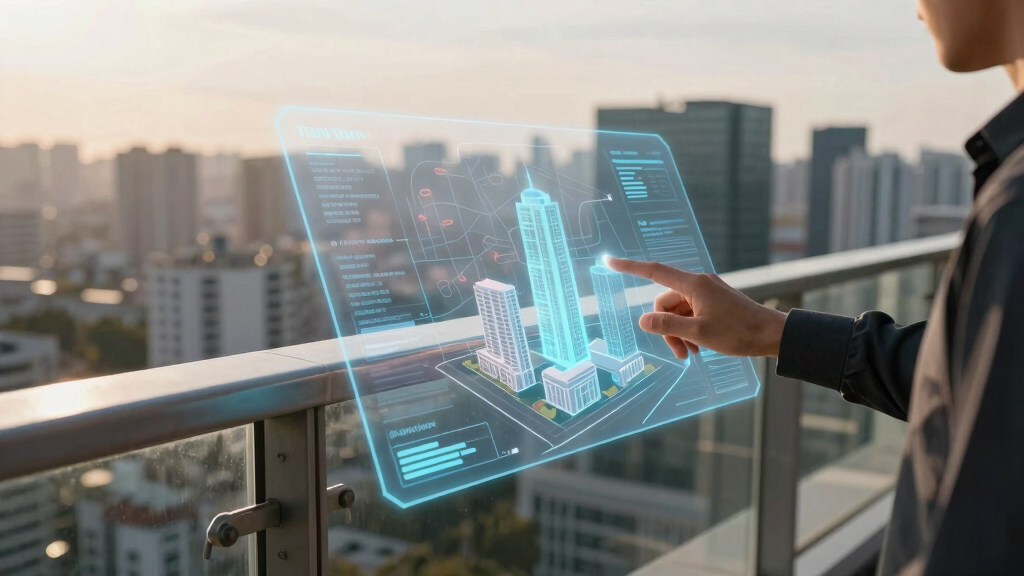
Urban digital twins are evolving into real-time, self-monitoring systems that integrate live sensor data, satellite imagery, and advanced AI. These systems enable cities to observe, simulate, and answer detailed questions about their operations, transforming urban management and surveillance.
The core of this development is the integration of wide-area motion imagery (WAMI), all-weather radar, satellite data, and frontier AI models capable of understanding complex, heterogeneous data streams. This convergence has created cities that can continuously watch themselves, archive every movement, and respond to natural language queries about their operations.
Singapore’s Virtual Singapore exemplifies this trend, modeling every building, road, and utility in three dimensions with real-time overlays. Other cities like Helsinki and Las Vegas already operate functional city twins, with reported savings in urban planning costs. The key innovation is the AI’s ability to interpret the vast data, turning raw feeds into actionable insights and simulations.
This technological leap turns the digital twin from a planning tool into an oracle-like system capable of detailed, on-demand analysis of urban dynamics, including traffic flow, infrastructure health, and emergency scenarios.
The city that watches itself: the living digital twin, and the god’s-eye view we’re building
Soon most cities will exist twice — once in concrete, once as a live data model you can rewind, simulate, and question in plain language. Persistent sensing + frontier AI turn the planner’s digital twin into an oracle. The most useful thing we’ve built — and the most powerful surveillance instrument. Both at once.
- Plan better — cities & rural: traffic, zoning, energy, land use
- Emergency response — route crews, one live picture, ~50% faster
- Disaster resilience — simulate, track live, assess damage in hours
- Mass surveillance — track everyone, retroactively, forever
- Pattern-of-life — AI links movements, infers associations
- Social control — no warrant, no suspicion (cf. Baltimore, 2021 ruling)
We’re building a city that watches itself, remembers everything, and can be asked anything. The technology won’t choose between saving lives and ending privacy — we will, through the rules we write now, while the twin is still under construction and the defaults haven’t yet hardened into permanence. WAMI and the living twin open our lives to a view from the heavens that, from the dawn of civilization until a heartbeat ago, was reserved for gods and stars. The question is no longer whether we can see everything — it’s who gets to look, and who watches the watchers.
Implications of Self-Monitoring Urban Systems
This development introduces a dual impact: it enhances city planning, infrastructure management, and disaster response, while simultaneously raising profound surveillance and sovereignty concerns. As cities gain the ability to monitor every movement and event in real time, questions about privacy, control, and dependence on foreign technology become urgent. The capacity for detailed, AI-driven oversight could reshape governance and civil liberties, making this both an opportunity and a risk.

Geodesign, Urban Digital Twins, and Futures
As an affiliate, we earn on qualifying purchases.
As an affiliate, we earn on qualifying purchases.
Progression Toward Autonomous Urban Monitoring
The concept of digital twins has been around for years, with initial implementations focused on static models for urban planning. The recent integration of persistent wide-area sensing, all-weather radar, and frontier AI marks a significant evolution, enabling real-time, dynamic replicas of entire cities. Singapore’s Virtual Singapore, launched after 2012 flooding, set a precedent for comprehensive modeling, which is now rapidly expanding globally.
Advances in AI, particularly in understanding complex data streams and natural language querying, have been the missing piece. These models now allow operators to ask detailed questions and receive precise, actionable responses, transforming the twin from a static map into a living, breathing entity.
“We are witnessing the emergence of cities that can watch, remember, and answer questions about themselves in real time, thanks to the convergence of sensors and frontier AI.”
— Thorsten Meyer, AI researcher

PKOLSFE Tire Pressure Monitoring System, Real-Time LCD Display TPMS with 4 External Sensors & 6 Alarm Modes, Solar/USB Charging Wireless Tire Pressure Monitor for RV Trailer Truck
- Real-Time Tire Pressure and Temperature: Tracks all four tires with LCD display
- Dual Charging Options: Solar and USB charging for convenience
- Automatic Power On/Off: Auto on when vehicle starts, off when parked
As an affiliate, we earn on qualifying purchases.
As an affiliate, we earn on qualifying purchases.
Unanswered Questions About Privacy and Control
It remains unclear how widespread adoption will address privacy concerns and sovereignty issues. The reliance on foreign AI models and sensors raises questions about data security, control, and potential misuse. The extent to which these systems can be regulated or kept transparent is still under debate, and the long-term societal impacts are uncertain.

China’s AI Revolution: Robotics and Smart Cities Reshaping Tomorrow
As an affiliate, we earn on qualifying purchases.
As an affiliate, we earn on qualifying purchases.
Next Steps in Urban Digital Twin Development
Future developments will likely include broader deployment in diverse urban environments, refinement of AI comprehension capabilities, and new regulations addressing privacy and sovereignty. Monitoring how cities and governments manage these systems’ risks and benefits will be critical. Additionally, advancements in local AI models may reduce dependence on foreign technology, shaping the global landscape of urban monitoring.

Spatial Big Data, BIM and advanced GIS for Smart Transformation: City, Infrastructure and Construction
As an affiliate, we earn on qualifying purchases.
As an affiliate, we earn on qualifying purchases.
Key Questions
What is a digital twin in a city?
A digital twin is a dynamic, three-dimensional virtual model of a city that integrates real-time data from sensors, satellites, and other sources to monitor and simulate urban conditions.
How does AI enhance city digital twins?
AI enables the interpretation of vast, heterogeneous data streams, allowing the twin to understand complex scenes, recognize patterns, and answer natural language questions, transforming it into an interactive oracle.
What are the privacy concerns associated with these systems?
The ability to track individual movements and behaviors raises privacy issues, especially as reliance on foreign or centralized AI models could lead to data control and sovereignty risks.
Can these systems replace traditional city planning?
They enhance planning by providing real-time insights and simulations, but they are tools that support human decision-making rather than replace it entirely.
What is the future of city surveillance with digital twins?
As these systems become more widespread, cities could achieve unprecedented oversight, raising important questions about civil liberties, data security, and the balance of power.
Source: ThorstenMeyerAI.com