
TL;DR

Get the latest gadgets delivered free — and shop member deals
- Fast, free delivery on millions of items
- Access to Prime Big Deal Days deals on October 6–7
- Prime Video, Amazon Music and more included
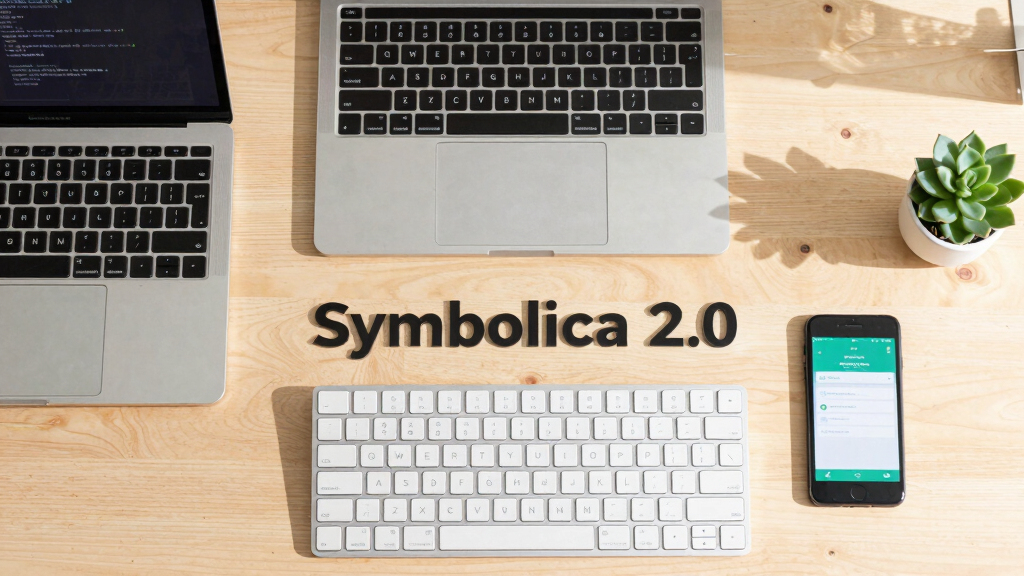
Symbolica has released version 2.0, adding programmable symbols and improved APIs for Python and Rust. This allows users to customize algebraic behavior and streamline symbolic computations.
Symbolica has announced the release of version 2.0, introducing programmable symbols that enable users to customize the behavior of symbolic expressions in Python and Rust. This update enhances flexibility and performance, making Symbolica more adaptable for advanced mathematical and computational tasks.
Symbolica 2.0 builds upon its previous capabilities by allowing users to define custom hooks for symbols, such as normalization, printing, derivatives, series expansions, and evaluation. These hooks enable tailored algebraic manipulations, including regularization of special functions like gamma and polylogarithms. The release also features a redesigned, more ergonomic Rust API, reducing boilerplate, supporting operator overloading, and employing builder patterns for complex configurations.
In addition to programmable symbols, the new version introduces improved output formatting with colorized, nested expressions for better readability in notebooks and documentation. The API updates include a simplified prelude, fewer import requirements, and more intuitive function calls, aiding developers in integrating Symbolica into their workflows more efficiently.
Why It Matters
This release significantly advances the capabilities of symbolic computation frameworks, especially for developers and researchers working with Python and Rust. Programmable symbols allow for more precise control over algebraic behavior, which is crucial in symbolic mathematics, automated theorem proving, and computational physics. The API improvements lower the barrier to entry and facilitate the development of custom mathematical tools, potentially accelerating research and application development in scientific computing.
symbolic computation software for Python
As an affiliate, we earn on qualifying purchases.
As an affiliate, we earn on qualifying purchases.
Background
Since its initial release, Symbolica has been evolving with features like richer output formats, symbol registration systems, and support for advanced mathematical functions. Version 1.0 introduced core symbolic capabilities, while subsequent updates focused on API ergonomics and output enhancements. The current release marks a major step by enabling user-defined hooks, aligning with broader trends in symbolic computation that emphasize customization and performance optimization.
“The introduction of programmable symbols in 2.0 offers users unprecedented flexibility to tailor symbolic algebra to their specific needs, bridging the gap between symbolic and numerical computation.”
— Symbolica development team
“The new API design simplifies integration with Rust projects, reducing boilerplate and improving developer experience, which is vital for high-performance applications.”
— Rust API lead
Rust programming language development tools
As an affiliate, we earn on qualifying purchases.
As an affiliate, we earn on qualifying purchases.
What Remains Unclear
It is not yet clear how widely adopted the programmable symbols will become or how they will perform in large-scale, real-world applications. Details on future updates or additional features are still emerging.
programmable symbolic algebra software
As an affiliate, we earn on qualifying purchases.
As an affiliate, we earn on qualifying purchases.
What’s Next
Next steps include broader community testing and feedback, potential integration with other mathematical software, and further development of built-in functions and hooks. The developers may also release detailed documentation and tutorials to facilitate adoption.
advanced mathematical computation tools
As an affiliate, we earn on qualifying purchases.
As an affiliate, we earn on qualifying purchases.
Key Questions
What are programmable symbols in Symbolica 2.0?
Programmable symbols are symbols that can have custom hooks for normalization, printing, derivatives, series expansions, and evaluation, allowing users to tailor their algebraic behavior.
How does the new API improve Rust integration?
The Rust API has been simplified with a prelude that reduces imports, supports operator overloading, builder patterns, and automatic type conversions, making it easier to write efficient symbolic code.
Can I define my own mathematical functions with hooks?
Yes, users can define custom functions with hooks for regularization, derivatives, and series expansions, enabling advanced symbolic manipulations.
Will Symbolica 2.0 work with existing code?
Migration guides are available, and most existing code should be compatible with updates, though some adjustments may be necessary to leverage new features.
What platforms will support Symbolica 2.0?
Symbolica 2.0 is designed for Python and Rust environments, with support for notebooks like Jupyter and output formats including HTML, LaTeX, and Typst.
Source: Hacker News
Halloween Picks
halloween
As an affiliate, we earn on qualifying purchases.