
TL;DR

Get the latest gadgets delivered free — and shop member deals
- Fast, free delivery on millions of items
- Access to Prime Big Deal Days deals on October 6–7
- Prime Video, Amazon Music and more included
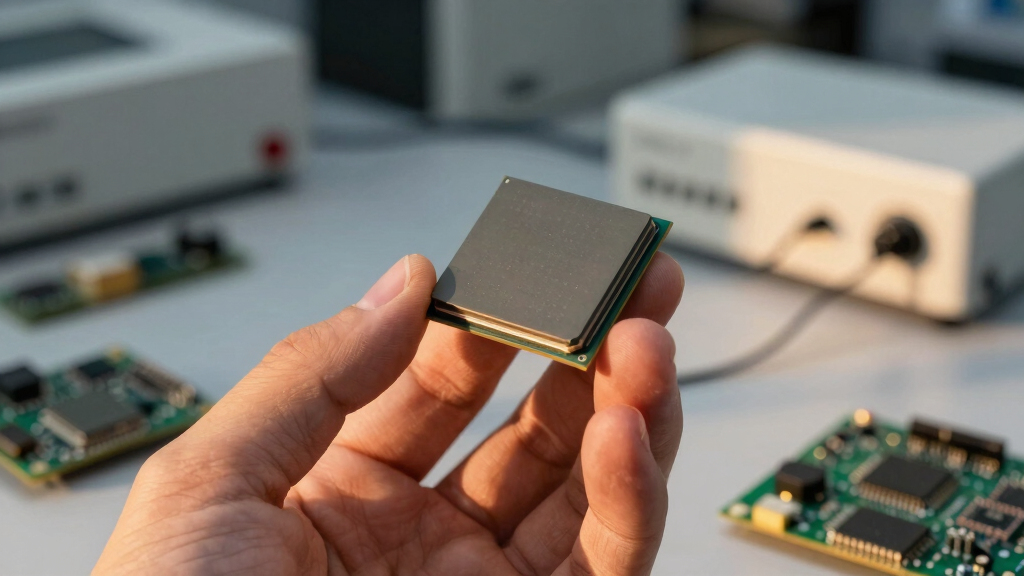
Researchers from Imec, ASML, and TSMC have demonstrated the integration of 2D transistors with atomically thin channels at a 50nm pitch on a single wafer. This marks the tightest scaling achieved to date for 2D devices, approaching the physical limits of traditional silicon technology.
Imec, ASML, and TSMC have successfully integrated both n-type and p-type 2D transistors with atomically thin channels on a single 300mm wafer at a 50nm contacted poly pitch, the tightest pitch demonstrated to date for such devices. This achievement, presented at the IEEE/JSAP Symposium, represents a significant advance toward the physical limits of transistor miniaturization and signals a potential pathway beyond traditional silicon scaling.
The collaboration used a single EUV exposure to print channel lengths as short as 28nm, with 94% of the integrated transistors switching correctly and an on/off current ratio exceeding 100,000. The n-channel devices employ molybdenum disulfide (MoS2), while the p-channel devices use tungsten diselenide (WSe2) or tungsten disulfide (WS2). This integration was achieved on a 300mm wafer, matching the industry standard, and the process was conducted at a 50nm poly pitch, the smallest to date for 2D transistors.
According to an anonymous researcher, this integration demonstrates the potential for 2D materials to serve as viable alternatives to silicon at near-atomic scales, with the possibility of further scaling or new device architectures in the future. The work was highlighted as a critical milestone in advancing 2D electronics into mainstream manufacturing.
Implications of 2D Transistor Integration at 50nm Pitch
This development indicates that industry-grade 2D transistors can now be fabricated at densities comparable to or exceeding current silicon technology, pushing the boundaries of miniaturization. It suggests that 2D materials could serve as a foundation for future transistors beyond the end of Moore’s Law, potentially enabling more energy-efficient, flexible, and novel electronic devices. The achievement also signals that the industry is approaching the physical limits of silicon scaling, accelerating research into alternative materials and architectures.
As an affiliate, we earn on qualifying purchases.
Background on 2D Materials and Transistor Scaling Limits
Traditional silicon transistor scaling has approached physical and economic limits, prompting industry research into alternative materials such as 2D semiconductors like MoS2 and WSe2. Prior efforts demonstrated individual 2D devices but integrating both n-type and p-type transistors at high density has remained a challenge. The recent demonstration by Imec, ASML, and TSMC marks the first time these materials have been integrated at a 50nm pitch on a standard wafer, within the range of advanced silicon processes, representing a major step toward practical 2D electronics manufacturing.
“This integration demonstrates the potential for 2D materials to serve as viable alternatives to silicon at near-atomic scales, with the possibility of further scaling or new device architectures.”
— an anonymous researcher
semiconductor wafer inspection tools
As an affiliate, we earn on qualifying purchases.
As an affiliate, we earn on qualifying purchases.
Remaining Challenges in 2D Transistor Commercialization
While the integration at 50nm pitch is a major milestone, it is not yet clear how scalable this process is for mass production or whether the long-term reliability and performance of such devices can match silicon. Further research is needed to optimize fabrication, reduce defects, and develop compatible circuit architectures. It is also uncertain how quickly industry adoption will occur given existing manufacturing infrastructure and cost considerations.
As an affiliate, we earn on qualifying purchases.
Next Steps Toward 2D Transistor Adoption
Researchers and industry players will focus on scaling down channel lengths further, improving fabrication yields, and testing device reliability. The next milestones include demonstrating integrated circuits with 2D transistors at commercial scales and evaluating their performance in real-world applications. Industry collaborations and government funding may accelerate development, but widespread adoption remains several years away.
nanometer scale semiconductor equipment
As an affiliate, we earn on qualifying purchases.
As an affiliate, we earn on qualifying purchases.
Key Questions
What are 2D transistors, and why are they important?
2D transistors use atomically thin materials like MoS2 and WSe2, offering potential for further miniaturization beyond silicon limits, with advantages in flexibility and energy efficiency.
How does this development impact the future of microelectronics?
It suggests that alternative materials like 2D semiconductors can be integrated at high densities, potentially enabling smaller, more efficient, and flexible electronic devices beyond silicon’s physical limits.
Is this technology ready for commercial manufacturing?
Not yet. While the integration at 50nm pitch is promising, further research is needed to address scalability, reliability, and cost before commercial adoption can occur.
What are the main technical challenges remaining?
Key challenges include improving fabrication yields, ensuring device reliability over time, and developing compatible circuit architectures for mass production.
When might we see 2D transistors in consumer electronics?
Widespread use is likely several years away, contingent on overcoming current technical and manufacturing hurdles.
Source: Tom’s Hardware: For The Hardcore PC Enthusiast
Halloween Picks
halloween
As an affiliate, we earn on qualifying purchases.