

📊 Full opportunity report: How To Build High Talent Density AI Teams on ThorstenMeyerAI.com — validation score, market gap, and execution plan.
TL;DR
Organizations are increasingly adopting talent density strategies, focusing on small, high-capability AI teams. This approach leverages AI’s productivity multiplier, enabling smaller teams to outperform larger organizations. The article examines confirmed developments, significance, and future steps.
Companies are now prioritizing the development of high talent density AI teams as a key strategy to outperform larger organizations. This shift is driven by the productivity multipliers enabled by AI, allowing small, highly skilled teams to achieve results previously thought impossible. The trend is reshaping organizational design and competitive dynamics in the AI economy.
Recent data indicates that AI-native companies like Midjourney, Cursor, Gamma, and Lovable are generating revenue per employee well above traditional software benchmarks, often exceeding $3 million. For example, Midjourney, with approximately 100 employees, generates nearly $4.7 million per employee, while Cursor, with a team in the low hundreds, reaches around $3.3 million per employee. These figures mark a significant departure from the prior median of $130,000 to $400,000 per employee in traditional SaaS firms.
Experts attribute this shift to two key factors: first, AI’s ability to automate and embed entire functions—such as customer support, content creation, and sales—reducing headcount without sacrificing output; second, the emergence of small, high-trust teams composed of individuals with exceptional skills in product taste, customer understanding, and AI fluency. These teams operate in a different mode, with less overhead, faster decision-making, and higher productivity, fundamentally changing the organizational landscape.
Industry leaders like Anthropic have demonstrated that a small team of a few thousand can generate a $30 billion revenue run rate, a scale previously achievable only by organizations with tens of thousands of employees. This trend underscores the role of talent density as an operational and economic lever, rather than merely an efficiency measure.
For a decade, revenue per employee was stable and boring. AI-native companies posted figures that don’t fit on the same chart — a 10-to-38× break.
Why High Talent Density AI Teams Are a Game Changer
The rise of high talent density AI teams represents a fundamental shift in organizational strategy and economic productivity. These teams enable smaller organizations to compete at scale, disrupting traditional models that relied on large headcounts. The ability to operate with fewer, more capable individuals accelerates decision-making, reduces overhead, and unlocks new levels of innovation and agility. For investors and leaders, understanding and cultivating talent density is now critical for maintaining competitive advantage in the rapidly evolving AI landscape.
As an affiliate, we earn on qualifying purchases.
The Evolution of Organizational Efficiency in the AI Era
Historically, revenue per employee has been a key metric for software companies, with median figures around $130,000. The advent of AI has dramatically altered this landscape, as recent examples show companies like Midjourney and Cursor achieving revenue per employee figures in the millions. This evolution is driven by AI's capacity to automate functions and the emergence of small, high-skill teams operating under high trust and minimal process, a concept rooted in management philosophies popularized by Netflix.
These developments are part of a broader trend where AI transforms operational models, enabling small teams to serve millions and redefine organizational boundaries. The shift is also reflected in the rapid scaling of AI-centric companies, with some reaching hundreds of millions or billions in revenue with significantly fewer personnel.
"Talent density is not just about efficiency; it's a different operating mode that only becomes available above a certain concentration of capability. Above that threshold, overhead drops, decisions accelerate, and small teams can achieve what once required large organizations."
— Thorsten Meyer
high performance AI development workstation
As an affiliate, we earn on qualifying purchases.
As an affiliate, we earn on qualifying purchases.
Uncertainties in Measuring and Sustaining Talent Density
While the current data shows remarkable revenue per employee figures, many are based on last-month run-rate calculations, which may overstate sustainable productivity. It remains unclear how these high levels will hold over time as companies scale or face market pressures. Additionally, the long-term organizational impacts of relying heavily on small, dense teams are still evolving, and the optimal balance between talent density and organizational resilience is not yet established.
As an affiliate, we earn on qualifying purchases.
Next Steps for Building and Scaling High Talent Density Teams
Organizations will need to focus on talent acquisition strategies that prioritize deep AI fluency, customer insight, and product taste. Developing internal cultures of high trust and minimal process will be critical. Investors and leaders should monitor emerging benchmarks and case studies to understand how these dense teams sustain high productivity over time. Further research and data collection are expected to clarify the long-term viability and best practices for scaling talent density in AI-driven organizations.
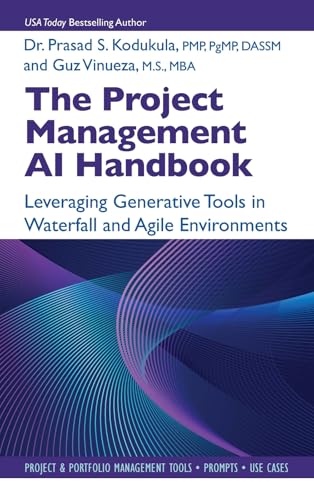
The Project Management AI Handbook: Leveraging Generative Tools in Waterfall and Agile Environments
As an affiliate, we earn on qualifying purchases.
As an affiliate, we earn on qualifying purchases.
Key Questions
What exactly is talent density in AI teams?
Talent density refers to a high concentration of highly skilled, capable individuals working together in small, high-trust teams that operate with minimal overhead, leveraging AI to maximize productivity and innovation.
Why are AI-native companies achieving higher revenue per employee?
AI-native companies automate functions, embed capabilities into products, and operate with small, dense teams of experts, enabling them to generate more revenue with fewer people.
Can small AI teams sustain their productivity as they grow?
This remains uncertain. While current data shows impressive figures, questions about long-term sustainability, scaling, and organizational resilience are still being studied.
What skills are most important for building high-density AI teams?
Key skills include deep AI fluency, strong customer understanding, and the ability to identify and develop valuable product features—combined with high trust and minimal process management.
How does talent density impact organizational structure?
High talent density allows organizations to operate with fewer layers, less coordination overhead, and faster decision-making, shifting from traditional hierarchical models to more agile, high-trust teams.
Source: ThorstenMeyerAI.com