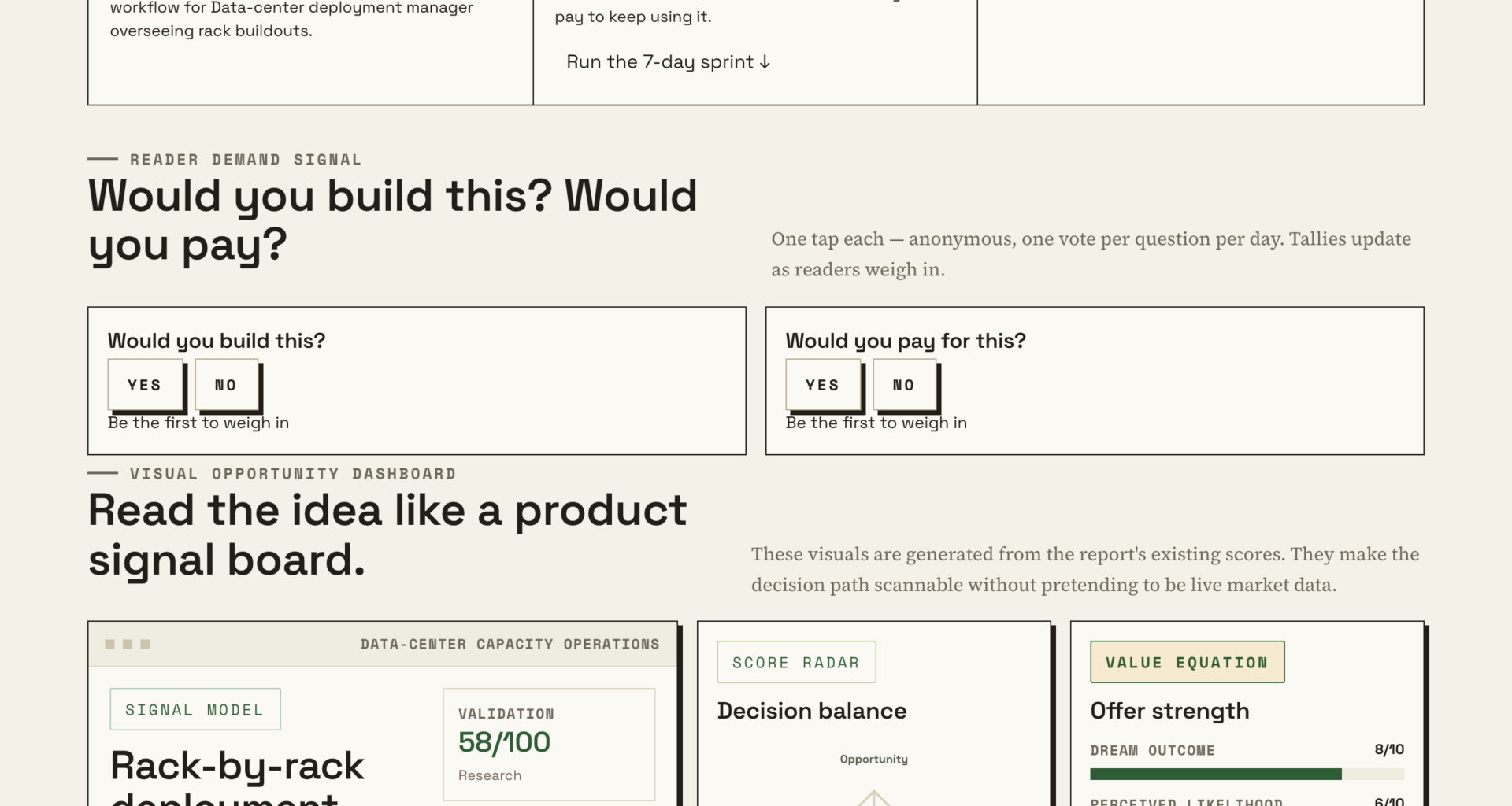

📊 Full opportunity report: How Rack Tracking Improves Data Center Capacity Operations on IdeaNavigator AI — validation score, market gap, and execution plan.

Get the latest gadgets delivered free — and shop member deals
- Fast, free delivery on millions of items
- Access to Prime Big Deal Days deals on October 6–7
- Prime Video, Amazon Music and more included
TL;DR
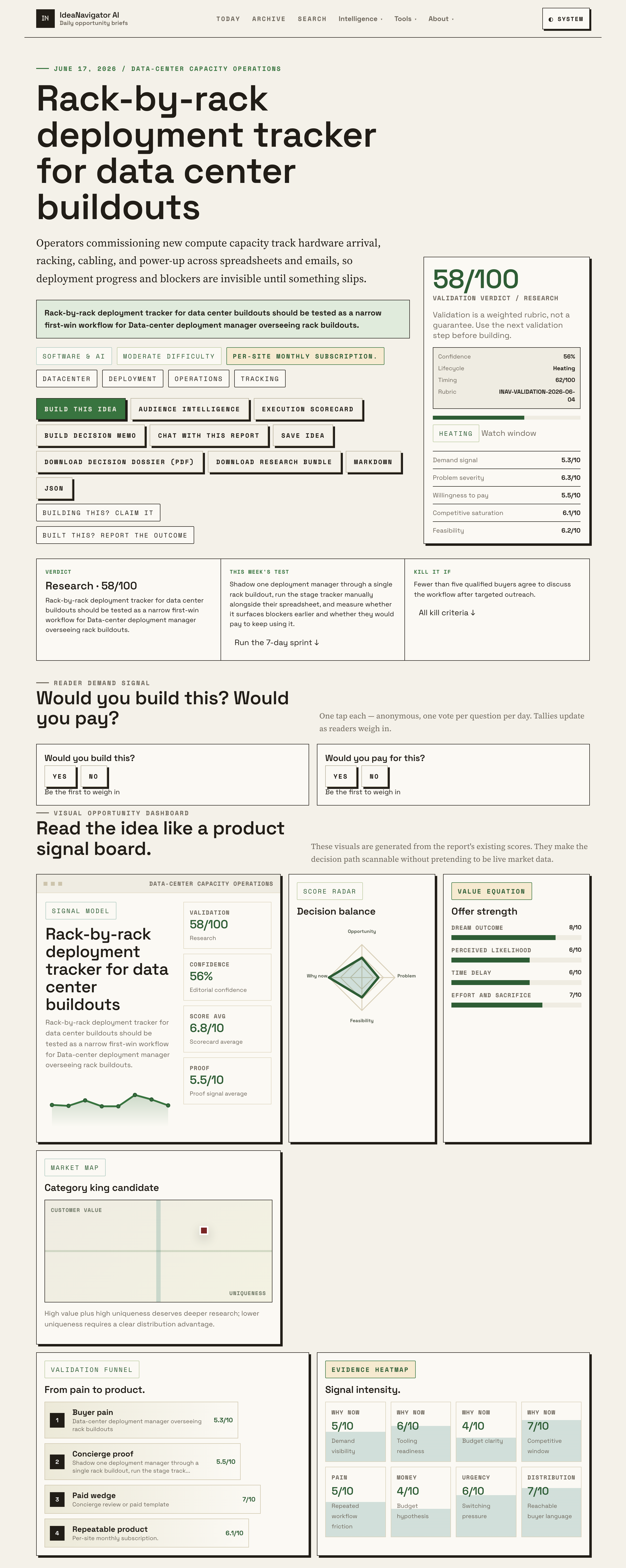
A new rack-by-rack deployment tracker is being tested to improve data center capacity operations. It offers real-time progress tracking, helping operators identify blockers early. This development aims to streamline large-scale buildouts driven by AI demand.
A new rack-by-rack deployment tracker is being tested as a workflow tool for data center capacity operations, aiming to improve visibility into hardware installation progress. The tracker is designed for deployment managers overseeing rack buildouts and addresses a key challenge: manual tracking through spreadsheets and emails that often leads to overlooked delays or blockers. This development is significant as data center operators seek more efficient ways to manage record-breaking buildouts driven by AI demand.
The proposed deployment tracker allows managers to log each rack through fixed stages: delivered, racked, cabled, powered, and validated. It provides a live percentage complete for each site and highlights stalled racks, offering real-time insights. The concept is to run this simple dashboard alongside existing spreadsheets during a single buildout to evaluate its effectiveness in surfacing blockers earlier. The tool is planned as a per-site monthly subscription product, targeting data center capacity operations that are increasingly strained by rapid expansion.
Testing involves shadowing a deployment manager through a single rack buildout, with the goal of comparing the tracker’s visibility against traditional methods. The approach aims to determine whether it can identify issues sooner and whether operators would pay for ongoing use. The initiative is driven by the urgent need to streamline deployment processes amid record growth in data center capacity, particularly for GPU-heavy AI infrastructure.
How Improved Tracking Impacts Data Center Efficiency
This development matters because it offers a practical solution to a widespread problem: manual, spreadsheet-based tracking that delays identification of deployment issues. By providing real-time, transparent progress updates, the tracker could reduce delays, improve resource allocation, and prevent costly overruns. As AI applications continue to push data center expansion, tools that enhance operational oversight become increasingly vital for maintaining pace and controlling costs. Early testing suggests this approach could be a valuable addition to capacity management, potentially transforming how deployment teams coordinate large-scale buildouts.
As an affiliate, we earn on qualifying purchases.
Growing Data Center Demands Drive Need for Better Tools
The rapid expansion of data centers, especially for AI and high-performance computing, has created a bottleneck in hardware deployment workflows. Operators currently rely heavily on manual tracking via spreadsheets and email updates, which can obscure progress and delay problem detection. This situation is compounded by compressed timelines and the scale of deployment, with thousands of GPUs being racked at a time. The concept of a dedicated, stage-based deployment tracker emerges from industry efforts to streamline operations and reduce buildout times, which are now critical to meet market demands.
“The manual tracking methods currently used often lead to overlooked delays, which can significantly impact deployment schedules.”
— an anonymous researcher
data center hardware management tools
As an affiliate, we earn on qualifying purchases.
As an affiliate, we earn on qualifying purchases.
Unclear How Effective the Tracker Will Be in Practice
It is not yet confirmed whether the tracker will significantly reduce delays or improve early detection of blockers during actual deployments. The testing phase is still ongoing, and results are pending. Additionally, it remains uncertain whether operators will find the tool worth the subscription cost after initial trials, or if integration with existing workflows will pose challenges.
rack installation progress monitor
As an affiliate, we earn on qualifying purchases.
As an affiliate, we earn on qualifying purchases.
Next Steps for Deployment Tracker Validation
The next step involves shadowing a deployment manager through a full rack buildout using the tracker alongside traditional methods. Results from this trial will determine if the tool can reliably surface blockers earlier and whether operators are willing to adopt it long-term. Further development may include expanding the tracker’s features based on initial feedback, with broader testing planned across multiple sites if promising.
data center capacity planning tools
As an affiliate, we earn on qualifying purchases.
As an affiliate, we earn on qualifying purchases.
Key Questions
How does the rack-by-rack deployment tracker work?
The tracker logs each rack through fixed stages—delivered, racked, cabled, powered, and validated—and provides a live progress percentage, highlighting stalled racks for real-time visibility.
What are the main benefits of using this tracker?
It offers improved visibility into deployment progress, early detection of delays, and better resource management, potentially reducing buildout times and costs.
Will operators adopt this tool widely?
Adoption depends on the results of ongoing testing and whether operators find it improves efficiency enough to justify ongoing subscription costs.
Is this tracker applicable to all data center types?
The initial focus is on large-scale AI infrastructure deployments, but the concept could be adapted for other data center buildouts requiring detailed progress tracking.
When will the tracker be commercially available?
A commercial launch is not yet announced; further testing and validation are required before broader deployment.
Source: IdeaNavigator AI
Fall Picks
fall essentials
As an affiliate, we earn on qualifying purchases.