
TL;DR

Get the latest gadgets delivered free — and shop member deals
- Fast, free delivery on millions of items
- Access to Prime Big Deal Days deals on October 6–7
- Prime Video, Amazon Music and more included
A man working from his garage reports developing a novel Alzheimer’s drug called PAC-832 using AI. The discovery is unverified by scientific institutions but could influence future research if validated.
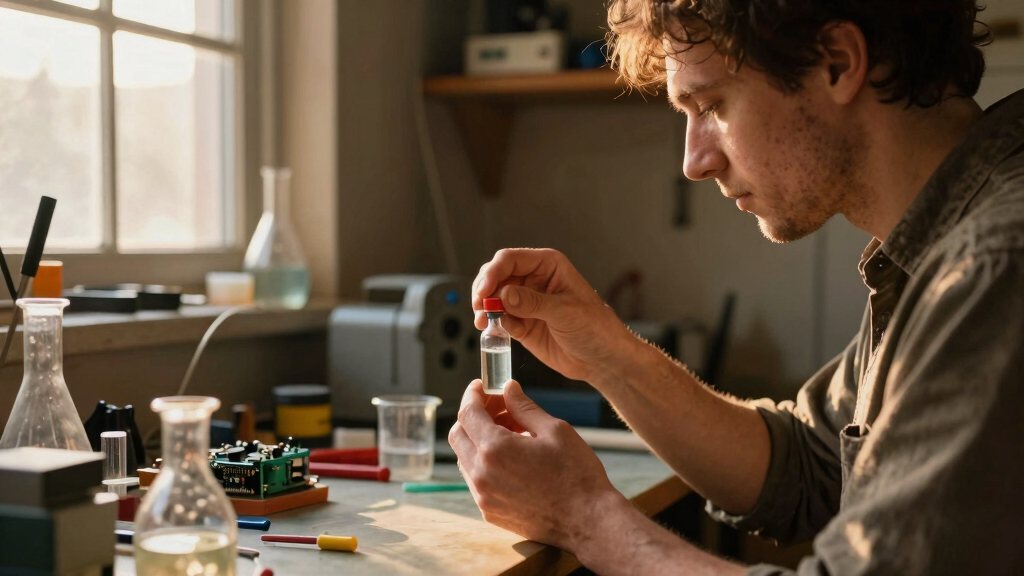
A man working from his basement claims to have developed a new drug for Alzheimer’s disease using artificial intelligence tools. The drug, called PAC-832, is described as the world’s first selective GalR1 antagonist, and he reports synthesizing it in a home lab. This unverified claim has attracted attention due to its potential implications for Alzheimer’s treatment development.
The individual, who posted on Hacker News, states that he designed and synthesized PAC-832 in a chemistry lab he built in his garage. He describes PAC-832 as a selective GalR1 antagonist, a class of compounds that could influence neurodegenerative processes associated with Alzheimer’s. According to his post, the drug is still in early stages, with no peer-reviewed studies or clinical testing yet conducted.
There is no independent verification or confirmation from scientific or regulatory authorities. Experts emphasize that claims of drug development require rigorous testing, peer review, and clinical trials before any conclusions about safety or efficacy can be drawn. The creator has not disclosed detailed data, experimental results, or plans for further testing.
Potential Impact of Basement-Developed Alzheimer’s Candidate
If verified, the development of PAC-832 could represent a significant breakthrough, especially if it proves effective and safe in further testing. The claim highlights the increasing role of AI in drug discovery, even outside traditional research institutions. However, without validation, it remains an unconfirmed possibility that might inspire or caution ongoing efforts in independent drug development.
Alzheimer's research lab equipment
As an affiliate, we earn on qualifying purchases.
As an affiliate, we earn on qualifying purchases.
Background on AI and DIY Drug Development
Recent years have seen growing interest in AI-driven drug discovery, with companies and institutions investing heavily in algorithms to identify potential therapeutics. However, most developments occur within regulated labs and clinical settings. The idea of an individual building a drug in a home lab is highly unusual and raises questions about safety, efficacy, and regulatory oversight. Prior to this, no known case of a DIY scientist successfully synthesizing a novel, potentially therapeutic compound for Alzheimer’s has been publicly documented.
“I designed and synthesized PAC-832 in my garage lab, using AI tools to guide the process.”
— an anonymous researcher
DIY chemistry kit for drug synthesis
As an affiliate, we earn on qualifying purchases.
As an affiliate, we earn on qualifying purchases.
Verification and Regulatory Status of PAC-832
It is not yet clear whether PAC-832 has undergone any formal testing, safety evaluations, or peer review. The scientific community has not verified the claims, and regulatory approval processes for new drugs are extensive and rigorous. The true efficacy and safety of PAC-832 remain unknown at this stage.
neurodegenerative disease research tools
As an affiliate, we earn on qualifying purchases.
As an affiliate, we earn on qualifying purchases.
Steps Toward Validation and Clinical Testing
Further independent testing, peer-reviewed research, and regulatory review are necessary before any claims about PAC-832’s safety or effectiveness can be confirmed. The individual has not announced plans for formal testing or clinical trials. Experts caution that any real progress toward an Alzheimer’s treatment will require rigorous validation over years of research.
As an affiliate, we earn on qualifying purchases.
Key Questions
Is PAC-832 approved for human use?
No, PAC-832 has not undergone any clinical testing or regulatory approval. Its safety and efficacy are unverified at this stage.
Can a basement scientist develop a drug safely?
While innovative, drug development requires strict safety protocols, testing, and regulatory oversight. DIY efforts lack these safeguards and are not a substitute for professional research.
What does this mean for Alzheimer’s research?
This claim highlights the growing potential of AI in early-stage drug discovery, but it remains unproven and should be approached with caution until validated through scientific processes.
Could this lead to an effective Alzheimer’s treatment?
It is too early to tell. The drug’s effectiveness and safety need thorough testing in preclinical and clinical studies before any conclusions can be made.
What are the risks of DIY drug development?
Unregulated, untested drug creation can pose serious health risks, including toxicity and adverse effects, and should only be conducted within proper scientific and regulatory frameworks.
Source: Hacker News
Fall Picks
fall essentials
As an affiliate, we earn on qualifying purchases.