
TL;DR
Developers have introduced a CSS-native method for creating parallax effects using scroll-driven animation timelines. This approach eliminates the need for JavaScript scroll event listeners, offering better performance and easier implementation. The technique leverages CSS properties like view-timeline-name and animation-timeline to synchronize animations with scroll progress.
A new CSS feature using scroll-driven animation timelines has been introduced, allowing developers to create parallax effects natively in CSS without JavaScript. This development promises improved performance and simpler implementation, making parallax effects more accessible and efficient.
The technique leverages CSS properties such as view-timeline-name and view-timeline-axis to track an element’s scroll progress and animate its position accordingly. By defining a view timeline that measures how far an element has traveled through the viewport, animations can be synchronized directly with scroll movement. This method replaces traditional JavaScript-based scroll event handling, reducing CPU load and improving performance.
The core of the implementation involves assigning a view timeline to a container element with the property view-timeline-name, which creates a timeline that progresses from 0% to 100% as the element enters and leaves the viewport. The child elements then use animation-timeline to bind their animations to this timeline, moving at a different rate than the scroll, creating a parallax effect. To prevent empty spaces when shifting content, the child is scaled up proportionally to the offset, ensuring consistent coverage regardless of movement. Additional considerations include respecting user preferences for reduced motion, which can disable the animation via media queries.
Why It Matters
This development matters because it introduces a native, performance-optimized way to implement parallax effects purely with CSS. It simplifies the codebase by removing reliance on JavaScript, potentially reducing load times and improving responsiveness. For web designers and developers, this means more accessible, maintainable, and efficient animations, especially on mobile devices where performance is critical.
As an affiliate, we earn on qualifying purchases.
Background
Parallax effects have long been achieved through JavaScript and CSS libraries, often involving scroll event listeners that recalculate element positions on each frame. The new approach builds on recent CSS advancements, specifically scroll-driven animation timelines, which were discussed in early 2026 as part of CSS Scroll-Linked Animations. This marks a significant step toward fully CSS-driven interactive effects, aligning with broader efforts to enhance web performance and declarative styling.
“This is a major step forward in CSS animations, allowing for more performant and simpler parallax effects without JavaScript.”
— CSS expert
“Using view timelines, we can create smooth, hardware-accelerated parallax effects that are easy to tune with just CSS.”
— Developer involved in the implementation
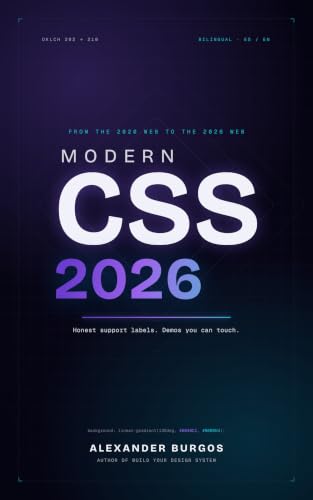
Modern CSS 2026: Modern CSS, with honest support labels and demos you can touch
As an affiliate, we earn on qualifying purchases.
As an affiliate, we earn on qualifying purchases.
What Remains Unclear
It is not yet clear how widely supported these CSS features will be across browsers, or how they will perform on low-end devices. Details about compatibility and potential limitations are still emerging, and further testing is needed to confirm robustness in various environments.
As an affiliate, we earn on qualifying purchases.
What’s Next
Browser vendors are expected to extend support for scroll-driven animation timelines in upcoming releases. Developers will likely experiment with this technique in production, and further guidelines or best practices may develop to optimize its use. Monitoring browser compatibility and performance benchmarks will be the next steps.

As an affiliate, we earn on qualifying purchases.
Key Questions
Is this CSS technique supported in all browsers?
Support is currently limited and may vary; checking browser compatibility tables and testing in target environments is recommended.
Can I use this method with existing CSS frameworks?
Yes, it can be integrated into existing stylesheets, but requires support for the new CSS properties like view-timeline-name and animation-timeline.
Does this replace JavaScript for all scroll animations?
It replaces JavaScript in many cases, especially for simple effects like parallax, but complex interactions may still require scripting.
How do I respect user preferences for reduced motion?
Use media queries like @media (prefers-reduced-motion: reduce) to disable animations and scaling for users who prefer less motion.
Source: Hacker News