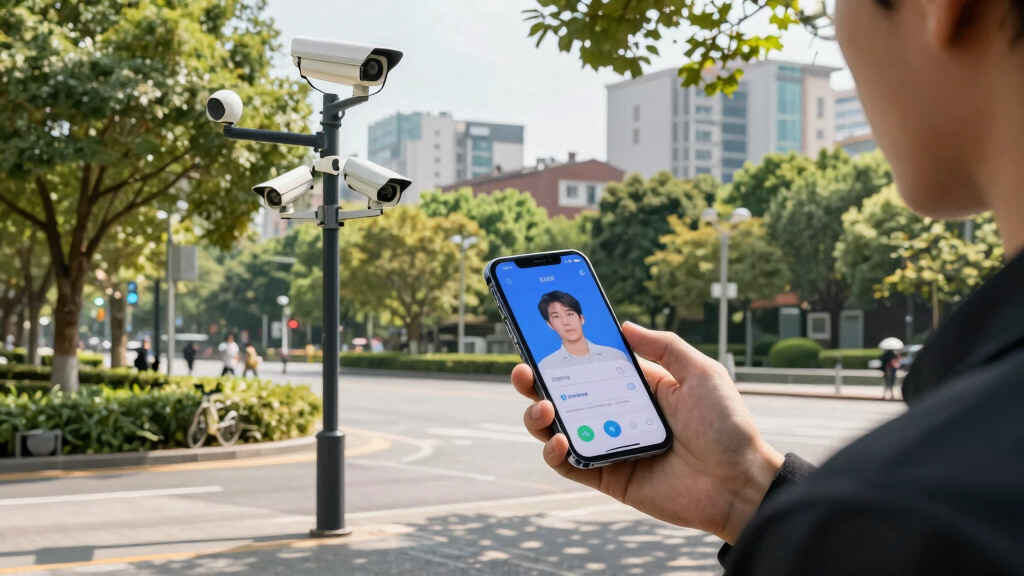

📊 Full opportunity report: Can AI Help Cities Balance Security And Privacy? on ThorstenMeyerAI.com — validation score, market gap, and execution plan.
TL;DR
Cities are increasingly adopting AI-powered digital twins for urban management. While these tools improve security and efficiency, they raise significant privacy concerns. The development of shared ownership models and privacy-preserving technologies could shape future governance, as discussed in Mozilla to UK regulators: VPNs are essential privacy and security tools.
Urban digital twins powered by AI are being adopted by cities worldwide to enhance security, traffic management, and emergency response. However, these technologies also pose significant privacy challenges, prompting debates about governance, ownership, and data control. This story examines the current state of AI-enabled city twins and the efforts to balance security benefits with privacy safeguards.
Several cities, including Barcelona, are implementing digital twin initiatives that integrate vast amounts of sensor, mobility, and imagery data to optimize urban functions. These systems, often driven by AI, can improve emergency responses, reduce emissions, and streamline planning processes. However, concerns have arisen regarding opaque data processing, lack of standardization, and potential privacy violations under regulations like GDPR. For more on privacy tools, see Mozilla to UK regulators: VPNs are essential privacy and security tools. Notably, privacy-preserving techniques such as differential privacy are maturing, with some implementations retaining nearly 95% of data utility while enhancing security.
Governance models are also evolving. Rotterdam’s shared ownership approach offers a potential alternative to vendor lock-in, aiming to make city digital twins a jointly-managed public infrastructure. Meanwhile, European vendors are increasingly emphasizing compliance and privacy-by-design features to meet legal standards and build trust. Despite these efforts, many questions remain about who controls the data and how citizens’ rights are protected in practice. Learn more about digital privacy tools and policies at Mozilla to UK regulators: VPNs are essential privacy and security tools.
The City That Watches Itself Has a Business Model —
That’s the Governance Problem
Same-day-verified · follow the money, the liability, and the social cost — not the state-vs-citizen framing
Three layers the privacy headlines skip
- Lock-in is the quiet scandal: once planning, flood response & traffic run through one vendor’s replica, exit costs are civilizational-grade
- Real service economy downstream: architects speed compliance, developers expedite approvals
- Counter-model: Rotterdam’s shared ownership — twin as governed infrastructure, not licensed product
- You’re in the twin whether you signed or not: logistics, energy signatures, employee movements become someone else’s data layer
- Unsettled GDPR joint-controller questions; Barcelona already criticized for opaque citizen-data processing
- Upside: compliance-grade twin infrastructure as a European market position — jurisdiction as feature
- Chilling effects on assembly & expression; algorithmic mediation can automate inequality into planning
- Function creep is the mechanism: drainage model → crowd model → protest model — each an upgrade ticket, not a political decision
- Contestability erodes: you can argue with a planning officer, not with a simulation’s false objectivity
The ladder nobody voted on — Gartner hype-cycle history
STEELMAN: BUILD THE TWINS ANYWAY
Refusing has social costs too: flood twins demonstrably cut emergency costs, traffic twins cut emissions and improve ambulance access. The honest position isn’t twin-or-no-twin — it’s that the same replica serves radically different ends depending on governance.
Watch three indicators, not the headlines: does Rotterdam-style shared ownership spread; does purpose limitation get enforcement teeth; do enterprises demand contractual standing in the twins that ingest them. Those three decide whether the city that watches itself answers to anyone.
![ESET Home Security Premium | Antivirus | 2025 Edition | 3 Devices | 1 Year| Unlimited VPN | Privacy Protection | Ransomware | Anti-Theft | Digital Download [PC/Mac/Android]](https://m.media-amazon.com/images/I/51rUg2B8o2L._SL500_.jpg)
ESET Home Security Premium | Antivirus | 2025 Edition | 3 Devices | 1 Year| Unlimited VPN | Privacy Protection | Ransomware | Anti-Theft | Digital Download [PC/Mac/Android]
Unlimited VPN Rely on secure network connections at home or on the go—access secure servers across 40 countries…
As an affiliate, we earn on qualifying purchases.
As an affiliate, we earn on qualifying purchases.
Implications of AI-Driven City Twins for Urban Governance
This development matters because digital twins have the potential to significantly improve urban management and safety, yet they also risk eroding citizen privacy and entrenching corporate dependencies. The way cities govern these systems — through ownership, purpose limitation, and transparency — will determine whether they serve the public interest or exacerbate social inequalities. The emergence of shared ownership models like Rotterdam’s could set important precedents for public control over these powerful infrastructures.
differential privacy software
As an affiliate, we earn on qualifying purchases.
As an affiliate, we earn on qualifying purchases.
Background on Digital Twins and Governance Challenges
The concept of digital twins has evolved from industrial applications to urban environments over the past five years. Cities use these virtual replicas for flood modeling, traffic optimization, and emergency planning. However, the integration of AI and extensive data collection raises governance concerns, including data control, privacy violations, and potential misuse. Critics warn that once a city’s twin infrastructure is locked into a single vendor, exit costs become prohibitively high, risking monopoly dependence. Recent initiatives, such as Rotterdam’s shared ownership model, aim to counteract this trend.
“The governance of city twins must prioritize purpose limitation and transparency to prevent social and privacy harms.”
— Thorsten Meyer, expert on urban digital infrastructure
city digital twin hardware
As an affiliate, we earn on qualifying purchases.
As an affiliate, we earn on qualifying purchases.
Unresolved Questions About Data Control and Governance
It remains unclear how widely shared ownership models like Rotterdam’s will be adopted and whether they will effectively prevent vendor lock-in. Additionally, the practical enforcement of purpose limitation and the robustness of privacy-preserving technologies in large-scale deployments are still under development. There is also uncertainty about how citizens’ rights will be protected as these systems become more pervasive.
urban sensor data security tools
As an affiliate, we earn on qualifying purchases.
As an affiliate, we earn on qualifying purchases.
Future Developments in City Twin Governance and Privacy
Next steps include expanding shared ownership initiatives, establishing standardized governance frameworks, and advancing privacy-preserving AI technologies. Policymakers and city officials are expected to pilot new models of public-controlled digital infrastructure. Monitoring these developments will reveal whether cities can effectively balance security benefits with privacy protections.
Key Questions
Can AI-enabled city twins improve urban security without compromising privacy?
Yes, if governance structures incorporate purpose limitation, transparency, and privacy-preserving technologies, city twins can enhance security while protecting individual privacy.
What are the main risks of deploying digital twins in cities?
The primary risks include privacy violations, data misuse, vendor lock-in, and the potential for social inequalities due to algorithmic biases or lack of oversight.
How are cities trying to prevent vendor lock-in with digital twins?
Some cities, like Rotterdam, are exploring shared ownership models and open standards to ensure public control and reduce dependency on single vendors.
Are there effective privacy safeguards in current city twin implementations?
Privacy-preserving techniques like differential privacy are being integrated, but widespread, standardized safeguards are still under development and not yet universally adopted.
Source: ThorstenMeyerAI.com