📊 Full opportunity report: Acoustic Dampening, Placement, and the “Rig in the Closet” Setup on ThorstenMeyerAI.com — validation score, market gap, and execution plan.
TL;DR
This article explains how moving AI workstations to separate rooms and using proper ventilation can drastically reduce noise. It highlights the importance of placement over acoustic foam and discusses the pros and cons of a ‘rig in the closet’ setup.
Moving AI workstations into separate rooms, such as closets or basements, is the most effective way to reduce noise, according to technical experts. This approach surpasses traditional acoustic foam treatment and is particularly relevant as high-power AI rigs generate significant heat and sound. For more details, see Acoustic Dampening, Placement, and the “Rig in the Closet” Setup.
Experts emphasize that the most effective noise mitigation strategy is to increase distance and isolation from the source. Placing a high-power AI workstation in a different room, like a closet or basement, can eliminate noise at the source, making additional acoustic treatments unnecessary. This is especially suitable for headless setups where the machine is accessed remotely via network connections, such as SSH or APIs. However, this approach requires reliable network connectivity and proper ventilation to prevent heat buildup. A common misconception is that acoustic foam or soundproof panels alone can significantly reduce noise. While these materials absorb airborne sound reflections within a room, they do little to block sound transmission through walls or structural vibrations. Therefore, placing the rig in another room is often more effective than relying solely on foam. When placing a rig in a closet or enclosed space, ventilation becomes critical. Sealed environments trap heat, which can cause thermal throttling and increased fan noise. To avoid this, active ventilation with quiet exhaust fans and ducting is necessary to dissipate heat while maintaining noise containment. Purpose-built soundproof cabinets with temperature-controlled airflow are ideal but come at a higher cost. Overall, combining strategic placement with proper ventilation offers the best balance of noise reduction and equipment safety, especially for continuous high-load operation.Acoustic dampening
& the rig in the closet.
The most powerful noise fix isn’t a material — it’s a floor plan. A rig you can’t hear because it’s in another room beats any amount of foam. Tap the approaches in Part 1 to see what actually works.
(another room)
(levers 1–4)
(door / barrier)
(acoustic foam)
Contain the noise, not the heat
Why Placement and Ventilation Are Critical for Quiet AI Rigs
Effective noise reduction in AI workstations is essential for maintaining a comfortable and productive workspace, especially in shared environments. Moving the rig into a separate room or closet drastically reduces noise exposure, improving work quality and reducing noise pollution. Proper ventilation ensures the hardware remains cool, preventing thermal throttling and hardware damage. This approach often offers a better return on investment than expensive acoustic treatments, making it a practical solution for many users. As AI workloads increase and hardware becomes more powerful and noisy, understanding and implementing these placement and cooling strategies are increasingly important for both individual users and organizations.
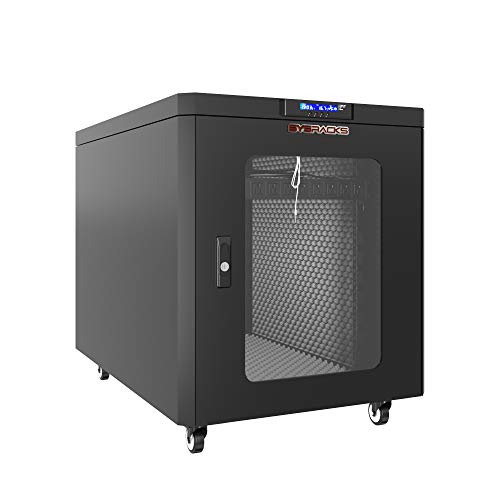
Sysracks 12U Soundproof Server Cabinet, 19-Inch, Glass Door
- Quiet Operation: Reduces server noise by up to 36%
- Automatic Cooling: Dual exhaust fans with thermostat control
- Secure Lockable Door: Locking glass door for equipment security
As an affiliate, we earn on qualifying purchases.
As an affiliate, we earn on qualifying purchases.
High-Power Hardware and the Limitations of Acoustic Foam
Traditional noise mitigation for computers often begins with acoustic foam or soundproof panels, which absorb airborne noise within a room. However, these materials do not block sound transmission through walls or structural vibrations. High-power AI rigs, especially those with GPUs consuming over 600W, produce substantial heat and noise, making placement and cooling strategies more effective than acoustic treatment alone. The concept of a 'rig in the closet' has gained popularity as a way to isolate noise, but it requires careful planning of ventilation to prevent heat buildup. Experts have long advised that distance and physical separation are the most effective forms of noise mitigation, a principle now reinforced by the increasing power and noise levels of modern AI hardware.
"Moving the rig into another room is the most effective way to eliminate noise, especially when combined with proper ventilation."
— Thorsten Meyer, AI hardware expert

AC Infinity AIRPLATE S1, Quiet Cooling Fan System 4" with Speed Control, for Home Theater AV Cabinets
- Quiet Cooling Fan System: Ultra quiet design for cabinets
- Multi-Speed Controller: Adjust fan speed for optimal noise and airflow
- Durable Aluminum Frame: CNC machined with brushed black finish
As an affiliate, we earn on qualifying purchases.
As an affiliate, we earn on qualifying purchases.
Remaining Challenges in Quietly Operating AI Workstations
While the benefits of moving workstations to separate rooms are clear, the practicalities of implementing effective ventilation in enclosed spaces remain complex. The optimal design for soundproof cabinets with cooling, cost considerations, and how to balance noise containment with heat dissipation are still evolving topics. Additionally, the impact of network latency and reliability when operating rigs remotely in different rooms is an ongoing concern, especially for real-time AI workloads. More research and development are needed to refine these solutions for widespread adoption.

CORSAIR 4000D RS ARGB Frame Modular Mid-Tower ATX PC Case, High Airflow, 3X Pre-Installed RS Fans, InfiniRail™ Mounting System, ASUS BTF, MSI Zero, Gigabyte Stealth, Black
- Modular Frame System: Customizable and upgradeable design
- Pre-Installed ARGB Fans: Three high-performance RGB PWM fans
- Silent Operation: Zero RPM mode for low noise
As an affiliate, we earn on qualifying purchases.
As an affiliate, we earn on qualifying purchases.
Next Steps for Achieving Quieter AI Workstations
Future developments will likely focus on integrated solutions combining soundproofing, active cooling, and remote management. Manufacturers may introduce more affordable, effective soundproof cabinets with built-in ventilation systems tailored for high-power hardware. Users should prioritize establishing reliable network connections and proper airflow in any remote or enclosed setup. Ongoing research into low-noise hardware components and innovative cooling techniques will further improve the feasibility of placing workstations in less accessible spaces, ultimately making quiet operation more accessible for everyone.

2 Pack Studio Monitor Isolation Pads for Large Speakers Sound Insulation Studio Foam Prevents Vibrations Acoustic Speaker Isolation Pad High Density Fits Most Stands
- Enhanced Sound Clarity: Reduces vibrations for cleaner sound
- Universal Compatibility: Fits most studio monitors and brands
- Adjustable Angle Design: Allows precise monitor positioning
As an affiliate, we earn on qualifying purchases.
As an affiliate, we earn on qualifying purchases.
Key Questions
Why is moving my AI workstation to another room more effective than acoustic foam?
Moving the rig away from your workspace significantly reduces noise exposure because it physically separates the source from you, which is more effective than absorbing sound reflections within a room using foam.
What are the main challenges of placing a high-power GPU in a closet?
The primary challenge is heat buildup. Without proper ventilation, the enclosed space traps heat, causing thermal throttling and potentially damaging hardware. Active airflow with quiet exhaust fans is necessary to keep temperatures safe.
Can I just seal a cabinet or closet to block noise?
Sealing alone is not sufficient; heat must be managed with ventilation. Otherwise, trapped heat can lead to overheating, reducing hardware lifespan and performance.
Are there cost-effective solutions for quiet AI workstations?
Yes, using simple measures like rubber feet, passive vents, and network-based remote operation can significantly reduce noise without expensive soundproof cabinets. For more comprehensive solutions, purpose-built soundproof enclosures with active cooling are available but at a higher cost.
Source: ThorstenMeyerAI.com