Upgrading to DDR5 RAM can boost your system’s speed, power efficiency, and future compatibility, especially if your CPU and motherboard support it. However, the performance gains in gaming or everyday tasks may be modest unless you’re using a high-end setup. DDR5 also costs more and isn’t as widely available yet. If you’re interested in long-term upgrades and advanced features, exploring this option is worthwhile. Keep going to discover more about how DDR5 can benefit your system.
Key Takeaways
- DDR5 offers higher bandwidth and faster data transfer, benefiting CPU-intensive tasks and future hardware compatibility.
- Upgrading to DDR5 may not significantly improve gaming performance unless paired with high-end components.
- DDR5 consumes less power and runs cooler, enhancing energy efficiency and system longevity.
- DDR5 RAM is more expensive and less available, impacting affordability for many users.
- Future-proofing with DDR5 ensures better support for upcoming hardware advancements and longer system relevance.
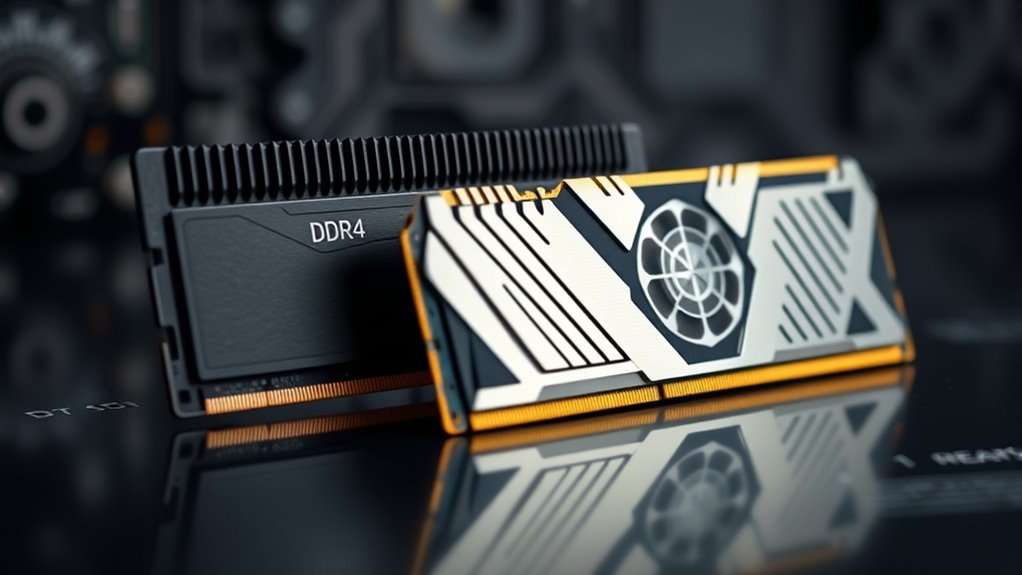
Are you trying to decide between DDR4 and DDR5 RAM for your system? If so, you’re likely weighing the benefits of each to determine which is the best fit for your needs. When it comes to gaming performance, DDR5 offers some promising improvements, but the real question is whether those gains are noticeable enough to justify the upgrade. DDR4 has been the standard for years, providing solid performance and reliability, but DDR5 is designed to push the boundaries further, especially as games and applications become more demanding.
One of the key differences you’ll notice with DDR5 is its potential for enhanced gaming performance. Thanks to higher data transfer rates and increased bandwidth, DDR5 can deliver faster load times and smoother gameplay in many titles. This means that, in theory, your games will run more efficiently, especially in CPU-intensive scenarios or when paired with a high-end graphics card. However, the actual performance gains depend on your system’s overall configuration and whether your CPU and motherboard support DDR5. If you’re upgrading from DDR4, you’ll want to consider whether your existing setup can take full advantage of DDR5’s speed improvements.
DDR5 offers faster load times and smoother gameplay, but benefits depend on your system’s CPU and motherboard support.
Power efficiency is another vital factor to evaluate. DDR5 memory is designed to operate at lower voltages compared to DDR4, which can lead to reduced power consumption and heat output. This means that, over time, a DDR5-based system might run cooler and consume less electricity, making it potentially more sustainable and cost-effective in the long run. For portable or energy-conscious users, this efficiency could translate into longer battery life or lower electricity bills. Yet, it’s worth noting that the power savings may be marginal in everyday use unless you’re running intensive tasks constantly.
That said, upgrading to DDR5 isn’t just about raw performance and power savings; it’s also about future-proofing your build. As more motherboards and CPUs support DDR5, you’ll be better prepared for upcoming hardware advancements. But keep in mind that DDR5 RAM is currently more expensive and less widely available than DDR4. This price difference can be a barrier, especially if you’re on a tight budget or only need a reliable system for basic tasks or gaming.
Frequently Asked Questions
How Much Performance Boost Does DDR5 Offer Over DDR4?
You’ll notice a performance boost with DDR5, especially in bandwidth improvements that can be up to 50% higher than DDR4. While raw speed increases are modest—around 20-30%—the enhanced bandwidth allows for smoother multitasking, faster data transfer, and better performance in demanding applications. If you’re after future-proofing and better handling of intensive tasks, upgrading to DDR5 offers meaningful performance gains that can improve your overall computing experience.
Is DDR5 Compatible With Older Motherboards?
You can’t use DDR5 RAM with older motherboards because compatibility depends on motherboard support and chipset compatibility. Motherboard compatibility determines whether your system can handle DDR5 modules, and many older chipsets don’t support the newer standard. To upgrade, you need a motherboard specifically designed for DDR5. So, if you want to enjoy DDR5’s benefits, you must verify your motherboard’s chipset supports DDR5 and look for the right socket and slots.
What Are the Typical Costs of DDR5 RAM?
You’ll find that DDR5 RAM typically costs between $150 and $300 for a 16GB kit, depending on the brand and speed. When you compare prices with DDR4, DDR5 may seem pricier now, but the future affordability of DDR5 is expected to improve as technology advances and production scales up. So, while it’s a bigger investment today, it could save you money long-term.
Does DDR5 Consume More Power Than DDR4?
Yes, DDR5 consumes slightly more power than DDR4 due to its increased performance capabilities. However, it offers better energy efficiency through features like lower voltage operation and improved power management. While the power consumption might be higher under heavy workloads, DDR5’s advancements help optimize energy efficiency overall. You’ll notice that, despite the increased power use, DDR5 is designed to deliver better performance without markedly impacting your energy consumption.
How Long Before DDR5 Becomes Mainstream?
You’ll likely see DDR5 become mainstream within the next two to three years, as adoption timelines accelerate with more affordable options. Currently, market penetration is around 15%, but experts predict it will reach over 50% by 2025. This rapid growth is driven by new processors and increased demand for faster memory. If you’re waiting for widespread availability, expect a gradual shift, but adoption is definitely gaining momentum.
Conclusion
Deciding between DDR4 and DDR5 is like choosing between a reliable bridge and a rising river. DDR4 offers steady performance, but DDR5 promises to carry you further into the future’s uncharted waters. Upgrading is an investment in your digital voyage—sometimes you need to brave the current to reach new horizons. So, weigh your needs carefully; the right choice can turn your tech journey into an adventure worth sailing.