
📊 Full opportunity report: Games At The Gallery: Learning Ideas For Small Museums on IdeaNavigator AI — validation score, market gap, and execution plan.

Get the latest gadgets delivered free with Prime
- Fast, free delivery on millions of items
- Prime Video, Amazon Music and more included
- Member-only deals all year
TL;DR
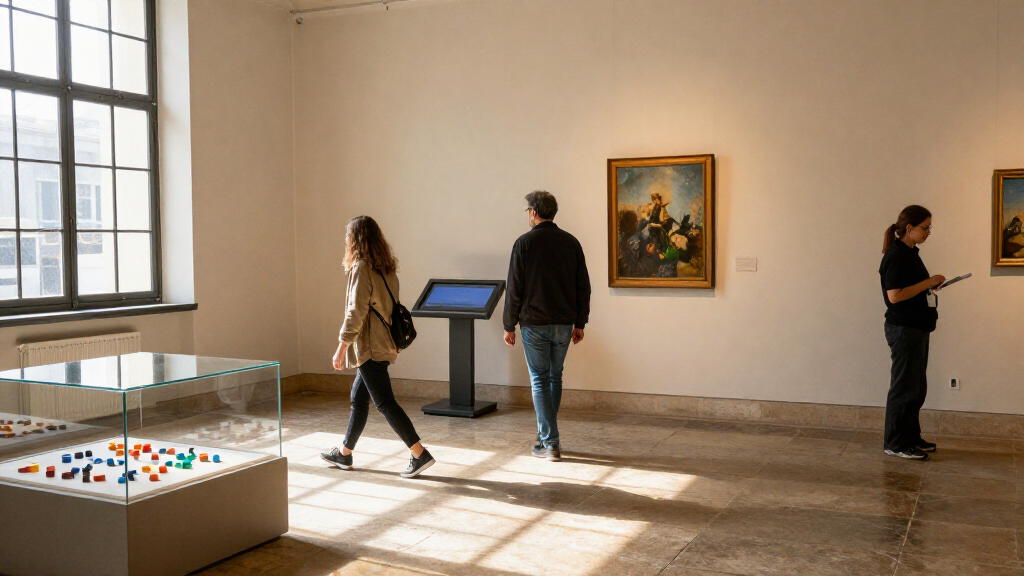
A proposal for small museums lays out a fixed-price package of browser-based learning games built around each institution’s collection. It recommends testing the idea with three museums and measuring visits and bookings before claiming results; no pilot outcomes or confirmed buyers are provided.
IdeaNavigator AI’s proposal describes a package of browser-based learning games for small museums, designed around each museum’s collection and aimed at school groups and families. The proposal recommends testing the service with three museums before treating it as a proven way to increase bookings, visitor engagement or repeat visits.
According to the IdeaNavigator AI proposal, the intended customers are directors or sole educators at small history, art and science museums, typically with annual budgets below $250,000. The proposal says these institutions often rely on a small staff and volunteers, leaving limited time to develop and maintain activities for school groups and families. It describes reused worksheets and brief family visits as problems the product would seek to address; the proposal does not provide survey findings or visitor data to substantiate those descriptions.
Under the proposed package, a museum would provide collection photographs, exhibit labels and object records. The proposal says the provider would deliver a browser-based quest within two weeks, with no app download required and separate activities for school groups, families and solo visitors. The school activity would be organized by grade band and aligned to state standards; the solo trail would be designed to take about 10 minutes.
The proposed service also includes content drafted from the museum’s collection and checked by a museum educator, a basic editor for replacing objects when exhibits change, a printable alternative and visitor analytics that museums could use in grant reports. IdeaNavigator AI suggests a fixed-price build sized for a small grant, followed by an annual hosting and content-refresh fee. Regional museum associations are suggested as possible group buyers, but the proposal identifies no contracts, prices or participating institutions.
Games At The Gallery A proposal to test
IdeaNavigator AI proposes collection-based browser games for small museums. The package is untested, with no confirmed buyers or pilot results.
What museums would get
A done-for-you package designed for school groups, families and solo visitors.
Collection-based quests
Activities would use museum photographs, labels and object records, with school quests organized by grade band.
Browser and print options
Visitors would not need an app download, and a printable alternative is proposed.
Tools to update content
An editor and educator-reviewed content are intended to help museums refresh activities as exhibits change.
How the pilot would work
The proposal recommends building quests at cost, then comparing selected measures over one term.
Create collection-based quests for participating institutions.
Measure school-group bookings, family dwell time and repeat visits.
Check whether at least two museums would seek funding for a refresh.
What remains unknown
The proposal does not yet establish demand, affordability or impact.
- Fixed-price build sized for a small grant
- Annual hosting and content-refresh fee
- Comparison with the same term a year earlier
- Prices, contracts or named participants
- Pilot results or confirmed buyer interest
- Evidence that games cause visitor changes
A Lower-Cost Route to Museum Activities
If the approach works, it could give small museums a way to offer collection-based digital activities without building an app or hiring an agency for a custom project. The IdeaNavigator AI proposal describes a browser-based format and printed fallback intended to let visitors take part without downloading software, while an editing tool is intended to make updates less dependent on outside help.
The proposal’s value remains a testable possibility, not a demonstrated result. Its suggested measures—school-group bookings, family dwell time and repeat visits—could help museums judge whether the activities are being used and whether visitor patterns change. Such measures alone would not establish that the games caused any change, particularly if other programming or seasonal factors also affect attendance.
For museums that depend on grants, a fixed-price project could be easier to plan than an open-ended custom build. The proposal links the idea to grant reporting, but it does not establish that a particular funder would cover the service or that analytics from a quest would meet any grant’s reporting rules.
Products Worth Considering

EcoFlow Delta 3 Max Portable Power Station with 220W Solar Panel, 2048Wh

Samsung Galaxy Tab A11+ 8GB RAM, 256GB Storage, Gray

Bose TV Speaker Compact Soundbar with Bluetooth and HDMI-ARC, Black
As an affiliate, we earn on qualifying purchases.
Grant Timing Shapes the Proposal
IdeaNavigator AI’s proposal situates the idea amid uncertainty over federal support for small museums. It says the Institute of Museum and Library Services announced its FY2026 Inspire Grants for Small Museums on Sept. 9, 2026, funding 88 museums for educational programs and exhibits. The proposal also says a court settlement in April 2026 left the agency intact. These details frame the proposed service as a possible project museums could budget for with grant funding; they do not show that any grant recipient plans to purchase it.
The proposal further states that the president’s FY2027 budget again proposes eliminating IMLS and that the deadline for FY2027 National Leadership Grants was tentatively Nov. 13, 2026. These are time-sensitive details as presented in the proposal, not confirmation that the agency will be eliminated or that the tentative deadline is final. The proposal offers the timing as a reason for museums to consider projects that can fit a grant line, not as evidence of buyer demand.
To test the business idea, IdeaNavigator AI proposes building quests for three small museums at cost. The proposal recommends tracking school-group bookings, family dwell time and repeat visits over one term and comparing them with the same term a year earlier. It also proposes asking whether at least two of the three museums would include a paid refresh in their next grant application. No pilot is reported as completed.
Pilot Demand and Results Are Unknown
No participating museums are named, and the IdeaNavigator AI proposal does not provide a launch date, a price, sample game content or evidence that the two-week delivery target has been met. It also does not say who would provide the educator review, how the service would protect collection information or visitor data, or what level of technical support would be included.
There are no measured outcomes for school bookings, time spent in galleries or repeat visits. The proposal’s suggested comparison with the same term in the prior year could be affected by changes in school schedules, exhibitions, staffing or attendance patterns. It also does not specify how many visitors would need to use the games to make the project worthwhile, or how a museum would distinguish their effect from other changes.
Grant availability and timing remain separate uncertainties. The funding context described in the proposal does not confirm that individual museums qualify, that grant funds can be used for this service, or that the stated tentative deadline will stand. The business case depends on both demonstrated museum interest and a price that fits institutions’ budgets.
Three-Museum Test Comes First
The next step described in the IdeaNavigator AI proposal is a three-museum pilot built at cost, followed by a term of measurement. The proposed test would compare school-group bookings, family dwell time and repeat visits with the same term in the previous year, then ask whether two of the three museums would seek funding for a paid refresh. No schedule, museum commitments or evaluation results have been announced.
If a pilot proceeds, useful details for readers and potential customers would include the participating museums, the actual delivery and hosting costs, how the visitor measures are collected, and whether the activities are used by school groups and families. Until those results are available, the package remains a proposed service rather than a validated product.
Source: IdeaNavigator AI proposal
Key Questions
What is the proposed service?
A done-for-you package of browser-based quests built from a museum’s collection materials, with activities proposed for school groups, families and solo visitors, according to IdeaNavigator AI’s proposal.
Who is the proposal aimed at?
IdeaNavigator AI describes the intended customers as directors or sole educators at small history, art and science museums, typically with annual budgets below $250,000 and serving school groups and families.
Has the service been tested?
No pilot results are provided in the proposal. It recommends creating quests for three museums and comparing selected visitor measures with the same term a year earlier.
How would the service be funded?
The proposal suggests a fixed-price build intended to fit a small grant line, plus an annual hosting and refresh fee. No prices or confirmed funding awards for the service are given.
What remains unknown?
The proposal does not establish whether museums will participate or pay, how much the product would cost, or whether the games would change bookings, visitor time or return visits. The grant timetable it describes also includes a tentative deadline rather than a confirmed one.
Source: IdeaNavigator AI