
TL;DR

Get the latest gadgets delivered free — and shop member deals
- Fast, free delivery on millions of items
- Access to Prime Big Deal Days deals on October 6–7
- Prime Video, Amazon Music and more included
SPAN is developing a network of mini data centers installed in new homes across the US, aiming to increase AI compute capacity while reducing land use and costs. The pilot begins in 2024, with plans to scale up significantly by 2027.
SPAN, a San Francisco startup, has revealed plans to deploy thousands of mini data center nodes in residential homes across the US, aiming to boost AI compute capacity while offering homeowners subsidized electricity and internet access. The initiative, announced this week, marks a shift toward localized, distributed AI infrastructure that could reshape data center deployment and community energy management.
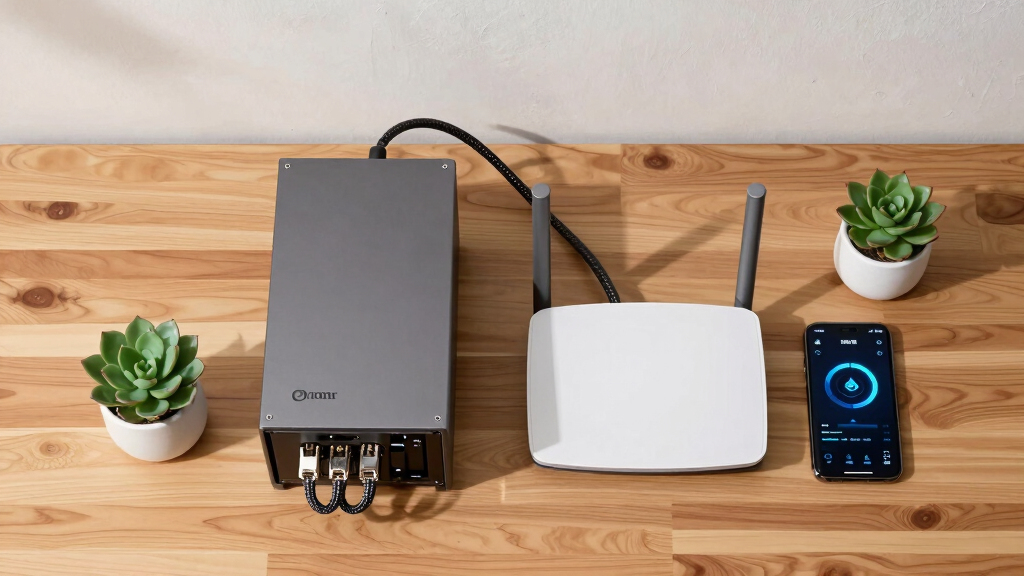
The company’s approach involves installing wall-mounted smart panels, backup batteries, and liquid-cooled Nvidia RTX Pro 6000 GPUs within new homes. These nodes, called XFRA units, will operate using excess household power capacity, primarily in homes with 200-amp electrical service, which is standard in recent US constructions. The initial pilot targets 100 homes this year, with plans to expand to 80,000 nodes nationwide by 2027, providing over 1 gigawatt of distributed compute capacity.
The nodes are designed to run continuously, supporting AI inference tasks such as cloud gaming and content streaming, rather than large-scale model training. Homeowners will have their electricity and internet bills paid by SPAN, with options for a flat fee or potentially no fee, and will benefit from backup power during outages. The system uses a proprietary software platform, PowerUp, to manage energy consumption, prioritizing critical loads and utilizing home batteries to maintain operation during peak demand or outages.
Why It Matters
This development could significantly alter AI infrastructure deployment by decentralizing data processing, reducing reliance on large centralized data centers, and alleviating land, water, and energy consumption issues associated with traditional facilities. For utility companies, it offers a way to meet rising electricity demands from AI workloads without costly infrastructure upgrades, potentially lowering community energy costs and increasing grid resilience. For residents, the initiative promises enhanced energy resilience and lower utility bills, making AI compute more accessible and sustainable.
As an affiliate, we earn on qualifying purchases.
Background
Traditional data centers are large, land-intensive, and often face community opposition due to noise and environmental concerns. The rise of AI workloads has accelerated demand for compute capacity, prompting companies to explore alternative deployment models. SPAN’s plan builds on recent trends toward edge computing and distributed infrastructure, aiming to leverage existing residential power systems. Pilot testing in 2024 follows earlier announcements of the concept, with the goal of scaling rapidly by 2027, amidst ongoing debates about the environmental impact and community acceptance of large data centers.
“Data centers are loud, ugly, and often drive up local electricity bills. This approach is quiet, discreet, and makes energy more affordable for the host and community.”
— Chris Lander, VP of XFRA at SPAN
“By harnessing excess power capacity among US households, we can quickly expand AI compute without the costs and delays of traditional data centers.”
— SPAN spokesperson (via press release)
As an affiliate, we earn on qualifying purchases.
What Remains Unclear
It remains unclear how homeowners will respond to the installation of these nodes, particularly regarding privacy, noise, or potential disruptions. Details about long-term operational costs, regulatory approval, and community acceptance are still developing. The scalability of the project beyond pilot phases and the precise impact on local electricity grids also remain uncertain.
wall-mounted smart data center panel
As an affiliate, we earn on qualifying purchases.
As an affiliate, we earn on qualifying purchases.
What’s Next
Next steps include completing the pilot installations in 2024, gathering data on performance and homeowner feedback, and refining the system. SPAN plans to announce further rollout details and seek regulatory approvals for larger-scale deployment in subsequent years. Monitoring the pilot’s success will be crucial for assessing broader adoption.
distributed AI data center hardware
As an affiliate, we earn on qualifying purchases.
As an affiliate, we earn on qualifying purchases.
Key Questions
How will the home data centers affect household electricity bills?
SPAN will cover electricity and internet costs for participating households, offering a flat fee or no fee, depending on the plan. The system aims to operate within existing household electrical capacity, minimizing additional costs.
Will this installation cause noise or other disturbances?
According to SPAN, the liquid-cooled GPUs operate with minimal noise, and the system is designed to be discreet, with no significant disturbance expected for residents.
What kinds of AI workloads will these nodes support?
The nodes are intended for AI inference tasks such as cloud gaming, content streaming, and real-time AI applications, not large-scale model training.
Are there privacy concerns related to housing data centers?
Details on data security and privacy are not specified. The focus appears to be on compute capacity and energy management, but privacy implications remain an area to watch.
When will this project be available nationwide?
Pilot testing begins in 2024, with a broader rollout planned to scale up to 80,000 nodes by 2027, subject to regulatory approval and pilot success.
Fall Picks
fall essentials
As an affiliate, we earn on qualifying purchases.