🔍 Read the full analysis: Meta, TikTok And Google Push Back As Indonesia Weighs AI Copyright Rules on ThorstenMeyerAI.com

Get the latest gadgets delivered free with Prime
- Fast, free delivery on millions of items
- Prime Video, Amazon Music and more included
- Member-only deals all year
TL;DR
Meta and TikTok joined Google at a parliamentary hearing in Jakarta on Nov. 11 to object to parts of Indonesia’s proposed copyright-law revision. The draft could require payments for news links and previews and set rules for AI training, disclosure and creator rights, but it is still under deliberation and its current text is not publicly confirmed.
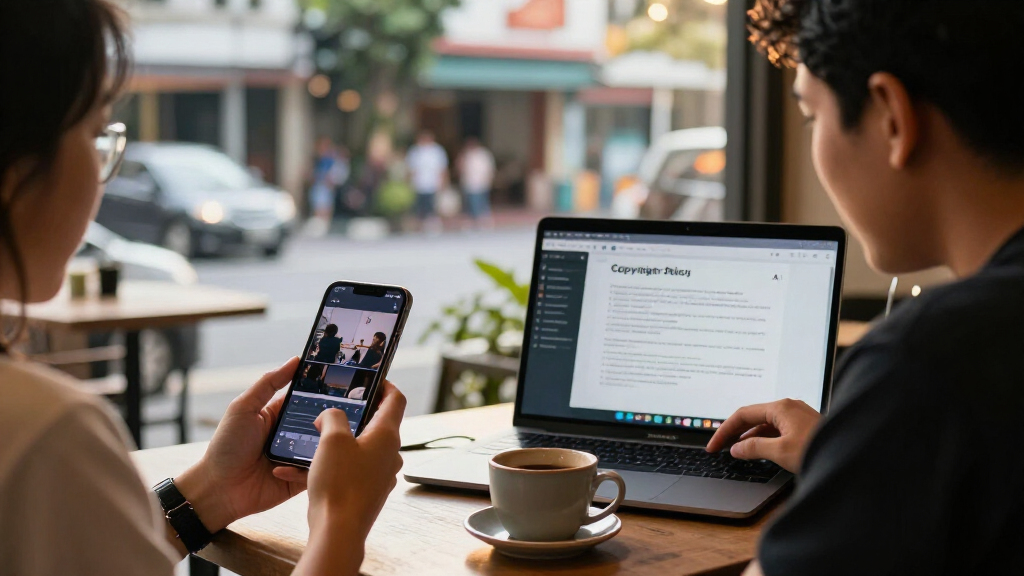
Meta and TikTok joined Google in objecting to parts of Indonesia’s proposed copyright-law revision at a parliamentary hearing in Jakarta on Nov. 11, as lawmakers consider rules that could require platforms to pay for displaying news links and set conditions for using copyrighted works to train AI. The bill is still under deliberation, and the latest draft text was not available for independent review.
The revision would amend Indonesia’s Copyright Law, Law No. 28 of 2014. Parliament approved it as a legislative initiative on March 12, 2026, and its Legislation Body, known as Baleg, is discussing it with the government. According to Kompas, the Nov. 11 hearing included Google, Meta, TikTok, the Press Council and Satu Lisensi Indonesia. Google had previously raised objections.
The bill’s provisions reported from a July draft include possible compensation for platforms’ aggregation, republication or display of news, including link previews, as well as rules for copyrighted material used in AI training. Reuters reported that the earlier draft also addressed AI-assisted works, disclosure of AI use and imitation of a creator’s distinctive style. The proposal could exclude fully AI-generated work from copyright protection, but the reported draft did not specify how much human input would qualify a work for protection.
The companies’ objections differ. Google opposes payments for links and snippets, a single collective licensing body and mandatory licenses covering all AI training data. It has proposed a text-and-data-mining exception with an opt-out, such as robots.txt, according to reports by Suara and Kompas. Meta argued that sharing a link is not the same as republishing an article and said payment duties could reduce traffic and income for publishers. TikTok said disclosure requirements should not apply when AI is only assisting a creator, and called for intermediary safe-harbor protections to remain.
Copyright rules in debate Platforms push back
Meta, TikTok and Google objected to parts of Indonesia’s proposed copyright-law revision. Its reported provisions could affect news publishers, creators and AI developers, but the draft is still under deliberation.
What the proposal could cover
Reported drafts address both news distribution and the use of copyrighted works in AI.
Links and previews
Platforms could face payments for aggregating, republishing or displaying news, including link previews.
Copyrighted works
Rules could set conditions for using protected material to train AI models.
Disclosure and rights
Earlier draft reporting also addressed AI-assisted works, disclosure and imitation of a creator’s distinctive style.
Where platforms disagree
Each company raised different concerns about the reported proposals.
- Opposes payments for links and snippets.
- Objects to one collective licensing body and mandatory licenses for all AI training data.
- Proposes a text-and-data-mining exception with an opt-out.
- Meta says sharing a link is not republishing an article and warns payments could reduce publisher traffic and income.
- TikTok says disclosure should not apply when AI only assists a creator.
- TikTok also calls for intermediary safe-harbor protections.
What remains unsettled
The latest text was not available for independent review, and reports may describe different drafts.
The reported July draft may differ from the version now under discussion.
Human input thresholds, AI-training rules and news-payment calculations remain unclear.
Baleg and the government are discussing the revision; no vote date was reported.
News Links and AI Training at Stake
The debate could shape how news organizations are compensated when platforms display or distribute their work, while also setting conditions for AI developers seeking to train models on copyrighted material. If enacted as described in reports, the law would affect platforms, publishers, creators and businesses developing or deploying AI in Indonesia.
The hearing also exposed competing accounts of the current digital news market. The Press Council’s deputy chair, Totok Suryanto, told lawmakers that platforms take 80 percent of digital advertising and that traffic from platforms to news sites has fallen by up to 70 percent, according to reporting cited in the source material. Those are claims presented by the Press Council, not independently established findings in the available material. Meta, by contrast, says imposing payments for links could reduce the traffic and revenue publishers receive.
For AI developers, a broad licensing requirement could affect the availability and cost of training data. Google argues that licensing every item used to train models would be technically unworkable at web scale and that restricting access to local data could impair models’ ability to handle Indonesian. These are the company’s arguments; the bill’s final requirements and their practical effects remain unsettled.
Products Worth Considering

Jackery Explorer 2000 v2 Portable Power Station with Two 200W Solar Panels

Anker SOLIX C1000 Gen 2 Portable Power Station with 200W Solar Panel
Amazon Kindle Paperwhite (12th Generation, 2024), 16GB, 7-Inch Display, Raspberry
As an affiliate, we earn on qualifying purchases.
From July Draft to November Hearing
The proposal sits alongside Presidential Regulation No. 32 of 2024, which requires digital platforms to support quality journalism. Dewan Pers deputy chair Totok Suryanto said at the hearing that the regulation has not worked as intended and that platform compliance is low, according to Aktual. The proposed copyright revision would add a separate statutory framework for payments and other rights.
Reuters reported on AI provisions in a draft on July 17, citing a document authenticated by Hermansyah Siregar, a law ministry official overseeing intellectual property. Siregar said generative AI had disrupted the copyright framework, but also stressed that the draft was not final. In the earlier version, use of copyrighted works for AI training would be handled through fair-use provisions or licensing agreements, Reuters reported.
At the November hearing, Google referred to Articles 29 and 30 of the version it discussed, saying they would require payment for indexing, aggregation, curation and news snippets, according to Suara. The current full text was not obtained, and reports may refer to different drafts. The article numbers and details from the July version should not be treated as settled provisions.
“The development of generative AI has disrupted the copyright framework.”
— Hermansyah Siregar, a law ministry official overseeing intellectual property, as quoted by Reuters in July
Current Draft and Vote Date Unknown
The bill has not become law, and the version under discussion may differ from the July text described by Reuters. The full current draft was not available to the source publication, and news reports cite different versions. It is not yet clear which provisions, definitions or sanctions will remain in the text that parliament considers.
Key details are unresolved, including how much human contribution would be needed for an AI-assisted work to qualify for copyright, how any AI-training exception or licensing scheme would operate, and how payments for news links would be calculated and distributed. The reported July draft included possible sanctions, including revocation of local business permits, but it is not confirmed whether those measures remain in the current draft. No vote date was announced in the available reports.
Baleg Deliberations Continue
Parliament’s Legislation Body and the government are continuing deliberations on the revision. The Nov. 11 hearing brought platform companies, press representatives and licensing groups before lawmakers, but no final text or vote timetable was reported. The next concrete development to watch is publication or confirmation of the text under discussion, followed by any committee decisions or scheduled parliamentary vote.
Until those steps occur, the July draft’s provisions should be treated as proposals rather than settled law. Further statements from lawmakers or the government may clarify whether the bill will retain payments for link previews, how AI training will be addressed and what protections will apply to platforms and creators.
Key Questions
Has Indonesia passed the proposed copyright-law revision?
No. The bill remains under discussion by parliament’s Legislation Body and the government. No vote date was reported.
What are Meta, TikTok and Google objecting to?
Google objects to payments for news links and snippets, a single collective licensing body and mandatory licenses for AI training data. Meta says links are not republication and warns that payments could reduce publisher traffic and revenue. TikTok says disclosure rules should not cover cases where AI only assists a creator and wants intermediary safe-harbor protections retained.
What AI rules were described in the earlier draft?
Reuters reported that the July draft addressed AI disclosure, protection for AI-assisted works, imitation of creators’ distinctive styles and the use of copyrighted works for training through fair use or licensing. The draft was not final, and its details may have changed.
The July draft was reported to cover aggregation, republication and link previews, while Google said the version discussed at the hearing would require payment for indexing, aggregation, curation and snippets. Because the current full text was unavailable and drafts may differ, the final scope is not confirmed.
Source: ThorstenMeyerAI.com