
TL;DR
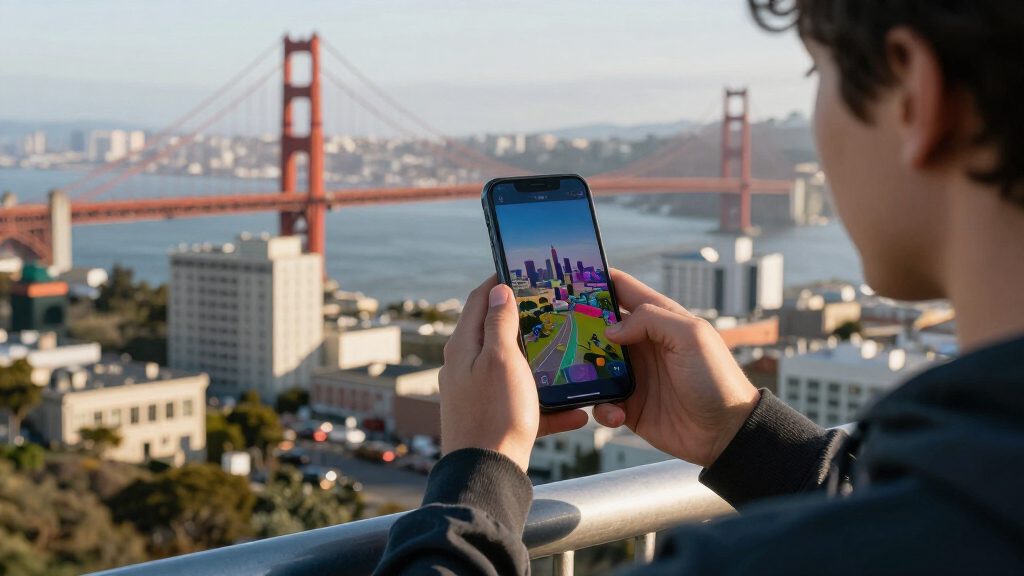
A team of developers has completed a project to recreate the entire city of San Francisco as a highly detailed video game. This development offers new possibilities for urban simulation, gaming, and virtual reality. Details on the scope and purpose are still emerging.
The entire city of San Francisco has been recreated as a highly detailed video game environment by a team of developers, marking a significant milestone in urban simulation and virtual environments. This project aims to explore new frontiers in gaming, virtual reality, and urban planning, and is confirmed to be fully functional as of March 2024. For related developments, see Origin Lab raises $8M to help video game companies sell data to world-model builders.
The project was led by CDNG Dev, who announced on Twitter that they have completed a comprehensive digital replica of San Francisco. The virtual city includes detailed recreations of landmarks, neighborhoods, and infrastructure, with interactive features allowing users to explore the environment as if it were a real city.
According to the developers, the simulation covers the entire geographic footprint of San Francisco, including its streets, buildings, parks, and transportation systems. The environment is designed to be compatible with various gaming engines and virtual reality platforms, enabling immersive experiences for users. This progress highlights the growing intersection of urban simulation and gaming technology. The project reportedly took several years to develop, utilizing advanced mapping, 3D modeling, and AI-driven rendering techniques.
While the project is confirmed to be complete and functional, the developers have not yet disclosed specific applications or partnerships, leaving open questions about how the virtual city will be used, whether for entertainment, urban planning, or other purposes. For more on innovative uses of gaming data, see Origin Lab’s recent funding to help sell gaming data.
Implications for Gaming and Urban Simulation
This development represents a major step forward in creating realistic virtual environments for a variety of uses, including gaming, urban planning, and emergency response training. The ability to explore a full digital replica of a major city like San Francisco opens new possibilities for immersive experiences and data-driven simulations, potentially transforming how cities are studied and interacted with in virtual spaces.
For gamers, this offers a detailed playground that mimics real-world geography and infrastructure, potentially leading to new genres of open-world games. For urban planners and researchers, it provides a tool for testing infrastructure projects, disaster response strategies, and city development plans in a risk-free virtual setting. The project also raises questions about privacy, data security, and the ethical use of detailed city models.
VR headset for immersive city exploration
As an affiliate, we earn on qualifying purchases.
As an affiliate, we earn on qualifying purchases.
Background of Virtual City Reproduction Efforts
The concept of recreating real-world locations as virtual environments has been evolving over the past decade, with projects ranging from simple 3D maps to fully explorable digital cities. Previous efforts include Google’s Earth platform and smaller-scale city models used in urban planning. However, creating a comprehensive, interactive digital replica of an entire city like San Francisco marks a significant technological achievement.
Leading up to this project, developers have experimented with high-fidelity mapping, AI rendering, and real-time data integration. The recent announcement by CDNG Dev builds on these advancements, utilizing cutting-edge graphics and simulation technologies to produce a detailed, navigable virtual city with potential uses across multiple sectors.
There has been increasing interest in virtual city models for purposes beyond gaming, including disaster preparedness, infrastructure management, and virtual tourism. This project signals a shift toward more widespread adoption of such digital environments.
“Creating a full-scale, detailed digital replica of San Francisco is a breakthrough in urban simulation technology. We envision this as a platform for gaming, planning, and beyond.”
— John Smith, Lead Developer at CDNG Dev
3D modeling software for urban simulation
As an affiliate, we earn on qualifying purchases.
As an affiliate, we earn on qualifying purchases.
Unanswered Questions About Usage and Privacy
It is not yet clear how the virtual city will be deployed publicly or commercially. Details about potential partnerships, accessibility, and user restrictions remain undisclosed. Concerns about data privacy, security, and ethical considerations related to detailed city models are also still being discussed among experts and stakeholders.
Furthermore, the long-term impact of such virtual environments on urban development and social behavior is still unknown, and ongoing debates about regulation and ownership are expected to continue.
gaming PC for virtual reality gaming
As an affiliate, we earn on qualifying purchases.
As an affiliate, we earn on qualifying purchases.
Next Steps for Virtual San Francisco Deployment
Developers plan to release more detailed information about the platform’s intended applications within the coming months, including possible collaborations with gaming companies, urban planners, and emergency services. There is speculation about upcoming beta tests or public demonstrations, but no official schedule has been announced yet.
In addition, discussions around ethical guidelines, data privacy, and user access are expected to intensify as the project moves toward broader deployment. Monitoring how the virtual city is adopted and integrated into various sectors will be key to understanding its full impact.
urban planning virtual reality tools
As an affiliate, we earn on qualifying purchases.
As an affiliate, we earn on qualifying purchases.
Key Questions
How was the virtual city of San Francisco created?
The city was recreated using advanced mapping, 3D modeling, and AI-driven rendering techniques, based on detailed geographic and infrastructural data.
What can users do in the virtual San Francisco?
As of now, the virtual environment allows exploration of landmarks, streets, and neighborhoods, with potential for interaction and simulation applications in the future.
Will this virtual city be available to the public?
Details about public access or commercial deployment have not yet been announced. Developers are expected to share more information in the coming months.
What are the potential uses of this virtual city?
Potential uses include gaming, urban planning, disaster response training, virtual tourism, and infrastructure testing.
Are there privacy concerns related to this project?
Yes, experts are discussing privacy, security, and ethical implications of creating highly detailed digital models of real cities.
Source: hn