
TL;DR
ReactOS has reached a significant milestone by running the classic game Half-Life with 3D acceleration on real hardware. This demonstrates progress in its compatibility with Windows applications and games. The achievement is confirmed but broader performance details remain to be seen.
ReactOS has achieved the ability to run the Windows version of Half-Life with 3D acceleration on real hardware, a milestone that demonstrates the operating system’s ongoing progress toward binary compatibility with Windows applications and games.
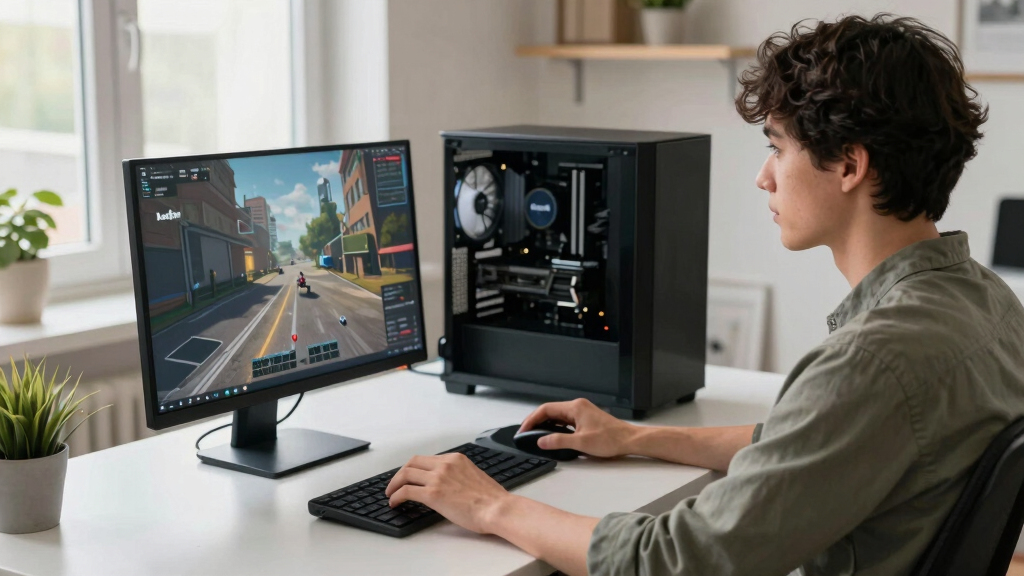
Developers and users of ReactOS announced that the open-source operating system now supports running Half-Life with hardware-accelerated 3D graphics on a Dell OptiPlex system equipped with a Core i5 2400 processor and NVIDIA GeForce 8400GS graphics card. This marks the first confirmed instance of the game running in-game on physical hardware with proper 3D acceleration, a feat not previously documented.
The achievement was demonstrated by a ReactOS user known as ‘Zombiedeth’ on Hacker News, who reported successful initialization and in-game performance of Half-Life. ReactOS has been under development for 28 years, aiming to provide a free, open-source alternative to Windows with high binary compatibility. While running older Windows games on Linux via Wine is common, this development highlights ReactOS’s progress in reaching similar compatibility levels on native hardware.
It is important to note that, as of now, this is a demonstrated capability rather than a stable or fully optimized feature. The developers have not yet released official builds or detailed performance benchmarks but confirm that the game runs at least at a basic level with 3D acceleration enabled.
Impact of Running Half-Life on ReactOS
This milestone demonstrates ReactOS’s potential as a free, open-source alternative for running Windows applications and games, especially those relying on 3D hardware acceleration. It could appeal to enthusiasts, preservationists, and those seeking a Windows-compatible environment without proprietary software. Success in running classic titles like Half-Life also indicates progress toward broader application compatibility, which has historically been a challenge for open-source OS projects.

EVGA GeForce 8400 GS Passive 512MB DDR3 PCI-Express 2.0 Graphics Card – 3 Year Limited Warranty 512-P3-1301-KR
- Model Name: EVGA GeForce 8400 GS
- Memory Size: 512MB DDR3
- Interface: PCI-Express 2.0
As an affiliate, we earn on qualifying purchases.
As an affiliate, we earn on qualifying purchases.
ReactOS Development Milestones and Compatibility Goals
ReactOS has been in development since 1996, aiming to provide a binary-compatible clone of Windows NT. Over the years, it has made incremental progress, with recent efforts focusing on improving hardware support and application compatibility. Running legacy Windows games such as Half-Life has been a long-standing challenge, primarily due to graphics and driver compatibility issues. The recent achievement marks a significant step forward, although full stability and performance improvements are still underway.
Earlier reports indicated that Half-Life could initialize under ReactOS, but this is the first confirmed report of the game running in-game with hardware acceleration enabled on real hardware, rather than in emulated or virtualized environments.
“Getting Half-Life to run with 3D acceleration on ReactOS is a significant milestone after nearly three decades of development.”
— an anonymous Hacker News user

Dell Optiplex 3060 Desktop Computer | Intel i5-8500 (3.2) | 32GB DDR4 RAM | 1TB SSD Solid State | Built in WiFi | Bluetooth | Windows 11 Professional | Home or Office PC (Renewed)
- RGB Lighting with 13 Modes: Customizable side panel RGB lighting
- Built-in WiFi Connectivity: Supports latest wireless internet connection
- Trusted Refurbished Quality: Microsoft Authorized refurbisher with support
As an affiliate, we earn on qualifying purchases.
As an affiliate, we earn on qualifying purchases.
Remaining Stability and Performance Challenges
Details on stability, frame rates, driver reliability, and compatibility with various hardware configurations are still unavailable. Broader application support and system stability are ongoing development areas, and it remains uncertain when these will be ready for widespread use.

WRS Die Cast T Shaped Replacement Pivot Bar, 2 Holes Quantity 4 Pack
- Functionality: Allows sash tilting for cleaning
- Material: Die-cast zinc construction
- Size: 3 inches long
As an affiliate, we earn on qualifying purchases.
As an affiliate, we earn on qualifying purchases.
Next Steps for ReactOS Hardware and Software Compatibility
Future efforts will likely focus on enhancing hardware support, driver stability, and expanding application compatibility. The community anticipates official releases with improved stability and performance metrics, aiming for broader usability and adoption in running Windows applications and games.
System Firmware: An Essential Guide to Open Source and Embedded Solutions
As an affiliate, we earn on qualifying purchases.
As an affiliate, we earn on qualifying purchases.
Key Questions
Can ReactOS run other modern Windows games with 3D acceleration?
Support for modern Windows games with advanced graphics hardware remains limited. The recent success with Half-Life is promising, but broader compatibility is still under development.
Is ReactOS suitable for daily use or gaming today?
ReactOS is still in development and not recommended for daily use or gaming as a primary operating system. Its stability and compatibility are improving, but it is primarily intended for testing and development purposes.
Will ReactOS be able to replace Windows in the future?
While progress is notable, it is uncertain whether ReactOS will achieve full compatibility and stability to replace Windows for mainstream use. Development continues, but it remains a niche project at this stage.
What hardware is needed to run ReactOS effectively?
ReactOS can operate on standard PC hardware, with compatibility depending on driver support. The recent demonstration used a Dell OptiPlex with an NVIDIA GeForce 8400GS, indicating support for older hardware configurations.
Source: Hacker News