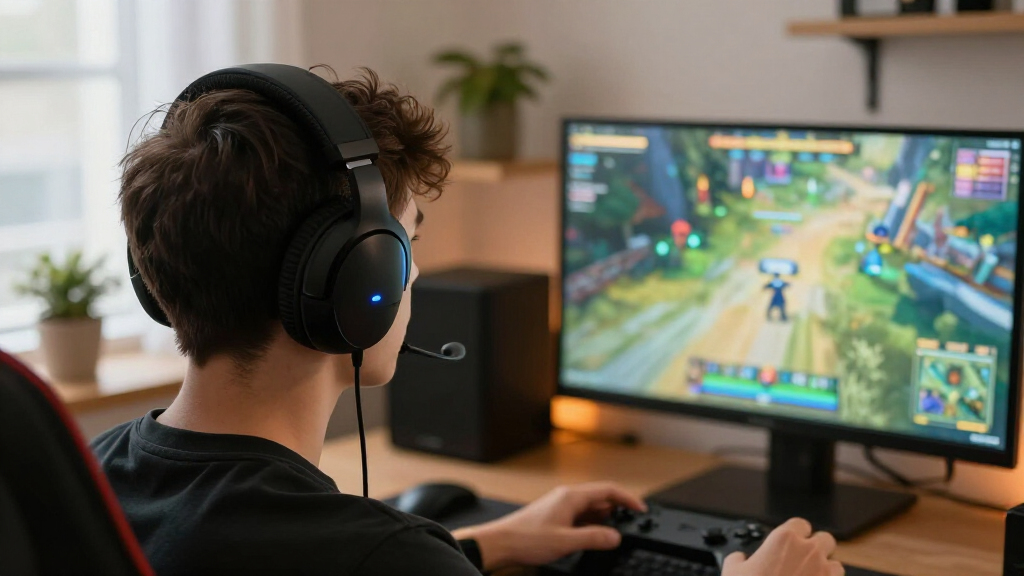

Set up your wireless gaming headset by connecting it to a PC or console, choosing it as the audio device, and checking its microphone and sound. This guide is for beginners who have a headset and want to use it for games, voice chat, or both. Plan for 15–30 minutes; the exact connection steps depend on whether your headset uses a USB receiver, Bluetooth, or a console-specific wireless connection.

Get the latest gadgets delivered free — and shop member deals
- Fast, free delivery on millions of items
- Access to Prime Big Deal Days deals on October 6–7
- Prime Video, Amazon Music and more included

SteelSeries Arctis Nova 5 Wireless Multi-System Gaming Headset
- ✔ Connectivity: 2.4GHz wireless and Bluetooth 5.3
- ✔ Battery life: Up to 60 hours
- ✔ Fast charging: 15 minutes provides up to 6 hours of use

Turtle Beach Stealth 700 Gen 3 Wireless Gaming Headset
- ✔ Connectivity: 2.4GHz wireless and Bluetooth 5.2
- ✔ Wireless transmitters: Two USB transmitters
- ✔ Drivers: 60mm Eclipse dual drivers

Turtle Beach Stealth 600 Wireless Gaming Headset
- ✔ Connectivity: 2.4GHz wireless and Bluetooth
- ✔ Bluetooth version: Inconsistent supplied details: 5.2 or 5.4
- ✔ Drivers: 50mm Nanoclear
Difficulty: Beginner | Time: 15-30 minutes
What You’ll Need
Tools & Materials:
- Wireless gaming headset and its USB charging cable
- USB wireless receiver or transmitter, if supplied
- PC, PlayStation, Xbox, Nintendo Switch, or other compatible device
- Internet access if the headset requires a companion app or firmware update
Knowledge:
- Basic ability to open device settings and select audio devices
- Ability to identify your headset’s connection type from its manual or product label
Check the headset manual or manufacturer’s support page for compatibility before connecting. Some Xbox headsets use Xbox Wireless or a licensed receiver; ordinary Bluetooth headsets generally cannot connect directly to Xbox consoles. A USB receiver may support only the platform listed by the manufacturer. Charge the headset before setup so a low battery does not interrupt testing.
SteelSeries Arctis Nova 5 Wireless Multi-System Gaming Headset
The Arctis Nova 5 earns our top spot for players whose gaming setup spans several systems. Its listed compatibility covers PC, PlayStation, Nintendo Switch, Meta Quest, phones, and tablets, giving it the widest stated platform range in this lineup. Both 2.4GHz wireless and Bluetooth are available, and Quick-Switch controls help move between connection modes without making the headset feel tied to one device.Its defining extra is a library of 100+ game audio presets, which can help tailor sound to different games without requiring every player to build an EQ from scratch. The tradeoff is that presets rely on the companion app, so buyers who prefer a fully self-contained headset may find that step less appealing. Its up-to-60-hour battery life is substantial, though shorter on paper than the 80 hours listed for both Turtle Beach options. SteelSeries specifies that 15 minutes of charging provides up to six hours of use, which is a particularly useful recovery window among these picks.A retractable ClearCast microphone keeps the mic out of the way when it is not needed, while the Nova 5’s platform breadth sets it apart from the Stealth 700 Gen 3’s emphasis on paired USB transmitters. Choose the Nova 5 for variety across systems and configurable game sound; skip it if your priority is the longest stated battery life or you do not want app-dependent presets.
Pros:
- Broad listed compatibility across PC, consoles, Meta Quest, and mobile devices
- 2.4GHz wireless and Bluetooth 5.3 with Quick-Switch controls
- 100+ customizable game audio presets
- Fast charging provides up to six hours of use from 15 minutes
Cons:
- Preset access depends on the companion app
- Listed battery life is shorter than the two Turtle Beach alternatives
Best for: Players who use several supported systems and want game-specific sound presets with both wireless and Bluetooth options.
Not ideal for: Buyers who prioritize the longest listed battery life or want to avoid using an app for audio presets.
Bottom line: The Nova 5 is our most adaptable choice for players who move across platforms and want extensive sound options.
“The Nova 5 is our most adaptable choice for players who move across platforms and want extensive sound options.”
Turtle Beach Stealth 700 Gen 3 Wireless Gaming Headset
For a setup that moves between console and PC, the Stealth 700 Gen 3 makes a strong case with two USB transmitters. That arrangement gives buyers a dedicated way to switch between compatible systems, while simultaneous 2.4GHz wireless and Bluetooth can keep a mobile device in the mix. The Nova 5 supports a wider range of named platforms, but the Stealth 700’s paired-transmitter approach is especially relevant when the main challenge is connecting two gaming systems.It also lists 60mm Eclipse dual drivers, up to 80 hours of battery life, and quick charging that provides up to three hours from a 15-minute charge. That battery figure matches the Stealth 600, while the Nova 5 has the shorter stated runtime but a longer specified quick-charge payoff. A flip-to-mute microphone and glasses-friendly memory foam cushions add practical details for voice chat and longer sessions.The flexibility has conditions: switching systems depends on the USB transmitters, and advanced EQ and microphone adjustment require the Swarm II app. Compared with the more platform-spanning Nova 5, the Stealth 700 is a more focused pick for transmitter-based console and PC changes. Choose it when that setup matters; look elsewhere if you want fewer pieces to manage or do not plan to configure sound through an app.
Pros:
- Two USB transmitters support switching between compatible console and PC systems
- Can connect to a gaming system and mobile device simultaneously
- Up to 80 hours of battery life with quick charging
- Glasses-friendly cushions and a flip-to-mute microphone
Cons:
- Multiplatform switching depends on the USB transmitters
- Advanced EQ and microphone settings require the companion app
Best for: Console and PC players who want dedicated USB transmitters and Bluetooth audio available alongside their gaming connection.
Not ideal for: Players who want a simpler single-transmitter setup or who do not need multi-system switching and app-based tuning.
Bottom line: The Stealth 700 Gen 3 is the specialized choice for players whose wireless setup spans multiple gaming systems and a phone.
“The Stealth 700 Gen 3 is the specialized choice for players whose wireless setup spans multiple gaming systems and a phone.”
Turtle Beach Stealth 600 Wireless Gaming Headset
The Stealth 600 is the straightforward endurance pick: it combines 2.4GHz wireless with Bluetooth and lists up to 80 hours of battery life, matching the Stealth 700 Gen 3. That runtime makes it a natural choice for players who would rather charge less often than add dedicated USB transmitters to their setup. Its compatibility list spans Xbox, PlayStation, PC, Steam Deck, and mobile devices, though the Nova 5 names additional systems such as Nintendo Switch and Meta Quest.Comfort gets a clear emphasis through memory foam cushions with glasses-relief technology. A flip-to-mute microphone with AI noise reduction covers the basics for voice chat, and the Turtle Beach Swarm II app offers audio and microphone customization. That software expands the options, but it also means advanced tuning takes an extra step. The provided details list Bluetooth 5.2 in one place and 5.4 in another, so buyers who specifically need a version should verify the current listing.Compared with the Stealth 700 Gen 3, the Stealth 600 avoids making dual USB transmitters central to its appeal. Compared with the Nova 5, it trades the named 100-plus preset library and broader platform list for a longer stated battery life and a simpler endurance-first pitch. It makes sense for long play sessions and glasses wearers, but buyers who want the clearest compatibility details or more explicit system switching may prefer one of the other two.
Pros:
- Up to 80 hours of listed battery life
- 2.4GHz wireless and Bluetooth for gaming and mobile connections
- Memory foam ear cushions designed to relieve pressure around glasses
- Flip-to-mute microphone with AI noise reduction
Cons:
- Provided details conflict on whether Bluetooth is version 5.2 or 5.4
- Advanced customization requires the Swarm II companion app
Best for: Players who value long intervals between charges and want glasses-friendly cushions across gaming and mobile use.
Not ideal for: Buyers who need an unambiguous Bluetooth version, extensive listed platform support, or dedicated dual-transmitter switching.
Bottom line: The Stealth 600 suits endurance-focused players who want long battery life and glasses-friendly comfort without prioritizing dual-transmitter switching.
“The Stealth 600 suits endurance-focused players who want long battery life and glasses-friendly comfort without prioritizing dual-transmitter switching.”
As an Amazon Associate we earn from qualifying purchases.
Before You Start
Turn off or disconnect other audio devices that could make it unclear which headset is active. Keep the headset and receiver close to the computer or console during pairing. If you plan to install a companion app, download it from the manufacturer’s official site or your device’s app store. Do not force a connector into a port; check the receiver’s shape and the manual if it does not fit.
Step-by-Step Instructions
Step 1: Charge and power on the headset
Connect the headset to a USB power source with the supplied cable. Check its indicator light or the manufacturer’s app for the charge level, then disconnect the cable if you want to use it wirelessly. Hold the power button until the headset’s light or tone indicates that it has switched on.
Tip:Some headsets can play audio while charging, but the cable may limit movement or change how the headset connects. Use wireless mode for the setup check if that is how you plan to play.
Check: The headset powers on and shows a charge or power indicator. Its battery level is enough for setup and testing.
Step 2: Connect the headset using its supported method
Use the connection method listed for your headset and platform. For a USB wireless receiver, plug the receiver into a USB port on the PC or console, then switch the headset to wireless or receiver mode. For Bluetooth, open the computer or console’s Bluetooth settings, put the headset into pairing mode as described in its manual, and select its name. For a console wireless system, follow the headset and console pairing instructions.
Tip:A receiver may have a PC/console mode switch. Set it to the mode for your device before pairing. Bluetooth pairing mode is different from simply turning on the headset; use the specified button or button combination.
Check: The headset or receiver indicates a connection, and the device lists the headset as connected or available for audio.
Step 3: Select the headset for game audio
Open the PC’s sound settings or the console’s audio settings. Choose the headset as the output device for game or system audio. If the headset appears under more than one name, select the gaming or stereo output recommended in its manual. Play a system sound or open a game and raise the headset volume gradually.
Tip:On a PC, the headset may appear as separate game and chat devices. Follow the manufacturer’s guidance for assigning game audio and voice chat; selecting a chat-only device for all sound can make games seem silent.
Check: You can hear system sounds or game audio through the headset, and the volume controls change the sound level.
Step 4: Set the microphone and chat device
In the same settings area, select the headset microphone as the input device. On a PC, also check the input device in the game or voice-chat app, since an app can use a different microphone from the system default. On a console, open the microphone or party-chat settings and select the headset if needed. Unmute the headset and position its microphone near the corner of your mouth.
Tip:Check for a physical mute switch, a flip-up mute function, or a control on the ear cup. These can mute the microphone even when software settings show it as selected.
Check: Use the system’s microphone test or a private voice-chat test. Speak at a normal volume and confirm that the input meter moves or your voice is audible without severe distortion.
Step 5: Adjust levels and test in a game
Set a comfortable headset volume, then adjust game audio, voice-chat volume, and microphone level separately if those controls are available. Start a game or voice-chat session and listen for both game sound and speech. Make a short recording or ask a trusted chat participant to confirm that your voice is clear.
Tip:Keep the headset volume at a comfortable level, especially during long sessions. If game sounds overpower speech, lower game audio or raise chat volume rather than turning up every level at once.
Check: Game audio plays through the headset, chat voices are audible, and the microphone sends clear speech. The connection remains steady while you move normally within the intended range.
Step 6: Install the companion app or update firmware if needed
If the manufacturer provides a companion app, install it from an official source and follow its prompts to recognize the headset. Use it to check for firmware updates, battery status, or supported equalizer and microphone settings. Keep the headset powered and connected as directed while an update runs; do not unplug or turn it off until the app reports completion.
Tip:Skip app installation if the headset works as intended and the manufacturer does not require an app. Firmware updates can take several minutes, so start one when you can leave the headset connected.
Check: The app recognizes the headset, or the update reports that it finished. Audio and microphone tests still work afterward.
Common Mistakes to Avoid
- Starting a firmware update with a low battery or disconnecting the headset during the update. — Charge the headset first and follow the app’s instructions until it confirms that the update is complete.
Troubleshooting
Problem: The headset does not appear in the device’s audio or Bluetooth list.
Solution: Confirm that the headset is powered on and in the correct mode. For a receiver, check that it is firmly connected and set to the correct platform mode. For Bluetooth, restart pairing mode and search again. Move the headset close to the device and consult the manual for platform compatibility.
Problem: The headset connects, but game or system audio still comes from the speakers.
Solution: Select the headset as the output device in system settings and in the game. Check the headset’s volume dial and the device’s output level. If several headset outputs appear, try the gaming or stereo output named in the manual.
Problem: Other people cannot hear you, or your microphone test shows no input.
Solution: Unmute the headset and choose its microphone as the input device in system and app settings. Check any console party-chat or privacy controls, reconnect the receiver, and run the microphone test again. Reposition the microphone near your mouth.
Problem: Audio cuts out, crackles, or has noticeable delay.
Solution: Move closer to the console or PC and keep the receiver unobstructed. Disconnect unused wireless audio devices and try another USB port if the manual allows it. For Bluetooth, reduce distance and interference, then reconnect. Check the manufacturer’s guidance if delay persists, since some connection modes add more latency than others.
What Success Looks Like
The headset connects to the intended PC or console without repeated dropouts. Game or system sound comes through the headset, chat audio is audible, and a microphone test confirms that speech is transmitted. The volume and mute controls respond, and the battery indicator shows enough charge for use.
Next Steps
Store the receiver with the headset so it is ready for the next session, and charge the headset when its battery is low. If you change platforms, repeat the device selection and compatibility checks because saved audio settings may not carry over. Check the manufacturer’s support page if a firmware update or platform-specific feature stops working.
Frequently Asked Questions
Can I use any wireless gaming headset with any console?
No. Compatibility depends on the headset’s connection system and the console. Check the manufacturer’s platform list before buying or pairing. A USB receiver that works on a PC or PlayStation may not work on Xbox, and ordinary Bluetooth audio support varies by console.
Why does my headset have sound but no microphone?
The headset may be muted, or the system or game may be using another input device. Check physical mute controls, select the headset microphone in system and app settings, and confirm that party-chat permissions allow voice input.
Should I use Bluetooth or the USB receiver for gaming?
Use the connection the manufacturer recommends for your platform. A dedicated receiver is often the intended mode for gaming and may provide lower delay or simultaneous microphone support. Bluetooth can be suitable when the headset and device support the features you need.
Do I need to install headset software?
Not always. Many headsets work with basic system audio settings. Install the official companion app when you need features such as firmware updates, custom controls, or equalizer settings, or when the manufacturer requires it for setup.
Fall Picks
fall essentials
As an affiliate, we earn on qualifying purchases.